

228. Magglio Ordóñez
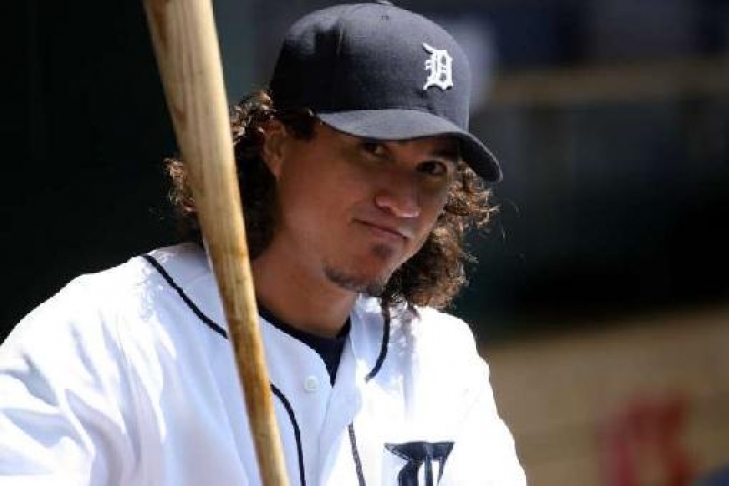
Magglio Ordonez proved to be a very good hitter over his fifteen-year career, with 2,156 Hits, a .308 career Batting Average, a Batting Title in 2007, and had good power numbers with three Silver Slugger Awards and a career Slugging Average over .500. In 2007, Ordonez was the runner-up for the American League MVP Award, and he went to six All-Star games. He was a good player for a long time, but his career bWAR of 38.5, while decent, is not indicative of Hall of Fame candidacy by today’s standards.
30. Magglio Ordonez
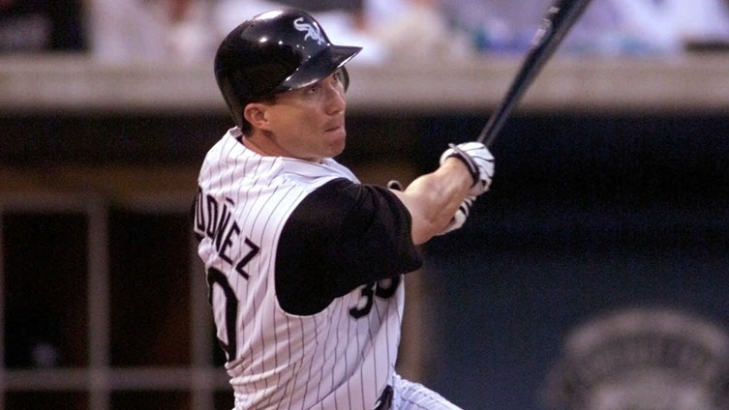
The long road from being a 1991 amateur signing finally reached its destination in 1997, but it was the 1999 campaign where Ordóñez truly matured into a franchise cornerstone. He took over right field and immediately brought a level the organization hadn't seen at the position in years. From 1999 to 2002, he was a model of run production, annually clearing the benchmarks of 30 home runs and 110 RBIs. He arrived as a prospect with high-ceiling potential and quickly became the high-leverage bat that opposing pitchers most feared in the Chicago order.
Efficiency was the hallmark of his game throughout the peak of his residency. Ordóñez wasn't a "three-true-outcomes" slugger; he was a surgical hitter who maintained a batting average over .300 for five consecutive seasons starting in '99. He earned him four All-Star selections and two Silver Slugger awards in a White Sox uniform, proving that his Advanced Quality was rooted in a rare combination of contact and power. He possessed a gap-to-gap approach that allowed him to anchor the middle of the order, serving as the primary engine for an offense that was consistently among the most dangerous in the junior circuit.
Whether he was driving a double into the left-center gap or launching a ball over the wall, Ordóñez played with a calm intensity that resonated with the South Side faithful. He concluded his Chicago chapter with 1,167 hits and 187 home runs, leaving the team with a stellar .307 career average. However, the final walk toward the exit was clouded by a complex set of circumstances.
The conclusion of his time in Chicago was as abrupt as it was painful. A collision with second baseman Willie Harris in May 2004 led to a significant left knee injury and bone marrow edema, a medical mystery that sidelined him for the majority of the season. With his contract expiring and concerns lingering about the long-term stability of his knee, the White Sox opted not to re-sign their star outfielder. Ordóñez entered free agency under a cloud of physical uncertainty, ultimately signing a massive deal with the Detroit Tigers in 2005.
BASEBALL HALL OF FAME: UPCOMING BORDERLINE CANDIDATES, PART 1
Granted, 2013 was the first year of eligibility for Barry Bonds and Roger Clemens, both poster boys for performance-enhancing drugs (PED), bringing to a head the contentious debate about "cheaters" and their admission into the Hall. But there were certainly several "clean" players on that ballot, and a few of those, such as 3000-hit-club member Craig Biggio, would have been uncontroversial picks in any previous year.
And although 2014 saw the election of three players—Tom Glavine, Greg Maddux, and Frank Thomas—it was merely the tip of a talent-heavy iceberg (I identified 18 likely Hall of Famers for that ballot), while providing a burn to Biggio yet again as not only did he miss election by one vote (he garnered 74.8 percent of the vote), but three first-time candidates leapfrogged him into Cooperstown.
