


Site Admin
14. Tyron Smith
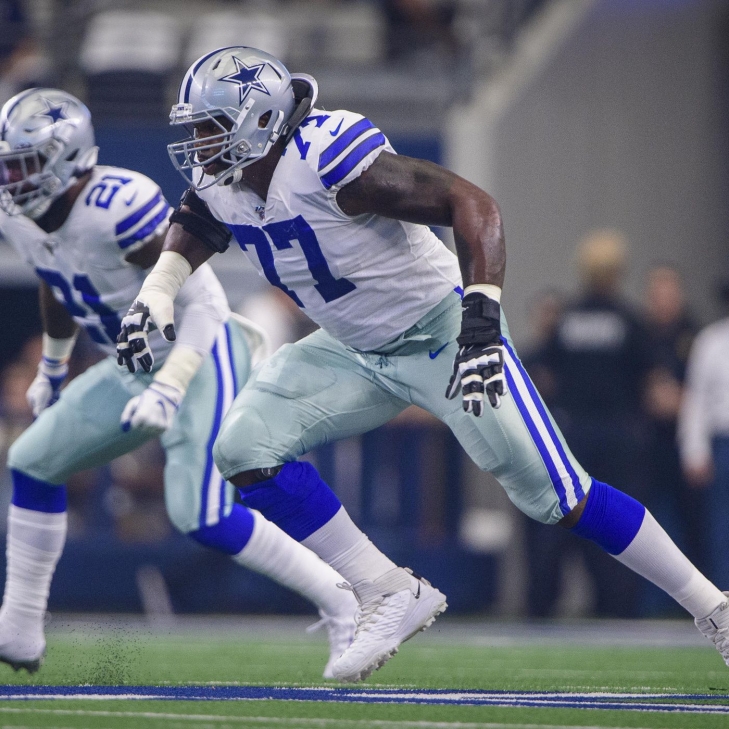
Tyron Smith stepped into Big D as a 20-year-old first-round (9th overall) phenom possessing a rare blend of length, explosive power, and quick footwork. Dallas initially placed him at right tackle, where his immediate impact earned him All-Rookie Team honors. His seamless move to left tackle in his sophomore campaign unlocked his true ceiling, providing the Cowboys with an elite edge anchor for the next decade.
That position switch catalyzed one of the most physically imposing runs by an offensive tackle in modern NFL history. From 2013 through 2019, Smith reeled off seven consecutive Pro Bowl selections, earning four AP All-Pro nods (First-Team in 2014 and 2016; Second-Team in 2013 and 2015). He formed the cornerstone of a legendary Dallas front five alongside Zack Martin and Travis Frederick, routinely neutralizing the league's most dangerous edge rushers without needing tight end assistance.
Smith’s presence transformed the entire identity of the Dallas offense, clearing massive lanes for multiple NFL rushing champions while keeping the pocket clean. His signature 2014 campaign saw him pave the way for DeMarco Murray's franchise-record 1,845 rushing yards, a performance that cemented Smith’s status as a generational pass protector. His total dominance across the era was officially recognized when he earned a spot on the NFL 2010s All-Decade Team.
Though recurring neck, back, and knee injuries limited his availability during his final four seasons in Dallas (2020–2023), Smith remained an unshakeable presence whenever he took the field. He added an eighth Pro Bowl selection in 2021 and earned Second-Team All-Pro honors in 2023 after allowing just one sack all year, serving as the trusted veteran protector through his final days in blue and silver.
Smith started all 161 regular-season games he appeared in before joining the New York Jets in 2024. His eight Pro Bowls, five All-Pro selections, and decade-plus of edge dominance assure his eventual place in the Cowboys Ring of Honor and a strong case for the Pro Football Hall of Fame.
23. Harvey Martin
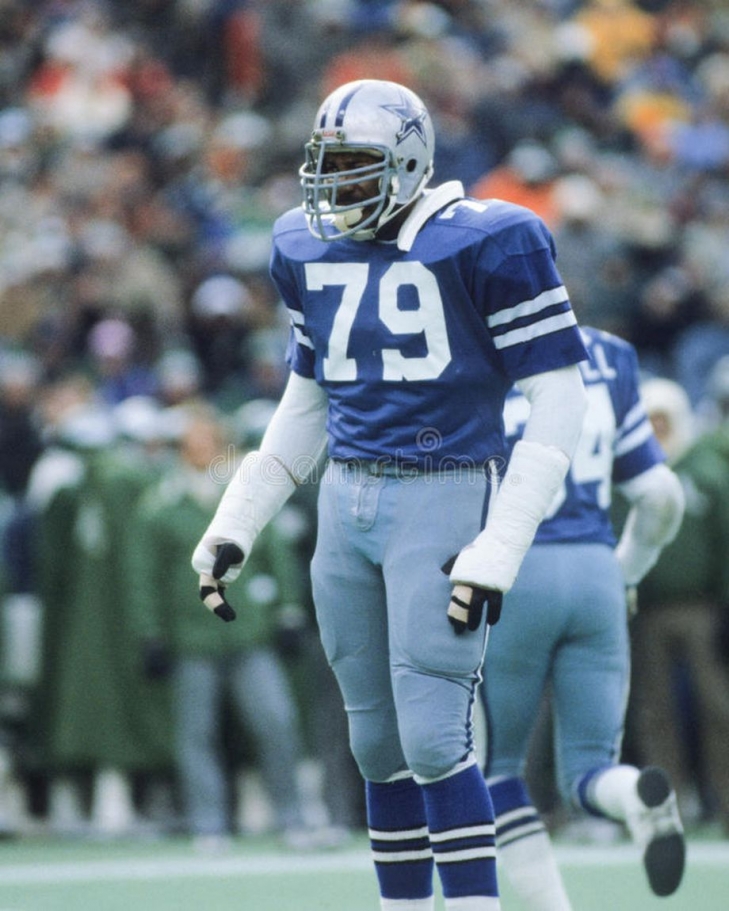
From East Texas State, Harvey Martin was drafted in the third round of the 1973 NFL Draft, where he lived out every Dallas kid's dream by slipping on the silver and blue. Born and raised in the city, the 6-foot-5, 260-pound pass rusher brought terrifying closing speed to Tom Landry’s "Doomsday II" defense. He spent his first two years serving as a designated pass-rush specialist—even leading the team in sacks as a rookie—before seizing the starting right defensive end job in 1975 and instantly transforming the Cowboys' front line.
Martin developed into an exceptional force over the subsequent four years, achieving four consecutive Pro Bowl selections from 1976 to 1979. His most notable accomplishment occurred during a remarkable 1977 season, when he delivered what is regarded as one of the most dominant individual performances by a defensive lineman in professional football history. Martin recorded 20.0 sacks in only 14 regular-season games—a total officially recognized by the Cowboys as 23—thereby securing the AP NFL Defensive Player of the Year award and earning First-Team All-Pro honors.
That standout player carried his exceptional skills into the postseason, where Martin dominated opposing backfields on his way to Super Bowl XII. Playing against the Denver Broncos on the biggest stage, he achieved two sacks and constant quarterback pressure, sharing Super Bowl MVP honors with teammate Randy White in the league's first co-MVP award. Every time Martin sacked a quarterback at Texas Stadium, the scoreboard displayed "MARTINIZED"—a fitting tribute to a defender known for making life difficult for offensive tackles of that era.
Although the NFL only began officially recording sacks in 1982, Pro Football Reference's retrospective film analysis shows Martin achieved 114.0 sacks over his 158 regular-season games with Dallas. He was the Cowboys’ sack leader six times during a nine-year period, setting a franchise record that lasted three decades until DeMarcus Ware surpassed it in 2013.
Martin spent 11 seasons with the Dallas Cowboys (1973–1983), playing in 158 regular games and 22 postseason contests. He recorded 114.0 career sacks (17.5 postseason), two interceptions, six fumble recoveries, and won Super Bowl XII. A four-time Pro Bowler and All-Pro (First-Team in 1977), and part of the NFL 1970s All-Decade Team, he is a key figure of the Doomsday Defense.
21. Cornell Green
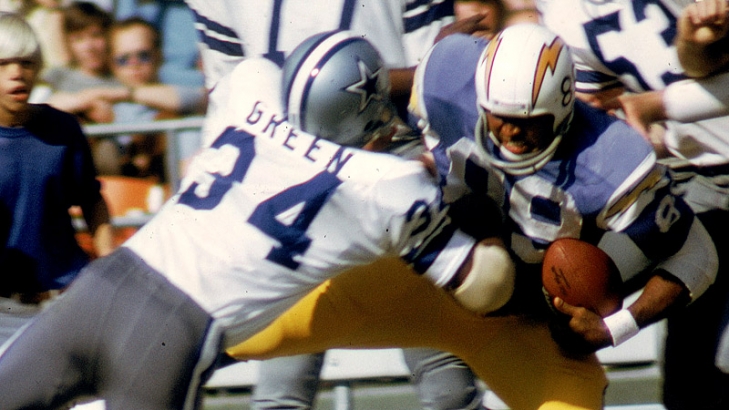
During a time when scouting departments mostly focused on well-known college football programs, the early Dallas Cowboys front office was known for discovering overlooked talent from unusual sources. One example is Cornell Green, a two-time All-American basketball player at Utah State with no prior football experience. Acting on a tip from the Aggies’ basketball coach, legendary personnel executive Gil Brandt offered Green, a 6-foot-3, 208-pound forward, a $1,000 signing bonus. Brandt and head coach Tom Landry believed Green’s height, agility, and rebounding skills would successfully transfer to football—and they were overwhelmingly correct.
Green emerged as a natural talent, joining the 1962 roster as an undrafted free agent and earning a spot on the NFL All-Rookie team. By 1963, he had become the full-time starting left cornerback, demonstrating a keen ball-hawking instinct by recording a career-high seven interceptions. Significantly taller than most cornerbacks of his era, Green used his impressive stature to disrupt pass routes at the line of scrimmage and had the raw speed to recover quickly downfield.
Tom Landry’s intricate "Flex Defense" required high discipline and intelligence from the secondary, and Green quickly became one of its most reliable anchors. He earned his first Pro Bowl in 1965, beginning a dominant period during which he led Dallas in interceptions four times in his first eight seasons. Between 1966 and 1969, Green was regarded as the NFL's top boundary defender, earning three First-Team All-Pro honors (1966, 1967, 1969) and helping transform Dallas from a new franchise into a consistent championship contender.
In 1970, Landry challenged Green to move inside to strong safety, testing his athletic versatility. Green adapted effortlessly, providing physical run support in the box and effectively covering tight ends and slot receivers. This smooth transition elevated the secondary's performance, earning him Pro Bowl selections in 1971 and 1972. Significantly, Green anchored the secondary during Super Bowl VI, leading Dallas to a 24–3 victory over the Miami Dolphins and securing the franchise's first Lombardi Trophy.
Perhaps most remarkably, the former hoopster was a true ironman throughout his 13-year career. Green played in 182 consecutive regular-season games—never missing a single contest during his entire playing run—and recorded 145 consecutive starts for the Cowboys. He also proved to be a secret weapon on special teams, using his leaping ability to record a franchise-record 10 blocked kicks, eight of which came on field goal attempts.
Green played in 182 regular-season games, compiling 34 interceptions, two defensive touchdowns, seven fumble recoveries, and one Super Bowl championship. A five-time Pro Bowler across two positions, three-time First-Team All-Pro, and member of the Cowboys’ 25th Anniversary Team, Green spent over three decades following his playing days as a scout for the organization. Green might be one of the greatest success stories in franchise history.
25. Tony Romo
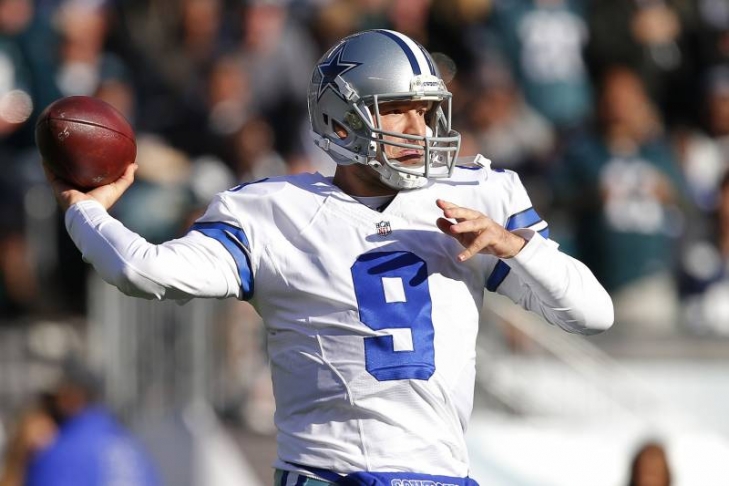
Undrafted from Division I-AA Eastern Illinois in 2003, Tony Romo joined Dallas as a backup quarterback before gradually earning the confidence of head coach Bill Parcells. After three years primarily acting as a clipboard holder, Romo was inserted into the starting role during a 2006 game against the New York Giants. He quickly became a key player for the team, throwing 19 touchdowns in ten starts, leading Dallas to the playoffs, and earning his first of four Pro Bowl selections (2006, 2007, 2009, 2014).
Romo was a naturally talented improviser whose playing style resembled a backyard gunslinger. With a lightning-fast release, he could escape sure sacks, extend plays outside the pocket, and keep his focus downfield to make accurate throws on the move. From 2006 to 2014, he ranked among the most efficient passers in football, finishing in the top eight in passer rating nine times over ten years and often handling large offensive responsibilities.
His standout individual season came in 2014, showcasing exceptional pocket awareness and decision-making skills. Operating behind a strong offensive line, Romo completed a league-leading 69.9% of his passes for 3,705 yards, 34 touchdowns, and just nine interceptions. He posted an impressive 113.2 passer rating and averaged 8.5 yards per attempt, helping Dallas achieve a 12–4 record. That year, he earned Second-Team All-Pro honors and ranked among the top three in AP NFL MVP voting.
Despite his excellent regular-season stats, Romo often stirred controversy. Playing quarterback for America's Team under intense media scrutiny, his mistakes were heavily criticized. Notable errors, like costly turnovers and the notorious botched hold during the 2006 wild-card game against Seattle, overshadowed his achievements. Statistically, he was among the most clutch quarterbacks of his era, with 24 fourth-quarter comebacks and 30 game-winning drives.
Injuries ultimately ended his playing career, with broken collarbones and back fractures restricting him to only five games in his last two seasons before Dak Prescott took over as the starter in 2016. Romo quickly moved into broadcasting, where his impressive talent for predicting plays before the snap made him a media sensation and one of the most respected analysts in sports TV.
Romo played 156 games in Dallas (2004–2016), with 34,183 yards, 248 touchdowns, 117 interceptions, and a 97.1 passer rating. A four-time Pro Bowler and Second-Team All-Pro, he retired as the Cowboys' all-time leader in yards and touchdowns, one of the greatest undrafted success stories in football history.
