


Site Admin
31. Don Meredith
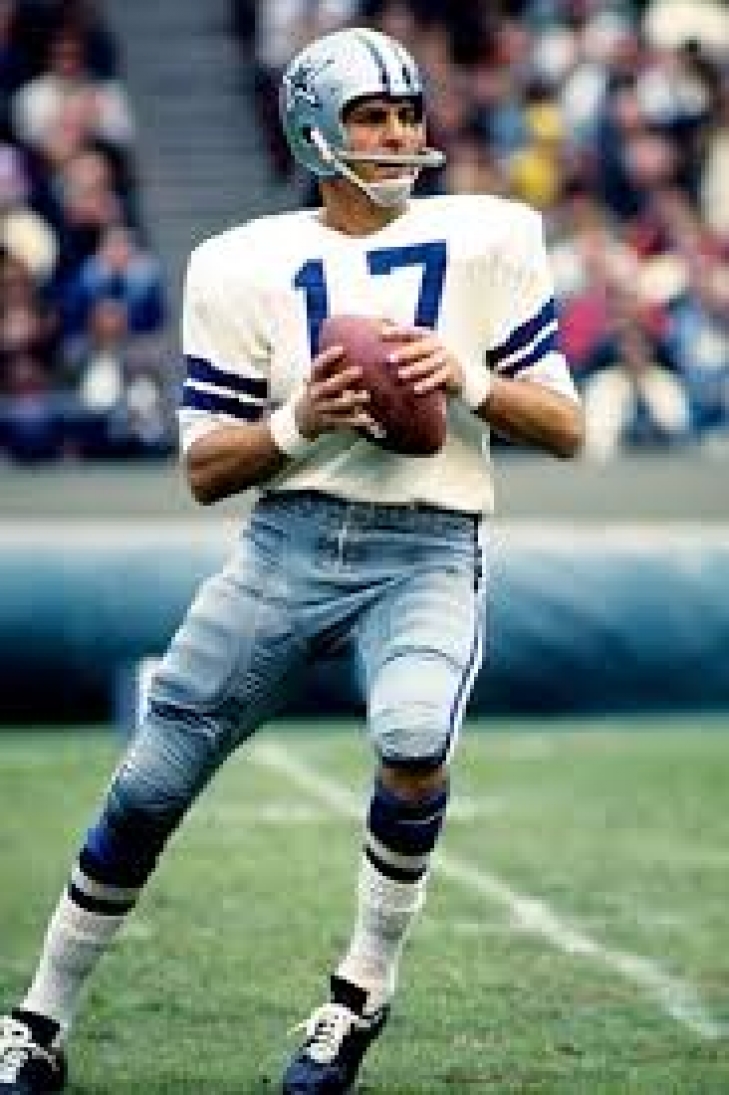
Long before America’s Team was a global marketing titan, it was a fledgling expansion franchise in desperate need of an identity. Enter Joseph Donald "Dandy Don" Meredith. A star at Southern Methodist University who was born and raised in Mount Vernon, Texas, Meredith was signed to a personal-services contract before the Cowboys even officially existed. When Dallas took the field for its inaugural 1960 season, the charismatic local hero instantly became the franchise’s first true face.
After splitting time early in his career, Meredith took full command of Tom Landry’s complex offense as the undisputed starter in 1963. He brought a loose, swaggering charm to the huddle that perfectly complemented Landry’s rigid, methodical demeanor. Armed with a deep-ball touch and extraordinary toughness—regularly dusting himself off after taking brutal hits behind a young offensive line—Meredith transformed Dallas from a league laughingstock into a championship contender.
His finest individual play arrived during a three-year Pro Bowl run from 1966 through 1968. In 1966, Meredith earned the Bert Bell Award as the NFL’s Most Valuable Player after throwing for a career-high 2,805 yards and 24 touchdowns. Paced by his 15.8 yards per completion—which led the entire NFL for a second consecutive year—he guided Dallas to its first-ever winning record (9–3–1) and a spot in the NFL Championship Game. Though heartbreaks against Vince Lombardi’s Green Bay Packers in the 1966 title game and the legendary 1967 "Ice Bowl" weighed heavily on him, Meredith was the engine that turned Dallas into a perennial powerhouse.
Weary of the physical toll and intense media pressure, Meredith shocked the football world by retiring after the 1968 season at just 31 years old. His magnetic personality made him a natural fit for television, where he joined Howard Cosell and Frank Gifford in 1970 as an original color commentator for Monday Night Football. His folksy wit, quick humor, and signature singing of "Turn Out the Lights, the Party's Over" whenever a game was out of reach revolutionized sports broadcasting.
Across nine active seasons spent exclusively with the Dallas Cowboys (1960–1968), Meredith played in 104 regular-season games, compiling 17,199 passing yards, 135 touchdown passes, and 1,216 rushing yards with 15 ground touchdowns. A three-time Pro Bowl selection, All-Pro, and 1966 Bert Bell Award winner, "Dandy Don" was inducted into the Dallas Cowboys Ring of Honor in 1976 alongside teammate Don Perkins, forever remembered as the Texas folk hero who put the franchise on the map.
30. Ralph Neely
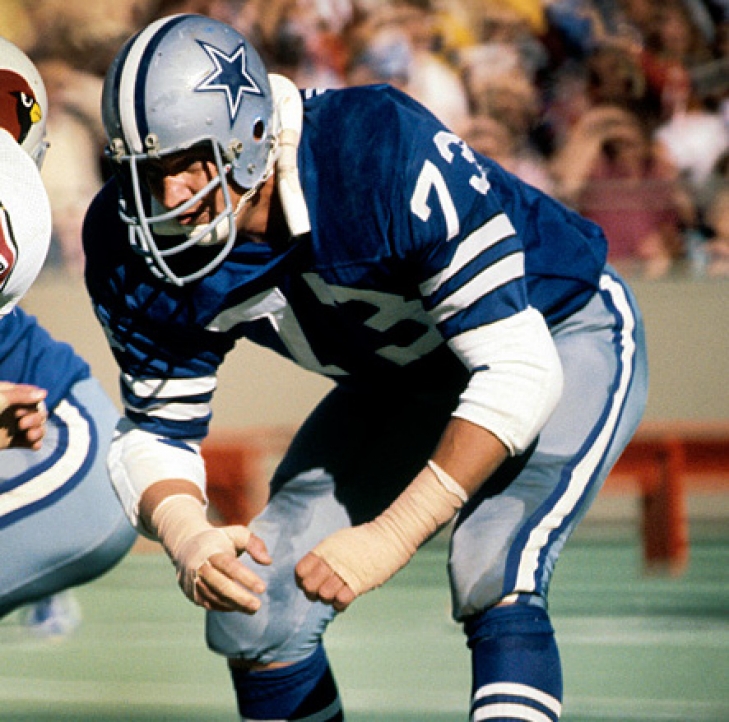
Selected in the second round of the 1965 NFL Draft from Oklahoma, Ralph Neely quickly established himself on the Dallas Cowboys’ line, helping to shape the team's initial era of success. As a consensus All-American for the Sooners, Neely combined agility, excellent footwork, and a fierce attitude in Tom Landry's scheme, securing the starting right tackle position as a rookie and earning recognition on the NFL All-Rookie team.
Neely quickly rose to prominence as one of the top blocking tackles in pro football, anchoring the right side during the era of the "Doomsday" defense. His prime years were from 1967 to 1969, when he earned three straight First-Team All-Pro selections and consecutive Pro Bowl appearances in 1967 and 1968. Neely had the necessary strength to push defenders back in the run game for players like Don Perkins and Calvin Hill, as well as the agility to stay lateral against edge rushers and protect quarterback Don Meredith.
When Rayfield Wright secured his position on the right side, Landry moved Neely to left tackle, where he transitioned smoothly while safeguarding the blind side for Roger Staubach and Craig Morton. Neely began at left tackle in Super Bowl VI, paving the way for Dallas's dominant 24–3 victory over the Miami Dolphins and earning the franchise's first Lombardi Trophy.
Despite breaking his leg in an off-field motorcycle crash that sidelined him during part of the 1971 season, Neely fought to stay a key part of the offense throughout the 1970s. He offered veteran leadership to a changing roster and ended his playing career by starting at left tackle in Super Bowl XII, where Dallas beat the Denver Broncos 27–10 to earn his second championship ring. He retired after the 1977 season, having spent all 13 years with the Cowboys.
Neely, who spent 13 seasons with the Dallas Cowboys (1965–1977), played 172 regular-season games, starting 168, and appeared in 21 postseason contests and four Super Bowls. A three-time First-Team All-Pro, two-time Pro Bowler, two-time Super Bowl champion, and NFL 1960s All-Decade Team member, he is one of the most decorated and durable offensive tackles in franchise history.
29. Don Perkins
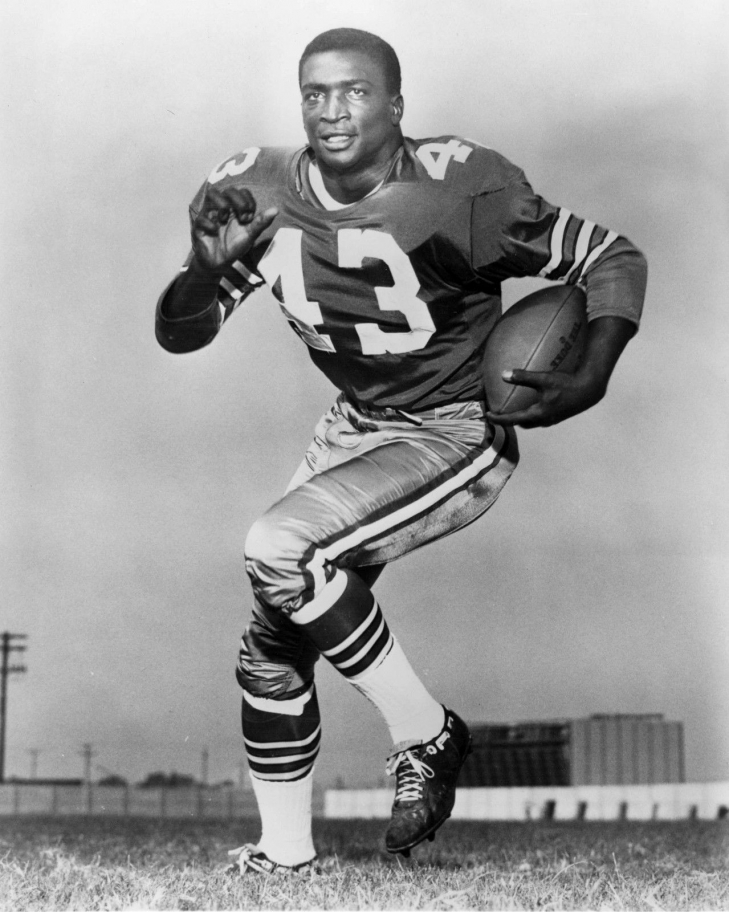
Before the Dallas Cowboys ever played an official game, general manager Gil Brandt utilized a loophole to secure Don Perkins. Because the expansion franchise was admitted too late for the 1960 NFL Draft, Brandt signed the University of New Mexico star to a personal-services contract, paying him a $1,500 bonus on the condition that he would play for Dallas if they received a franchise. When the Baltimore Colts drafted Perkins in the ninth round anyway, the NFL upheld the contract and forced Dallas to surrender a 1962 ninth-round pick as compensation.
Perkins' debut was postponed due to a broken foot sustained during training camp, causing him to miss the Cowboys' first season in 1960. After recovering in 1961, the 5-foot-10 fullback quickly made a significant impact on Tom Landry's offense. He amassed 1,113 yards from scrimmage and scored eight touchdowns, which led to him being named NFL Rookie of the Year and earning his first Pro Bowl nod, establishing the young franchise’s first major offensive cornerstone.
The following season, Perkins confirmed his strong debut by earning First-Team All-Pro honors in 1962, exceeding 1,000 yards from scrimmage for the second year in a row and scoring seven rushing touchdowns. As the lead runner in Landry's "Multiple Offense," Perkins didn't have elite speed, but he compensated with exceptional balance, leverage, and power when engaging with defenders. Opposing defenses anticipated he would carry the ball in short-yardage situations, yet he reliably gained the needed yards thanks to his raw toughness.
Beyond his ability to run and catch, Perkins was considered one of the best blocking fullbacks of his time. He took great pride in blocking blitzers, delivering powerful lead blocks, and handling subtle tasks that gave quarterbacks Don Meredith and Craig Morton the time they needed to make plays downfield. His selfless approach established a standard of accountability, helping the franchise evolve from an expansion team into a consistent playoff contender.
Perkins achieved six Pro Bowl selections during his eight seasons with Dallas (1961–1963, 1966–1968) and earned two additional All-Pro honors. He retired quietly after the 1968 season at only 30 years old, emerging as the franchise's all-time rushing leader at that time and leaving a lasting impact on the team's early history. Perkins played eight seasons with the Dallas Cowboys (1961–1968), appearing in 107 games with 6,217 rushing yards, 42 rushing touchdowns, 146 receptions for 1,310 yards, and 7,527 total yards from scrimmage. A six-time Pro Bowler and three-time All-Pro, he joined the Cowboys Ring of Honor in 1976.
28. Everson Walls
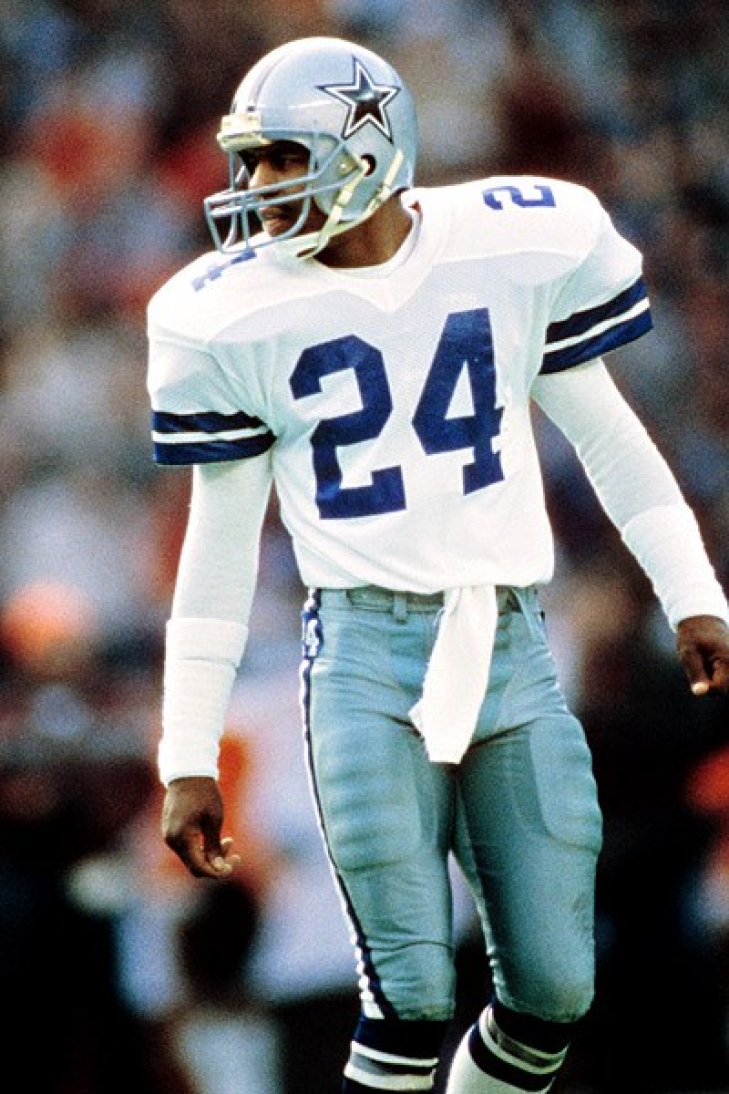
A sluggish 4.7-second 40-yard dash at the scouting combine sent Everson Walls undrafted out of Grambling State in 1981. Talent evaluators wrote off his raw speed, but legendary Cowboys executive Gil Brandt saw what stopwatch-obsessed scouts missed: elite instincts, fluid hip mobility, and a rare knack for snatching the football out of the air. Returning home to Dallas, Walls signed as an undrafted free agent and immediately proved that closing speed matters far less when a corner reads the quarterback better than the receiver does.
Walls secured the starting left cornerback position as a rookie, delivering one of the most impressive debut seasons for a defensive back in NFL history. He led the league with a franchise-record 11 interceptions in 1981, earning his first Pro Bowl nod and cementing his reputation as Tom Landry's top ballhawk. During the strike-shortened 1982 season, he continued his excellence by grabbing seven interceptions in nine games, becoming the first NFL player to lead the league in picks in consecutive seasons.
His dominant perimeter play reached its peak during a four-year period from 1981 to 1985, During this time, he received four Pro Bowl invites and three All-Pro selections, including First-Team honors in 1983. In 1985, Walls led the NFL in interceptions for the third time, catching nine passes to strengthen the opportunistic secondary known as "Thurman's Thieves" under defensive coordinator Ernie Zampese. By leading the league three times (1981, 1982, 1985), Walls joined Ed Reed as the only players in NFL history to achieve this milestone.
Although Walls didn't possess blazing speed, he effectively eliminated receivers with better field awareness, leverage, and accurate hand technique at the catch point. Quarterbacks attempting out-breaking routes against him often faced interceptions as he anticipated and jumped the pattern. He was a consistent presence in the Dallas secondary into the late 1980s, mentoring younger defensive backs and leading the team in interceptions five times, a franchise record that remains unbroken.
When the rebuilding Cowboys left after 1989, Walls signed with division rival New York. In 1990, he had six interceptions and made a game-saving tackle on Thurman Thomas in Super Bowl XXV, earning his long-awaited championship ring.
With Dallas, Walls played 133 games, with 44 interceptions, 427 return yards, and five recoveries. Second in franchise history behind Mel Renfro (52), Walls is one of the most prolific undrafted steals in pro football history.
