


Site Admin
You Send Me
Sam Cooke
You Send Me
18. Marquis Grissom
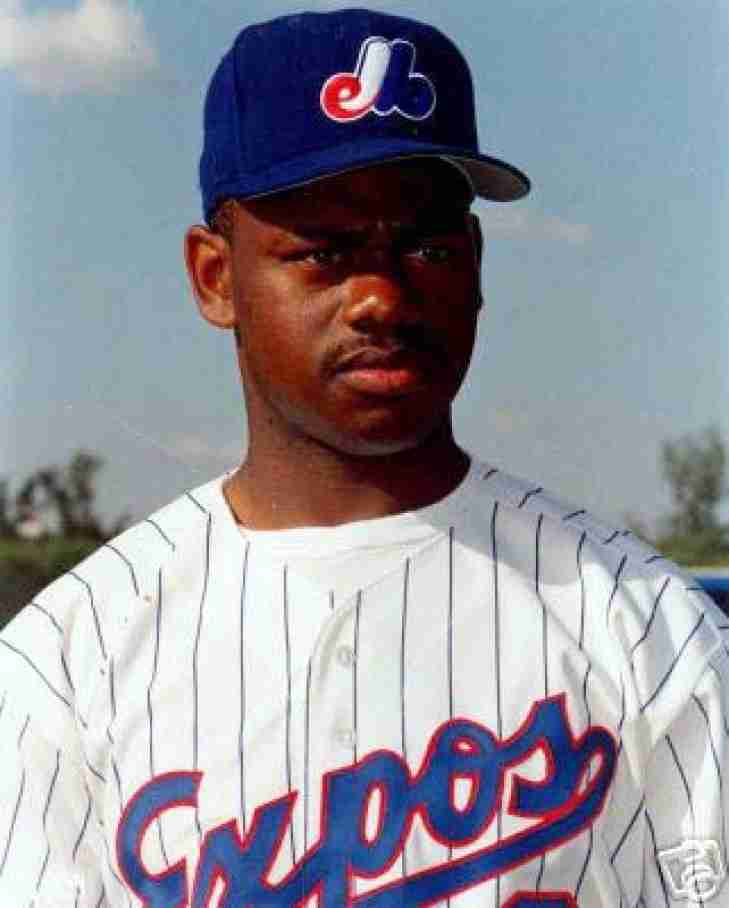
Marquis Grissom's rise in Montreal exemplifies dynamic outfield play. Drafted by the Expos in 1988 from Florida A&M, he debuted in late 1989 after minimal minor league time. With an explosive first step and great instincts, he made the leadoff spot at Stade Olympique a catalyst for chaos, establishing himself as a top two-way threat in the early 1990s.
His transformation into an elite table-setter was clearly demonstrated during consecutive league-leading seasons on the basepaths. Grissom overwhelmed National League pitchers by stealing an amazing 76 bases in 1991, and then set a career high with 78 stolen bases in 1992. His skill at generating runs out of nowhere provided manager Felipe Alou with a powerful offensive force that helped guide a talented, youthful Expos team, which was quickly learning how to dominate the Senior Circuit.
However, Grissom was much more than just a speed-focused player. His exceptional athleticism and precise route-running in center field made the large gaps in Olympic Stadium nearly impossible for opponents to exploit. His outstanding defensive skills earned him consecutive National League Gold Glove Awards in 1993 and 1994, and he reinforced his status with back-to-back All-Star appearances, establishing himself as an internationally recognized superstar. In the challenging 1994 season, he achieved 137 hits and 36 steals in 110 games, serving as a crucial leader for the Montreal team, which boasted baseball's best record before the strike.
Soon after the game resumed, the small-market franchise faced immediate financial constraints. Knowing they couldn't secure a long-term deal with their star outfielder, the front office made a blockbuster trade just before the 1995 season, sending Grissom to the Atlanta Braves. He quickly became a crucial part of his hometown team, famously catching the final out of the 1995 World Series to clinch the championship. Over his 17-year major league career, he accumulated numerous honors, including an ALCS MVP award in Cleveland, before retiring.
In Montreal, Grisson had 747 hits, 105 doubles, 23 triples, 48 home runs, and 238 RBIs. He posted a .273/.325/381 slash line and stole 266 bases.
10. Bryce Harper
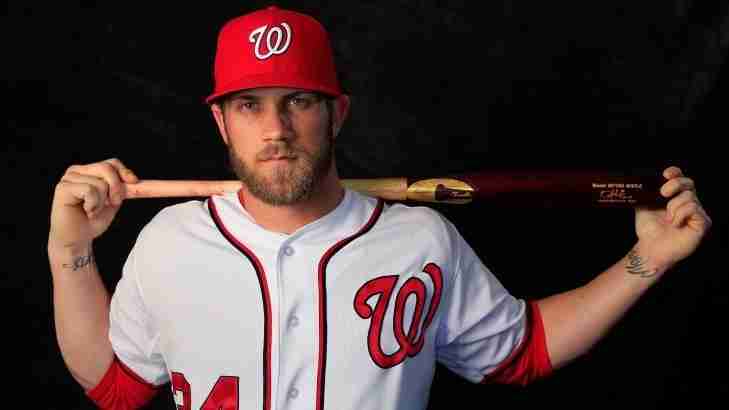
Few players in baseball history have ever shouldered the burden of expectation placed on Bryce Harper. At 16, appearing on the cover of Sports Illustrated as a prodigy, he was hailed as the "Chosen One" long before the Washington Nationals selected him with the first overall pick in the 2010 amateur draft. When he finally made his highly anticipated big-league debut in April 2012 at just 19, Harper didn’t just meet the immense hype—he weaponized a fierce, theatrical style of play that instantly electrified the nation's capital.
His 2012 arrival was an exceptional display of youthful vigor, characterized by assertive baserunning, diving catches, and a powerful, left-handed swing that produced 22 home runs, 98 runs scored, and an .817 OPS. His vigorous performance garnered him the National League Rookie of the Year Award and a position in the All-Star Game, playing a pivotal role in the franchise's evolution into a division champion and a consistent contender.
Harper was a notable box-office attraction in his own right, exhibiting a rare and charismatic star power that consistently drew spectators to Nationals Park. He was chosen to participate in the All-Star Game six times during his seven seasons in D.C., performing with a composed intensity and distinctive hair flips that established him as the most dynamic and esteemed icon of his generation.
Harper's remarkable talent culminated in a historic 2015 season, marked as one of the most dominant offensive performances in modern baseball. At only 22, he overwhelmed NL Pitching, winning the MVP unanimously after leading in home runs (42), runs (118), on-base percentage (.460), and slugging(.649). His 1.109 OPS and 198 OPS+, combined with a stellar 10.0 bWAR, topped MLB, making him the first MVP winner in Expos/Nationals franchise history.
Following that historic peak, the subsequent seasons were a thrilling, high-energy mix of prolific production and physical injuries. In 2016, opposing teams often chose not to pitch to him, intentionally walking him a record-tying 108 times—including six walks in a single game against the Cubs—causing his batting average to fall to .243 despite his hitting 24 home runs. He made a remarkable, MVP-level comeback in 2017, batting.319 with 29 home runs by August, but a dangerous slip on a wet first base resulted in a serious knee hyperextension, sidelining him for over a month.
Healthy again for his final season in Washington in 2018, Harper put on a show for the local fans. He won the Home Run Derby at Nationals Park in dramatic fashion and anchored the lineup by blasting 34 home runs and driving in a career-high 100 RBIs, while leading the major leagues with 130 walks to post an elite .393 on-base percentage.
After that campaign, Harper became the most sought-after free agent in years, transforming his impressive tenure with Washington into a landmark 13-year, $330 million deal with division rivals the Philadelphia Phillies. Although his departure disappointed fans who saw the Nationals win a World Series the following fall without him, his key contributions remain undeniable.
Harper appeared in 927 games for the Nats, accumulating 922 hits, 184 home runs, 521 RBIs, and 75 stolen bases while generating a stellar .279/.388/.512 slash line (139 OPS+).
Was he one of the best players in Nationals history?
Clown question, bro.
11. Dennis Martinez
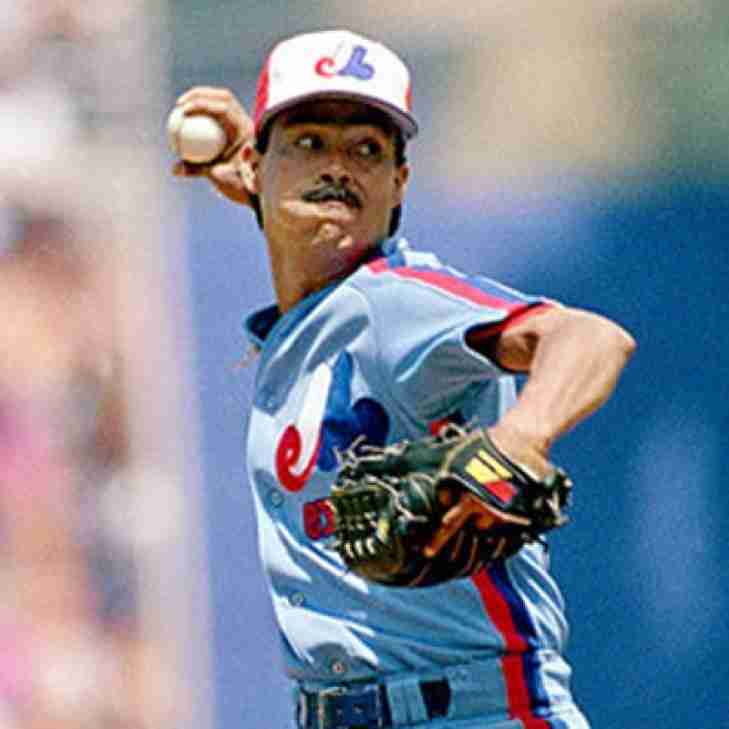
When Dennis Martínez arrived in Montreal mid-way through the 1986 season, he was a deeply respected veteran who had spent his career anchoring the Baltimore Orioles but was looking for a completely fresh start. The slender right-hander from Granada—the very first Nicaraguan-born player to ever reach the major leagues—instantly found a second home in Quebec. Over a spectacular late-career resurgence, "El Presidente" didn't just rebuild his trajectory; he orchestrated the finest, most elite pitching chapter of his 23-year big-league journey.
With a fantastic combination of sharp breaking balls, perfect control, and a passionate competitive spirit, Martínez became the dependable backbone of a young, lively Expos team. He consistently delivered an impressive streak of performances at Stade Olympique, earning three straight National League All-Star selections from 1990 to 1992. During this time, he regularly took on large workloads of over 200 innings, proudly serving as the steady anchor of the starting rotation.
Martínez’s late-career resurgence reached a truly memorable peak with a stunning 1991 performance. At 37, he dominated National League lineups, winning the NL ERA Title with a fantastic, career-best 2.39. He also led the league in complete games (9) and shutouts (5), finishing just outside the top spot in the NL Cy Young Award voting. This season truly highlighted his exceptional skill and resilience. The defining moment of that historic summer took place on July 28 at Dodger Stadium. In front of a stunned crowd in Los Angeles, Martínez authored the ultimate masterpiece of franchise history, retiring all 27 batters he faced to throw a flawless, 2–0 perfect game—a crowning theatrical achievement that permanently solidified his status as an absolute national hero in his homeland and a legend in Montreal.
Martínez maintained high-leverage performance during the 1993 season, concluding his lengthy tenure in Canada with precisely 100 wins and 973 strikeouts while playing for the Expos. After that season, he became a free agent and helped lead the Cleveland Indians to an American League pennant, surpassing 240 career wins.
In Montreal, he made 241 appearances (233 starts) with a 100–72 record, a microscopic 3.06 ERA, and a premium 1.15 WHIP. He threw 1,617.2 innings, recording 41 complete games, 18 shutouts, and 973 strikeouts. Martínez was inducted into the Canadian Baseball Hall of Fame in 2016.
