


Site Admin
321. Jodie Williams

13. Elvis Andrus
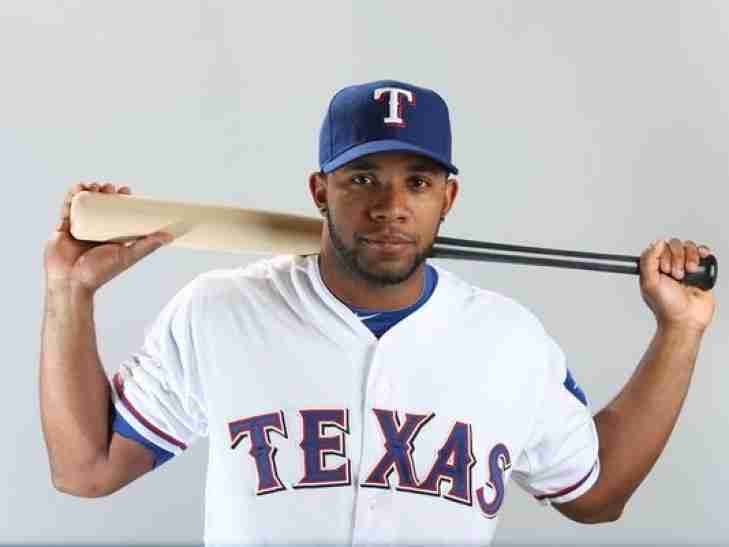
In July 2007, when the Texas Rangers traded star Mark Teixeira to the Atlanta Braves, they anticipated that their substantial return would significantly influence the franchise's future. The most prominent part of that package was an 18-year-old shortstop from Maracay, Venezuela, who brought both considerable minor-league anticipation and big expectations. Elvis Andrus officially assumed the role of starting shortstop on Opening Day in 2009 at just 20, and he did more than just fill a position—he brought a lively, joyful energy that became the vital spark for the most successful period in Texas baseball history.
Andrus' first decade in Arlington showcased his durability and high-volume production. While he played alongside powerful sluggers, he focused on a steady, table-setting game that gradually wore down opponents’ defenses. He excelled in the small-ball era, topping the American League in sacrifice hits three times and being a strategic, high-efficiency base-runner. Except for an injury-filled 2018 season and the shortened 2020 schedule, Andrus consistently recorded at least 125 hits and 20 stolen bases each full season. He was a two-time All-Star in 2010 and 2012, contributing strong defense and a reliable bat that helped the Rangers reach consecutive American League pennants. As a key postseason figure, he appeared in five postseasons and set franchise records for playoff games (42), hits (46), and stolen bases (9).
His speed and situational hitting made him a consistent threat, but his standout moment came in 2017. During that season, he showed a surprising improvement in his offensive game, achieving career highs with 191 hits, 44 doubles, and 20 home runs, while also scoring 100 runs. These achievements earned him the team’s Player of the Year award. Off the field, his legendary infield chemistry and playful dugout antics with third baseman Adrián Beltré became iconic elements that defined the franchise and endeared him to fans for a generation.
After the 2020 season, the front office traded the veteran shortstop to Oakland, ending a remarkable 12-year tenure. During his time, he started more games at a single position than any other player in organization history. He finished his Texas career with 1,743 hits, 303 doubles, and a .274 batting average over 1,652 games. Notably, he became the franchise's all-time leader in stolen bases with 305 steals, including a record seven steals of home in a single season.
In 2025, Andrus was inducted into the Rangers Hall of Fame.
24. Rusty Greer
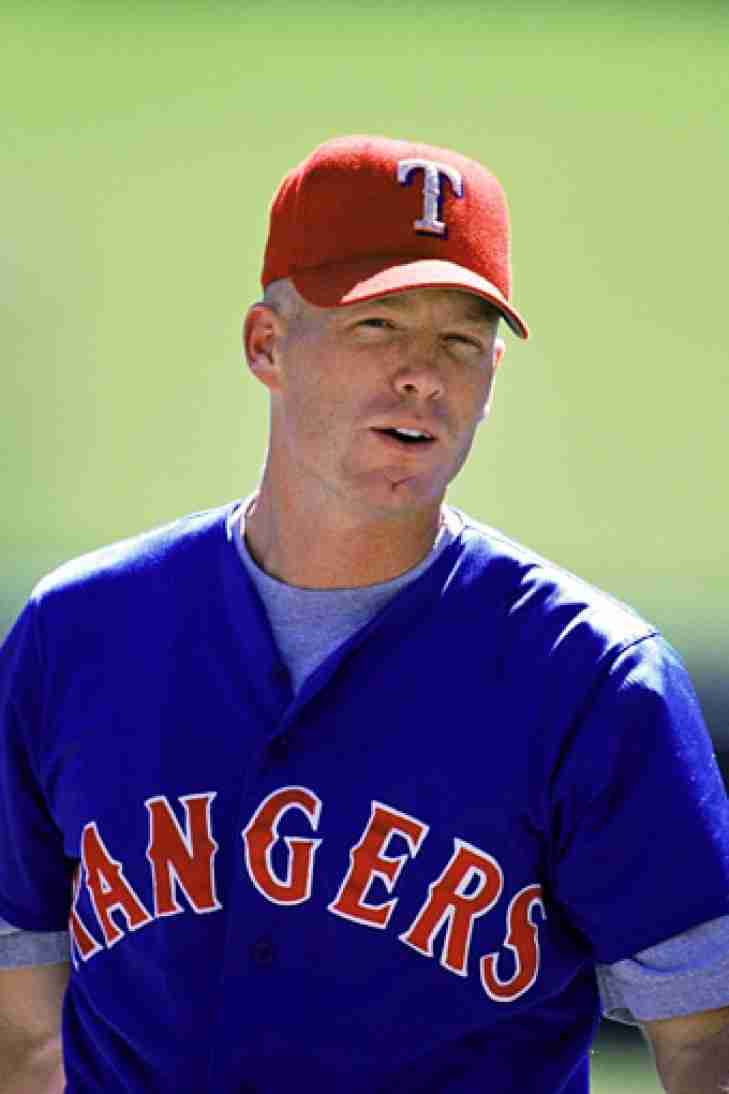
During a time when the Texas Rangers were known for their memorable home runs and exciting games, Rusty Greer made a special name for himself as a tough, high-obp player who really sparked the team. Drafted in the tenth round of the 1990 amateur draft from the University of Montevallo, this left-handed outfielder spent all nine of his Major League seasons right here in Arlington. Fans grew to love him quickly because of his passionate, relentless style of play, always giving his best, focusing on hard work and hustle over smooth finesse.
Greer immediately adopted an elite approach upon his arrival in 1994, finishing third in the American League Rookie of the Year voting. While the Texas Rangers featured marquee power hitters such as Juan González and Iván Rodríguez, Greer served as the indispensable link that maintained the team's offensive flow. He consistently achieved five separate seasons with a batting average exceeding .300, notably highlighted by a remarkable 1996 campaign in which he posted a .332 batting average, 41 doubles, 18 home runs, and his first of three seasons with 100 or more RBIs.
Far from merely a slap-hitting outfielder, Greer possessed an exceptional eye that enabled him to manipulate counts and command the strike zone. He surpassed the 80-walk threshold on three occasions, contributing to a flawless lifetime .387 on-base percentage that ranks among the franchise's highest. His bat exhibited subtle line-drive power as well, hitting a personal-best 26 home runs in 1997 and driving in 108 runs in 1998, serving as a cornerstone for the club's consecutive AL West championships.
That relentless, diving physical approach eventually exacted a significant toll on his physique. A series of back, shoulder, and hip injuries considerably restricted his availability after the 2000 season. Following three summers of intensive physical therapy and multiple surgeries, Greer made his final appearance in Major League Baseball in July 2002. Although he signed a multi-year extension intended to maintain his presence on the field through 2004, his body ultimately failed to cooperate, necessitating his official retirement from professional baseball after spending his entire career within a single organization's framework.
Greer played in 1,027 games, with 1,166 hits, 119 home runs, and 614 RBIs, maintaining a .305/.387/478 slash line (119 OPS+). The Rangers inducted Rusty Greer into the Texas Rangers Hall of Fame in 2007.
20. Julio Franco
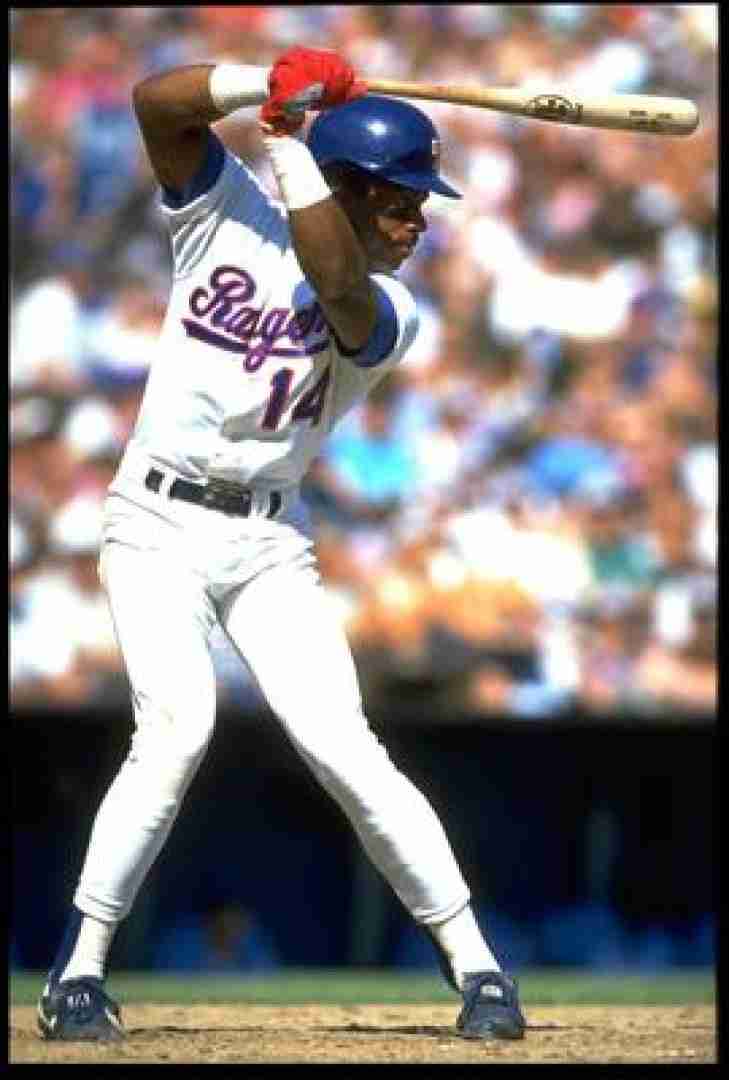
When Julio Franco stepped into Arlington before the 1989 season, he brought with him one of the most distinct batting stances in baseball—holding his bat high above his head and leaning forward toward the pitcher. This unique approach helped him build a long, exciting career that took him around the world over nearly thirty years. But it was during his five-year prime with the Texas Rangers that the Dominican infielder truly reached his top performance as a major league hitter.
Initially positioned at second base to strengthen the core of the Texas infield, Franco promptly attained a remarkable level of offensive consistency. He achieved three consecutive All-Star selections from 1989 to 1991, utilizing a swift right-handed swing that consistently produced line drives into the gaps. He established himself as the premier offensive second baseman of his time, earning three consecutive Silver Slugger Awards in Texas. His 1989 debut served as an impressive display of pure productivity, with 15 stolen bases, 92 RBIs, and a career-high 201 hits—the singular 200-hit effort in his extensive career.
His offensive wizardry reached its zenith during a remarkable 1991 campaign. Throughout the summer, he demonstrated exceptional performance against American League pitching, ultimately claiming the AL Batting Title with an impressive .341 batting average, surpassing Wade Boggs to become the first Ranger to earn this accolade since Buddy Bell. This achievement was complemented by his disciplined approach at the plate, as evidenced by his 82 walks, which elevated his on-base percentage to an outstanding .408, thereby contributing significantly to a notably dynamic Texas lineup.
As injuries constrained his defensive mobility, the organization transitioned Franco to a full-time designated hitter role by 1993, where he maintained a highly productive baseline. However, amidst the front office's strategic focus on a youth movement and financial realignments, his tenure in Arlington concluded after the 1993 season. This transition facilitated his move to Chicago, where he showcased his elite batting skills and ultimately led to his career in Japan.
With the Rangers, Franco had 725 hits, 44 HR, 345 RBIs, 79 stolen bases, and a .307/.382/437 slash line (131 OPS+).
