Site Admin
19. Nolan Ryan
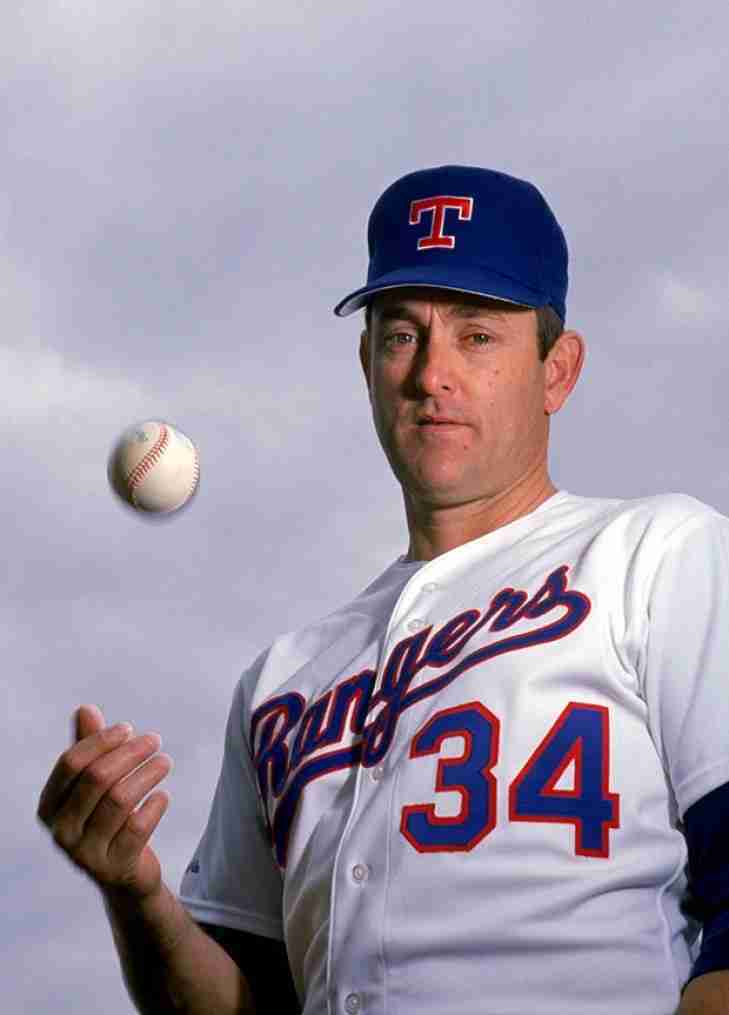
When Nolan Ryan entered into a free agency agreement with the Texas Rangers in December 1988, he was already 41 years old and possessed a distinguished career filled with numerous accolades. Traditional baseball wisdom indicated that the native Texan was returning home primarily to transition into retirement. However, "The Ryan Express" transformed his final five seasons into an extraordinary cultural and statistical phenomenon, thereby solidifying his position as a legendary figure in the history of sports in Lone Star State.
Operating with a high-velocity fastball that still defied time and physics, Ryan did not merely maintain a position in the starting rotation; he remained a formidable front-line force. His 1989 debut at Arlington was a remarkable demonstration of power, as he led the American League with 301 strikeouts over 239 innings—marking the sixth occasion in his career that he reached the 300-strikeout threshold. Even into his mid-40s, his exceptional pitching abilities remained entirely unhittable when he was fully concentrated, a fact he demonstrated to the baseball community by delivering his sixth career no-hitter against Oakland in 1990, followed by a spectacular no-hitter with 16 strikeouts against Toronto on May 1, 1991.
While his raw on-field value in Arlington was concentrated into the back end of his career, his physical presence provided the franchise with a significant competitive advantage and an immediate national profile. He was an intense, traditional competitor who demanded the strike zone, as famously exemplified by his legendary mound confrontation with Robin Ventura in 1993. Each time Ryan took the mound, he elevated the game to a high-stakes level, concluding his five-year tenure with an impressive 51–39 record and amassing 939 strikeouts against a heightened level of baseball age.
His final departure from the baseball field took place in September 1993, when a torn ligament in his right elbow abruptly ended his illustrious 27-year career in Major League Baseball. Although his number of starts was limited to 135, thereby resulting in his total statistical contributions being somewhat behind the franchise’s record holders over the decade, his late-career performance in terms of raw dominance and structural influence deeply left an indelible impression on the organization.
With the Rangers, Ryan made 135 appearances (all starts). He compiled a 51–39 record with a 3.43 ERA and a 1.12 WHIP. He logged 840 innings, recording 15 complete games, six shutouts, and 939 strikeouts. To permanently cement his monumental legacy, the Rangers retired his number 34 in 1996, and he was inducted into Cooperstown as a first-ballot member of the National Baseball Hall of Fame in 1999. He completed his journey with the organization by being inducted into the inaugural class of the Texas Rangers Hall of Fame in 2003, serving as the ultimate punctuation on his identity as a Texas icon.
26. Ken McMullen
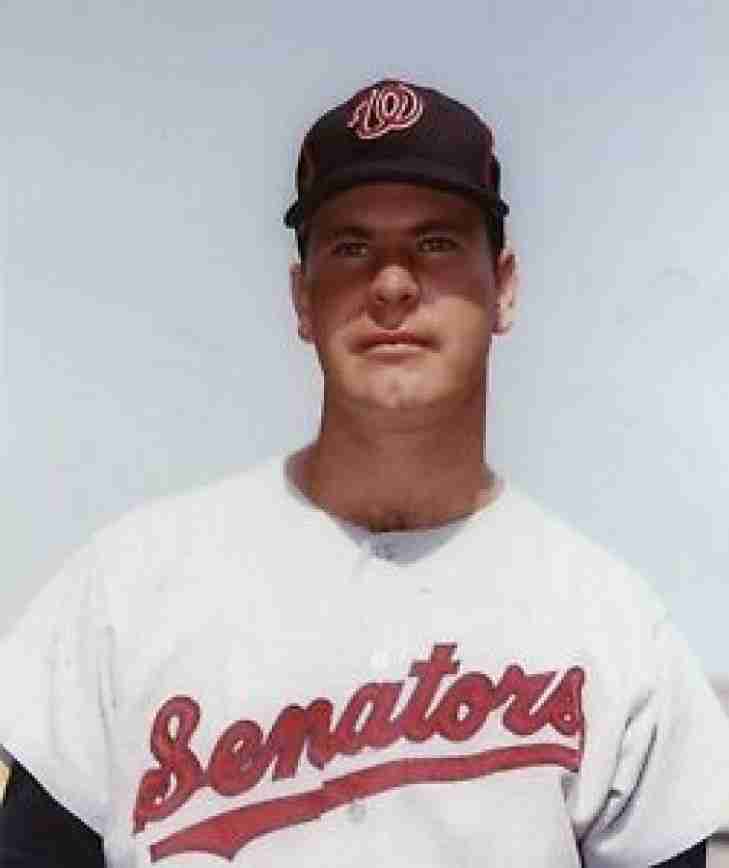
Although Ken McMullen never played a single inning within the territorial boundaries of Texas, his six-year tenure with the expansion Washington Senators means his statistical contributions are integral to the organization's foundational history. Transferred from the Los Angeles Dodgers prior to the 1965 season as part of a multi-player trade centered around Frank Howard, the right-handed batting third baseman dedicated the latter half of the 1960s to establishing himself as a dependable stabilizer at third base in Washington, D.C.
Under the management of Gil Hodges, McMullen was integrated into the standard lineup, providing an immediate enhancement to the team's depth by hitting 18 home runs during his debut summer of 1965. Although he initially faced some minor defensive challenges, he quickly became one of the league's most agile and reliable infielders. Demonstrating exceptional lateral agility and a formidable arm, he notably set an American League record with 11 assists from third base in a single game against the Red Sox in 1966. Over three consecutive seasons from 1967 to 1969, McMullen led all league third basemen in total defensive chances, further exemplifying his defensive prowess by leading the league three times in Range Factor per game at his position.
His defensive efficiency was matched by a steady, productive baseline with the bat. He exceeded the 20-home run threshold in 1968 and directed the most outstanding individual performance of his career in 1969 under the guidance of the newly appointed manager Ted Williams. In response to the legendary hitter's coaching, McMullen achieved a personal-best .272 batting average with 19 home runs and a career-high 87 RBIs, helping lead the modern Senators to their sole winning season in the nation's capital.
His long tenure with the club ended abruptly when the front office made an unpopular decision. After 15 games in the 1970 season, owner Bob Short traded McMullen to the California Angels for Aurelio Rodríguez and Rick Reichardt. The trade shocked the clubhouse, reportedly diminishing Williams's enthusiasm after the team lost a player seen as its captain and emotional anchor.
With the Senators, he amassed 709 hits, 86 homers, and 327 RBIs, posting a .249/.317/393 slash line (104 OPS+).
330. Lara Dickenmann