


Site Admin
38. Chad Clifton
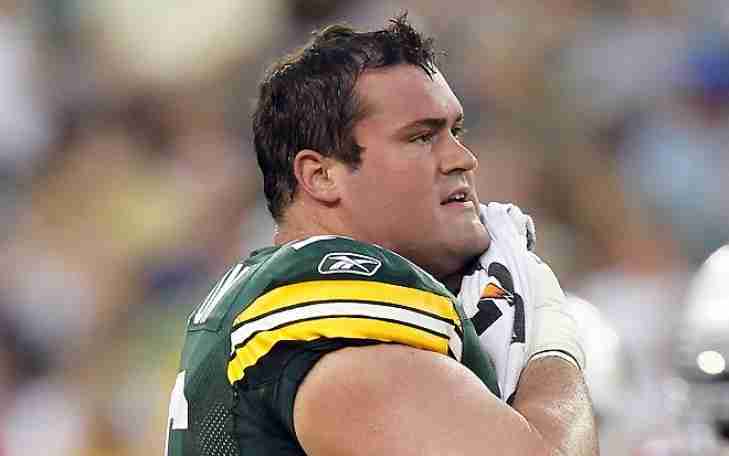
Long before he became the essential bridge between two iconic Green Bay quarterback eras, Chad Clifton was draft-day gold waiting to be discovered. Selected in the second round (44th overall) of the 2000 NFL Draft out of Tennessee, the towering 6-foot-5, 320-pound tackle slid into the starting lineup midway through his rookie campaign, locking down the blind side and becoming an unsung anchor of Green Bay's front line for over a decade.
Operating with a quiet demeanor and clinical pass-blocking technique, Clifton made a career out of neutralizing the NFC's most formidable pass rushers. Paired with long-time right tackle Mark Tauscher, Clifton provided unwavering stability through coaching shifts and roster transitions, safeguarding Brett Favre through the mid-2000s before doing the same for Aaron Rodgers. His steady presence enabled both legendary quarterbacks to thrive from clean pockets.
Clifton’s resilience was severely tested in 2002 when an illegal, devastating blindside hit from Tampa Bay's Warren Sapp left him with a severe pelvic injury that hospitalized him and threatened his career. Clifton returned for the 2003 season without missing a step and earned his first Pro Bowl selection in 2007 during Favre's final, electrifying run in Green Bay.
His individual excellence reached a crescendo late in his career as he garnered a second Pro Bowl nod in 2010. That storybook season culminated at Super Bowl XLV, where Clifton started at left tackle and contained Pittsburgh's pass rush to help secure a 31–25 championship victory, placing a world championship ring on a career defined by selfless reliability.
Clifton retired after twelve seasons in Green Bay, having started 160 of his 165 career appearances.
27. Sterling Sharpe
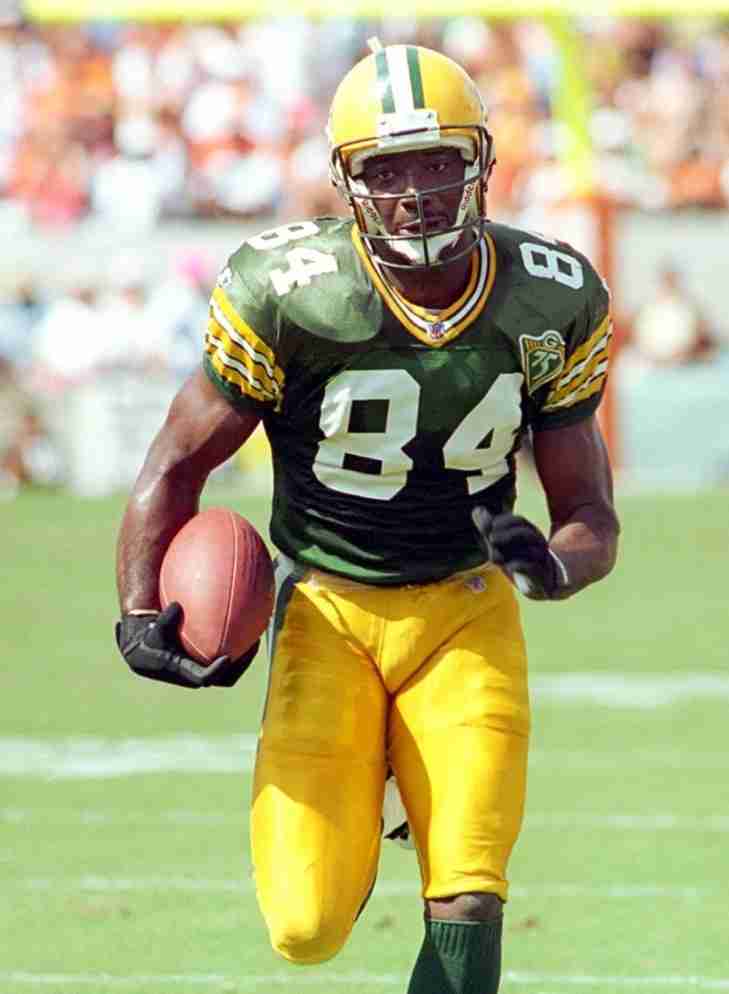
Arriving in Green Bay as the seventh overall selection in the 1988 NFL Draft, Sterling Sharpe hit the ground running out of South Carolina and spent the next seven years putting on an absolute clinic at receiver. Combining a running back's frame with soft hands and crisp route running, he bullied defensive backs across the middle and punished secondaries for attempting to tackle him in space.
Sharpe’s run in Titletown was defined by historically unprecedented high-volume production. He captured his first reception title in 1989 with 90 catches, but his dominance reached historic heights once paired with quarterback Brett Favre in 1992. That season, Sharpe achieved the rare wide receiver "Triple Crown" by leading the NFL in receptions (108), receiving yards (1,461), and receiving touchdowns (13). He broke his own single-season catch record the following year in 1993 with 112 receptions, becoming the first player in NFL history to record back-to-back 100-catch seasons.
When the stakes were highest, Sharpe was virtually uncovered. In Green Bay's 1993 Wild Card victory over Detroit—the franchise's first playoff win in over a decade—he hauled in three touchdown passes from Favre, including a legendary 40-yard strike in the final minute to secure the win. He followed that up in 1994 by setting a career-high with 18 receiving touchdowns, continuing to dominate despite facing constant double coverage and specialized defensive game plans designed solely to slow him down.
Tragically, Sharpe’s brilliant trajectory was cut short at the absolute apex of his powers. During the penultimate game of the 1994 regular season against Atlanta, he suffered a severe neck injury that required spinal fusion surgery, prematurely ending his career at just 29 years old. Despite playing only seven seasons, his enduring greatness left a permanent mark on the sport. After his induction into the Green Bay Packers Hall of Fame in 2002, the long-awaited ultimate honor arrived when Sharpe was selected by the Senior Committee and enshrined in the Pro Football Hall of Fame as part of the Class of 2025. Presented by his brother Shannon, the duo made history as the first pair of brothers enshrined in Canton.
Sharpe compiled 595 receptions, 8,134 receiving yards, 65 receiving touchdowns, and 72 rushing yards over his career.
40. Gale Gillingham
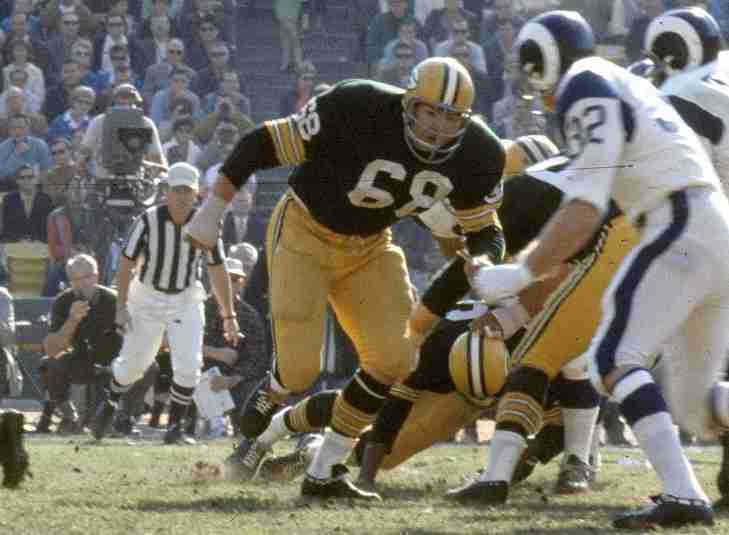
Taken in the first round (24th overall) of the 1966 NFL Draft out of Minnesota, Gale Gillingham arrived in Green Bay just in time to learn from Hall of Fame guard Jerry Kramer and anchor the final leg of Vince Lombardi's dynasty. Stepping into the starting lineup at left guard in 1967 after Fuzzy Thurston's retirement, the physically imposing 255-pound rookie displayed world-class power and explosive pulling speed, helping propel Green Bay to victories in Super Bowls I and II.
While the Packers entered a difficult transitional era in the post-Lombardi late '60s and 1970s, Gillingham's individual performance only surged into elite territory. Widely regarded as one of the most athletic and dominant interior linemen in the NFL, he earned five Pro Bowl selections (1969–1971, 1973, 1974) and First-Team AP All-Pro honors in 1969 and 1970. His rare combination of brute strength and mobility allowed Green Bay's offense to stay competitive even during lean rebuilding years.
Gillingham's selfless versatility was tested in 1972 when head coach Dan Devine asked him to move to defensive tackle—an experiment cut short when he suffered a season-ending knee injury. Returning to his natural right guard spot in 1973, Gillingham picked up where he left off, earning two more Pro Bowl nods and clearing the path for running backs John Brockington and MacArthur Lane as Green Bay won the NFC Central title.
After sitting out the 1975 season, Gillingham returned for one final campaign in 1976 before retiring. His ten seasons in the tundra established him as one of the finest interior blockers ever to wear a Packers uniform. In 1982, the Green Bay Packers formally recognized his sustained brilliance and championship legacy by inducting him into the Green Bay Packers Hall of Fame.
25. Clarke Hinkle
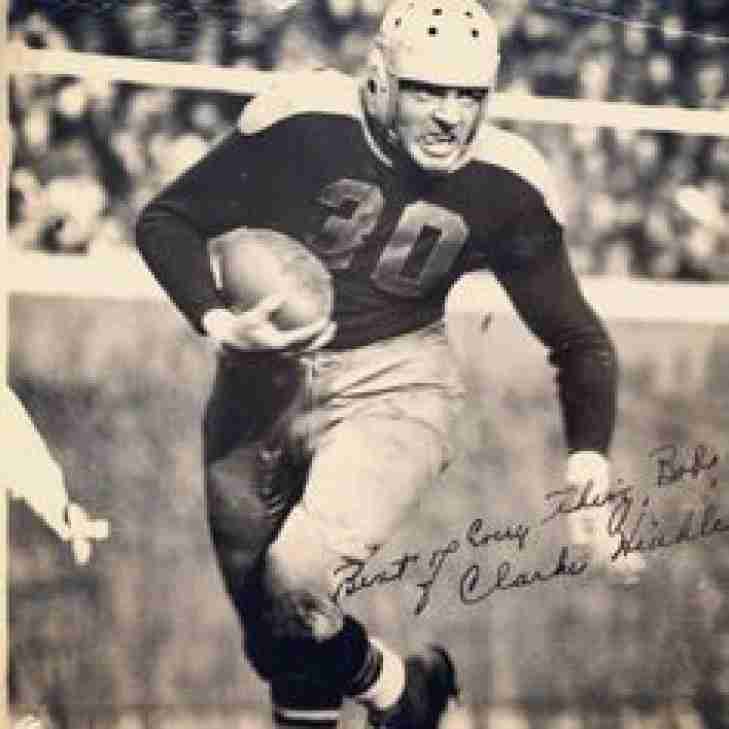
Signed out of Bucknell in 1932—four years before the inaugural NFL Draft was established—Clarke Hinkle arrived in Green Bay as a punishing, unstoppable force who redefined power running during the single-wing era. Standing 5-foot-11 and weighing 200 pounds, Hinkle possessed a rare blend of bruising physicality and track speed, making him the ultimate two-way centerpiece for Curly Lambeau’s powerhouse squads.
Hinkle's legendary career was marked by intense, high-stakes battles with Chicago Bears fullback Bronko Nagurski. While Nagurski was known for bulldozing through defenders, Hinkle was one of the rare players in football history who actively sought contact, famously engaging and leveling the Bears’ giant in several memorable crashes. On offense, Hinkle fought for tough yards inside the tackles and was a dangerous weapon out of the backfield. Defensively, he played at linebacker and safety, making powerful tackles and solidifying Green Bay's defensive line.
Hinkle’s abilities went well beyond just running and tackling. He was also Green Bay’s top placement kicker and punter, leading the NFL in field goals made in 1940 and 1941. His strength and stamina helped Green Bay win two NFL Championships (1936, 1939), with his 1936 championship highlighting his impact as he scored a touchdown in the Packers' 21–6 win over the Boston Redskins.
After retiring in 1941 to join the U.S. Coast Guard during World War II, Hinkle left the game as the NFL's all-time leading rusher with 3,860 yards, a remarkable achievement for 1930s football. A four-time First-Team AP All-Pro (1936, 1937, 1938, 1941) and three-time Pro Bowl participant, he was honored on both the NFL 1930s All-Decade Team and the NFL 75th Anniversary All-Time Team. His contributions were ultimately recognized with his induction into the Pro Football Hall of Fame in 1964, in its second class, and later into the Green Bay Packers Hall of Fame's second class in 1972.
Hinkle had 822 rushing attempts, 3,860 rushing yards, 35 rushing touchdowns, 49 receptions, 537 receiving yards, seven receiving touchdowns, 28 field goals made, 144 extra points made, and 12 interceptions.
