


Site Admin
35. John Reilly
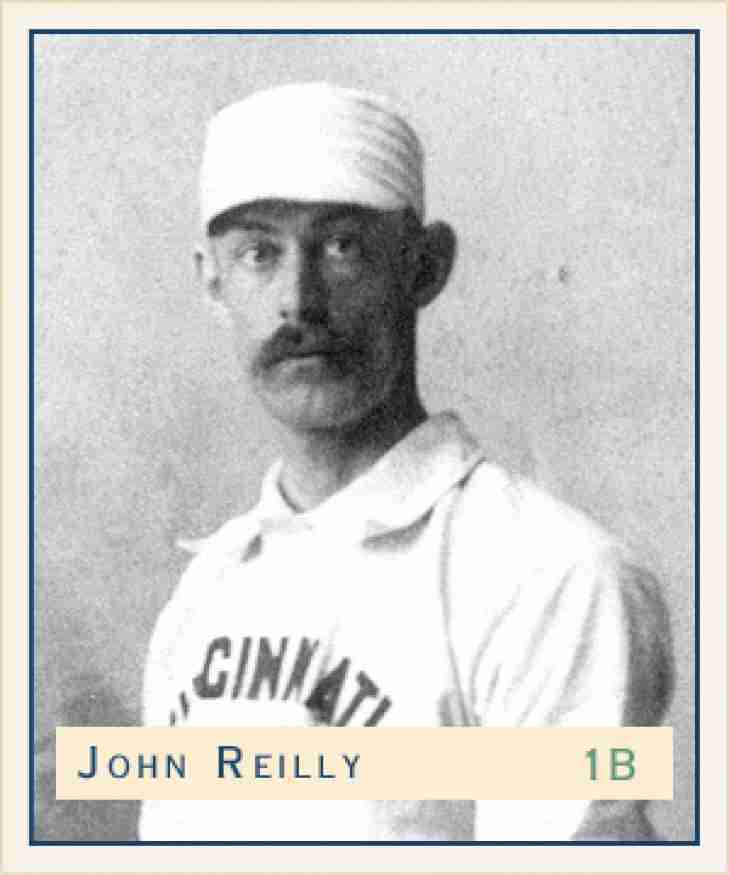
Reilly was inducted into the Reds Hall of Fame in 2012.
33. Brandon Phillips
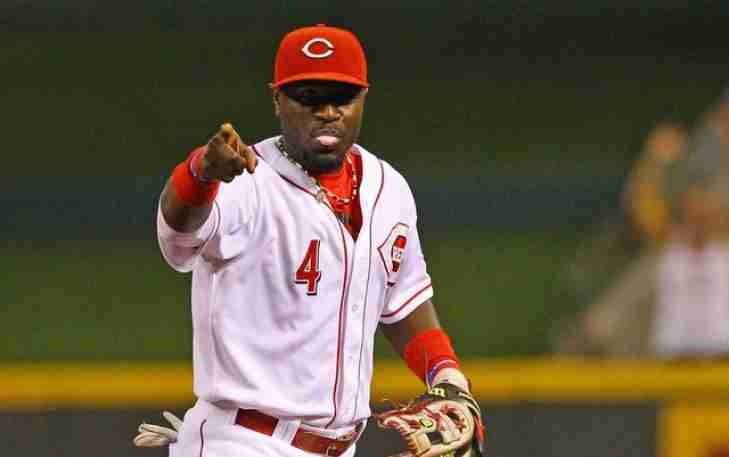
Brandon Phillips’ path to Cincinnati was forged by a lopsided 2006 trade that saw the Reds acquire him for a player to be named later. It was a low-risk gamble that paid immediate dividends, as he matured instantly into the premier multi-tool threat of the infield. He emerged with a specialized blend of speed and power, reaching an incredible peak in 2007 when he authored a historic 30-30 campaign. He was a model of explosive efficiency, proving that his game was built on a rare balance of athleticism, following up that breakout with two additional 20-20 seasons and establishing himself as the most dynamic leadoff and middle-of-the-order spark in the division.
The most impressive aspect of his tenure was the technical brilliance he displayed on the dirt. Phillips was a master of the highlight-reel out, a defensive technician who patrolled second base with a specialized range and a lightning-fast release. His craftsmanship was officially recognized with four Gold Glove Awards, as he consistently led the league in fielding percentage and range factor. He wasn't just a defensive specialist, though; he was a high-frequency producer at the plate, earning one Silver Slugger and three All-Star selections during a stay that saw him accumulate nearly 1,800 hits in a Reds uniform.
His presence was defined by a charismatic, unapologetic joy and a durability that made him the tactical heartbeat of the clubhouse for over a decade. Phillips was a fixture of the "Big Red Machine" resurgence of the early 2010s, providing the veteran poise and high-leverage defense that anchored three postseason teams. Whether he was making a behind-the-back toss to start a double play or lacing a walk-off single into the gap, he competed with a focused intensity and a connection to the fans that made him a local immortal. He proved that a player could become a franchise pillar by combining world-class skill with an infectious love for the game.
After the 2016 season, he was traded to the Atlanta Braves. With the Reds, Phillips compiled 1,774 hits, 191 home runs, and 194 stolen bases while securing four Gold Glove Awards.
28. Lonny Frey
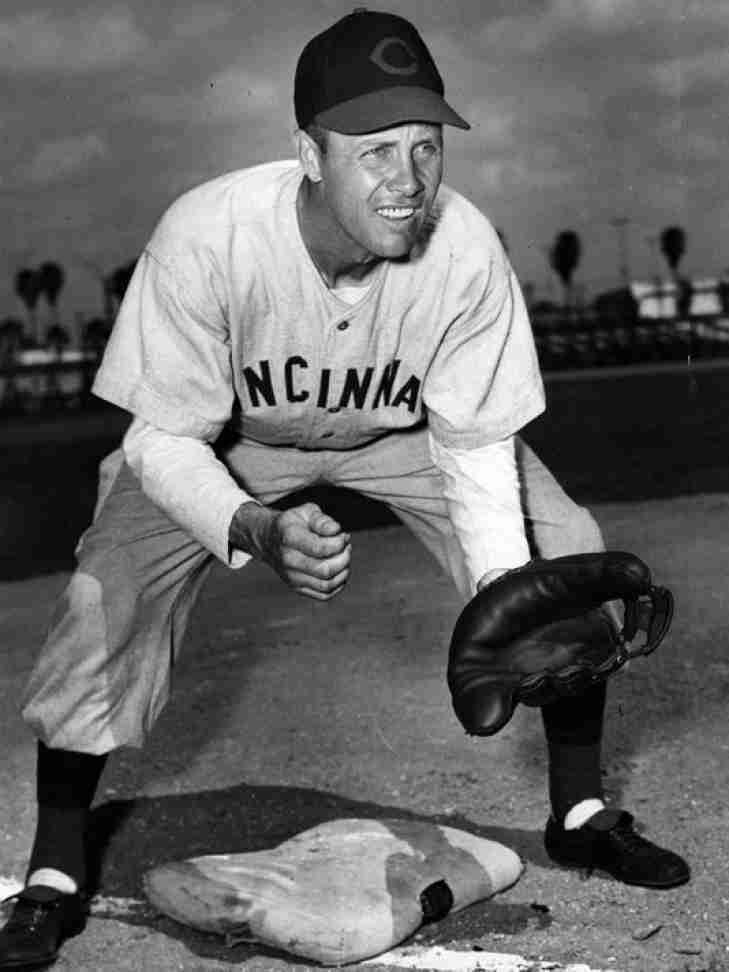
Lonny Frey began his MLB career with the Cincinnati Reds in 1938 and instantly matured into one of the premier defensive anchors of the Senior Circuit. He possessed a specialized ability to read the ball off the bat, a gift that fueled the Reds' rise to consecutive National League pennants in 1939 and 1940. During this window, he was a model of defensive efficiency, embarking on a remarkable five-year run where he finished in the top five in defensive bWAR, culminating in a first-place finish in 1940. He wasn't just a steady glove; he was a tactical technician who provided the pitching staff with an elite margin for error during the most high-stakes seasons in the club's history.
The most impressive aspect of his game was that he never allowed his defensive focus to overshadow his contributions at the plate. Frey was a master of the table-setting role, a trait he showcased most prominently in 1940 when he led the National League in stolen bases. He was a high-frequency producer who accumulated nearly 1,000 hits in a Reds uniform, proving he was a sophisticated offensive threat who could disrupt a game from the base paths. His craftsmanship earned him three All-Star selections during his stay, and he remained the heart of the infield until he answered the call to serve his country during World War II.
While his offensive production dipped during the club's two World Series appearances, most notably in 1940 when a painful foot injury limited him to just two at-bats, his defensive poise remained a vital asset. He was a fixture of the organization for nine seasons, using his world-class range to solidify a championship culture that defined the pre-war era. He proved that a player could become a franchise icon through a rare combination of grit, speed, and defensive mastery.
After his return from military service, Frey’s contract was sold to the Chicago Cubs. With the Reds, Frey recorded 962 hits, 533 runs scored, and 101 stolen bases while earning three All-Star nods. The ultimate recognition of his impact came in 1961, when the organization provided the final punctuation to his career. In a ceremony that celebrated his role as the defensive heartbeat of two pennant winners, Lonny Frey was inducted into the Cincinnati Reds Hall of Fame.
30. Joe Nuxhall
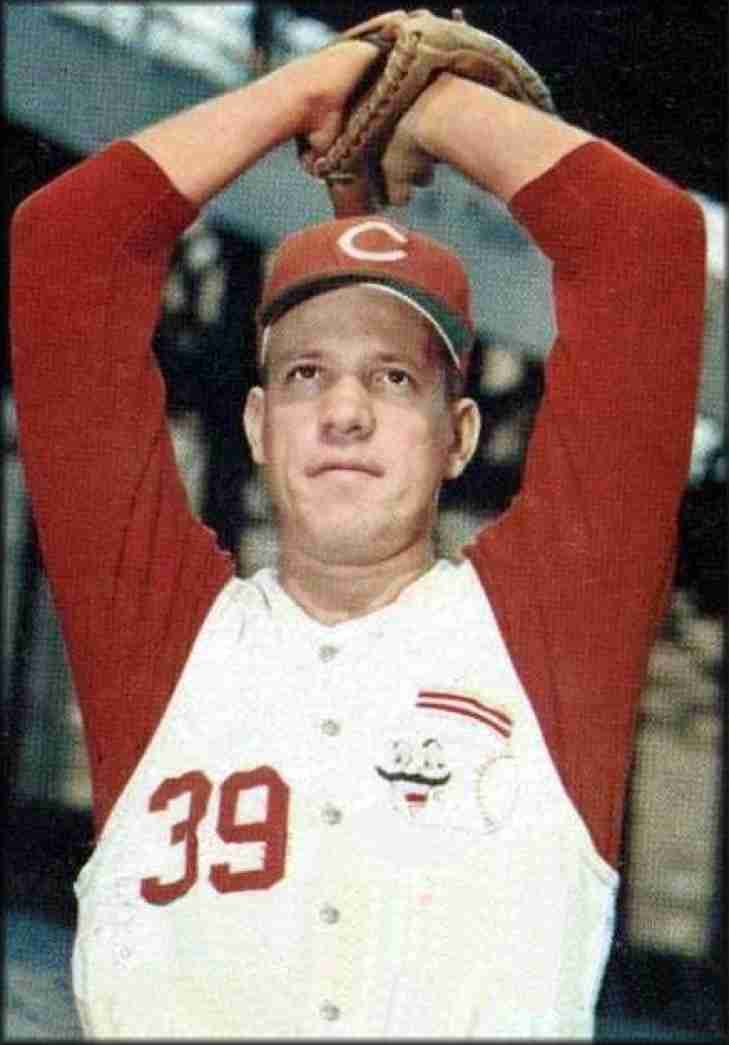
Nuxhall’s entry into the professional ranks remains one of the most remarkable footnotes in the history of the sport. In 1944, with the talent pool thinned by military service, the Reds turned to a local fifteen-year-old with a live arm. While his debut lasted less than an inning and came with the expected nerves of a teenager on a Major League mound, it established a record for the youngest player in modern history that will likely stand forever. He returned to the organization seven years later as a mature athlete, proving that he was far more than a wartime curiosity by carving out a permanent spot in the rotation.
The zenith of his effectiveness arrived during the mid-1950s, a period during which he emerged as a premier left-handed force in the National League. Nuxhall was a master of the middle-rotation role, a technician who used his experience to outmaneuver hitters across two different decades. Between 1955 and 1956, he reached a peak of national recognition, earning back-to-back All-Star selections and proving that he had the resilience to thrive long after his historic debut. He wasn't just a volume pitcher; he was a consistent producer who secured 130 victories in a Reds uniform, navigating the challenges of a heavy workload with a focused intensity that made him a central figure in the post-war era.
His presence was defined by a deep-seated loyalty and a charismatic, approachable nature that resonated with the Cincinnati faithful. Nuxhall spent all but one of his sixteen seasons with the club, a Red in every practical sense of the word. Whether he was grinding through a complete game at Crosley Field or maintaining his composure during a high-leverage rally, he competed with a local pride that solidified his status as a neighborhood hero. He proved that a player could become the heartbeat of a franchise through a rare combination of longevity and a relentless commitment to the organization’s success.
The playing chapter reached its competitive conclusion in 1966, but his influence on the city only grew in the years that followed. He transitioned seamlessly from the dugout to the broadcast booth, spending over thirty years narrating the triumphs of the "Big Red Machine" and the generations that followed. He left the diamond as a statistical titan of the franchise, but he remained a permanent fixture in the hearts of the fans along the Ohio River.
As a member of the Reds, Nuxhall compiled a 130-109 record with 1,289 strikeouts and a 3.80 ERA across 2,171.1 innings.
The organization recognized the singular magnitude of his contribution shortly after his retirement. In 1968, Joe Nuxhall was officially inducted into the Cincinnati Reds Hall of Fame, a fitting punctuation on a legacy that began with a fifteen-year-old’s dream.
