


Site Admin
136. Tobin Rote
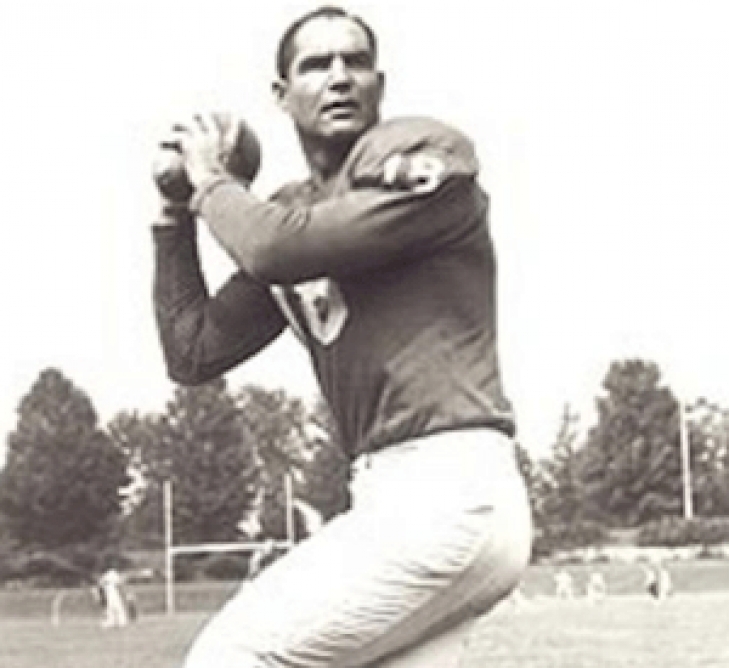
From Rice University, Tobin Rote was drafted by the Green Bay Packers, but in '50 the Pack was not very good, and wouldn't be for years. Green Bay's ineptitude wasn't Rote's fault; he proved to be an excellent QB, but he didn't have many teammates at his level. He was also a solid rusher, especially early in his career. For those who dismissed Rote in 1956, on what was still a mediocre Packers team, he led the NFL in Passing Yards and Completions and threw a then-record 29 Touchdown Passes. Despite that great season, the Packers traded him to Detroit, where he began the season sharing Quarterback duties with Bobby Layne, but he was clearly the main pivot on a team that would win the 1957 NFL Championship.
Sadly, Rote and the Lions had a disastrous 1959 season, and when he was released, he went north to play for the Toronto Argonauts of the Canadian Football League, where he did well, but American football called again, and he joined the San Diego Chargers. At age 35, he had the best season of his life, leading the AFL in Passer Rating (86.7) and taking his new team to a championship while winning the AP MVP. He would play another year in San Diego and a final one in Denver in 1966.
It can't be dismissed that Rote's decision to play in Canada hurt his overall chances, but this is one of the most underrated Quarterbacks not only of his day but of all-time.
119. Harvey Martin
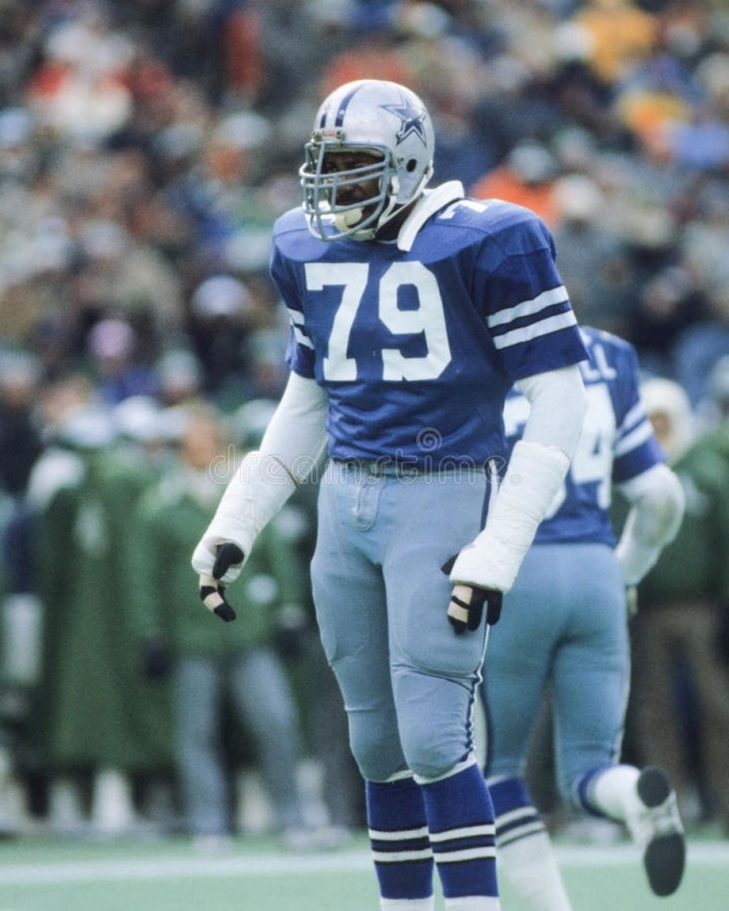
It was fitting that Harvey Martin played his entire pro career with the Dallas Cowboys. Martin was born in Dallas, played at East Texas State, and was drafted in the 3rd Round by the Cowboys in 1973; he joined and immediately contributed to what was already a dominating defensive unit.
Martin earned the starting Right Defensive End position in his third year (1975) and would then go on a four-year run of Pro Bowl Selections (1976-79). That second year was considered one of the best ever by a Cowboys defensive player. That year he won the NFL Defensive Player of the Year, had 23 (unofficial) sacks, and was the co-MVP of Dallas’ Super Bowl XII win with Randy White.
Although Quarterback Sacks were not an official statistic until 1982, Martin is believed to have recorded 114 over his career. It is next to impossible to imagine the “Doomsday Defense” without the contributions of Harvey Martin.
202. Tank Younger
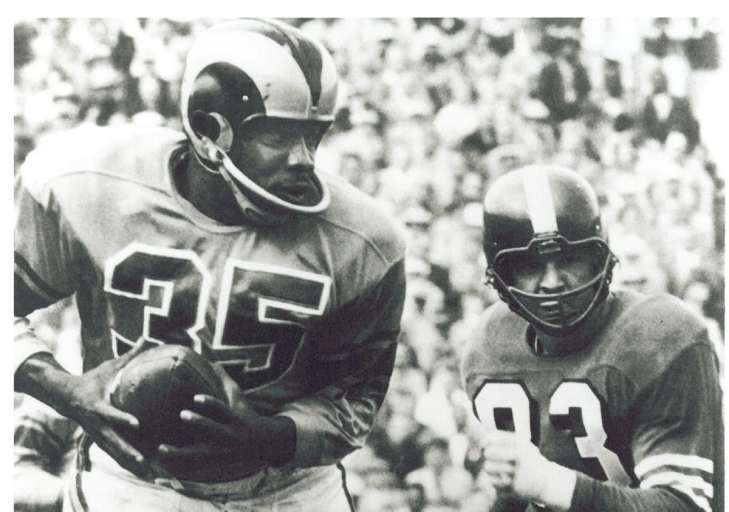
From the town of Grambling, Louisiana, and of course, playing at Grambling State, Paul “Tank” Younger wasn't selected in the 1949 Draft, but he didn’t have to wait long to find a home, as the Los Angeles Rams signed him.
Considered one of the first real NFL stars from a historically black college, Younger was an excellent two-way player who earned Pro Bowl selections (1951-53), first for his defense and later for his work as a Fullback (1955). Younger was an NFL Champion with L.A. in 1951, the same year he was named a First Team All-Pro Linebacker. Younger saw more and more rushing action, and he finished in the top seven in Rushing Yards in both 1954 and 1955, with the latter season seeing him lead the NFL in Rushing Yards per Game. He would finish his career with a year in Pittsburgh and would have 4,807 Yards from Scrimmage over his career.
131. Priest Holmes

Priest Holmes played for the high-profile Texas Longhorns in college, but it didn't lead to a draft selection. Undrafted in 1997, Holmes would sign with the Baltimore Ravens. The Running Back would see no action as a rookie but would rush for 1,008 Yards in 1998 and did well until Jamal Lewis supplanted him as the lead back for Baltimore. Holmes won a Super Bowl ring, but he wanted a starting role, so he signed with the Kansas City Chiefs, where he got that opportunity.
Holmes went on a three-year (2001-03) tear as an elite Running Back, earning First Team All-Pro honors each season. Holmes led the NFL in Rushing Yards in 2001, with first-place finishes in Rushing Touchdowns in 2002 & 2003. In all of those seasons, Holmes would have a 2,000 Yards From Scrimmage season, the first two being league-leading. Overall, in that triumvirate of seasons, he would amass 6,566 Yards From Scrimmage with 61 Touchdowns and an Approximate Value of 61. Injuries would pile up, and Holmes played only four more years, missing an entire season in one of them (2006) and playing only 19 more games in total. He would retire with an excellent sum of 11,134 Yards From Scrimmage and 94 Touchdowns.
