


Site Admin
72. Alan Ameche
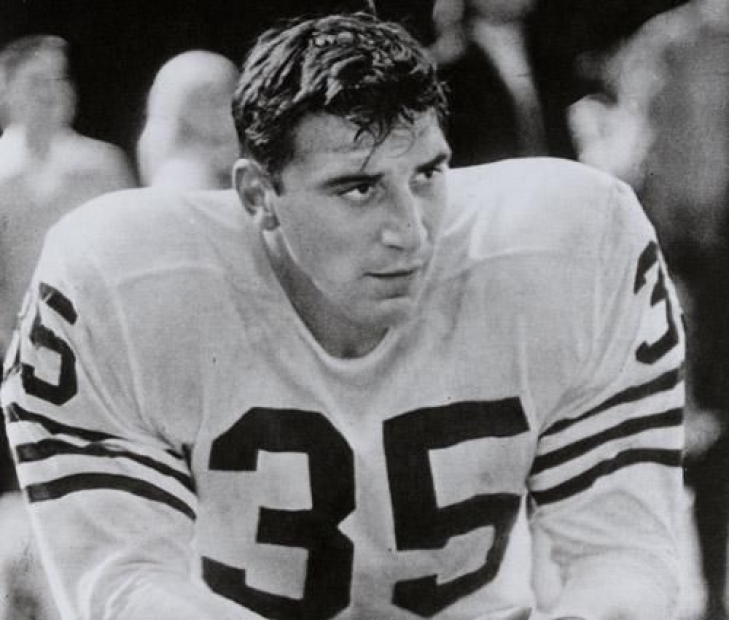
Alan Ameche won the Heisman Trophy in 1954, and the Wisconsin Badgers star went 3rd overall in the Draft. Chosen by the Baltimore Colts, he would win the NFL Rookie of the Year, leading the league in Rushing Yards, Rushing Touchdowns, and Yards from Scrimmage. This was Ameche's best statistical year, but he became an offensive fixture on an excellent Colts team that won the NFL Championship in 1958 and 1959. It was in the former title that Ameche cemented his legacy, as in that game (which has been dubbed “The Greatest Game Ever Played”), the Running Back scored two Touchdowns, including the game-winning one that would beat the New York Giants. That alone makes Alan Ameche an iconic figure in Pro football lore.
Ameche was a four-time Pro Bowl Selection (1955-58) and was chosen for the 1950’s All-Decade Team.
103. Abner Haynes
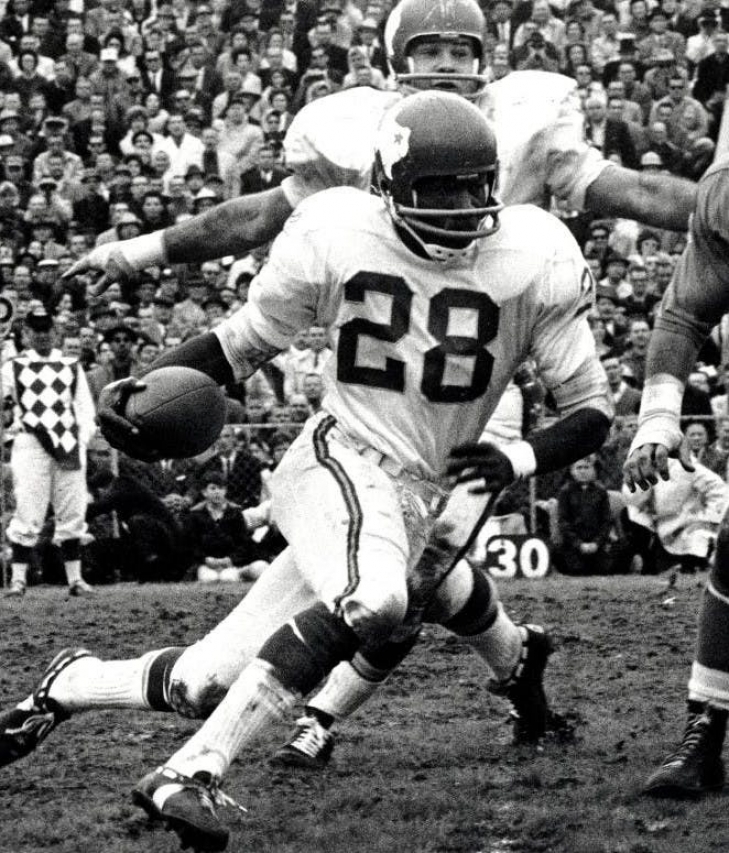
Playing college ball at the University of North Texas, Abner Haynes chose to stay in his home state and signed with the Dallas Texans of the AFL rather than the Pittsburgh Steelers, who selected him in the 5th Round in 1960. Haynes was the first breakout star of the new league, winning their inaugural Rushing Title while being named the AP and UPI MVP. Haynes, who would also lead the league in Rushing Touchdowns, would do so again in the next two seasons and would accrue over 1,700 All-Purpose Yards in all of his first three seasons, the last of which was an AFL Championship.
Haynes was never that dominant again, but he would have two more 1,400-yard seasons in All-Purpose Yards with the now-named Kansas City Chiefs. He finished his career with the Denver Broncos, Miami Dolphins, and New York Jets, where he won a Super Bowl Ring. Haynes would record 12,065 All-Purpose Yards over his eight-year career.
98. Cookie Gilchrist
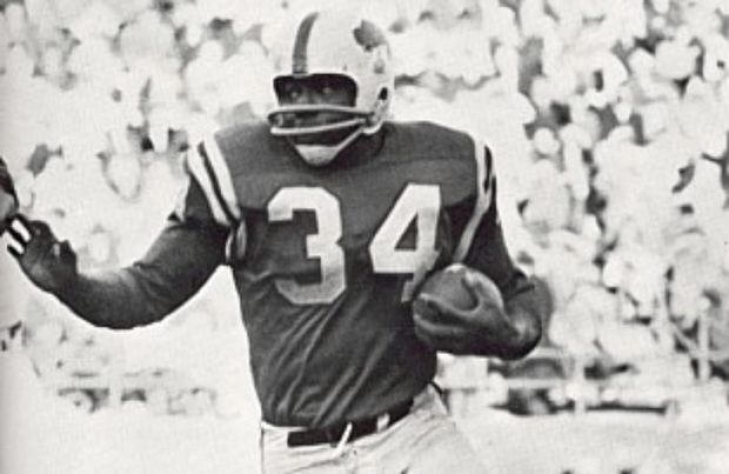
Cookie Gilchrist had a bizarre road to the pro football in the United States, and dare we say, had he never crossed the path of Paul Brown, the owner of the Cleveland Browns, he could have been a household name in the 1960s.
Gilchrist signed(what had to be an illegal) contract with the Cleveland Browns when he was still in high school. The Browns reneged, and he would forego college to play in an amateur league in Canada before he was old enough to play in the Canadian Football League. He played there for five years, winning a Grey Cup with the Hamilton Tiger-Cats, and in 1961 he would finally play pro in the United States when he traveled around Lake Ontario to play for the Buffalo Bills of the American Football League.
Gilchrist was an absolute phenom in his first three seasons in the AFL, where he would win the Rushing Title in 1962 and 1964 and led the league in Rushing Touchdowns in all three years. Both the AP and UPI named him the MVP, and in 1964 he rushed the Bills into an AFL Championship. After '64, he joined the Denver Broncos for two seasons (1965 & 1967), where he again finished first in rushing touchdowns in '65. He played one final year in Miami before retiring for good in 1968.
Any story on Gilchrist has to mention that he was an early civil rights leader, and he led a successful boycott of having the AFL All-Star Game in New Orleans, where segregation still occurred. He also refused induction into the Canadian Football League Hall of Fame, citing racist policies.
The only thing better than Cookie on the field was Cookie showing his character off of it.
156. Riley Matheson
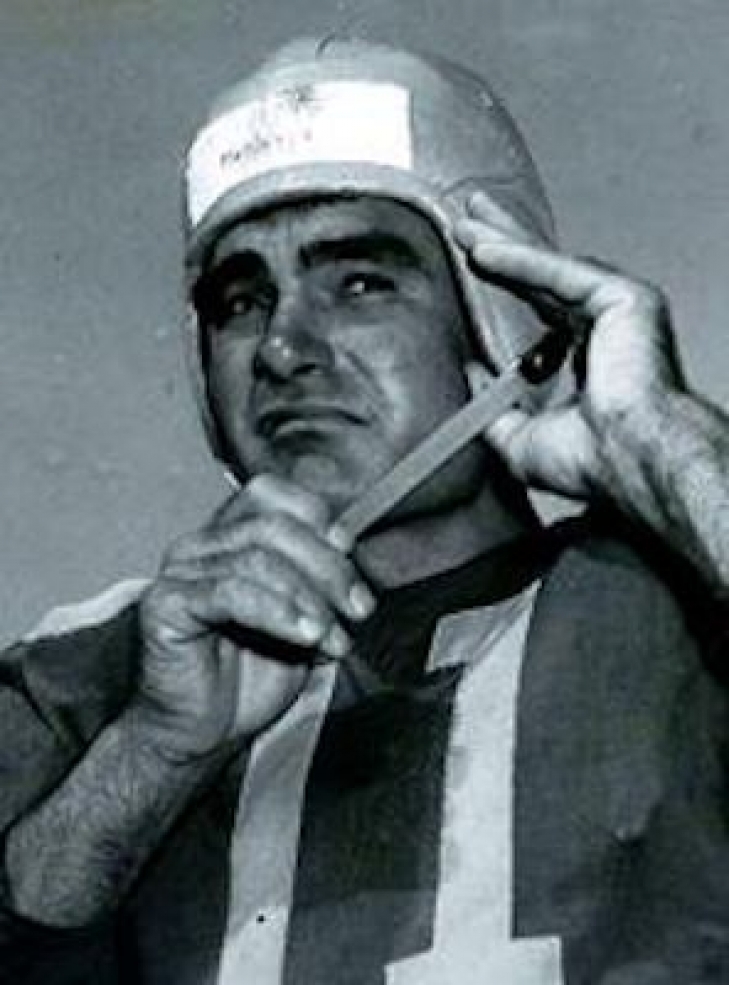
Riley Matheson arrived in Cleveland with little (really no) fanfare to join the Rams in 1939 after going undrafted from Texas-El Paso. Playing at both Offensive Lineman, Matheson broke out in 1942, earning his first First Team All-Pro, while also capturing that honor in 1944 and 1945. Granted, this happened during World War II, when the league was depleted, but the NFL Champion in ’45 was out to prove he was there to stay.
The Rams relocated to Los Angeles, but he remained a First Team All-Pro, selected to his fourth and fifth in 1946 and 1947. He left the Rams to join the San Francisco 49ers of the then-AAFC and finished his career with two years in the Canadian Football League with the Calgary Stampeders.
