


Site Admin
47. Jordy Nelson
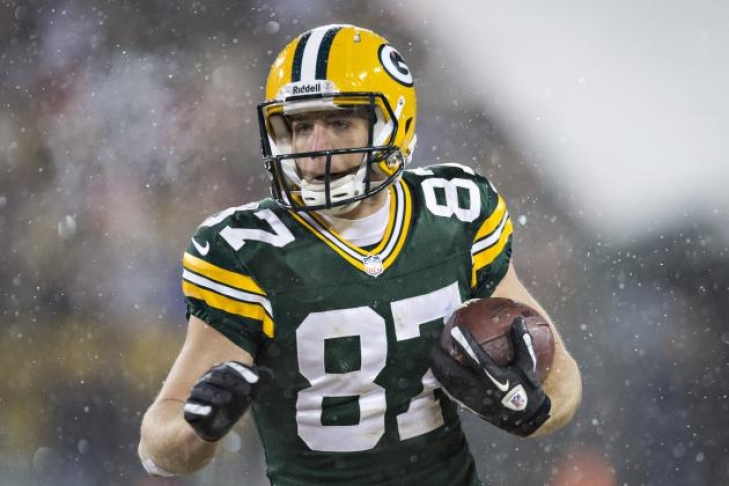
Drafted in the second round (36th overall) of the 2008 NFL Draft out of Kansas State—where he originally walked on as a safety before developing into a consensus All-American wide receiver—Jordy Nelson arrived in Green Bay just as Aaron Rodgers stepped into the starting quarterback job. Nelson logged rotational duty behind Donald Driver, Greg Jennings, and James Jones during his first three seasons, gradually refining his sideline footwork and deep-threat acceleration. His breakout arrived on the biggest stage imaginable: Super Bowl XLV, where he hauled in nine receptions for 140 yards and a touchdown to ignite Green Bay's 31–25 victory over Pittsburgh.
After that championship performance, Nelson became one of the most prolific perimeter weapons in professional football. Possessing rare body control along the boundary and telepathic chemistry with Rodgers on back-shoulder throws, he reeled off four 1,000-yard receiving campaigns over a six-year stretch. His individual apex came in 2014, when he set Green Bay's then-single-season franchise record with 1,519 receiving yards on 98 catches, scoring 13 touchdowns to earn Pro Bowl and Second-Team AP All-Pro honors.
After a torn ACL cost him the entire 2015 season, Nelson demonstrated remarkable resilience in 2016. Returning at age 31, he led the NFL with 14 touchdown receptions while catching 97 passes for 1,257 yards, sweeping consensus NFL Comeback Player of the Year honors and powering Green Bay back to the NFC Championship Game.
Following a single final season with Oakland in 2018, Nelson signed a ceremonial one-day contract to officially retire as a Green Bay Packer. In 2023, the franchise formally immortalized his legacy by inducting him into the Green Bay Packers Hall of Fame. Stat-wise, Nelson tabulated 550 receptions for 7,848 receiving yards and 69 touchdown catches.
37. Bill Forester
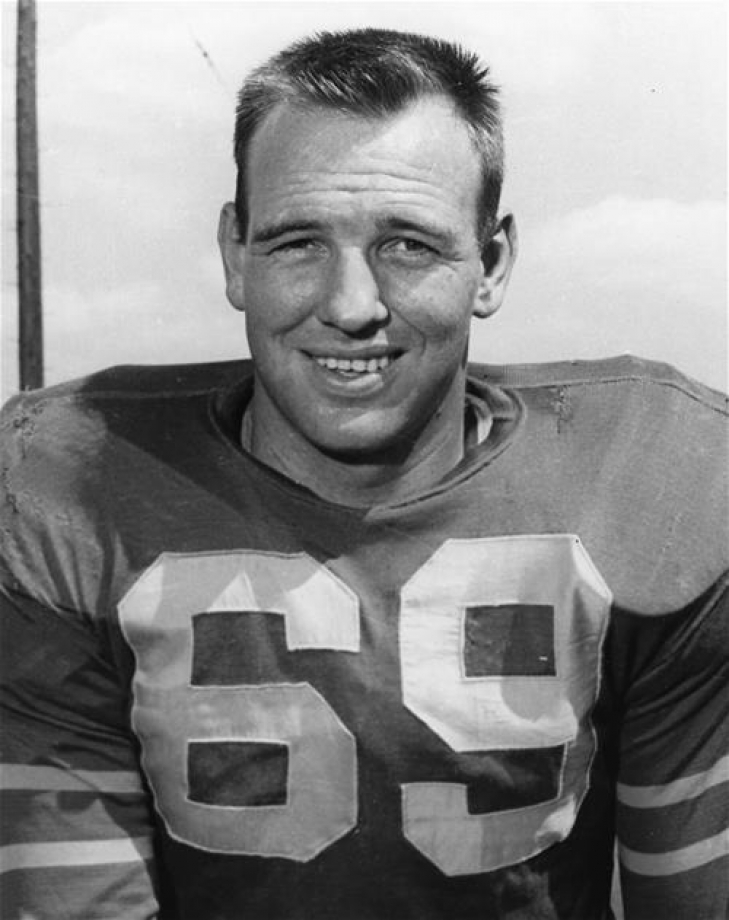
Before he became a fixture on the right side of Lombardi's legendary linebacking corps, Bill Forester spent the early 1950s quietly doing whatever the Packers asked of him on defense. Taken in the third round out of SMU in 1953, the versatile Texan spent his first few seasons shifting between middle guard and left linebacker as Green Bay searched for defensive identity—yet his diagnosing ability and relentless pursuit kept him anchored as a defensive starter long before the franchise turned the corner.
Forester's career trajectory changed dramatically with the arrival of Vince Lombardi in 1959. Settling permanently at right linebacker alongside Ray Nitschke and Dan Currie, Forester blossomed into one of the most dominant linebackers of his generation. His rare pass-coverage instincts and lateral pursuit made him the brain and backbone of Lombardi's defense, reeling off four consecutive Pro Bowl selections from 1959 through 1962.
Forester’s prime coincided directly with Green Bay's ascent to global football supremacy. He earned three consecutive First-Team AP All-Pro honors (1960–1962) and served as defensive team captain during Green Bay's back-to-back NFL Championship runs in 1961 and 1962. In the 1961 NFL Championship Game, Forester's front seven held the New York Giants to just 130 total yards in a 37–0 shutout victory at City Stadium.
Over his eleven-year career—spent entirely in Titletown—Forester compiled an extraordinary turnover total for an outside linebacker, snagging 21 career interceptions for 247 return yards and a touchdown, while adding 15 fumble recoveries and an estimated 18.5 career sacks.
In 1974, the Green Bay Packers formally honored his championship leadership and decade of excellence by inducting him into the team’s Hall of Fame.
36. Billy Howton
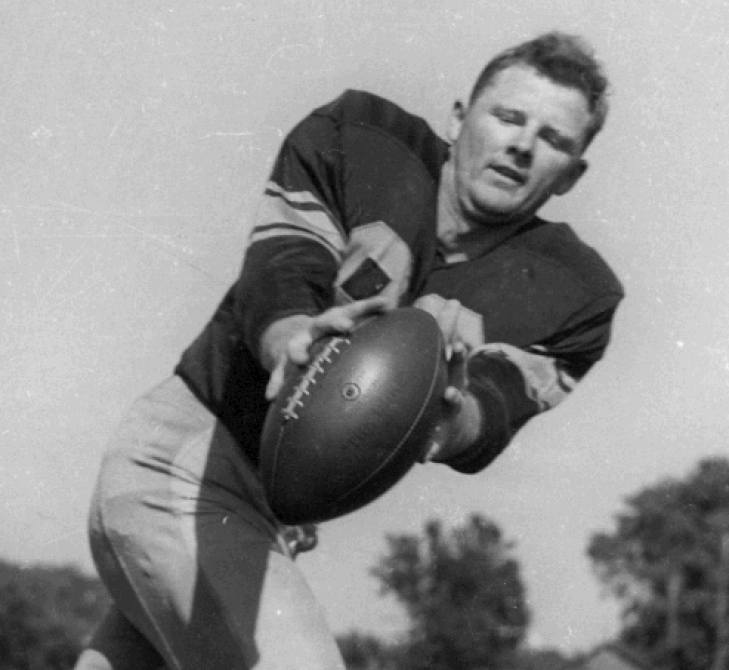
Drafted in the second round (21st overall) of the 1952 NFL Draft out of Rice University, Billy Howton exploded onto the professional football scene and delivered one of the most remarkable rookie campaigns in NFL history. Stepping into Green Bay's offense as an immediate deep threat, the swift end grabbed 53 receptions and led the NFL with 1,231 receiving yards and 13 touchdown catches—setting a Packers rookie receiving-yardage record that still stands today, nearly three-quarters of a century later.
Howton remained one of pro football's most feared perimeter weapons throughout the 1950s, serving as Green Bay's primary offensive engine during a challenging decade for the franchise. He earned four total Pro Bowl selections in Titletown (1952, 1955, 1956, 1957) and reached his apex in 1956. That season, Howton achieved the rare receiving "triple crown" feat for Green Bay, leading the NFL in both receiving yards (1,188) and touchdown receptions (12) while earning First-Team AP All-Pro honors alongside a second consecutive First-Team selection in 1957.
After seven stellar seasons in Wisconsin, Howton was traded to the Cleveland Browns in 1959 before becoming an integral veteran leader for the expansion Dallas Cowboys from 1960 through 1963. When he retired at age 33, Howton held the NFL's all-time career records for both receptions (503) and receiving yards (8,459), surpassing legendary Hall of Famer Don Hutson's previous historical marks.
Off the field, Howton played a major role in league history as a key organizer and the founding president of the NFL Players Association in 1956, fighting for player benefits, medical care, and minimum salaries during the sport's formative era. In 1974, the Green Bay Packers formally honored his historic statistical legacy and pioneering leadership by inducting him into the Green Bay Packers Hall of Fame.
24. Lavvie Dilweg
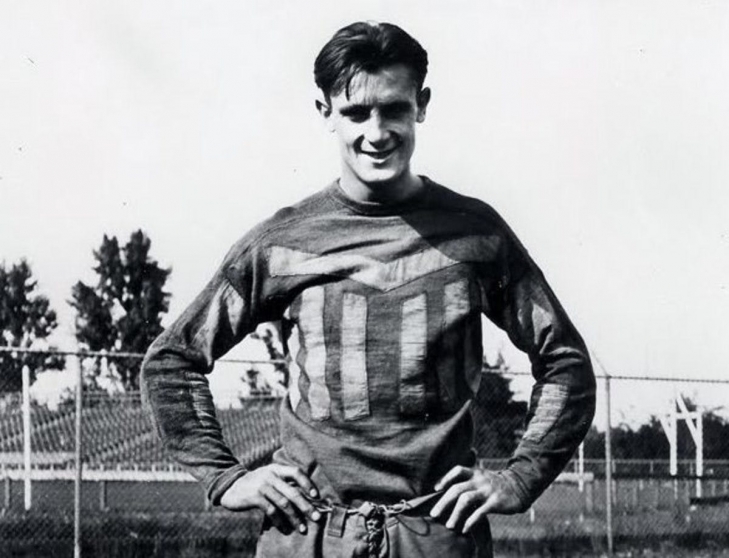
Long before professional football transformed into a multi-billion-dollar spectacle, LaVern "Lavvie" Dilweg established himself as one of the premier two-way forces in gridiron history. A collegiate star and All-American end at Marquette University in Milwaukee, Dilweg opted to remain in-state to launch his professional career in 1926 with the Milwaukee Badgers. However, when the franchise folded after a single tumultuous campaign, the gifted 6-foot-3 end ventured north to join Curly Lambeau’s ascending Green Bay Packers in 1927, embarking on an eight-year tenure that redefined trench play in the NFL's infant era.
Playing during an era of iron-man football, where starters needed to influence both offensive and defensive lines without substitution, Dilweg was highly esteemed as one of the most versatile players of his time. With remarkable height, uncommon agility, and natural physical strength, he was seen by his peers as the top blocking and tackling end in the sport. Defensively, his relentless effort shut down opposing end runs, while on offense, his blocking created important gaps for Green Bay’s backfield strategy.
Although official individual stats were limited and fragmented in the late 1920s and early 1930s, Dilweg’s impact on offense was unmistakable. He was a dangerous pass-catching weapon, leveraging his height to make crucial touchdowns and spark momentum shifts. His physical prowess on both offense and defense was the foundation of Green Bay’s historic dynasty, leading the Packers to three straight NFL Championships in 1929, 1930, and 1931—the league's first three-peat.
From an individual achievement perspective, Dilweg attained a level of dominance that few peers in the league could rival. Between 1927 and 1931, he earned First-Team All-Pro honors five years in a row, securing all-league selections from the Green Bay Press-Gazette, Collyer's Eye, and the Official NFL Consensus teams. His commanding hold on the end position during the late 1920s cemented his spot on the official NFL 1920s All-Decade Team.
Despite his glittering resume, Dilweg remains one of the most glaring historical omissions from the Pro Football Hall of Fame in Canton. While almost every other consensus First-Team All-Pro of his era eventually received induction, Dilweg was shockingly never even selected as a finalist by the Senior Committee—a systemic oversight that historians continue to debate given his status as arguably the preeminent end of the pre-Don Hutson era.
Local recognition, however, came swiftly and permanently. The Green Bay Packers organization permanently honored his immortal legacy by enshrining Dilweg as an inaugural member of the Green Bay Packers Hall of Fame in 1970. Following his playing career, Dilweg earned a law degree, served as a U.S. Congressman representing Wisconsin's 8th district, and left behind a legacy as a true pioneer of Wisconsin athletics.
