


Committee Chairman
Major Update: Our Baseball List has been revised for the 2023 Vote.
Is it that time again!
One of our core lists on Notinhalloffame.com, our Baseball list of those to consider for the Baseball Hall of Fame has been revised.
The steps in our revisions are basic:
-Remove all of those who were inducted. This included David Ortiz (#8), Gil Hodges (#11), Minnie Miniso (#14), Jim Kaat (#20) and Tony Oliva (#27).
-Input those we think worthy who are now eligible.
-Adjust rankings based on your votes and comments.
Before we announce our top ten, note that we did one major change. We used to have three number ones, with Pete Rose and “Shoeless” Joe Jackson appearing as 1A and 1B since our inception, as both were deemed ineligible. We have altered this with no multiples at the top, and although Rose and Jackson are still not welcome into Cooperstown, we disagree, and will keep them ranked.
The entire list can be found here, but here is our new top ten:
#1. Barry Bonds. Bonds’ ten years of eligibility may have ended a few months ago, but the all-time leader in Home Runs leader won seven MVPs, despite there being a cloud of PED suspicion around him. His chances now lie with the Veteran’s Committee. Bonds was ranked at 1C last year.
#2. Roger Clemens. Clemens is like Bonds, in that he too ended his regular stay on the ballot, and was likely excluded due to the belief that he might have used PEDs. Clemens won the Cy Young seven times, and remains at #2.
#3. Alex Rodriguez. Unlike Bonds and Clemens, Rodriguez DID test positive for PEDs, which happened after the 2004 agreement between the players and MLB that outlawed the enhancers. A-Rod was on his first year of eligibility, drawing only 34.3% of the vote, despite being a three-time MVP. He holds the same rank as last year.
#4. Pete Rose. Rose is the all-time leader in Hits, but he has been from baseball for gambling on the sport. Ranked at #1A last year, Rose drops considerable on this list, but despite the issues of the players of above him, Rose actually has a significantly lower bWAR than Bonds, Clemens and Rodriguez.
#5. “Shoeless” Joe Jackson. Ranked #1B last year, Jackson is ineligible for the Hall due to his possible participation in the throwing of the 1919 World Series. That being said, there are many, including us, who feel that he belongs.
#6. Lou Whitaker. The former Tigers Second Baseman might not have lasted more than one year on the Hall of Fame ballot, but he was once on the Veteran’s Ballot, and is considered one of the more egregious snubs by sabremetricians. He was ranked #4 last year.
#7. Bill Dahlen. Dahlen was a previous Veteran’s Committee Nominee, and that is still the route in which he needs to gain entry to Cooperstown. The Shortstop was a two-time leader in Defensive bWAR and won a World Series Ring with the Giants in 1905. He was ranked #5 last year.
8. Curt Schilling. Schilling asked to be removed off of the ballot, and that didn’t happen, and many of the voters acquiesced to his later request to be removed from consideration. On his last year on the ballot, Schilling dropped from 71.1 to 58.6, and despite his resume, it is conceivable that he will never see a Veteran’s Committee ballot.
9. Manny Ramirez. Ramirez entered the ballot in 2017, and offensively he statistically had a better resume than Ivan Rodriguez and Vladimir Guerrero, both of which are now in Cooperstown. He is in the same vein as A-Rod, as he was popped for PEDs as a player. Ramirez will enter his seventh year on the ballot, but has yet to crack 30%.
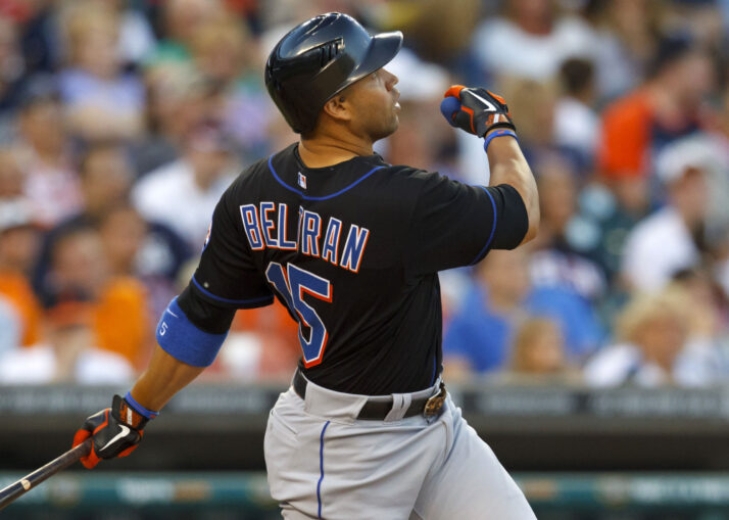
10. Carlos Beltran. Beltran is the only new entry in his first year of eligibility, and the nine-time All-Star has the stats for the Hall, but his recent scandal involving the Astros World Series win, could cost him some votes.
There were other new entries, including closer, Francisco Rodriguez, who debuts at #172. To close off the list, a new #300 had to come in, which was Derrek Lee.
Thank you all for your support, and we encourage you to cast your votes and offer your opinions.
Our All-Time Top 50 St. Louis Cardinals have been revised to reflect the 2021 Season
Yes, we know that this is taking a while!
As many of you know, we here at Notinhalloffame.com are slowly generating the 50 of each major North American sports team. That being said, we have existing Top 50 lists out and we always consistently look to update them when we can and based on necessity. As such, we are very happy to present our pre-2022 revision of our top 50 St. Louis Cardinals.
As for all of our top 50 players in baseball we look at the following:
1. Advanced Statistics.
2. Traditional statistics and how they finished in the National League.
3. Playoff accomplishments.
4. Their overall impact on the team and other intangibles not reflected in a stat sheet.
The Cardinals earned a Wild Card berth in the playoffs, but lost in that round. With a team as old and successful as St. Louis, little movement occurred in our top 50, none in the top five, and there were no new entries.
As always, we present our top five.
1. Stan Musial
4. Bob Gibson
5. Ozzie Smith
You can find the entire list here.
Pitcher, Adam Wainwright moved up one spot to #11.
It is worth noting that Catcher, Yadier Molina, who announced that 2022 will be his final season, did not climb up any spot in 2021, and remains at #13.
We welcome your input and comments and as always, we thank you for your support.
The Rock Hall responds to Dolly Parton's request to be removed from the ballot
That didn’t take long.
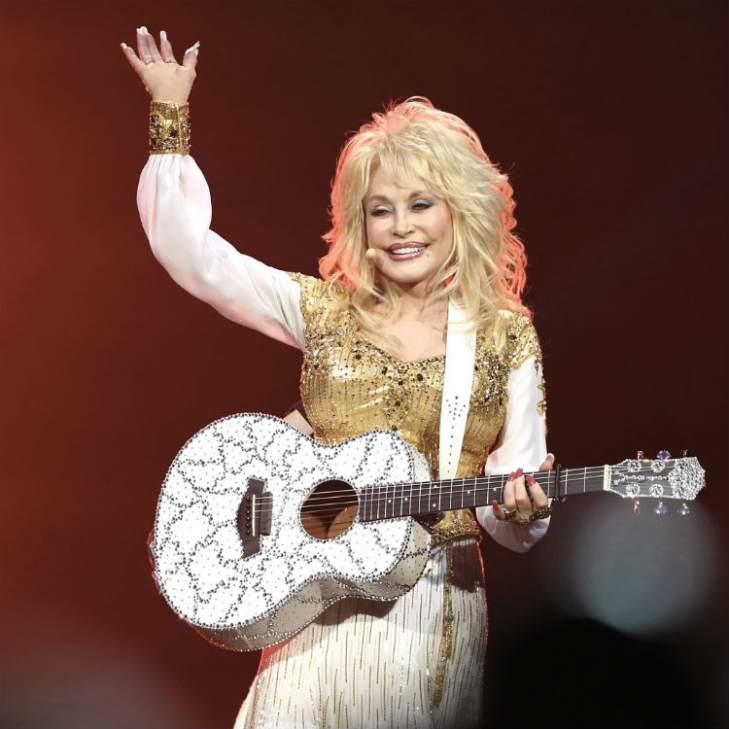
Following Dolly Parton’s Instagram post where she respectfully asked to be removed from the ballot, the Rock and Roll Hall of Fame responded:
“All of us in the music community have seen Dolly Parton’s thoughtful note expressing her feeling that she has not earned the right to be inducted into the Rock & Roll Hall of Fame. In addition to her incredible talent as an artist, her humility is another reason Dolly is a beloved icon by millions of fans around the world.
From its inception, Rock & Roll has had deep roots in Rhythm & Blues and Country music. It is not defined by any one genre, rather a sound that moves youth culture. Dolly Parton’s music impacted a generation of young fans and influenced countless artists that followed. Her nomination to be considered for induction into the Rock & Roll Hall of Fame followed the same process as all other artists who have been considered.
Dolly’s nomination, along with the other 16 for the class of 2022 was sent out earlier this month to our 1,200 general ballot voters, the majority of whom are artists themselves, for consideration for induction at our ceremony.
We are in awe of Dolly’s brilliant talent and pioneering spirit and are proud to have nominated her for induction into the Rock & Roll Hall of Fame.”
We applaud the Rock Hall’s quick response, and we wonder if their verbiage indicates that she might have been selected, or likely to be, as many of the votes have already come in.
Either way, we will be watching the drama unfold.
The 2021 Fictitious Athlete Hall of Fame is finally announced!
Oh, what a special day.
When you run a website called Notinhalloffame.com, you are naturally obsessed with existing Halls of Fame. The natural progression is creating your own.
Actually, we have three!
The first one we built was the Fictitious Athlete Hall of Fame, in 2013, with Rocky Balboa enshrined as the inaugural inductee. Since that time, we have had an open vote where you, the people, decided who should be inducted.
In the years after, you have inducted into the Athlete wing, Roy Hobbs (The Natural), Crash Avis (Bull Durham), Ricky “Wild Thing” Vaughn (Major League), Happy Gilmore (Happy Gilmore), Reggie Dunlop (Slap Shot), The Hanson Brothers (Slap Shot), Charlie Conway (The Mighty Ducks) Benny “The Jet” Rodriguez (The Sandlot), Apollo Creed (Rocky), Willie “Mays” Hayes (Major League), Forrest Gump (Forrest Gump), Bobby Boucher (The Waterboy), Paul “Wrecking” Crewe (The Longest Yard), Dottie Hinson (A League of Their Own), Daniel LaRusso (The Karate Kid), Clubber Lang (Rocky), Ivan Drago (Rocky), “Fast” Eddie Felson (The Hustler & The Color of Money, Al Bundy (Married...with Children), Homer Simpson (The Simpsons) and Johnny Lawrence (The Karate Kid and Cobra Kai).
After a delayed vote, (let’s say due to COVID-19), the Class of 2021 is now official based on your votes, staggered over three stages.
This year, the Fictitious Athlete Hall of Fame Athlete Wing welcomes:
Jake Taylor: Major League & Major League 2. Taylor (Tom Berenger) joins his fellow teammates from Cleveland, Ricky Vaughn and Willie “Mays” Hays into the Hall. The veteran Catcher would later parlay his wits into an interim managerial role with the team.
Jimmy Chitwood: Hoosiers. Chitwood (Maris Valainis) finally enters the Hall after making the Final round four previous times. His skill took small town Hickory to the Indiana State Basketball Championship in 1954, an upset of epic proportions.
Sam Malone: Cheers. A finalist every year since we have been doing this, “Mayday” (Ted Danson) brings his five years as a Red Sox Relief Pitcher into the Fictitious Athlete Hall of Fame.
You can view their complete bios here.
The Contributor Wing has previously inducted Harry Doyle (Major League), Carl Spackler (Caddyshack), Mr. Miyagi (The Karate Kid), Chubbs Peterson (Happy Gilmore), Gordon Bombay (The Mighty Ducks), Mickey Goldmill (Rocky), Morris Buttermaker (The Bad News Bears), Coach Ernie Pantusso (Cheers), Adrian Balboa (Rocky), Jimmy Dugan (A League of Their Own), and the Gopher (Caddyshack).
This year, the Fictitious Athlete Hall of Fame Contributor Wing welcomes:
Norman Dale: Hoosiers. In the same year that Jimmy Chitwood finally enters, another perennial Finalist from Hoosiers enters with Norman Dale (Gene Hackman). Dale led Hickory to a win at State, and atoned for many of his past misdeeds.
Paulie Pennino: Rocky, Rocky II, Rocky III, Rocky IV and Rocky V. Paulie joins the Rocky series brethren as the downtrodden sister of Adrian, and eventual cornerman of the Heavyweight Boxing Champion of the World.
You can view their complete bios here.
The Veteran Wing has previously inducted Andy “Champ” Purcell (The Champ), Dennis Ryan (Take Me Out to the Ball Game), Guffy McGovern (Angels in the Outfield), Huxley College (Horse Feathers), Sport Goofy (Disney) and Joe Hardy/Joe Boyd (Damn Yankees).
This year, the Fictitious Athlete Hall of Fame Veteran Wing welcomes:
Harold Lamb: The Freshman. Lamb played college football for Tate University, and the undersized talent got the girl at the end.
Voting has now begun for the Class of 2022, which we hope you will take part in.
As always, we thank you for your support, and we are excited to keep this project alive!
