

Committee Chairman
29. Kyle Hamilton
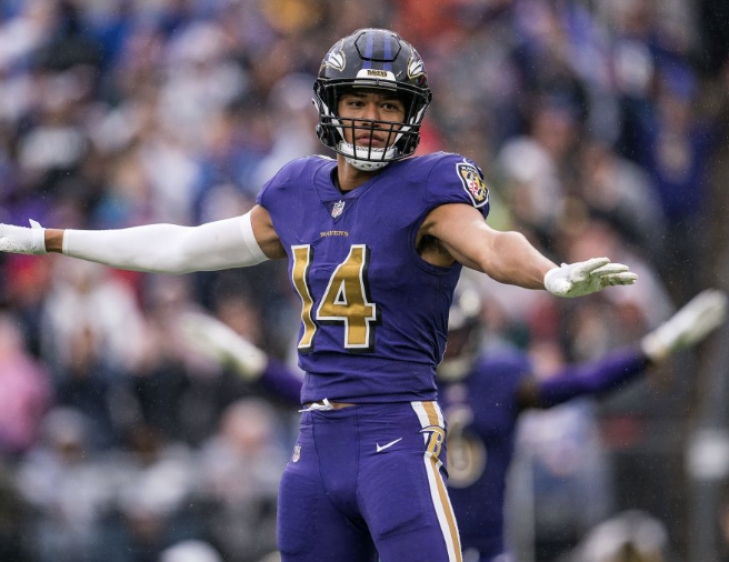
Drafted 14th overall in the first round of the 2022 NFL Draft out of Notre Dame—where he was a Consensus All-American—Kyle Hamilton brought rare unicorn traits to Baltimore's secondary. Standing 6 feet 4 inches and weighing 224 pounds, he disrupted traditional positional labels, quickly establishing himself as a foundational piece of the Ravens' modern defensive framework.
Hamilton blends the size of a linebacker with the coverage ability of a safety and the agility of a slot corner. He acts as a versatile hybrid, lining up in various positions such as deep half, stacking the box to defend the run, moving into the slot to cover pass-catchers, or rushing through gaps as a pass-rushing threat from the edge. His quick processing and burst of speed enable him to disrupt perimeter screens and interrupt seam routes early, preventing throws before they develop.
In his 2022 rookie season, Hamilton established a significant role as a slot defender and box safety, earning PFWA All-Rookie Team honors with 62 tackles, 2.0 sacks, and five pass deflections. His true breakthrough came in 2023 when Mike Macdonald fully unlocked his potential within the defense. Playing 15 games as a starter, Hamilton recorded 81 tackles, 3.0 sacks, 10 tackles for loss, 13 pass deflections, and four interceptions, including a pick-six. His impactful performance led to his first Pro Bowl selection and First-Team All-Pro honors.
In 2024, he maintained a world-class level, finishing with a career-high 107 combined tackles, 2.0 sacks, two forced fumbles, and an interception, earning his second Pro Bowl and Second-Team All-Pro honors. In 2025, Hamilton continued to be the driving force of Baltimore's secondary. Playing all 16 games, he recorded another outstanding season with 105 combined tackles, 7.0 tackles for loss, nine pass deflections, and two forced fumbles. His exceptional play earned him his second First-Team All-Pro selection and his third straight Pro Bowl appearance.
Entering the 2026 season, Hamilton stands as one of the most dominant and complete defensive weapons in football. Across his first four seasons in Baltimore, he has played in 64 regular-season games, accumulating 355 total tackles, 8.0 sacks, 25 tackles for loss, 36 pass deflections, and five interceptions.
Michigan State names it 2026 Hall of Fame Class

Regular visitors of notinhalloffame.com know that we are slowly working on the top 50 of every major team in the NHL, NBA, NFL, and MLB. Once that is done, we will examine how each team honors its past players, coaches, and executives. Eventually, we will do the same with major college programs. As such, it is important to us that Michigan State has announced the six players and a coach that will be inducted into its Athletic Hall of Fame Class of 2026.
The event will take place on September 11, with the inductees being honored the following day during the football game against Eastern Michigan.
The Class of 2026 members are:
Lindsay Bowen, Women’s Basketball, 2002-06. Bowen was a four-time Big Ten Selection and the 2003 Big Ten Freshman of the Year. She recorded 1,739 Points as a Spartan.
Dan Currie, Football, 1955-57. Currie helped take Michigan State to National Championships in 1955 and 1957 and in ’57 was a Consensus All-American. He also helped take MSU to a Rose Bowl win in 1956. He played nine seasons in the NFL, seven of which were in Green Bay, where he helped the team win two NFL Championships.
Walt Drenth, Track & Field Coach, 2000-20. Drenth led the women’s track team to five cross country conference titles and the 2014 National Championship. He was also a six-time Big Ten Coach of the Year, and his athletes won two individual NCAA Titles and 37 Big Ten Titles.
Tico Duckett, Football & Men’s Track & Field, 1989-92. Playing at Running Back, Duckett rushed for 4,176 Yards and 26 TDs, his best season coming in 1990, when he rushed for a conference-leading 1,394 Yards. For his efforts, he was named the Big Ten Offensive Player of the Year. Duckett also competed for the Spartans in the 55-m and 100-m dash.
Sue Latter-Addison, Women’s Track & Field, 1975-78. A pioneer in school history, Latter-Addison was part of the inaugural women’s track team and later would win the 44-yard and 88-yard Big Ten Titles, while also helping the Spartans win the conference title. She later won the National Title in the 800.
Kalin Lucas, Men’s Basketball, 2007-11. Playing at Point Guard, Lucas was the 2009 Big Ten Player of the Year and guided the Spartans to the National Championship Game against North Carolina and back to the Final Four a year later. The two-time First Team All-Big Ten Selection had 1,996 Points, which is enough for fifth all-time in program history. Lucas went on to play professionally for 14 years in countries such as Greece, Turkey, Israel, Serbia, Italy, Kuwait, and the UAE. He also played one game each for the Memphis Grizzlies and the Detroit Pistons in the NBA.
Leah O’Connor-Falland, Women’s Cross Country & Track Field, 2011-15. O’Connor-Falland won two National Championships, the 2014 Outdoor Steeplechase and 2015 Indoor Mile. She also helped Michigan State win the 2014 National Championship.
We here at Notinhalloffame.com would like to congratulate the impending members of the Michigan State University Athletic Hall of Fame.
The Pro Football Hall of Fame Revisited Project: 1999 Preliminary VOTE
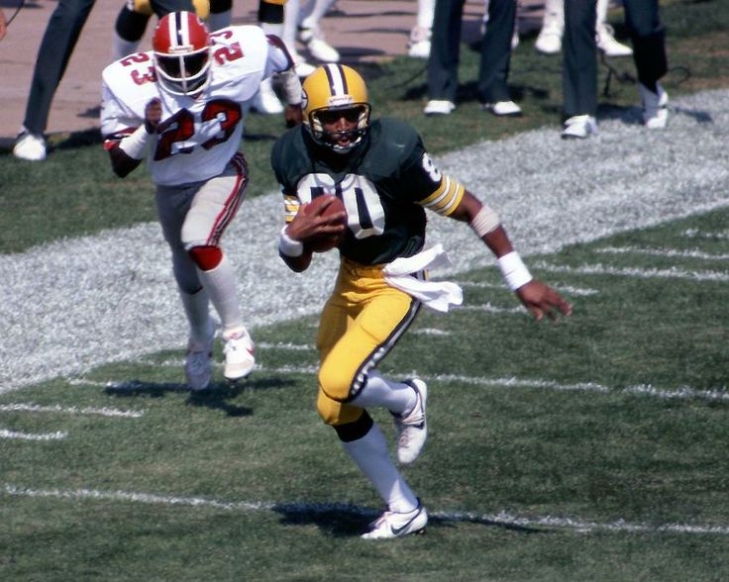
1999 PRELIMINARY RESULTS:
Thank you to all who participated in the Pro Football Hall of Fame Revisited Project. If you are still determining what that is, we treated the PFHOF as having its first class in January 1946.
We have completed the first 50 years.
For “1999,” a Preliminary Vote with over 100 players whose playing career ended by 1993. We also follow the structure in which players have 20 years of eligibility, and if they do not make it into the Hall, they are relegated to the Senior Pool.
Each voter was asked to select 25 names from the preliminary list, and the top 25 vote-getters were named Semi-Finalists.
A week later, voters will be asked to select 15 names from the 25 Semi-Finalists, then choose five from the remaining 15. We will continue this process every week until we catch up to the current year.
Please note that a significant change occurred “years ago,” allowing voters to submit fewer than the allotted number of spots.
31 Votes took place.
This is for the “Modern Era”
Bold indicates they advanced to the Semi-Finals:
*Indicates they have been removed from future ballots
|
Player |
Year of Eligibility |
Vote Total |
|
Lawrence Taylor LB |
1 |
28 |
|
Eric Dickerson RB |
1 |
26 |
|
James Lofton WR |
1 |
25 |
|
Howie Long DE-NT |
1 |
23 |
|
Mike Munchak G |
1 |
23 |
|
Andre Tippett LB |
1 |
19 |
|
Louis Wright DB |
8 |
18 |
|
Cliff Harris S |
15 |
16 |
|
L.C. Greenwood DE |
13 |
16 |
|
Drew Pearson WR |
11 |
15 |
|
Roger Craig RB |
1 |
15 |
|
Bob Griese QB |
14 |
14 |
|
George Kunz T |
14 |
14 |
|
Lemar Parrish DB |
12 |
14 |
|
Todd Christensen TE |
6 |
14 |
|
Ken Stabler QB |
10 |
13 |
|
Billy “White Shoes” Johnson |
6 |
13 |
|
Otis Taylor WR-FL |
19 |
12 |
|
Ken Riley DB |
11 |
12 |
|
Ken Anderson QB |
8 |
12 |
|
Joe Jacoby T |
1 |
12 |
|
Lester Hayes DB |
8 |
11 |
|
Joe Klecko DE |
6 |
11 |
|
Jimbo Covert T |
4 |
11 |
|
Deron Cherry DB |
3 |
11 |
|
Floyd Little RB |
19 |
10 |
|
Walt Sweeney G |
19 |
10 |
|
Curley Culp DT-NT |
13 |
9 |
|
Russ Francis TE |
5 |
9 |
|
Ottis Anderson RB |
2 |
9 |
|
Harold Carmichael WR |
10 |
8 |
|
Mark Gastineau DE |
6 |
8 |
|
Winston Hill T |
17 |
7 |
|
Jim Marshall DE |
15 |
7 |
|
Fred Dean DE |
9 |
7 |
|
Joey Browner DB |
2 |
7 |
|
Andy Russell LB |
18 |
6 |
|
Bill Bergey LB |
14 |
6 |
|
Harold Jackson WR |
11 |
6 |
|
Ed “Too Tall” Jones DE |
5 |
6 |
|
*Daryle Lamonica QB |
20 |
5 |
|
Jake Scott DB |
16 |
5 |
|
Bubba Baker DE |
4 |
5 |
|
Stanley Morgan WR |
4 |
5 |
|
Everson Walls DB |
1 |
5 |
|
Larry Brown RB |
18 |
4 |
|
Ed Budde G |
18 |
4 |
|
Doug Wilkerson G |
10 |
4 |
|
Ed White G |
9 |
4 |
|
Harry Carson LB |
6 |
4 |
|
Fred Smerlas NT |
2 |
4 |
|
Phil Simms QB |
1 |
4 |
|
*Cornell Green DB |
20 |
3 |
|
Lee Roy Jordan LB |
18 |
3 |
|
Ernie McMillan T |
18 |
3 |
|
Dick Anderson DB |
17 |
3 |
|
Pat Fischer CB |
17 |
3 |
|
Mike Curtis LB-FB |
16 |
3 |
|
Coy Bacon DE |
13 |
3 |
|
Chuck Foreman RB |
13 |
3 |
|
Jack Tatum DB |
14 |
3 |
|
Isiah Robertson LB |
12 |
3 |
|
Rick Upchurch WR/R |
11 |
3 |
|
Lyle Alzado DE |
9 |
3 |
|
Matt Blair LB |
9 |
3 |
|
Jeff Van Note C |
8 |
3 |
|
Nolan Cromwell DB |
7 |
3 |
|
Dennis Harrah G |
7 |
3 |
|
Randy Cross G-C |
6 |
3 |
|
Doug Williams QB |
5 |
3 |
|
Dexter Manley DE |
3 |
3 |
|
Roy Green WR |
3 |
3 |
|
Frank Minnifield DB |
2 |
3 |
|
Jay Hilgenberg C |
1 |
3 |
|
Gale Gillingham G-DT |
18 |
2 |
|
Jerry Smith TE |
17 |
2 |
|
Jim Bakken PK |
16 |
2 |
|
Ron McDole DE-DT |
16 |
2 |
|
Mike Wagner DB |
14 |
2 |
|
Mel Gray WR |
12 |
2 |
|
Bert Jones QB |
12 |
2 |
|
Harvey Martin DE |
11 |
2 |
|
Riley Odoms TE |
11 |
2 |
|
Gary Johnson DT |
9 |
2 |
|
Tom Jackson LB |
8 |
2 |
|
Dwight Clark WR |
7 |
2 |
|
Wes Chandler WR |
6 |
2 |
|
Neil Lomax QB |
6 |
2 |
|
Christian Okoye RB |
2 |
2 |
|
Mark Clayton WR |
1 |
2 |
|
Bill Fralic G |
1 |
2 |
|
John Niland G |
19 |
1 |
|
Roman Gabriel QB |
17 |
1 |
|
Ralph Neely T |
17 |
1 |
|
George Atkinson DB |
15 |
1 |
|
Lydell Mitchell RB |
14 |
1 |
|
Lawrence McCutchen RB |
13 |
1 |
|
Rich Saul C |
13 |
1 |
|
Billy Sims RB |
10 |
1 |
|
Joe Theismann QB |
9 |
1 |
|
Marvin Powell T |
7 |
1 |
|
Rulon Jones DE |
6 |
1 |
|
Dave Brown DB |
5 |
1 |
|
Hanford Dixon DB |
5 |
1 |
|
Mike Quick WR |
4 |
1 |
|
Keena Turner LB |
4 |
1 |
|
Curt Warner RB |
4 |
1 |
|
Raymond Clayborn DB |
3 |
1 |
|
Hugh Green LB |
3 |
1 |
|
Matt Millen LB |
3 |
1 |
|
James Brooks RB |
2 |
1 |
|
Michael Carter NT |
2 |
1 |
|
Freeman McNeil RB |
2 |
1 |
|
Neal Anderson RB |
1 |
1 |
|
Keith Millard DT-NT |
1 |
1 |
|
Steve Nelson LB |
7 |
0 |
|
Jerome Brown DT |
3 |
0 |
|
Joe Morris RB |
3 |
0 |
|
*Chip Banks LB |
2 |
0 |
|
*Bob Golic NT-DT-LB-DE |
2 |
0 |
|
*Jacob Green DE |
2 |
0 |
|
*Louis Lipps WR |
2 |
0 |
|
*Al Toon WR |
2 |
0 |
|
Dave Duerson DB |
1 |
0 |
|
David Fulcher DB |
1 |
0 |
|
Jerry Gray DB |
1 |
0 |
|
Drew Hill WR |
1 |
0 |
|
Bill Maas NT |
1 |
0 |
|
John Offerdahl LB |
1 |
0 |
This is for the Senior Era
Bold indicates they advanced to the Semi-Finals:
*Indicates that they will be removed from the ballot permanently.
|
Player |
Year |
Votes |
|
Alan Ameche FB |
14 |
8 |
|
Arch Ward CONTRIBUTOR |
10 |
8 |
|
Bobby Boyd DB |
6 |
8 |
|
Dick Schafrath T-G-DE |
3 |
8 |
|
Charlie Conerly QB |
13 |
7 |
|
Charles Bidwill OWNER |
10 |
7 |
|
Tank Younger FB-LB-HB |
16 |
6 |
|
Art Powell E |
6 |
6 |
|
Houston Antwine DT |
2 |
6 |
|
Billy Wilson FL-E |
14 |
5 |
|
Greasy Neale COACH |
10 |
5 |
|
Jim Ray Smith G-T |
10 |
5 |
|
Larry Grantham LB |
2 |
5 |
|
*Bruno Banducci G |
20 |
4 |
|
Dave Grayson DB |
4 |
4 |
|
Erich Barnes DB |
3 |
4 |
|
Rich Jackson DE |
2 |
4 |
|
Harlon Hill E-DB |
12 |
3 |
|
*Les Bingaman DG-G-C |
20 |
3 |
|
George Preston Marshall OWNER |
10 |
3 |
|
Dan Reeves OWNER |
10 |
3 |
|
Max McGee E |
7 |
3 |
|
Fuzzy Thurston G |
7 |
3 |
|
Jack Kemp QB |
5 |
3 |
|
Boyd Dowler FL-SE-LB |
3 |
3 |
|
Rosey Grier DT-DE |
8 |
2 |
|
Cookie Gilchrist FB |
7 |
2 |
|
Goose Gonsoulin DB |
6 |
2 |
|
Don Meredith QB |
6 |
2 |
|
George Saimes DB |
2 |
2 |
|
John Brodie QB |
1 |
2 |
|
Abner Haynes HB |
7 |
1 |
|
Jim Katcavage DE |
6 |
1 |
|
Butch Byrd DB |
3 |
1 |
|
*Clem Daniels HB-DB |
6 |
0 |
|
Babe Parilli QB |
5 |
0 |
|
*Howard Mudd G |
4 |
0 |
|
Carroll Dale WR-E |
1 |
0 |
|
Bob Jeter DB-WR |
1 |
0 |
|
Jim Nance RB-FB |
1 |
0 |
|
Mike Stratton LB |
1 |
0 |
This is for the “Coaches/Contributors”
Bold indicates they advanced to the Semi-Finals:
*Indicates that they will be removed from the ballot permanently.
|
Name |
Year |
Votes |
|
SCOUT: Bill Nunn |
6 |
16 |
|
COACH Tom Flores |
3 |
12 |
|
EXEC Ron Wolf |
1 |
11 |
|
SCOUT: Eddie Kotal |
4 |
10 |
|
EXEC: Jim Finks |
11 |
8 |
|
TV EXEC: Roone Arledge |
13 |
6 |
|
SCOUT : Jack Vainsi |
4 |
6 |
|
COACH: Buddy Ryan |
2 |
6 |
|
EXEC: George Young |
2 |
6 |
|
SCOUT: John Wooten |
4 |
5 |
|
EXEC: George Halas Jr. |
20 |
4 |
|
NARRATOR: John Facenda |
4 |
4 |
|
SCOUT: Lloyd Wells |
4 |
4 |
|
COACH: Chuck Knox |
3 |
4 |
|
OWNER: Bud Adams |
18 |
3 |
|
TV COMMENTATOR: Howard Cosell |
13 |
3 |
|
OWNER: Clint Murchison |
18 |
2 |
|
COACH: Bill Arnsbarger |
14 |
2 |
|
COACH: Bum Phillips |
12 |
2 |
|
OWNER: Art Modell |
14 |
1 |
|
OWNER: Jack Kent Cooke |
4 |
1 |
|
OWNER: William Clay Ford |
4 |
1 |
|
COACH: Jerry Glanville |
4 |
1 |
|
COACH: Richie Petitbon |
4 |
1 |
|
COACH: Lindy Infante |
11 |
0 |
|
COACH: John Robinson |
5 |
0 |
|
*COACH: Joe Collier |
4 |
0 |
|
*COACH: Tom Catlin |
2 |
0 |
|
*OWNER: Robert Irsay |
2 |
0 |
|
COACH: Zeke Bratkowski |
1 |
0 |
|
EXEC: Charley Casserly |
1 |
0 |
|
COACH: Wayne Fontes |
1 |
0 |
|
COACH: Rich Kotite |
1 |
0 |
|
COACH: Floyd Peters |
1 |
0 |
|
COACH: Joe Scannella |
1 |
0 |
Next week, we will announce the Semi-Finalists for the 1999 Pro Football Hall of Fame Revisited Project.
Our All Time Top 50 Arizona Cardinals have been revised to reflect the 2025 Season
Yes, we know that this is taking a while!
As many of you know, we at Notinhalloffame.com are slowly generating the top 50 of each major North American sports team. That being said, we maintain and update our existing Top 50 lists annually. We are pleased to present our pre-2026 revision of our top 50 Arizona Cardinals.
As for all of our top 50 players in baseball, we look at the following:
1. Duration and Impact.
2. Traditional statistics and how they finished in the National Football League.
3. Advanced Statistics.
4. Playoff performance.
5. Their respective legacy on the team.
6. How successful the team was when he was there.
7. Respecting the era in which they played.
Criteria 1-4 will make up the lion’s share of the algorithm. Please note that we have implemented this for the first time. This has changed the rankings all throughout the board.
Last year, the Arizona Cardinals were awful, winning only three games. As this team's origins date back over a century, it takes a lot to enter this list, or even move up within it. As such, there was only one elevation in this list.
As always, we present our top five, which saw no changes.
1. Larry Fitzgerald
2. Larry Wilson
3. Charley Trippi
4. Roger Wehrli
5. Dan Dierdorf
You can find the complete list here:
Eight-time Pro Bowl Safety Budda Baker moved to #12 from #17.
Of note, now a Minnesota Viking, Quarterback Kyler Murray remained at #49.
We thank you for your continued support of our lists on Notinhalloffame.com.
