


Committee Chairman
6. Babe Adams
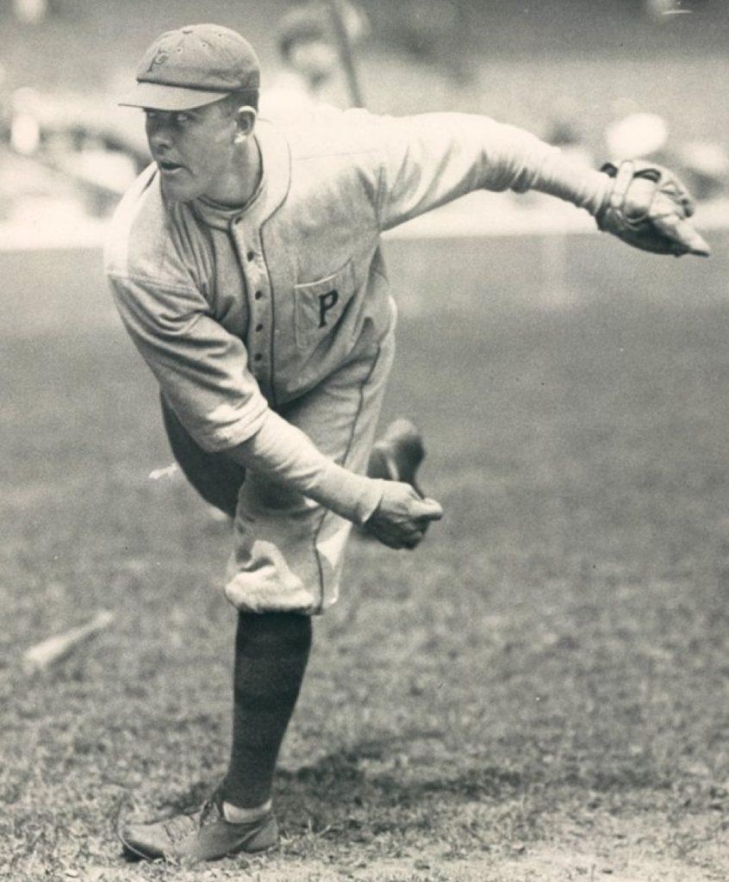
The history of pitching is full of fire-breathers who used raw speed to overpower batters, but Babe Adams took a different approach. Throughout his 19-year MLB career, mostly with the Pittsburgh Pirates, except for a brief relief stint with the St. Louis Cardinals in 1906, Adams made his mark with remarkable control. He turned the strike zone into his personal canvas of precision, effectively neutralizing the best hitters of the Deadball Era by avoiding unnecessary walks.
His official debut as a key player coincided with the historic 1909 pennant race, leading to one of the most memorable rookie performances ever seen on baseball's biggest stage. Facing Ty Cobb and the formidable Detroit Tigers in the Fall Classic, manager Fred Clarke gambled on his young right-hander. Adams responded with exceptional excellence, pitching and winning three games, including a complete-game shutout in the crucial Game 7. He dominated the American League champions over 27 intense innings, allowing only four runs, ending the series with a remarkable 1.33 ERA and a 0.889 WHIP, earning Pittsburgh its first world championship.
Far from being just a flash in October, Adams quickly proved himself as a top-tier pitcher. He showcased a remarkably smooth and effortless delivery paired with a potent curveball, achieving two outstanding 20-win seasons in 1911 and 1913. Consistently excelling in run prevention and baserunner suppression, he led the National League in WHIP in 1911 and 1914, and frequently topped the circuit in FIP. This highlights that his effectiveness was largely independent of his team's defensive support.
Yet, the immense physical toll of throwing over 300 innings a year finally caught up to him. A severe shoulder injury severely derailed his velocity, culminating in a dismal 1916 campaign that looked like a permanent career exit. Adams spent the bulk of the subsequent two summers buried in the minor leagues, a stretch that would have broken a lesser competitor.
His second act represents one of the greatest, unheralded comeback stories in baseball folklore. Returning to Forbes Field in 1919 with a completely rebuilt pitching repertoire, Adams embarked on a spectacular twilight peak that defied both Father Time and the explosive arrival of the live-ball era. From 1919 through 1921, he systematically paralyzed National League lineups to lead the league in WHIP for three consecutive summers. Even more staggering, across a four-year window from 1919 to 1922, his control reached an era-defining peak, leading all of baseball in fewest walks per nine innings and strikeout-to-walk ratio. Opposing hitters knew exactly where the pitch was going, but his pinpoint accuracy meant they still couldn't square it up.
By the time the mid-1920s rolled around, Adams had transitioned into a revered, 40-something elder statesman in the clubhouse. While his overall playing time was significantly reduced, he served as a highly functional veteran anchor on the historic 1925 championship roster. When the Pirates defeated Washington in a thrilling seven-game Fall Classic that October, Adams etched his name permanently into a unique corner of club lore, becoming the solitary player to bridge the generation gap as a member of both the 1909 and 1925 World Series title teams.
By 1924, his performance had declined, but he was in his 40s by then. In 1925, Adams participated in the World Series; although he had limited playing time, he helped the championship team. This made him the only player to win both Pittsburgh's 1909 and 1925 World Series titles. His final season was in 1926, and he retired with a record of 194-139 and a WHIP of 1.090.
4. Willie Stargell
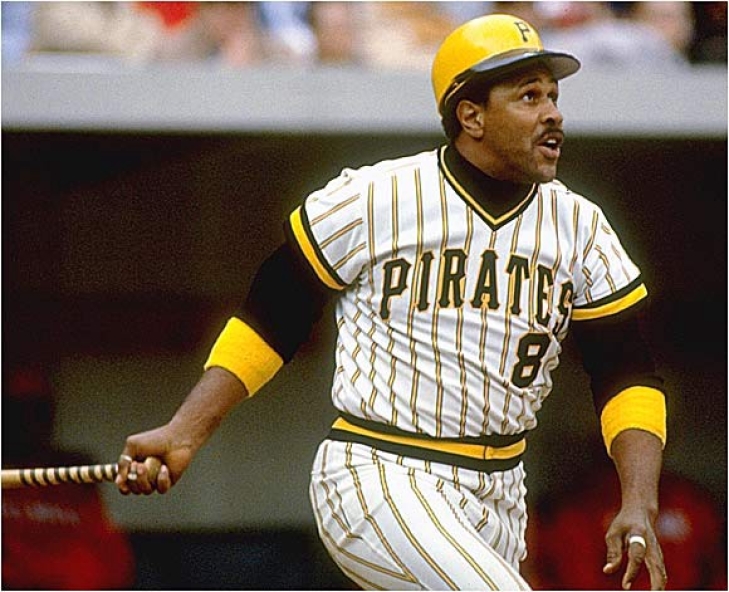
When Willie Stargell debuted for the Pirates in late summer of 1962, he didn't immediately shift the National League's landscape, but the tall left-handed slugger from Oklahoma quickly became a towering presence. Initially playing left field, "Pops" spent the 1960s providing raw power alongside Roberto Clemente. He swung a heavy bat with a distinctive, sweeping motion that struck fear into pitchers, routinely hitting tape-measure home runs over Forbes Field's roofs.
By the 1970s, his influence soared to a historic, league-shaping peak. Stargell won two National League home run titles, hitting a career-best 48 in 1971 and 44 in 1973. In those standout seasons, he also led the league in slugging percentage and narrowly missed the MVP award. As the cleanup hitter for the "Lumber Company" lineup that won the 1971 World Series, his true masterpiece was reserved for the final years of his career.
By the late 1970s, Stargell had moved to first base and became the team's clear leader. Before the famous 1979 season, he changed the clubhouse atmosphere by adding embroidered "Stargell Stars" to the team's unique pillbox caps, giving them to players who performed well in key moments. With his guiding presence, the team embraced Sister Sledge’s song "We Are Family," turning their baseball squad into a symbol of unity and culture.
In the diamond spotlight, the 39-year-old veteran led the team to victory. He shared the 1979 National League MVP award with Keith Hernandez and delivered an impeccable postseason performance. Stargell expertly broke down opposing pitchers, earning both the NLCS and World Series MVP honors. He became the first player in major league history to win all three MVP titles in one season, highlighted by a crucial, go-ahead home run in Game 7 against Baltimore that clinched the world championship.
His physical baseline broke down rapidly under the weight of knee injuries following that magical autumn, limiting his playing time until his permanent retirement at the conclusion of the 1982 schedule. He walked away from the diamond as a lifelong, 21-year one-uniform icon, holding the definitive all-time franchise records with 475 home runs and 1,540 runs batted in.
The Pirates retired his No. 8, and in 1988, he was inducted into the Baseball Hall of Fame on his first ballot. The franchise also unveiled a bronze statue of Stargell outside PNC Park to honor his legacy.
5. Arky Vaughan
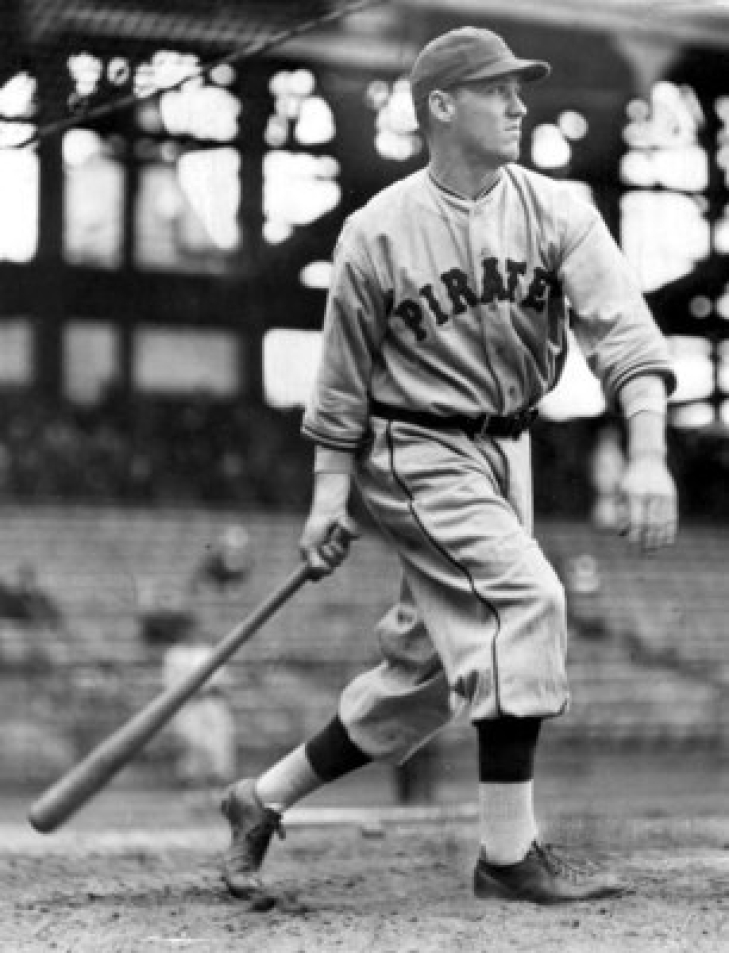
Following the footsteps of a legendary hometown figure can overshadow a young player's career, but Arky Vaughan spent ten years demonstrating he could rise above the shadow of Honus Wagner. Coming from Arkansas farmland to earn his lifelong nickname, Vaughan arrived in Pittsburgh with a quiet, deadly focus that reflected the industrial surroundings of Forbes Field. While Wagner himself wandered the dugout as the team's iconic coach and mentor, Vaughan dedicated himself to building a legacy that ranks just below "The Flying Dutchman" among the greatest shortstops in history.
Initially, Vaughan was expected to observe during the 1932 schedule, learning from veteran Tommy Thevenow. However, an ankle injury to Thevenow put Vaughan, then just 20, directly into the action. He didn't merely survive the challenge; he secured the starting role for the next ten summers.
By his second season in 1933, he was consistently turning extra-base hits into a regular occurrence, leading the National League with a impressive 19 triples. The next summer marked the beginning of a historic nine-year streak of appearances in the All-Star Game, with the first eight played while he was a Pittsburgh player.
His 1935 season is considered one of the greatest offensive displays in Major League history. Vaughan dominated the National League, ending with a remarkable .385/.491/607 slash line. He also showed surprising power for a hitter known for contact, hitting a career-high 19 home runs and driving in 99 RBIs, finishing third in the NL MVP voting. His .385 batting average and 1.098 OPS from that summer remain franchise records to this day.
Evaluating Vaughan only at his peak underestimates his remarkable consistency. He was a dependable hitter, consistently maintaining a batting average above .300 in ten straight seasons with Pittsburgh. His outstanding bat speed, combined with sharp spatial awareness and disciplined plate approach, allowed him to walk nearly four times more often than he struck out throughout his career. This made it very difficult for opposing pitchers to avoid him.
Following the 1941 season, continued conflicts with management led to a major trade that sent him to the Brooklyn Dodgers. He left Forbes Field with impressive career stats: a .324 batting average, 1,709 hits, 908 runs scored, and an outstanding .887 OPS over 1,411 games.
Tragically, his post-baseball life was cut short in 1952 when he drowned at the age of 40 during a sudden storm while trying to save a fishing companion, a final act of selflessness that underscored the quiet dignity he carried throughout his life.
Vaughan was chosen for the Baseball Hall of Fame in 1985 via the Veterans Committee.
3. Paul Waner
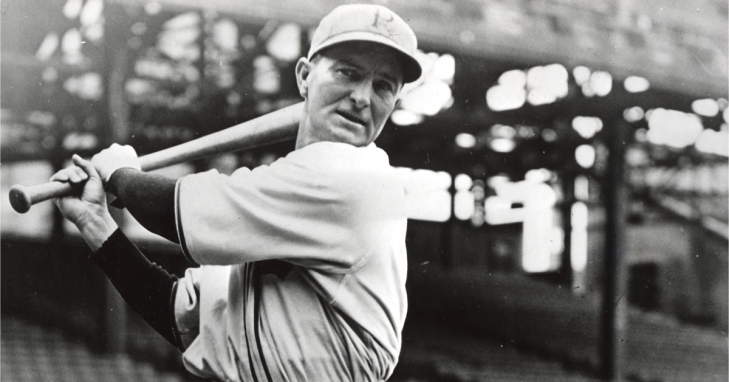
The 1920s brought us the Home Run era that we still enjoy today, but spray hitters have never gone out of style. One of the best was Paul Waner.
Waner learned how to bat by hitting corncobs from Oklahoma, but that is not the most unique part about developing his skills. Waner had poor eyesight, specifically due to astigmatism, and he learned how to hit the blurry baseballs in the middle. Unique as it was, it worked, and he tore it up in the Minors and would land a job in Pittsburgh in 1926 as their Rightfielder.
Waner had a terrific rookie year, leading the NL in Triples (22) with a .336 Batting Average. As an MLB sophomore, Waner had his best year as a professional, topping the league in Hits (237), Triples (18), RBIs (131), and Batting Average (.380). Waner rightfully won the MVP, and although we will argue this was his peak campaign, it was not his last excellent one.
Over the next ten years, Waner could be counted on to produce Hits, Runs, and a high Batting Average. From his rookie year in '26 until 1937, Waner never finished a year with a Batting Average lower than .300, and he won two more Batting Titles (1934 & 1936) to add to the one he captured when he was an MVP. Waner had nine years with over 100 Runs (including two league-leading years), was a two-time Hit leader, and two-time leader in Doubles. He never did capture a second MVP, but he was in the top five three times.
As Waner got older, his skills slipped, and the Pirates traded him to Brooklyn during the 1940 Season. He played five more years, but had he never played baseball after Pittsburgh, Waner would have been Cooperstown-worthy. With the Pirates, he had 2,868 Hits, with a Batting Average of .340.
Waner was chosen for the Baseball Hall of Fame in 1952, his seventh year on the ballot.
