


Committee Chairman
12. Jesse Barfield
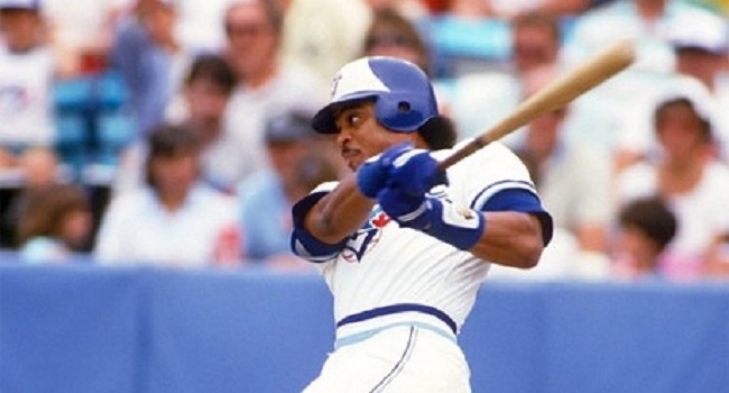
Plucked in the ninth round of Toronto's inaugural 1977 amateur draft, Jesse Barfield was methodically developed by the organization until he reached the majors in late 1981. While he carved out a regular roster spot over the subsequent seasons, it wasn't until 1985 that the fiercely athletic outfielder secured the everyday starting role in right field. Alongside Lloyd Moseby and George Bell, Barfield anchored what became arguably the most complete and feared major-league outfield of the decade.
His true elevation to stardom began during that breakout 1985 campaign. Rocketing into the upper tier of American League run producers, Barfield tallied 189 hits and 27 home runs while leading the expansion franchise to its first-ever division crown and finishing seventh in the AL MVP vote. He immediately eclipsed that stellar baseline with an absolute masterpiece in 1986. Securing his lone career All-Star selection, Barfield weaponized a violent right-handed stroke to blast a league-leading 40 home runs, becoming the first player in Blue Jays history to capture the American League home run crown. The spectacular summer earned him a Silver Slugger Award and a fifth-place finish in the MVP sweepstakes.
Yet, as potent as his bat could be, Barfield’s calling card was an absolute cannon of a throwing arm that struck pure terror into opposing base runners. He didn't merely play right field; he controlled that entire side of the grass, earning back-to-back Gold Glove Awards in 1986 and 1987. His defensive analytics were staggering—he paced the junior circuit in outfield assists four times during his Toronto tenure and twice led all American League outfielders in Total Zone Runs, proving he was criminally under-rewarded with just two physical trophies.
While he added another 28 home runs to his ledger in 1987, his offensive efficiency began a steady decline as strikeout totals mounted. As the front office attempted to re-tool the roster and find a different offensive mix, his long tenure in Ontario came to a sudden conclusion early in the 1989 campaign. On April 30, the Blue Jays executed a straight-up trade, sending their longtime right fielder to the New York Yankees in exchange for left-handed starter Al Leiter.
Barfield accumulated 919 hits, 179 home runs, and 527 RBIs while generating a .265/.335/.484 slash line (120 OPS+) in a Blue Jays uniform.
10. George Bell
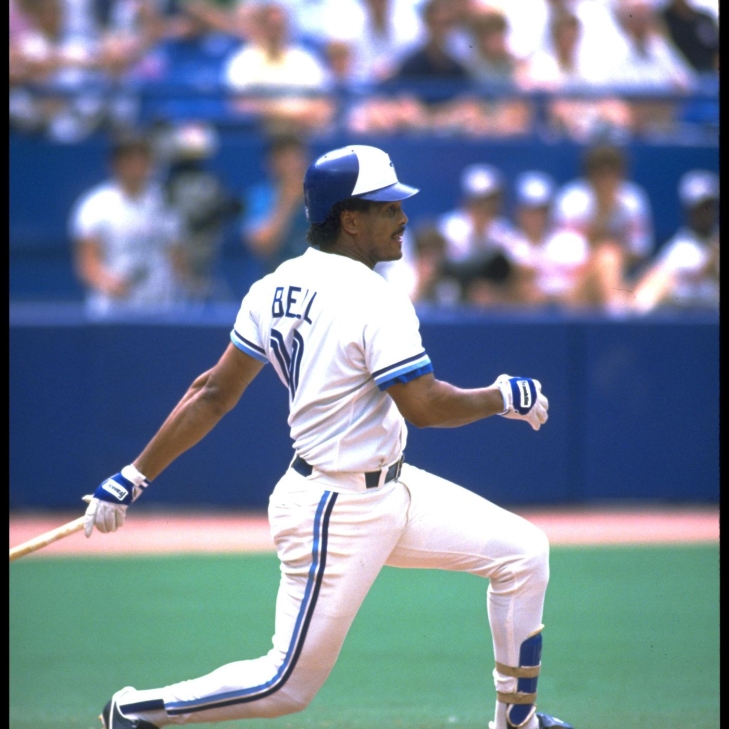
When the Philadelphia Phillies originally signed a raw, teenage George Bell out of the Dominican Republic in 1978, they little realized they were holding the fuse to an absolute offensive explosion that would detonate north of the border. Recognizing his immense, unpolished ceiling, the Toronto Blue Jays plucked Bell away in the 1980 Rule 5 draft. The roster rules forced them to keep the young outfielder on the major league bench for the entire 1981 campaign, well before his pitch recognition was ready, but after a necessary season-and-a-half of refinement in the minors, he returned to Exhibition Stadium for good as the team's everyday left fielder.
Armed with a ferocious, free-swinging right-handed stroke and an intense, combative edge, Bell instantly gave the young expansion franchise a terrifying middle-of-the-order identity. He launched 26 home runs during his first full summer in 1984, followed by a 28-long-ball campaign in 1985 that helped carry Toronto to its first-ever American League East division crown. He sustained that upward trajectory in 1986, hitting a crisp .309 with 31 home runs and 108 RBIs to secure a fourth-place finish in the AL MVP race.
That steady escalation culminated in a spectacular, historic 1987 masterpiece that permanently altered the franchise’s national profile. Battering junior circuit pitching all summer, Bell authored one of the most dominant individual campaigns of the decade, launching a massive 47 home runs and driving in a league-leading 134 runs while batting .308. His breathtaking power display earned him his first All-Star nod, a Silver Slugger, and the 1987 American League MVP Award. For a young organization operating outside the United States, seeing Bell crowned as the absolute best player in the sport was a monumental milestone that signaled Toronto’s arrival as a true baseball powerhouse.
While he never quite replicated those staggering triple-crown metrics, Bell remained a highly productive run producer over the next few seasons, driving in 104 runs in 1989 to steer the Blue Jays back to the postseason and capture another fourth-place MVP finish. Yet, despite his middle-of-the-order consistency, friction began to build behind the scenes. Bell’s fiercely proud, unapologetic temperament frequently clashed with managers, Toronto media, and local fans—particularly when the front office attempted to transition him into a designated hitter role.
Though he earned a second career All-Star selection during a 21-home run campaign in 1990, the emotional distance between the star outfielder and the organization had grown too wide. Following the conclusion of the 1990 season, Bell reached the end of his contract and chose to depart the only major league home he had ever known, hitting the free-agent market to sign a lucrative deal with the Chicago Cubs.
Bell appeared in 1,181 games. He accumulated 1,294 hits, 202 home runs, and 740 RBIs while generating a stellar .286/.325/.486 slash line (122 OPS+). He was inducted into the Canadian Baseball Hall of Fame, and his name was forever enshrined in the Toronto Blue Jays Level of Excellence.
11. Roberto Alomar
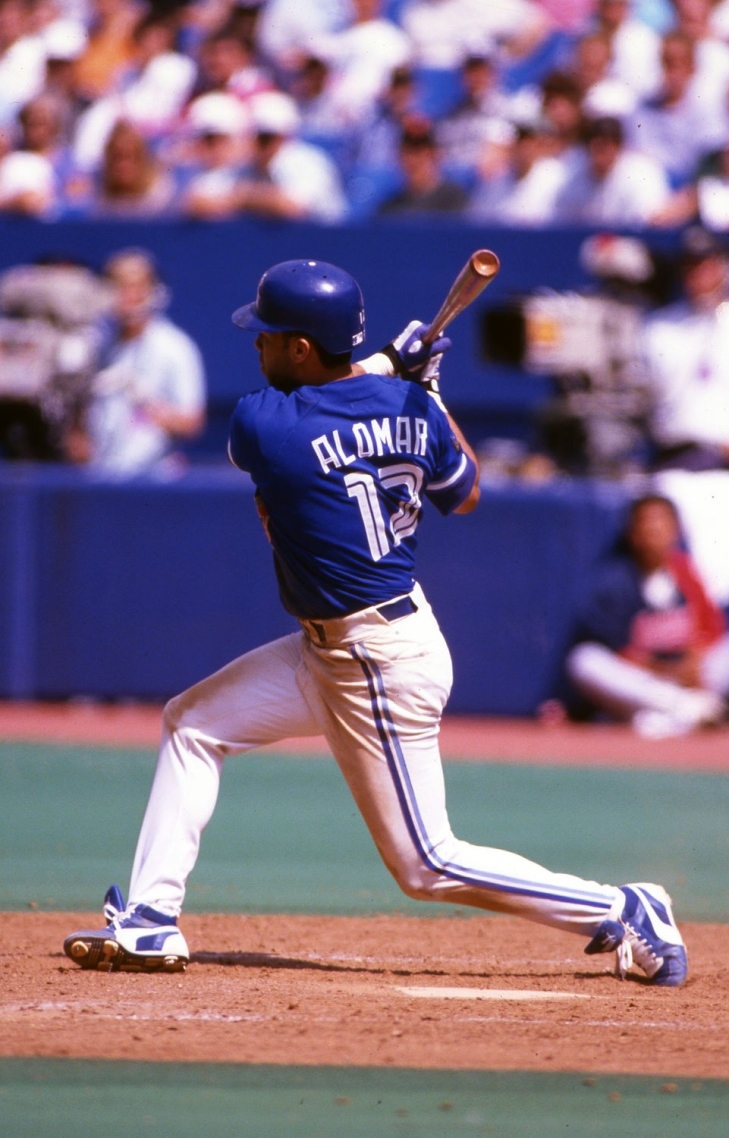
The December 1990 blockbuster trade with San Diego is famously known for bringing Joe Carter, who hit the most iconic home run in Canadian baseball history. However, it was the second player in that deal who truly transformed the franchise's competitive spirit. Roberto Alomar arrived at Toronto alongside Carter, in exchange for Fred McGriff and Tony Fernández, giving the Blue Jays a dynamic, top-tier presence. Over a focused five-year period, he not only strengthened the middle of the infield but also cemented his status as the leading second baseman in the league.
His 1991 summer debut north of the border set a high energetic tone. He stole 53 bases, hit 41 doubles, and achieved 11 triples while leading off the lineup. His vibrant presence drove the Blue Jays to win the AL East and placed him sixth in the AL MVP voting. In 1992, he improved further, batting .310, drawing a career-best 87 walks to boost his on-base percentage to an impressive .405, and scoring 105 runs. He placed sixth in MVP again that fall, but his real highlight was in October. Alomar was named ALCS MVP after a historic, game-tying ninth-inning home run off Oakland's Dennis Eckersley—then scored the series-winning run in the 11th inning of Game 6 of the World Series, leading Canada to its first championship.
The momentum carried directly into a spectacular 1993 masterpiece, marking the absolute apex of his offensive peak. Alomar battered junior-circuit arms all summer, batting a career-high .326 while showing improved power to slug 17 home runs and drive in 93 runs. He added 55 stolen bases to his tally and finished a close third in the AL MVP voting, behind teammate Paul Molitor and winner Frank Thomas.
Alomar earned an All-Star selection and a Gold Glove in every season he played in Ontario, defending the right side of the field with exceptional agility and acrobatic skills that made remarkable plays seem effortless. However, the team's golden era came to a sudden end as the roster aged and the front office shifted toward rebuilding. Frustrated with the team's decline, Alomar, eager to remain competitive, entered free agency after the 1995 season and signed a lucrative contract with the Baltimore Orioles, marking the end of his notable tenure in Toronto.
As a Blue Jay, Alomar secured 832 hits, 55 home runs, 342 RBIs, and 206 stolen bases while authoring a spectacular .307/.382/.454 slash line (123 OPS+),
His accomplishments paved the way for his first-ballot election into the National Baseball Hall of Fame in 2011, as well as his induction into the Canadian Baseball Hall of Fame.
His relationship with the organization changed after an independent investigation into sexual misconduct allegations from his post-playing career, leading MLB to permanently ban him in 2021. The Blue Jays then severed all ties, removing his name from the Level of Excellence, taking down his banner, and un-retiring his number 12 for active use.
9. Vernon Wells
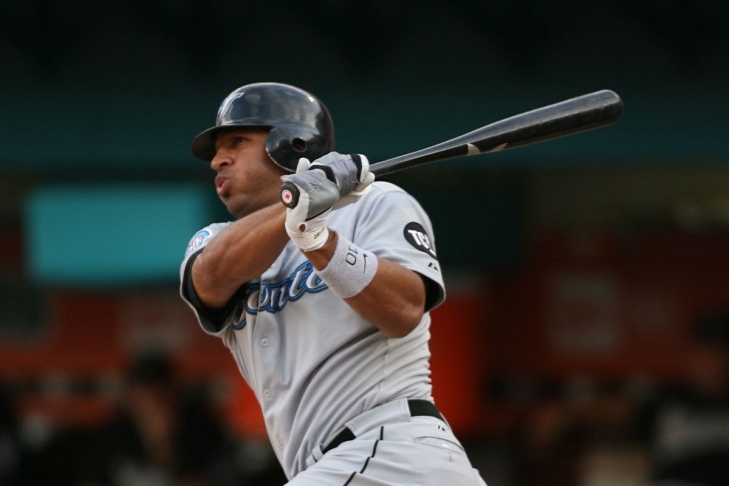
Vernon Wells, chosen fifth overall in the 1997 amateur draft, was intentionally nurtured by the front office to become the flagship of Toronto's future outfield. After gradually advancing through the minor leagues, the Shreveport native took over the starting center field position in 2002 and quickly became one of the most energetic and athletic players in the American League.
His early seasons laid the groundwork for a breakout year in 2003. Throughout the summer, Wells dominated opposing pitchers, having a remarkable season with 215 hits, 49 doubles, 33 home runs, and 117 RBIs. His impressive offensive output resulted in a .317/.359/550 slash line, earning him his first All-Star selection, a Silver Slugger Award, and an eighth-place finish in the AL MVP voting.
While his explosive right-handed bat anchored the top of the lineup, Wells paired his offensive production with premier run prevention. He patrolled the vast turf of Rogers Centre with elite tracking instincts and an exceptional vertical leap, securing three consecutive Gold Glove Awards from 2004 through 2006. He remained a high-ceiling run producer throughout the decade, earning a second All-Star nod during a 32-home-run summer in 2006 and recapturing his elite form in 2010 to smash 31 long balls and land his third career All-Star selection.
Burdened by a massive, back-loaded $126 million contract extension and with the front office eager to reset its payroll flexibility, the Blue Jays shocked the baseball world in January 2011 by orchestrating a blockbuster trade, shipping their long-time franchise center fielder to the Los Angeles Angels.
Wells appeared in 1,393 games with Toronto, accumulating 1,529 hits, 223 home runs, 813 RBIs, and 90 stolen bases while generating a .280/.329/.475 slash line (108 OPS+).
