


Site Admin
18. Dave McNally
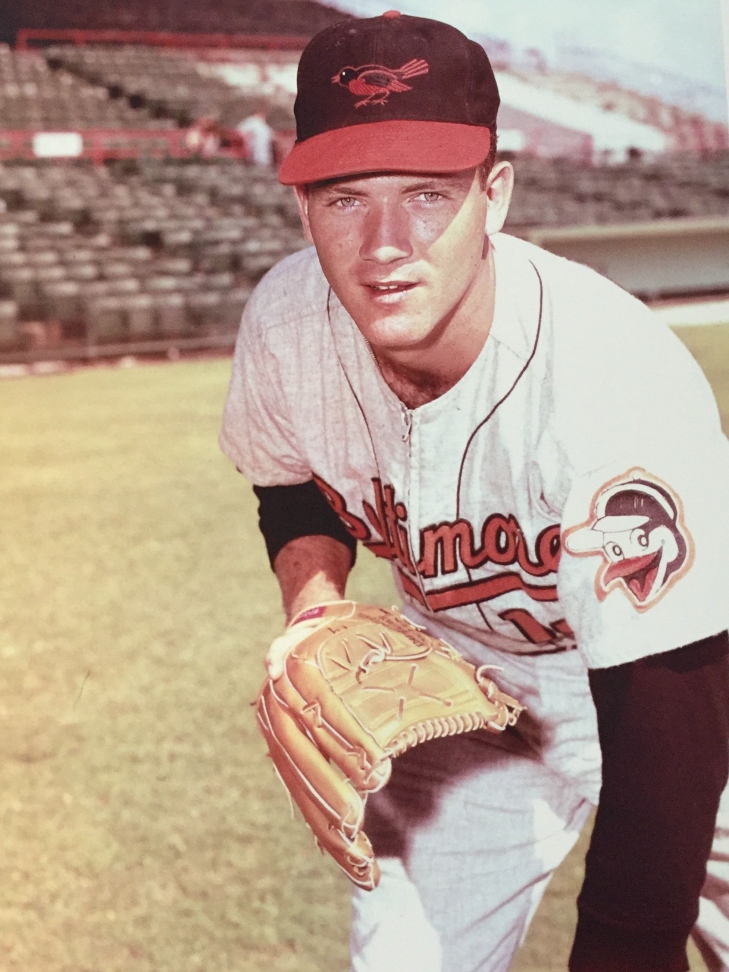
Dave McNally arrived in Baltimore as a 19-year-old in 1962, flashing immediate brilliance with a two-hit shutout in his debut. By the mid-60s, the crafty left-hander had evolved into a cornerstone of the rotation, famously firing a four-hit shutout in the clinching Game 4 of the 1966 World Series to secure the franchise’s first title. It was the start of one of the most dominant pitching runs in the history of the American League.
From 1968 to 1971, McNally authored a standard of excellence that remains the benchmark for Orioles' southpaws. He reeled off four consecutive 20-win seasons, headlined by a league-leading 24 victories in 1970. During this peak, he was a perennial Cy Young finalist, finishing as the AL runner-up in 1970 and placing fourth in both 1969 and 1971. McNally wasn't just a regular-season workhorse; he was a postseason legend. In the 1970 World Series, he not only earned a victory on the mound but also hit the only grand slam by a pitcher in World Series history, a feat that earned his bat a place in Cooperstown.
McNally’s impact on the game extended far beyond his 181–113 record and 1,476 strikeouts in Baltimore. Traded to Montreal after the 1974 season, he courageously challenged the "reserve clause" alongside Andy Messersmith. Their legal victory effectively ended the era of "baseball bondage" and ushered in the modern era of free agency, forever changing the landscape of professional sports.
In 1978, the Orioles honored his towering legacy by making him the lone inductee in the franchise's second Hall of Fame class. A two-time champion and a fearless pioneer, McNally remains the definitive "Big Game" pitcher in the history of the Birds.
15. Brady Anderson
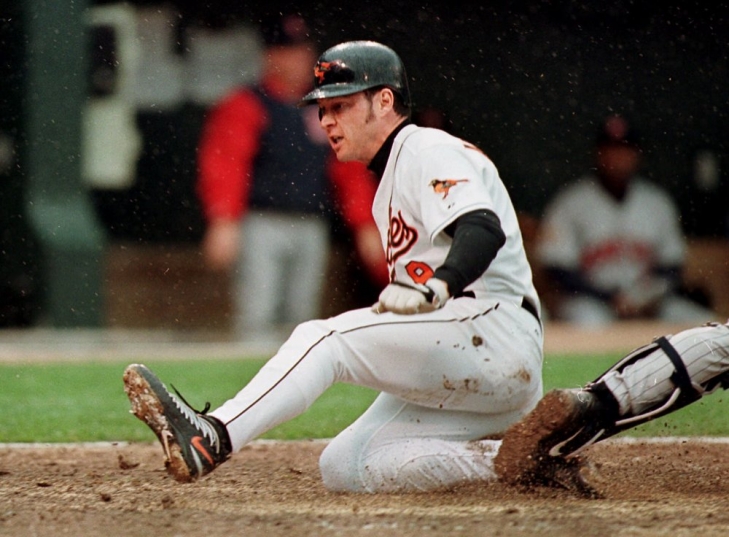
Best known for his sideburns and that inexplicable (actually, many think they can explain it) 50 Home Run Season in 1996, Brady Anderson played 14 seasons for the Orioles.
13. Paul Blair
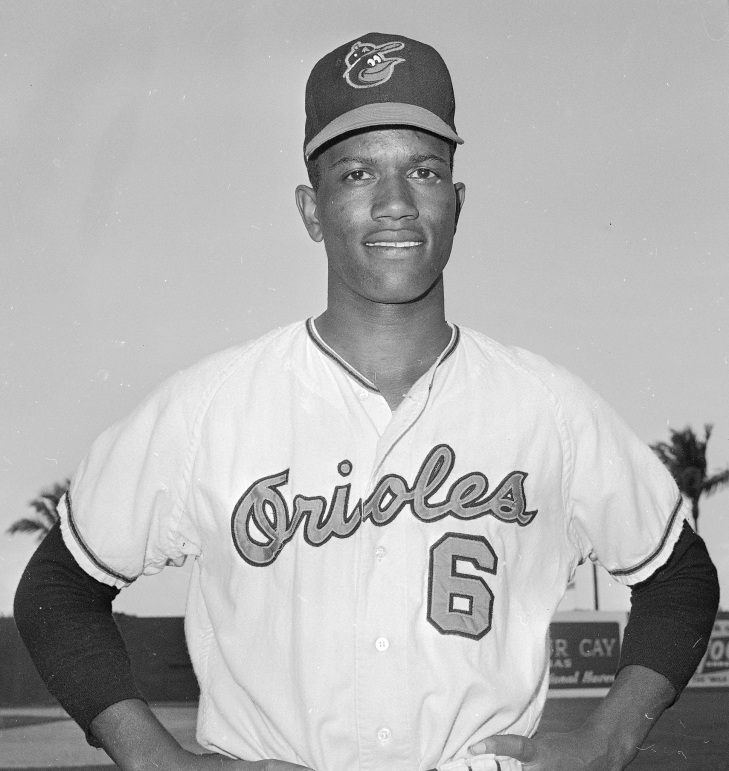
While the legendary Orioles infield of the 1960s and 70s took the headlines, Paul Blair patrolled center field at a level few have matched in the history of the sport. A defensive gem of the highest order, Blair roamed the outfield for Baltimore from 1964 to 1976, serving as the air-traffic controller for the greatest era in franchise history.
Blair’s defensive resume is staggering. A twelve-time American League leader in Total Zone Runs (seven of those in center field), he captured eight Gold Gloves as an Oriole. His range was so vast that he consistently ranked among the top ten in Defensive bWAR, providing the reliable glove work that anchored Baltimore’s path to the 1966 and 1970 World Series championships.
Though he was not a patient hitter—evidenced by a career .306 on-base percentage—Blair was a vital offensive "catalyst" who prioritized movement and pressure. He led the AL in triples in 1967, was a two-time All-Star, and possessed a unique blend of "sneaky" power and speed. During his Baltimore tenure, he recorded three 15-home run seasons and three 20-stolen base campaigns, proving he was as dangerous on the paths as he was with his elite bunting ability.
Following a trade to New York in 1977, Blair added two more World Series rings to his collection, further cementing his status as one of the game's ultimate winners. He left the Orioles with 1,426 hits, 126 home runs, and 167 stolen bases. Inducted into the Baltimore Orioles Hall of Fame in 1984, Blair remains the gold standard for defensive excellence in the outfield.
12. Mark Belanger
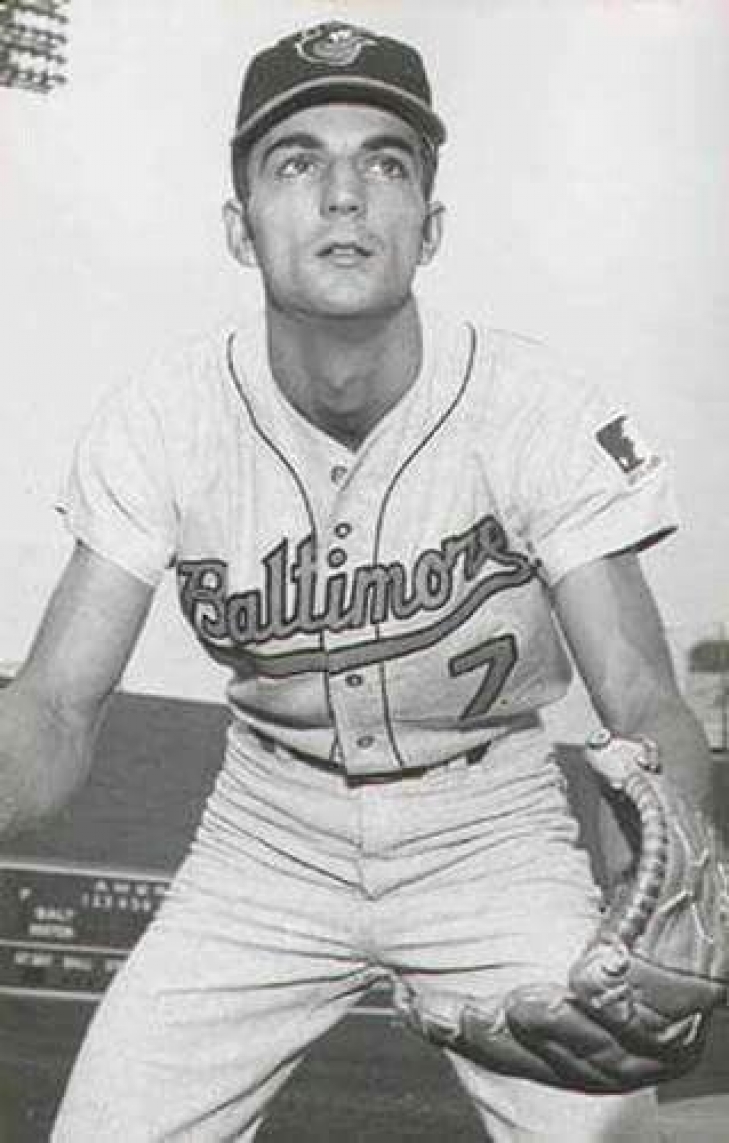
The Baltimore Orioles of the 1960s and 1970s were an impenetrable defensive fortress. While Brooks Robinson famously anchored the hot corner, Mark "The Blade" Belanger proved his equal play-for-play at shortstop. Spending 17 of his 18 seasons in an Orioles uniform (1965–1981), Belanger was the defensive heartbeat of the winningest era in franchise history.
Belanger’s resume is a masterclass in middle-infield excellence. A perennial vacuum at short, he captured eight Gold Gloves and, from 1973 to 1978, reigned as the annual American League leader in Defensive bWAR. He was a three-time overall leader in Total Zone Runs, consistently turning hits into outs with a range and precision that bordered on the supernatural. To this day, Belanger ranks second all-time in career Defensive bWAR (39.5), trailing only Ozzie Smith in the history of the sport.
However, the "Blade" was a one-dimensional specialist. Offensively, he was an undeniable liability, struggling to a career slash line of .227/.300/.280. Yet, even with his limited bat, Belanger found ways to contribute when the lights were brightest. He managed 1,304 career hits and proved his postseason mettle by homering in the 1969 ALCS and batting a robust .333 in the 1970 ALCS—a performance that paved the way for the Orioles' 1970 World Series title.
Belanger’s legacy is a testament to the "Oriole Way": the belief that run prevention is just as valuable as run creation. He was inducted into the Baltimore Orioles Hall of Fame in 1983, immortalized as a player who proved that you don't need to hit like a giant to be a giant on the diamond.