

Site Admin
13. Carlos Correa
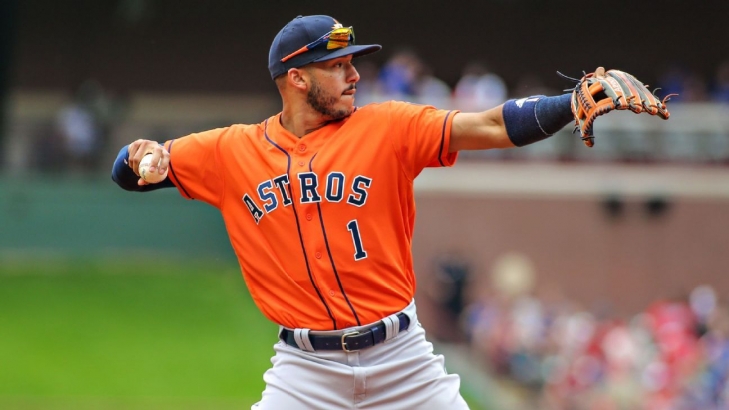
Carlos Correa arrived in Houston as the ultimate symbol of a rebuilding era, carrying the weight of being the first overall pick in 2012. He didn't just meet those expectations; he shattered them with a professional poise that suggested he was born for the high-leverage moments of October. For seven seasons, Correa was the defensive and emotional heartbeat of the most successful run in franchise history, a specialized talent whose combination of range, arm strength, and middle-order power turned the shortstop position into a source of constant advantage for the Astros.
Correa’s ascent began with an immediate high-frequency impact in 2015. After being called up in June, he sprinted to the AL Rookie of the Year award, launching 22 home runs and signaling a transition from a prospect to a franchise pillar in just 99 games. He followed this with a relentless run of production, hitting 20 or more homers in each of the next two seasons while maintaining a batting average over .275. In 2017, Correa batted a career-high .315 and earned an All-Star nod while serving as the emotional engine of the Astros' first World Series championship.
The middle chapters of his residency were marked by a frustrating series of physical setbacks, as back and rib injuries led to a declining plateau in availability between 2018 and 2020. However, in 2021, his final year before reaching free agency. That season, he provided a masterclass in two-way dominance, hitting 26 home runs and leading the entire American League in defensive bWAR (2.9). He finished fifth in the MVP voting and secured both a Gold Glove and a Platinum Glove, proving that when healthy, his craftsmanship in the field was the gold standard of the game.
The story in Houston took a dramatic turn after the 2021 season when Correa’s talents traveled north to Minnesota in free agency. While many assumed the chapter was closed, the reality of the 2025 season brought a stunning homecoming. With the Astros looking to solidify their infield for another championship run, they orchestrated a high-leverage trade to bring Correa back to the Lone Star State. He arrived mid-season to a hero’s welcome, immediately reclaiming his spot at shortstop and helping the club navigate a pressurized playoff race.
As the 2026 season begins, Correa stands as a veteran-like bridge between the championship runs of his youth and the franchise’s current aspirations. He has returned to the city where his legacy began, proving that a player’s connection to a fanbase can survive even a multi-year absence. He showed the organization that when you have the heart of a competitor and the discipline of an elite athlete, you don't just fill a position—you anchor a culture.
16. George Springer
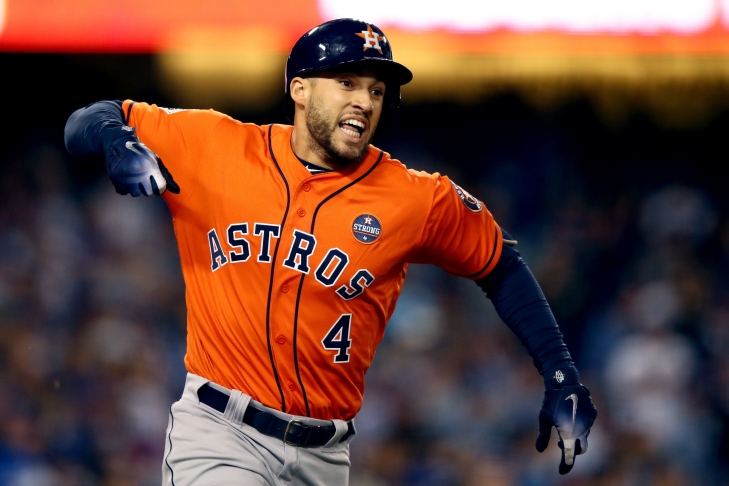
George Springer didn't just join the lineup; he ignited it. For seven seasons, he served as the primary engine at the top of the order, a player whose combination of leadoff power and a fearless defensive approach redefined the center-field position during the most successful era in Astros history.
In 2014. As a rookie, he reached a staggering gear early, launching 20 home runs in just 78 games and signaling a transition from a top-tier prospect to a franchise pillar almost immediately. He possessed a focused intensity that made him a nightmare for pitchers trying to settle into a rhythm, as he became one of the most dangerous leadoff hitters in the game. By 2016, he proved his physical resilience by leading the American League in plate appearances, a high-frequency workload that saw him hit 29 home runs and provide the steady-state production the rebuilding club required.
The middle of his tenure reached a definitive career peak in 2017. That summer, Springer blasted 34 home runs, earned his first All-Star nod, and secured a Silver Slugger Award. However, his true professional high point occurred in October. During the 2017 World Series, he authored a historic performance, hitting five home runs and driving the Astros to their first championship. He was named the World Series MVP, a statistical outlier of a series that cemented his legacy as a big-game performer who thrived when the lights were brightest. He followed this with two more All-Star campaigns in 2018 and 2019, showing the organization that he could maintain elite efficiency year after year.
The final chapters of his Houston story were marked by a veteran-like consistency even as he navigated minor injuries. In 2019, he reached an unrivaled mark for personal power, hitting 39 home runs in only 122 games and leading the team back to the Fall Classic. He showed the world that when he was at the top of the card, the Astros were nearly impossible to beat. However, the reality of free agency brought a shift in 2021, as Springer chose to take his talents to the Toronto Blue Jays. He departed the Lone Star State with 178 home runs and a .491 slugging percentage, leaving as the emotional heart of a dynasty.
With the Astros, Springer compiled 178 home runs, three All-Star selections, and the 2017 World Series MVP.
Vontae Davis
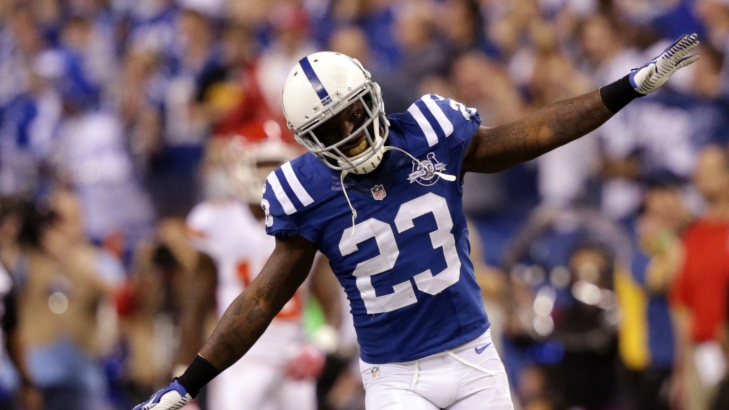
Vontae Davis was a late 1st Round Pick from the University of Illinois where as a Miami Dolphin he would be named to the All-Rookie Team. He did well in his three years in Miami and would do better in Indianapolis where he was a two time Pro Bowl Selection (2014 & 2015) and was in that second tier of Corners.
T.J. Lang