


Site Admin
38. Mo Vaughn
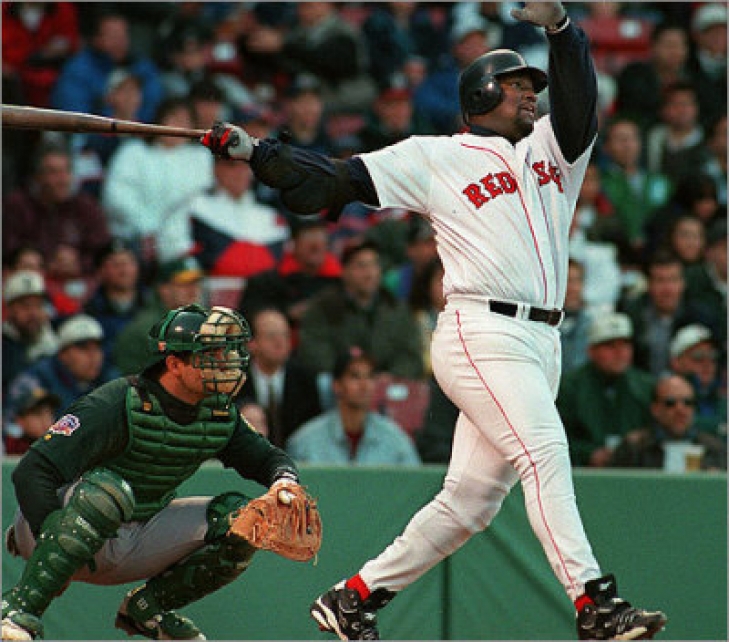
Mo Vaughn arrived in Boston in 1991 and quickly became the "Hit Dog," a nickname that defined his aggressive, lunging presence at the plate. While his power was his calling card, Vaughnwas fueled by a surprising level of contact and plate discipline. From 1994 to 1998, he reeled off five consecutive .300 seasons, peaking with a career-best .337 in his final year in Boston. However, this peak was a masterclass in "playing through it"; despite the elite average, the agility and health that fueled his early 90s rise were already beginning to wane before he ever left New England.
The 1995 season remains the crown jewel of Vaughn’s profile. He led the Red Sox to an AL East title by leading the league in RBIs (126) and blasting 39 home runs. In a razor-thin vote, Vaughn edged out Albert Belle to win the AL MVP Award. He also posted three straight .400+ OBP seasons (1996–1998), combining brute strength with a surgical understanding of the strike zone even as lower-body injuries began to mount.
Vaughn was deeply rooted in his connection to the city. Whether it was his extensive charity work or his role as the face of the post-Clemens Red Sox, he embodied the "Boston Grinder" persona. His peak was a model of concentrated excellence: four consecutive 35-home run seasons and a .542 Slugging Percentage in a Red Sox uniform. While 1998 was statistically brilliant, it was the final act of his prime; the decline was already underway in the trainer's room before he signed with the Anaheim Angels in 1999.
Vaughn finished his Red Sox tenure with 230 home runs, 1,165 hits, and a career .304 average. Though his post-Boston years saw a rapid drop-off, his decade at Fenway represents one of the most dominant offensive stretches in franchise history. Recognizing his era-defining dominance and his role as a community icon, the Red Sox inducted him into the Red Sox Hall of Fame in 2008.
37. John Valentin
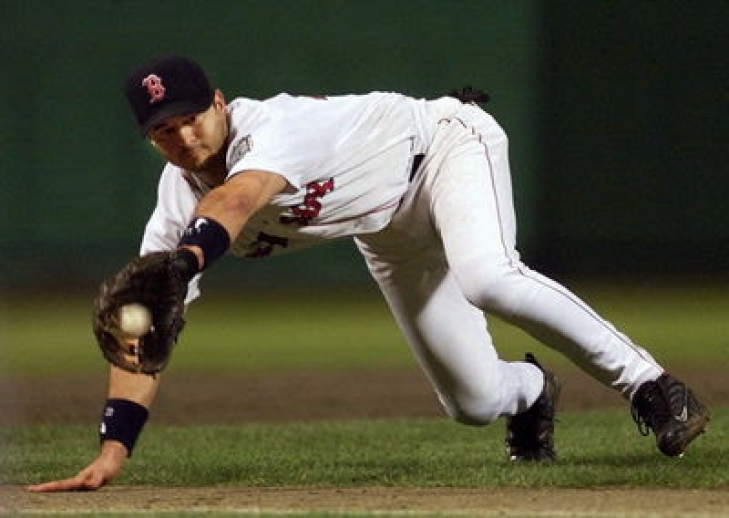
John Valentin spent a decade in Boston (1992–2001) as the stabilizing force of the Red Sox infield. While he famously lacked a Gold Glove on his mantle, the advanced metrics tell a different story. Valentin was a defensive savant, leading the American League in Total Zone Runs twice (1993 and 1995) and topping his position in that category three times across two different spots on the diamond. His 12.3 Defensive bWAR in Boston proves that he was the most efficient run-saver in the league during his prime.
Valentin’s peak arrived in the mid-90s, where he evolved into one of the premier offensive shortstops in the game. In 1995, he had a career year, batting .298 with 27 home runs and 102 RBIs, earning the Silver Slugger Award and a ninth-place finish in the MVP voting. He followed this with a historic 1996 season in which he hit for the cycle and a 1997 campaign in which he led the American League with 47 doubles. This rare blend of gap power and middle-infield efficiency makes him a 10.0 outlier for his era.
Valentin was also blessed with incredible baseball IQ. On July 8, 1994, Valentin achieved one of the rarest feats in sports by turning an unassisted triple play against the Mariners, becoming only the 10th player in history to do so. In the postseason, he remained a high-leverage threat; during the 1999 ALDS, he famously drove in seven runs in a single game against Cleveland, a performance that nearly single-handedly propelled the Red Sox toward the ALCS.
Though injuries eventually slowed his pace and led to his departure in 2002, Valentin’s impact on the franchise's transition into a modern powerhouse was undeniable. He left Boston with 1,093 hits, 124 home runs, and a stellar .279 average. For his unparalleled defensive intelligence and offensive consistency, the Red Sox inducted him into the Red Sox Hall of Fame in 2010.
36. Joe Cronin
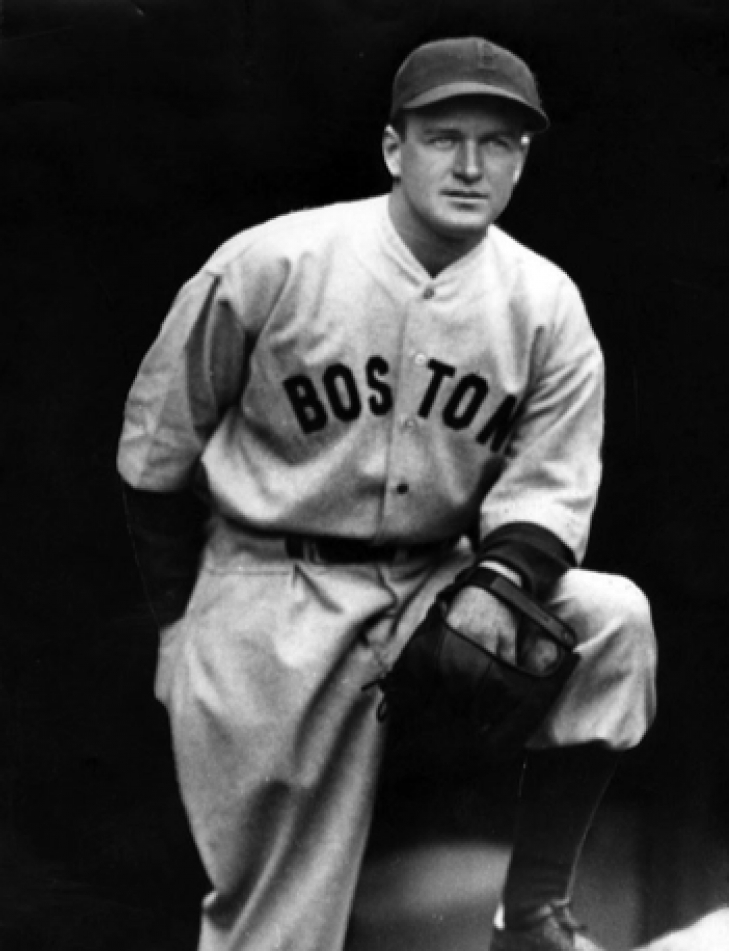
Joe Cronin arrived in Boston in 1935 not just as an elite shortstop, but as the "Field General" charged with transforming the franchise. After a runner-up MVP finish in Washington, the Red Sox traded for Cronin to lead both their defense and their dugout. Despite a leg injury that hampered his 1936 season, he authored a five-year peak (1937–1941) that redefined the offensive ceiling for his position. During this stretch, he was a metronome of productivity, never recording fewer than 155 hits, 16 home runs, or 94 RBIs in a full season.
Cronin was a five-time All-Star in Boston, consistently batting over .300 while posting a massive .394 On-Base Percentage. He also set a franchise record on July 9, 1939, by recording an RBI in twelve consecutive games. This ability to drive in runs at a historic clip while handling the mental rigors of managing made him the most valuable "double-threat" in the American League.
While his playing career effectively ended with a broken leg in 1945, his leadership propelled the Red Sox to the 1946 American League Pennant. Even in the later stages of his career, he remained a high-leverage weapon; in 1943, he set an AL record with five pinch-hit home runs, including two in a single doubleheader. This "clutch" gene ensured that his presence was felt in every critical inning, whether he was in the field or on the top step of the dugout.
Cronin’s legacy is woven into the very fabric of Fenway Park. He served the organization for decades as a player, manager, and eventually General Manager, before becoming the President of the American League. For his unparalleled contributions, he was inducted into the Baseball Hall of Fame in 1956. In a historic ceremony on May 29, 1984, the Red Sox retired his Number 4 alongside Ted Williams’ Number 9, the first two numbers ever retired by the franchise.
34. Dutch Leonard
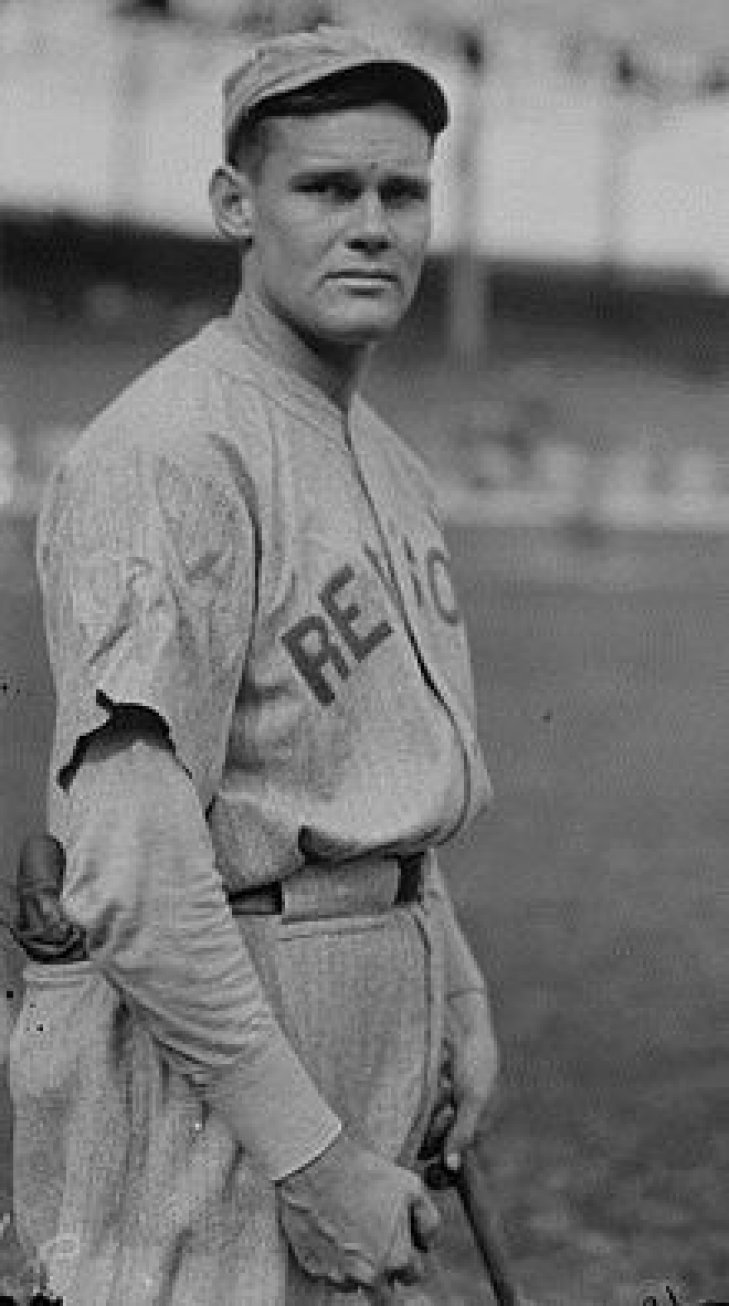
Hubert "Dutch" Leonard arrived in Boston in 1913 and immediately established himself as a left-handed force. Following a stellar rookie campaign, he authored a sophomore season in 1914 that defies modern comprehension. Leonard went 19–5 and set a Major League record with a 0.96 ERA—a mark that remains the lowest in the live-ball or deadball era for any pitcher with at least 200 innings paired that microscopic ERA with league-leading marks in FIP (1.95), WHIP (0.886), and Strikeouts per 9 (7.1).
Leonard was the engine behind the 1915 and 1916 World Series titles. While the Red Sox rotation was deep, Leonard was their postseason "Closer" before the role existed. He was a collective 2–0 with a 1.00 ERA in Fall Classic play, including a brilliant performance in 1915, where he helped dismantle the Phillies. His ability to maintain a 2.13 career ERA in Boston during a stretch when he faced some of the greatest contact hitters in history marks him as a premier talent.
His story is one of peak brilliance followed by the era's typical roster churn. Before his famous feud with Ty Cobb in Detroit or his move to the Yankees, Leonard was the left-handed anchor of Fenway Park. He threw two no-hitters in a Red Sox uniform, one in 1916 and another in 1918, joining an elite tier of "hurlers who possessed the ‘swing-and-miss' stuff necessary to dominate without the help of his defense.
Leonard left Boston with a 90–64 record and 771 strikeouts. Though his tenure was shorter than some of the "Lifers" in the Lab, his concentration of excellence was so high that he was finally inducted into the Red Sox Hall of Fame in 2012.