


Site Admin
13. Paul Blair
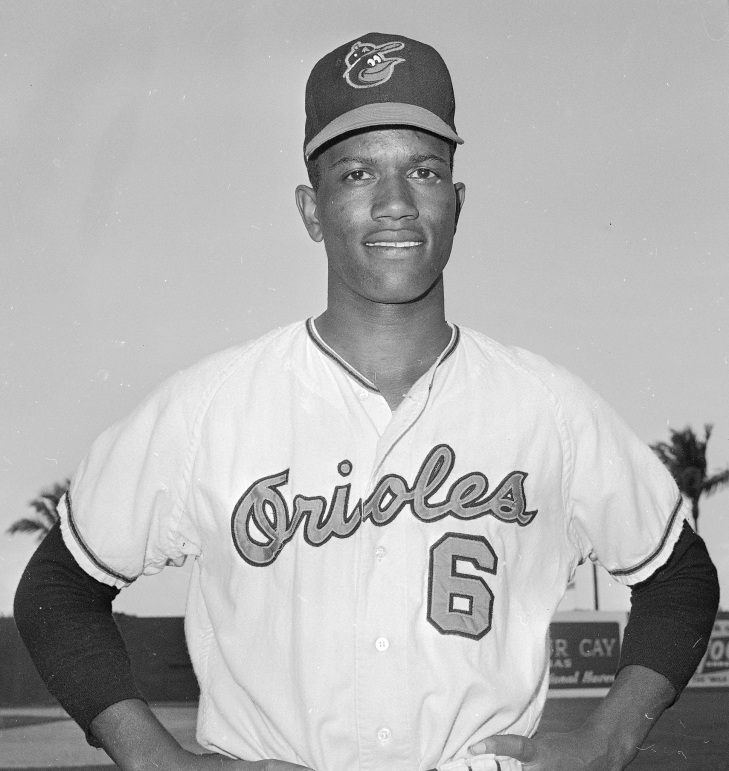
While the legendary Orioles infield of the 1960s and 70s took the headlines, Paul Blair patrolled center field at a level few have matched in the history of the sport. A defensive gem of the highest order, Blair roamed the outfield for Baltimore from 1964 to 1976, serving as the air-traffic controller for the greatest era in franchise history.
Blair’s defensive resume is staggering. A twelve-time American League leader in Total Zone Runs (seven of those in center field), he captured eight Gold Gloves as an Oriole. His range was so vast that he consistently ranked among the top ten in Defensive bWAR, providing the reliable glove work that anchored Baltimore’s path to the 1966 and 1970 World Series championships.
Though he was not a patient hitter—evidenced by a career .306 on-base percentage—Blair was a vital offensive "catalyst" who prioritized movement and pressure. He led the AL in triples in 1967, was a two-time All-Star, and possessed a unique blend of "sneaky" power and speed. During his Baltimore tenure, he recorded three 15-home run seasons and three 20-stolen base campaigns, proving he was as dangerous on the paths as he was with his elite bunting ability.
Following a trade to New York in 1977, Blair added two more World Series rings to his collection, further cementing his status as one of the game's ultimate winners. He left the Orioles with 1,426 hits, 126 home runs, and 167 stolen bases. Inducted into the Baltimore Orioles Hall of Fame in 1984, Blair remains the gold standard for defensive excellence in the outfield.
12. Mark Belanger
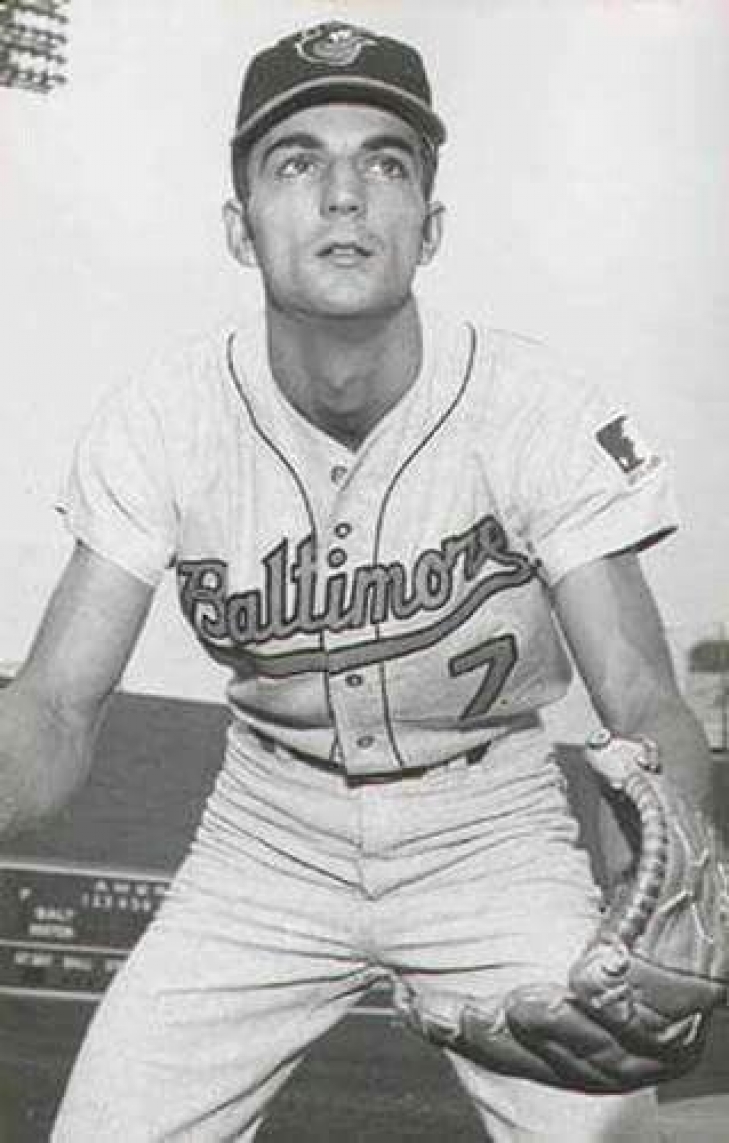
The Baltimore Orioles of the 1960s and 1970s were an impenetrable defensive fortress. While Brooks Robinson famously anchored the hot corner, Mark "The Blade" Belanger proved his equal play-for-play at shortstop. Spending 17 of his 18 seasons in an Orioles uniform (1965–1981), Belanger was the defensive heartbeat of the winningest era in franchise history.
Belanger’s resume is a masterclass in middle-infield excellence. A perennial vacuum at short, he captured eight Gold Gloves and, from 1973 to 1978, reigned as the annual American League leader in Defensive bWAR. He was a three-time overall leader in Total Zone Runs, consistently turning hits into outs with a range and precision that bordered on the supernatural. To this day, Belanger ranks second all-time in career Defensive bWAR (39.5), trailing only Ozzie Smith in the history of the sport.
However, the "Blade" was a one-dimensional specialist. Offensively, he was an undeniable liability, struggling to a career slash line of .227/.300/.280. Yet, even with his limited bat, Belanger found ways to contribute when the lights were brightest. He managed 1,304 career hits and proved his postseason mettle by homering in the 1969 ALCS and batting a robust .333 in the 1970 ALCS—a performance that paved the way for the Orioles' 1970 World Series title.
Belanger’s legacy is a testament to the "Oriole Way": the belief that run prevention is just as valuable as run creation. He was inducted into the Baltimore Orioles Hall of Fame in 1983, immortalized as a player who proved that you don't need to hit like a giant to be a giant on the diamond.
10. Bobby Wallace
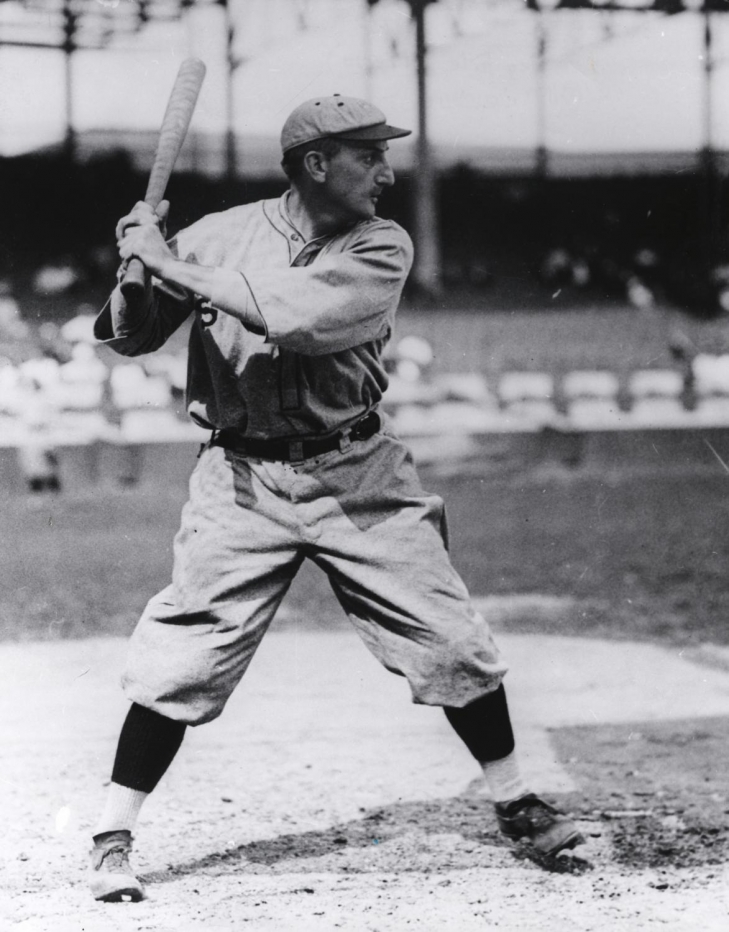
In 1902, Bobby Wallace made a cross-town leap that shifted the balance of power in Missouri, jumping from the National League’s St. Louis Cardinals to the fledgling American League’s St. Louis Browns. It was a move that secured the Browns a cornerstone for the next 15 years and provided the AL with its definitive defensive shortstop for its first decade.
Wallace’s value was rooted in a revolutionary approach to the position. He was among the first shortstops to master the "continuous motion" play—fielding and throwing in one fluid movement—a skill that made him a statistical outlier in an era of static defense. He led the American League in Defensive bWAR in 1902 and 1908, and remarkably, he never finished lower than sixth in that category over the six seasons between those peaks. While his glove was his primary calling card, he was a steady presence in the lineup, recording five seasons with over 130 hits during the height of the Deadball Era.
Though his production began to wane after 1911, Wallace remained a fixture in a Browns uniform until 1916, when he was eventually traded back to the Cardinals. His twenty-five-year career is one of the longest in baseball history, though it carries a unique and "dubious" distinction: Wallace played in more seasons than anyone else in the history of the sport without ever appearing in a World Series game.
Despite the lack of postseason hardware, Wallace’s peers and historians recognized his genius. He finished his Browns career with 1,424 hits and a staggering 20.9 Defensive bWAR in St. Louis. In 1953, the Veterans Committee cemented his legacy by inducting him into the Baseball Hall of Fame, honoring the man who turned shortstop into an art form.
11. Ken Williams
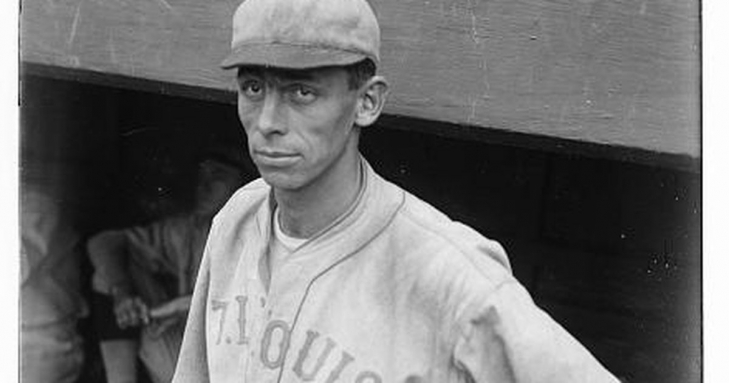
Ken Williams arrived in St. Louis in June 1917 via the Portland Pacific Coast League, but his ascent was briefly paused by military service in 1918. He returned to the Browns in 1919, flashing his potential with a .300 average in limited action. It was a mere prelude to a breakout that would see him become one of the most feared offensive forces of the early Live-Ball Era.
From 1920 to 1925, Williams was a model of elite consistency, batting at least .300 in six consecutive seasons. He was a master of the strike zone, maintaining an on-base percentage of .410 or higher from 1921 to 1924—consistently ranking among the American League’s top eight. However, it was his power that truly redefined the Browns' offense. Williams finished in the top four in AL home runs every year from 1921 to 1925, reaching his zenith in 1922. That season, he eclipsed even Babe Ruth to capture the Home Run Title (39) and the RBI Title (155). In doing so, he became the first player in Major League history to register a 30-home run, 30-stolen base season, a feat of versatility that wouldn't be matched for over three decades.
Williams continued his assault on AL pitching through the mid-20s, securing the Slugging Championship in 1925 with a blistering .613 percentage. Though age finally began to catch the 36-year-old outfielder in 1926, he remained a fixture in St. Louis through 1927 before being sold to the Boston Red Sox.
He left the Browns with a storied legacy: 1,308 hits, 185 home runs, and an elite career slash line of .326/.403/.558. In the annals of the St. Louis era, Williams stands as the ultimate "Pillar of Power," a man who proved that the Browns could produce superstars capable of rivaling the biggest names in New York.