

Site Admin
19. Babe Ruth
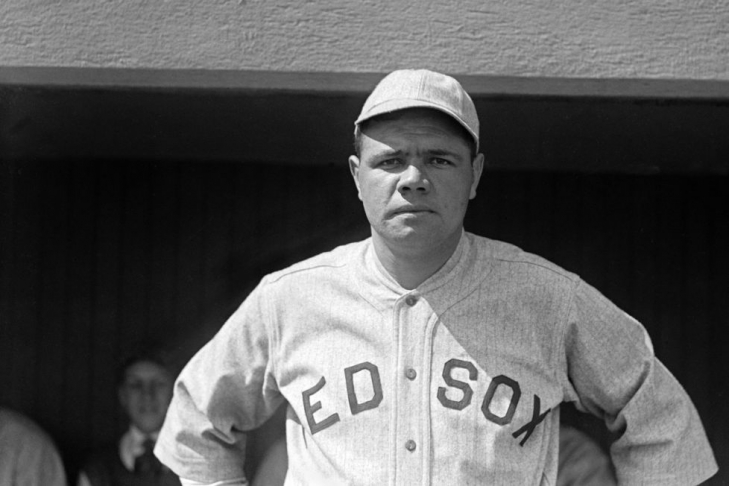
Yeah, this guy.
While the world remembers Babe Ruth as the quintessential Yankee, his legend was forged on the mound in Boston. Debuting in 1914, "The Bambino" first established himself as the premier left-handed pitcher in the American League. By 1915, he was an 18-game winner with a 2.44 ERA, a vital cog in a rotation that delivered a World Series title.
The 1916 season was Ruth’s masterpiece as a hurler. Long before the Cy Young Award existed, Ruth authored a "Category 6" proxy season, going 23–12 with a league-leading 1.75 ERA. He was the undisputed ace of the 1916 World Series champions, throwing a 14-inning complete-game masterpiece in Game 2. Between 1915 and 1918, Ruth was the engine behind three World Series titles for Boston, recording a staggering 0.87 ERA across 31 postseason innings—a high-leverage performance that remains one of the greatest in October history.
By 1918, the "Two-Way Experiment" was in full flight. Ruth transitioned into the outfield while still making 20 starts on the mound, leading the league in Home Runs (11) and Slugging (.555). In 1919, he shattered the baseball world's concept of "Category 3" Era Dominance. He blasted 29 home runs—breaking a 20-year-old record—while simultaneously leading the league in Runs (103), RBIs (113), OBP (.456), and bWAR (9.1). It was a statistical takeover of a sport that had never seen a player dominate both the rubber and the batter's box with such ferocity.
The franchise's trajectory changed forever in late 1919 when owner Harry Frazee, seeking to finance his Broadway interests, sold Ruth to the New York Yankees for $100,000. This "Transaction of Infamy" birthed "The Curse of the Bambino," an 86-year championship drought that defined the Red Sox identity for nearly a century. Ruth left Boston having already achieved a Hall of Fame trajectory as a pitcher, only to become the greatest hitter in history elsewhere.
Ruth was an inaugural member of the Baseball Hall of Fame in 1936 and a charter inductee into the Red Sox Hall of Fame.
15. Mookie Betts
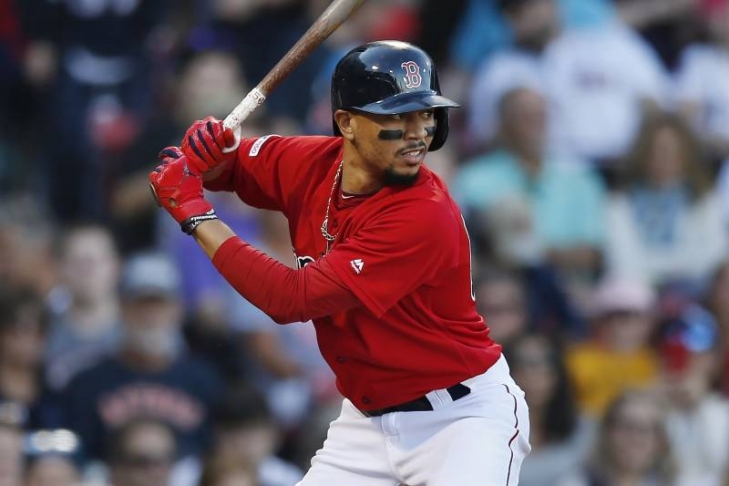
Mookie Betts didn't just play for the Red Sox; he redefined what a lead-off hitter could be. Debuting in 2014, he quickly ascended from a promising prospect to one of the most dynamic advanced quality players in the game. By 2016, Betts was a national superstar, launching 31 home runs, driving in 113 runs, and batting .318—a stat line that earned him an All-Star nod, a Silver Slugger, a Gold Glove, and a runner-up finish in the MVP race.
The 2018 season stands as Betts' masterpiece. In a year that remains the statistical benchmark for modern excellence, Mookie became the first player in MLB history to win the MVP, Silver Slugger, Gold Glove, Batting Title (.346), and a World Series Championship in the same season. He led the majors in Slugging (.640) and Runs (129), serving as the primary engine for a Red Sox team that won a franchise-record 108 games.
Betts’ value was rooted in his "Five-Tool" efficiency. He combined elite power with elite discipline and speed, stealing 20 or more bases in four of his full seasons in Boston. Defensively, he was a vacuum in right field, winning four consecutive Gold Gloves (2016–2019). His high-leverage performance in the 2018 postseason, including a crucial home run in the World Series clincher, solidified his status as a championship anchor.
The "Mookie Era" in Boston ended abruptly following the 2019 season. In a move that remains one of the most debated in franchise history, the Red Sox traded Betts to the Los Angeles Dodgers as part of a rebuilding effort. He left Fenway with a staggering .301/.374/.519 slash line and four top-eight MVP finishes. Though he has gone on to further glory in Los Angeles—winning multiple titles and continuing his Hall of Fame trajectory—Red Sox fans view his six-year peak as a period of untouchable brilliance.
17. Jimmie Foxx
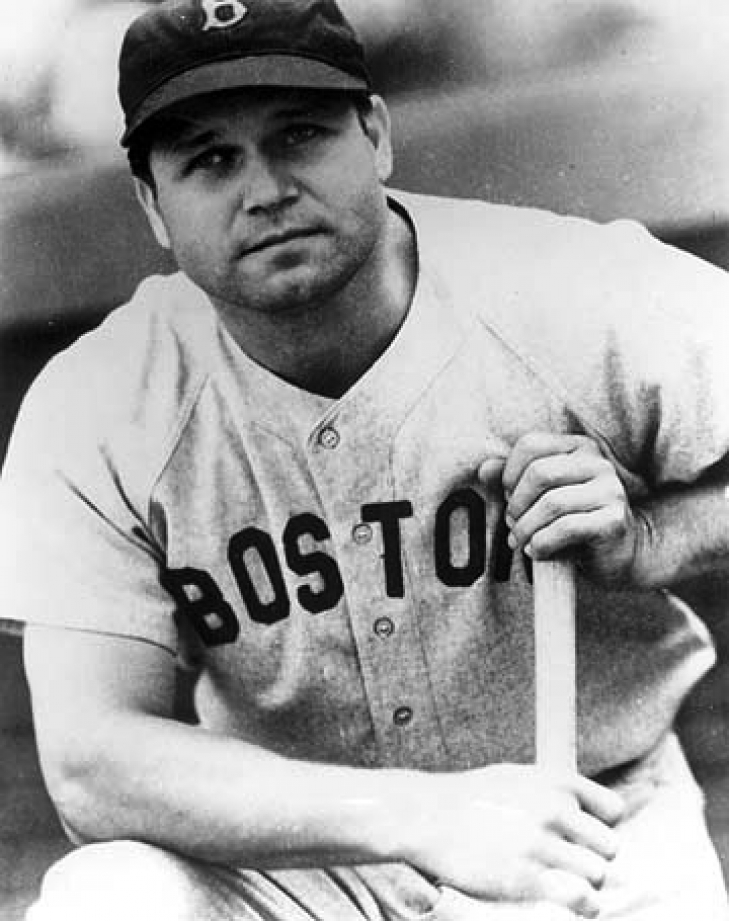
Prior to being dealt to the Red Sox, Jimmie Fox was the offensive star for the Philadelphia Athletics. It was in Eastern Pennsylvania, where he won his first MVP and would win two World Series Titles. With the equally cool nicknames of "Double X" and "Beast," the Depression of the 1930s hit Connie Mack's Philadelphia Athletics hard, and he was essentially sold to the Red Sox.
The Buck Stops Here -- Interview with Evelyn McDonnell