


Site Admin
49. Vern Stephens

In the late 1940s, shortstop was a position reserved for defensive wizards and contact hitters—men who bunted and scratched out runs. Then came Vern Stephens. Already a home run champion with the St. Louis Browns, Stephens arrived in Boston in 1948 and immediately looked like a man born to play in front of the Green Monster. He didn't just join the Red Sox; he became the thunderous second half of a one-two punch with Ted Williams that remains one of the most terrifying middle-of-the-order combinations in the history of the game.
His five-year run in Boston was a relentless assault on the record books. From 1948 to 1950, Stephens produced a three-year peak that felt more like a glitch in the era's physics. He launched 98 home runs and drove in a staggering 440 runs in that window alone, capturing back-to-back RBI titles in 1949 and 1950. His 1949 season was his masterpiece: 39 home runs and a record-shattering 159 RBIs, a total that still stands as a benchmark for what a shortstop can achieve. To Ted Williams, Stephens wasn't just a teammate; he was the most effective protection he ever had in a lineup.
As the 1950s progressed, the heavy workload and the physical demands of the position began to take their toll. By 1952, injuries had sapped some of the lightning from his bat, and he was dealt to the White Sox before the 1953 season. He left the Fens with 122 home runs and a reputation as the man who proved a shortstop could be a cleanup hitter. While the baseball world occasionally forgets how dominant he was, the Red Sox never did, officially immortalizing him in the franchise Hall of Fame in 2006. He arrived as a trade-market gamble and left as the man who redefined his position, proving that power knows no defensive boundaries.
44. Mike Greenwell
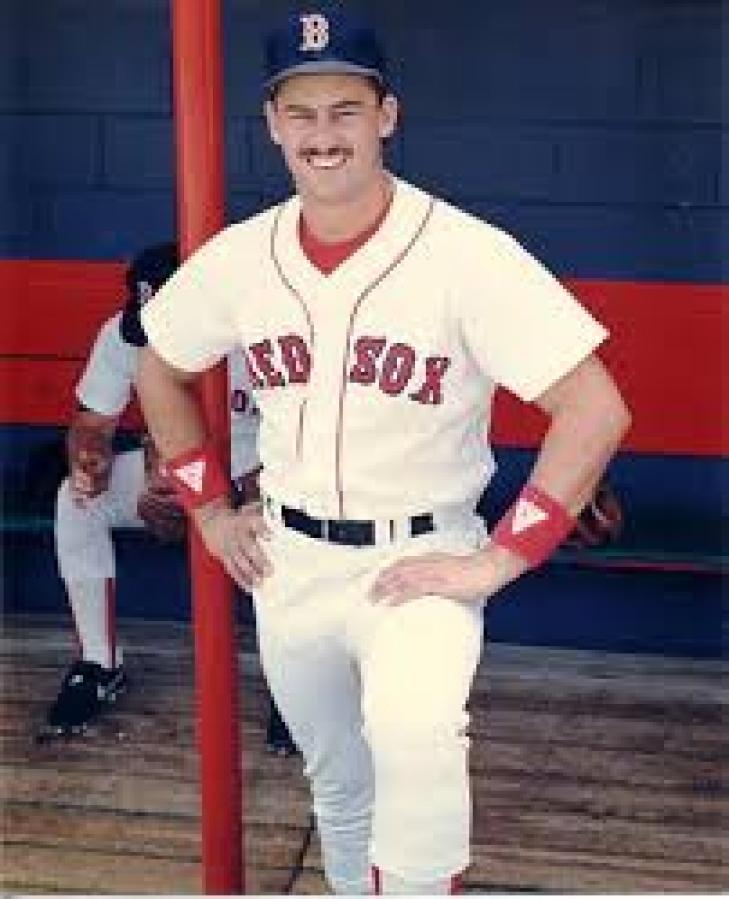
When Mike Greenwell took over left field in 1987, he didn't just inherit a position; he inherited a lineage of legends. Nicknamed "The Gator" for his Florida roots and fearless intensity, he quickly proved he belonged in the conversation. After finishing fourth in the Rookie of the Year voting, he had a career-year in 1988. That season, Greenwell hit for the cycle and posted a staggering slash line of .325/.416/.531, while setting an American League record with 23 game-winning RBIs. This earned him a Silver Slugger and a second-place finish in one of the most famous MVP races in history.
The tragedy of Greenwell’s MVP year is that he finished as the runner-up to a steroid-aided Jose Canseco. Despite this, his efficiency remained elite; he was a two-time All-Star and a consistent .300 hitter who refused to be overwhelmed by the shadows of his predecessors. While he never recaptured the 20-home run power of 1988, his bat control and gap-to-gap precision were spot on. On September 2, 1996, he delivered a legendary final moment by driving in all 9 runs in a 10-inning victory over Seattle, a contest that remains a franchise record for the most RBIs, accounting for all of the team's scoring.
He spent all 12 of his Major League seasons in a Red Sox uniform, retiring with a career .303 average and 1,400 hits. He was the bridge between the 1986 pennant-winning squad and the high-powered offenses of the mid-90s, serving as a reliable engine for two division titles. Sadly, Greenwell passed away in October 2025 at the age of 62, a loss felt deeply by the Fenway faithful who remember him as the man who played with a grit that matched the city he represented.
Inducted into the Red Sox Hall of Fame in 2008.
42. Larry Gardner
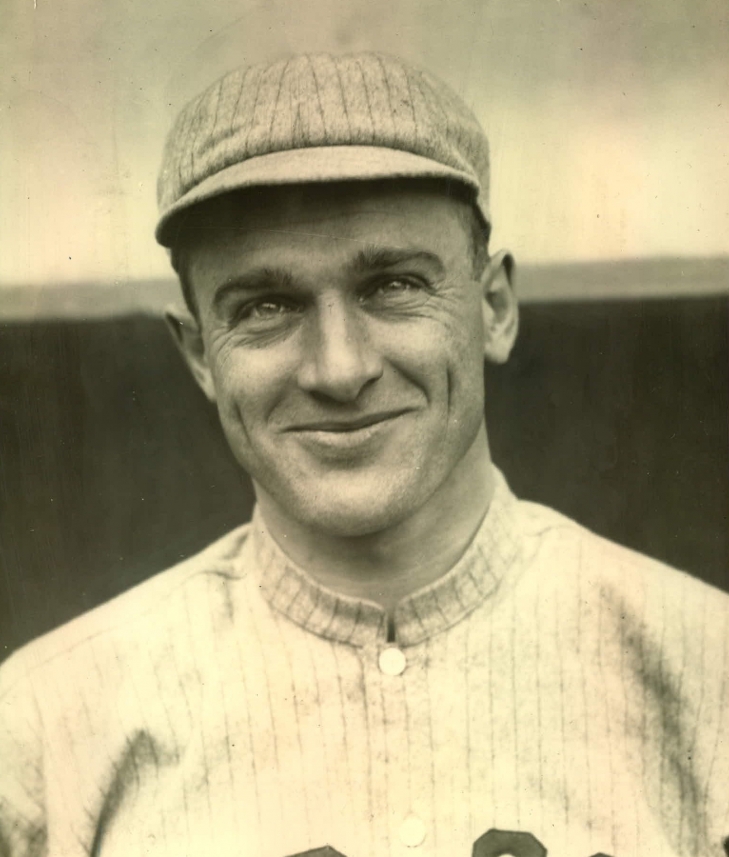
Larry Gardner arrived in Boston in 1908 as a lost kid from the green hills of Vermont, but he quickly became a foundational piece of a powerhouse. By 1910, he had earned his spot as the starting second baseman, but it was his move to the hot corner in 1911 that defined his legacy. Gardner wasn't just a third baseman; he was a tactical defender whose prowess in fielding bunts drew comparisons to the legendary Jimmy Collins. In an era where small ball was king, Gardner’s glove was a high-leverage weapon that protected thin leads and stifled rallies.
The 1912 season remains Gardner's best year in a Red Sox uniform. He batted .315 and led the team with 86 RBIs, but it was his October heroics that etched his name in Fenway lore. Despite playing with a broken finger on his throwing hand, he delivered the Series-winning sacrifice fly in the 10th inning of Game 8 against the New York Giants. That moment, scoring Steve Yerkes off the great Christy Mathewson, remains one of the most clutch performances in the history of the Fall Classic.
As the decade progressed, Gardner remained the steady pulse of the "Impossible Dream" of the 1910s. He was a central figure in the 1915 and 1916 championships, proving his rare power surge in the 1916 Series. Facing the Brooklyn Robins, he launched two home runs—including a dramatic three-run inside-the-parker—matching his entire regular-season home run total in just five games. This ability to elevate his game when the stakes were highest made him an indispensable figure for the club's first golden age.
Though he was traded to Philadelphia after the 1917 season, Gardner’s impact on Boston was indelible. He left the franchise with 1,106 hits, a .282 average, and three rings. He would eventually win a fourth title with Cleveland, but his heart remained tied to the Northeast, where he eventually returned to coach at his alma mater, the University of Vermont. Inducted into the Red Sox Hall of Fame in 2000, Gardner is remembered as the "Vermont Marvel”, a player whose career was defined by winning, stability, and the ability to come through when the city of Boston needed him most.
50. Pete Runnels
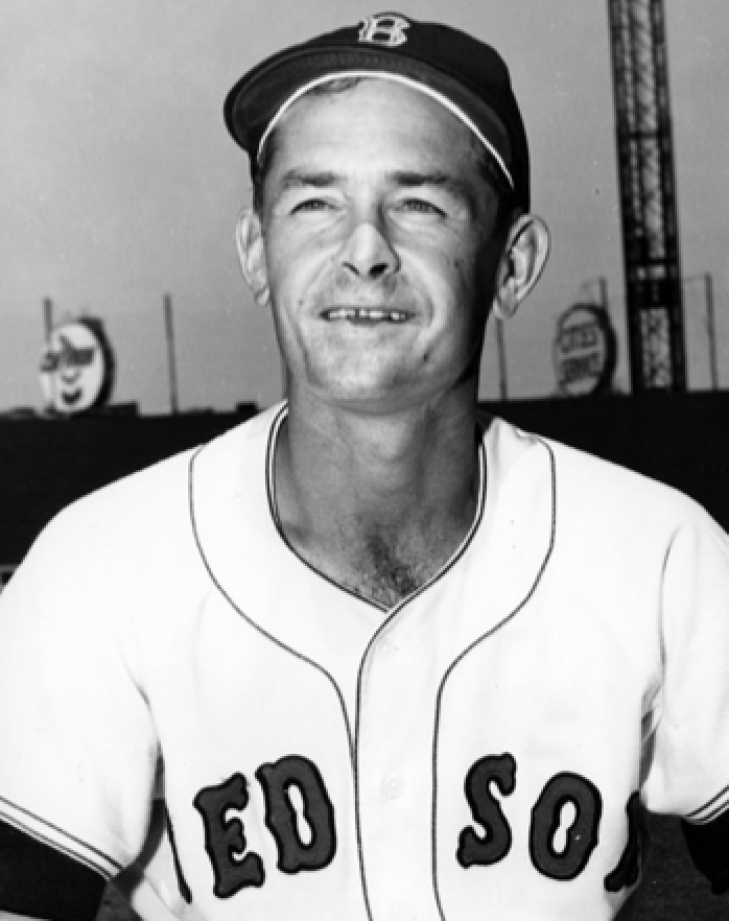
When Pete Runnels arrived in Boston in 1958, he was a versatile infielder who had struggled to find his offensive ceiling in the cavernous Griffith Stadium in Washington. He brought a "swing at everything" mentality to the Fens, but his arrival coincided with a life-changing apprenticeship. Under the tutelage of Ted Williams, Runnels abandoned his pull-heavy approach and began treating the Green Monster like a magnet. He didn't just find his plate discipline; he found a home for his line drives.
His five-year run in Boston was a clinic in pure hitting. Runnels didn't just flirt with the .300 mark—he lived well above it, never batting below .314 during his entire Red Sox tenure. He became a fixture at the top of the American League leaderboard, finishing in the top three for batting average in four of his five seasons. The climax of this evolution came in 1960 and 1962, when he captured two American League Batting Titles. His 1960 crown was a testament to his grit; playing through the agonizing pain of stomach ulcers, he refused to sit out the stretch run, famously telling his manager he wanted to "win this thing the right way."
Beyond the bat, Runnels provided the Red Sox with a defensive safety net. He was the rare player who could lead the league in fielding percentage at second base one year (1960) and at first base the next (1961). He was the steady hand on a team that was often searching for its identity in the post-Williams era.
The final chapter arrived after the 1962 season when, at Runnels' own request to be closer to his Texas roots, the Red Sox traded their reigning batting champion to the expansion Houston Colt .45s. It was a rare "mercy trade" by owner Tom Yawkey, and it proved to be a perfectly timed exit for Boston. Once away from the friendly confines of Fenway, Runnels’ production plummeted, and he was out of the game within two years. He left Boston with a sterling .320 average and a legacy of professional excellence that was finally immortalized in the Red Sox Hall of Fame in 2004. He arrived as a raw talent and left as a two-time champion of the box score.