

Committee Chairman
13. Darin Erstad
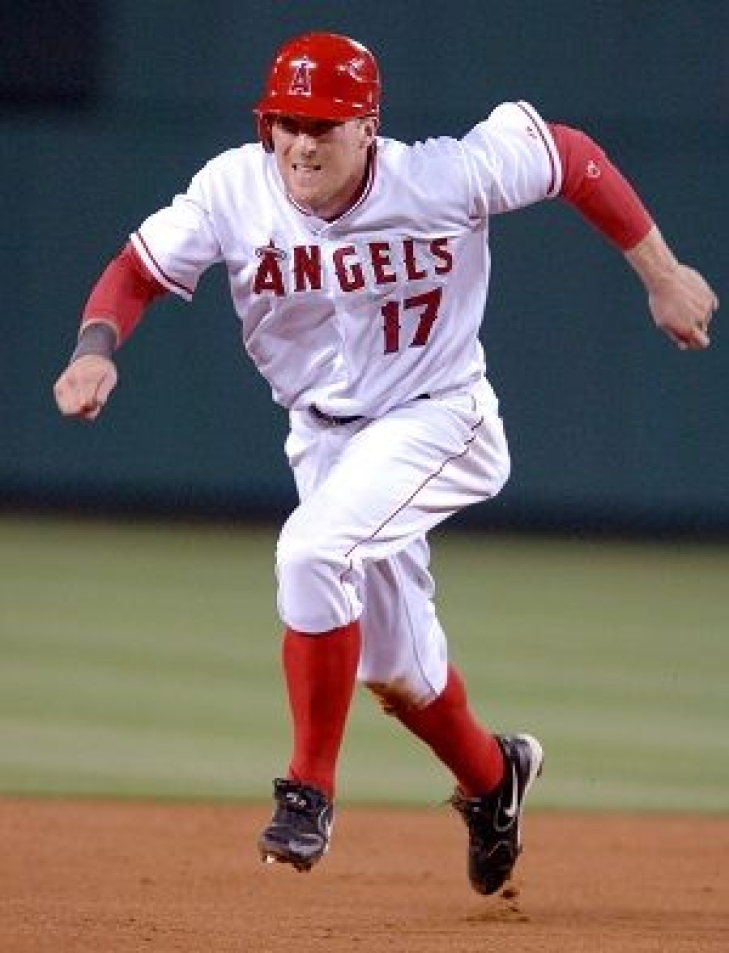
In 1995, the California Angels made the number one pick Darin Erstad, a former Golden Spikes Finalist from Nebraska. Erstad debuted for the Angels the following season, and he was arguably the first building block that would see the team win it all in 2002.
Erstad would twice to go the All-Star Game (1998 & 2000), and in his latter All-Star year, the Outfielder had career highs in Batting Average (.355), Home Runs (25), RBIs (100), and led the American League in Hits (240). Erstad was a crucial part of Anaheim's 2002 World Series Championship, a three-time Gold Glove winner, collecting 25 Hits in that post-season.
Erstad remained with the Angels until 2007, and he had 1,505 Hits for the team with 114 Home Runs and 170 Stolen Bases.
11. Vladimir Guerrero
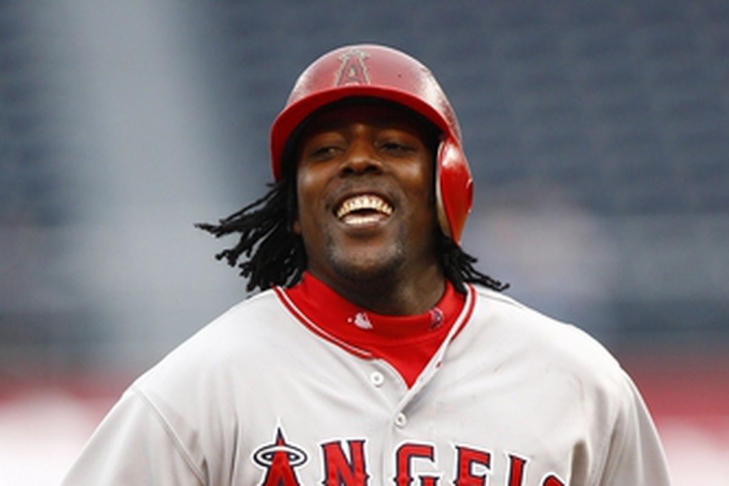
If you were a fan of the Montreal Expos in the 90s and early 00s, you knew that if you had a star, they would eventually leave for greener pastures because your team could not afford to keep them. Such was the case for Vladimir Guerrero, who, after four All-Star appearances and 234 Home Runs as an Expo, joined the Halos in 2004.
You could say (and we are) that Guerrero saved his best performance for his debut campaign with the Angels. Guerrero captured the MVP on the strength of 39 Home Runs, 126 RBI, .337/.391/.598 performance and it ushered in a new four-year streak of All-Star Games. During that run, "Vlad the Impaler" never had led that 27 Home Runs, 108 RBIs, and a .317 Batting Average, and he was without a doubt one of the top offensive players in baseball.
Guerrero played with the Angels until 2009, signing with Texas and departing SoCal with 173 Home Runs and a Slash Line of .319/.381/.546. The Angels inducted Guerrero into their Hall of Fame in 2017.
10. Bobby Grich
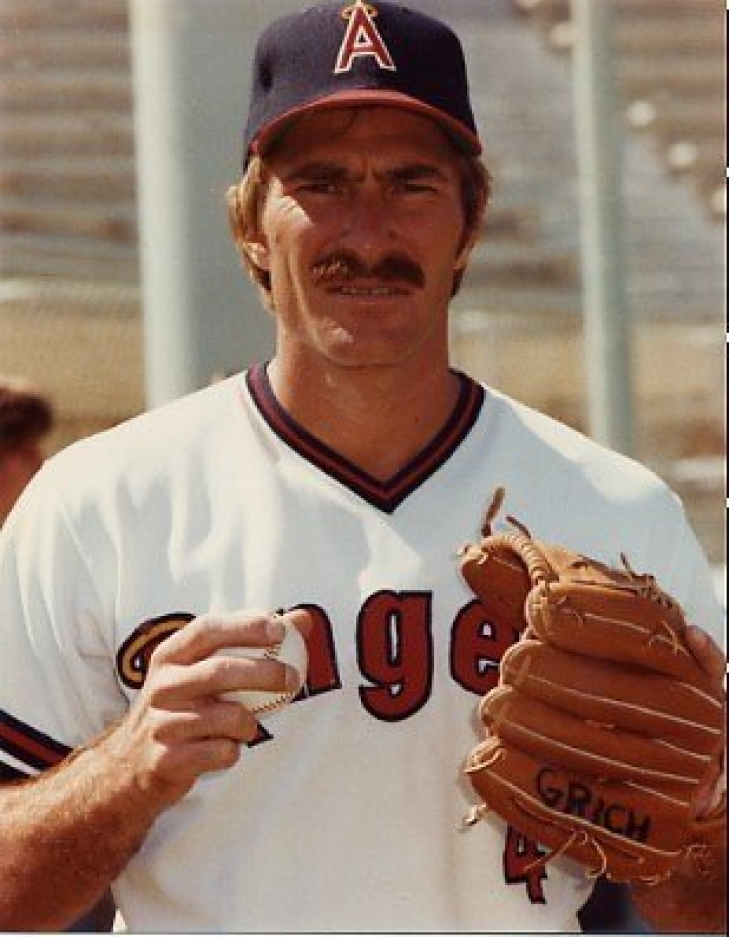
After seven seasons with the Baltimore Orioles, one of the most revered men amongst sabremetricians signed with the California Angels as a Free Agent after the 1976 season.
Playing mostly at Second Base, Grich brought his strong defensive skills and patient batting to the Angels. A three-time All-Star with Baltimore, Grich would go to three more in California. He would have his best power numbers with the Angels, blasting 30 Home Runs with 101 RBIs in 1979, and he was eighth in MVP voting. In the strike-shortened 1981 campaign, Grich had 22 Home Runs, which was enough to co-lead the American League. That year, he led the AL in Slugging (.543) and OPS+ (165) and earned his only Silver Slugger.
Grich played until 1986 and would have 1,103 Hits as an Angel. In 1988, Grich became the first person to be inducted into the Angels Hall of Fame.
8. Tim Salmon
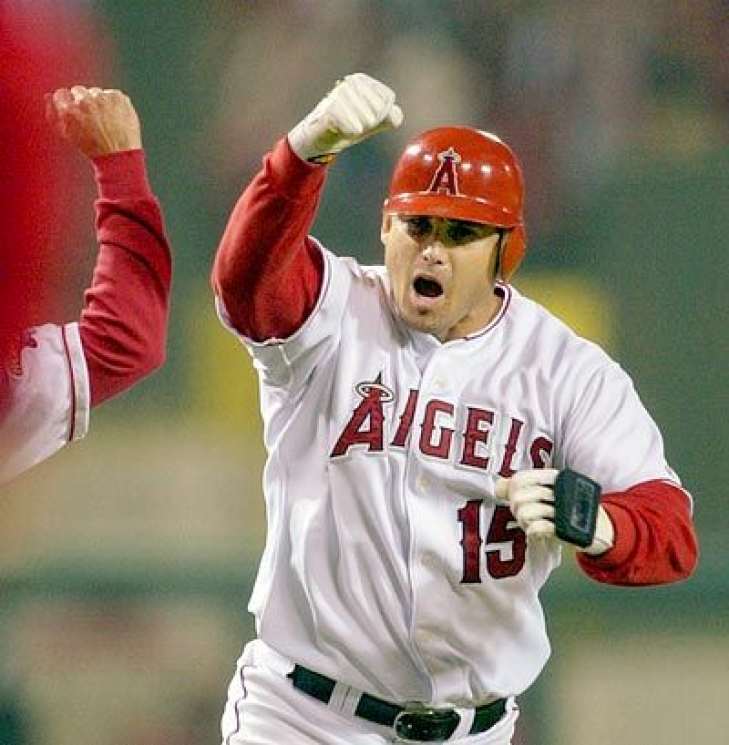
Tim Salmon arrived in Anaheim as a third-round pick who quickly proved he belonged in the heart of the order. For fourteen seasons, he anchored right field with a specialized blend of patience and power, becoming the most productive homegrown hitter in the first half-century of the franchise. While he often flew under the national radar, Salmon provided the Halo with dependability that made him the cornerstone of the lineup during the transition from the California to the Anaheim era.
Salmon’s emergence in Anaheim began with a historic 1993 campaign that set the standard for his entire career. After a brief look the previous September, he took over the starting role and responded with 31 home runs and 95 RBIs, earning the American League Rookie of the Year award in a unanimous vote. This performance signaled a transition from a promising prospect to a premier offensive threat, a style defined by his ability to pair a .283 batting average with a disciplined eye. He showed the organization that he was a foundational piece of the roster, providing a focused intensity that would define his decade-long peak as the most dangerous bat in the clubhouse.
In 1995, he reached a career peak for all-around production, batting .330 with 34 home runs and winning a Silver Slugger. He followed this with a run of consistency that saw him reach the 30-homer milestone five times and drive in at least 100 runs in two separate seasons. Even as the team cycled through different managers and rosters, Salmon remained a statistical force, finishing his career with eight seasons of a .500 slugging percentage or better. He possessed a specialized ability to drive the ball to all fields, maintaining a career on-base percentage of .385 that reflected his mastery of the strike zone.
Everything culminated in the historic 2002 postseason, where Salmon served as the emotional lead-off for the franchise’s first World Series title. In the twilight of his journey, he provided the veteran-like poise required for a championship run, famously hitting two home runs in a crucial Game 2 victory against San Francisco. He continued to contribute until his retirement following the 2006 season, leaving the game as a rare lifer who spent his entire professional life in one uniform. He exited with 299 home runs and 1,016 RBIs, a statistical footprint that made him the club's all-time leader in nearly every major offensive category at the time of his departure.
In 2015, he was inducted into the Angels Hall of Fame.