

Committee Chairman
40. Charlie Jamieson
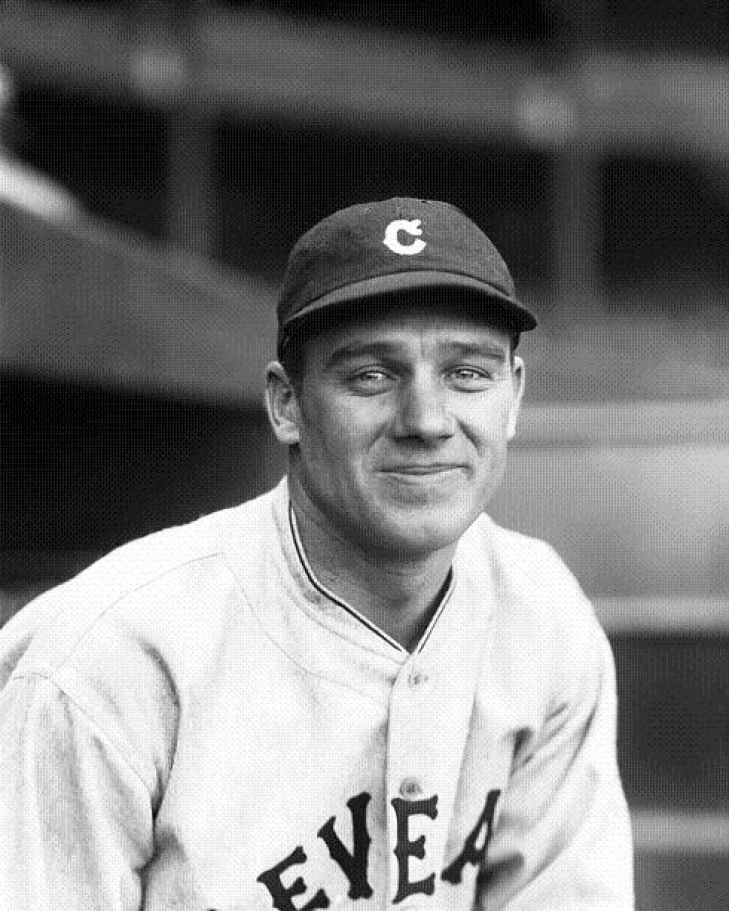
In the high-scoring landscape of the 1920s American League, Charlie Jamieson emerged as the quintessential leadoff man for Cleveland. Arriving via trade in 1919 after modest stints in Washington and Philadelphia, the left-handed outfielder didn't just find a home on the North Coast; he became the table-setter for one of the most prolific offensive eras in franchise history. Known for a specialized ability to manipulate the bat and a relentless approach at the plate, "Cuckoo" Jamieson spent over a decade proving that a hitter didn't need the frame of a titan to become a star.
Jamieson’s tenure in Cleveland was defined by a high-velocity transition from a reserve role to a frontline tactical force. While he provided the veteran poise that helped the 1920 squad capture the franchise's first World Series title, his individual production improved in the years that followed. He was a model of specialized efficiency, authoring a seven-year stretch from 1921 to 1927 where he recorded at least 150 hits annually. This was most evident in 1923, a summer where he led the American League with 222 hits and batted a career-high .345, serving as the high-leverage engine that ignited the Cleveland offense.
The most profound aspect of his game was a professional resilience that allowed him to maintain a .316 average across nearly 1,500 games in a Cleveland uniform. Jamieson was a master of the "small ball" era, twice leading the league in at-bats and consistently ranking among the elite in singles and triples. While he lacked the raw power of the era’s emerging sluggers, launching only 18 home runs during his stay, he compensated with a high-frequency ability to reach base and score. He twice eclipsed the 100-run plateau and was a fixture in the top ten for batting average, proving that his value was built on the steady-state excellence of a professional contact hitter.
Age caught up to him, and after the 1932 season, he left the Majors. He departed with 942 runs scored, 1,753 hits, and a .316 batting average while leading the league in hits in 1923.
The organization provided the ultimate punctuation on his career nearly a century later, inducting him into the Cleveland Hall of Fame in 2016.
46. Michael Brantley
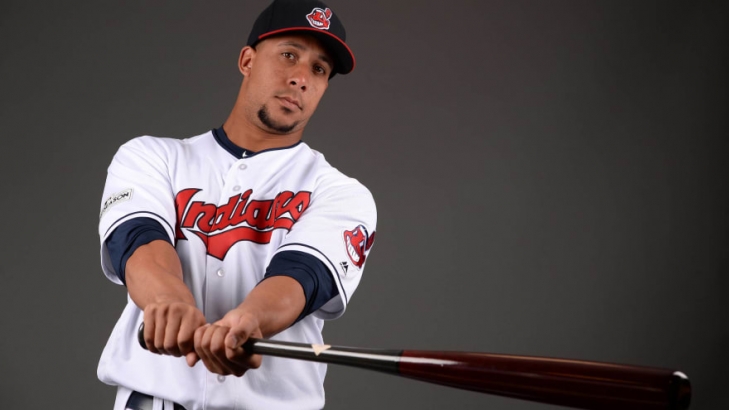
The acquisition of Michael Brantley in 2008 remains one of the most lopsided "player to be named later" transactions in baseball history. Originally a secondary piece in the blockbuster trade that sent C.C. Sabathia to Milwaukee, Brantley arrived on the North Coast with a quiet confidence and a left-handed stroke that would eventually become the gold standard for contact hitters in the American League. Known as "Dr. Smooth" for his effortless mechanics and professional approach, he evolved from a "throw-in" prospect into the steady heart of a Cleveland lineup that returned to postseason prominence in the mid-2010s.
After a foundational debut in 2009, he established himself as a reliable fixture in left field by 2011, posting back-to-back seasons with over 150 hits and a .280 average. However, the true breakout arrived during a historic 2014 campaign. That summer, Brantley orchestrated a masterclass in all-around production, reaching the 200-hit plateau and recording career highs in nearly every statistical category. His .327 average, 20 home runs, and 97 RBIs earned him a Silver Slugger and a third-place finish in the MVP voting, proving he was the most efficient offensive force on a roster chasing a division title.
The hallmark of his game was a disciplined approach that prioritized gap-to-gap power and elite contact. Even as he shifted from a high-average hitter to a more complete middle-of-the-order threat, he remained a model of high-frequency output, leading the American League with 45 doubles in 2015. He possessed a rare ability to stay within himself regardless of the game situation, serving as the primary stabilizer for the Cleveland offense. While a significant shoulder injury limited him to just 11 games during the club's 2016 World Series run, he showed a remarkable resilience by returning to All-Star form in 2017 and 2018, batting over .300 and providing the veteran poise required to keep the Tribe atop the AL Central.
After the 2018 season, he signed with Houston as a free agent. With Cleveland, Brantley compiled 1,195 hits, 87 home runs, and 528 RBIs while securing a Silver Slugger and three All-Star selections.
37. Carlos Santana
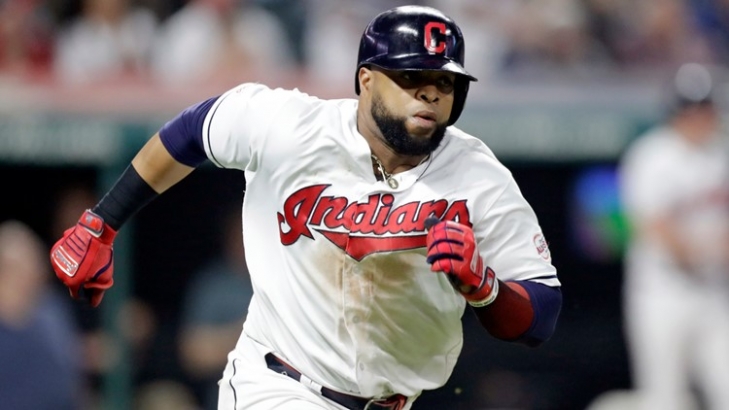
Whenever a nickname perfectly summarizes a player's primary contribution to the game, it becomes the only logical place to start. For Carlos Santana, the moniker "Slamtana" was more than just a catchy title; it was a warning to American League pitchers that a mistake over the plate would likely result in a ball clearing the outfield wall. Arriving in Cleveland as a highly touted catching prospect in 2010, the Dominican slugger evolved into one of the most disciplined offensive forces in the franchise’s modern era, defined by a rare combination of switch-hitting power and an elite refusal to swing at bad pitches.
Santana’s initial run in Cleveland was marked by a steady reliability that saw him transition from behind the plate to first base to preserve his health and his bat. He established a baseline of specialized production that few could match, launching at least 20 home runs in five of his first seven full seasons. While his batting average often hovered in the modest range, he was a model of high-frequency on-base efficiency. His skill was defined by a legendary eye, leading the American League with 113 walks in 2014 and consistently forcing opposing starters to run up high pitch counts early in the game.
After a single-season hiatus in Philadelphia, his return to Cleveland in 2019 provided a triumphant second act that stands as his professional high-water mark. That summer, Santana played with a level of focused intensity that transformed him from a reliable contributor into a legitimate MVP candidate. He reached a career-best .281 average while setting personal records in home runs (34) and RBIs (93), earning his first All-Star selection and a Silver Slugger Award. He was the veteran poise in a young lineup, providing the high-leverage hits required to keep the club in the hunt for a postseason berth.
The final chapter of his Cleveland story was written in 2025, when he returned for a third stint after the club traded Josh Naylor. While this homecoming lacked the statistical fireworks of his 2019 peak—resulting in a .225 average and 11 home runs, it served as a meaningful homecoming for a player who considered the city family.
With Cleveland, Santana compiled 227 home runs and 1,286 hits while leading the American League in walks twice across 1,450 games.
38. Francisco Lindor
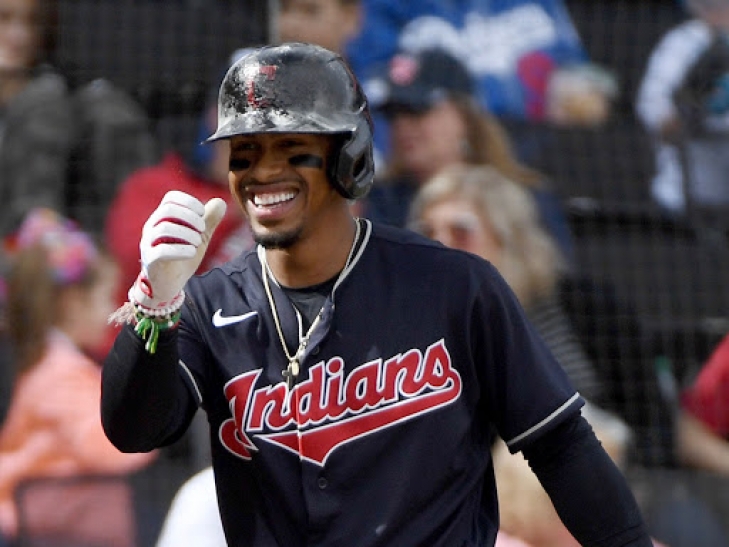
When Francisco Lindor arrived in Cleveland in 2015, he brought a megawatt smile and a generational skillset that instantly transformed the franchise’s trajectory. Known as "Mr. Smile," Lindor played with a joy that masked a ruthless competitive edge, quickly proving that he was the premier total-package shortstop of his era.
Lindor’s impact was immediate, a high-velocity entrance that saw him finish as the Rookie of the Year runner-up with a .313 average. This was merely the prelude to a four-year run of dominance during which he established a permanent presence in the All-Star Game. He was a model of specialized versatility, blending elite contact skills with a surprising power surge that saw him launch at least 32 home runs in three consecutive summers. Between 2016 and 2018, his value was so undeniable that he finished in the top nine of the MVP voting every year, serving as the tactical engine of a Cleveland squad that pushed the 2016 World Series to the final inning.
The most profound aspect of his tenure was the sheer volume of elite production he delivered daily. Lindor was a master of durability and high-frequency output, leading the American League in plate appearances three times and pacing the circuit with 129 runs scored in 2018. His craftsmanship extended far beyond the batter's box; he was a defensive technician who collected two Gold Gloves and a Platinum Glove, proving he was the league’s most efficient run-preventer. He possessed a rare ability to influence every facet of the box score, swiping at least 15 bags annually while maintaining a slugging percentage that hovered near .500.
The stay in Cleveland reached a premature conclusion after the 2020 season when a cost-cutting trade sent him to the New York Mets. With Cleveland, Lindor compiled 138 home runs, 99 stolen bases, and 804 hits while securing four All-Star nods and two Gold Gloves.