


Site Admin
14. Harlond Clift
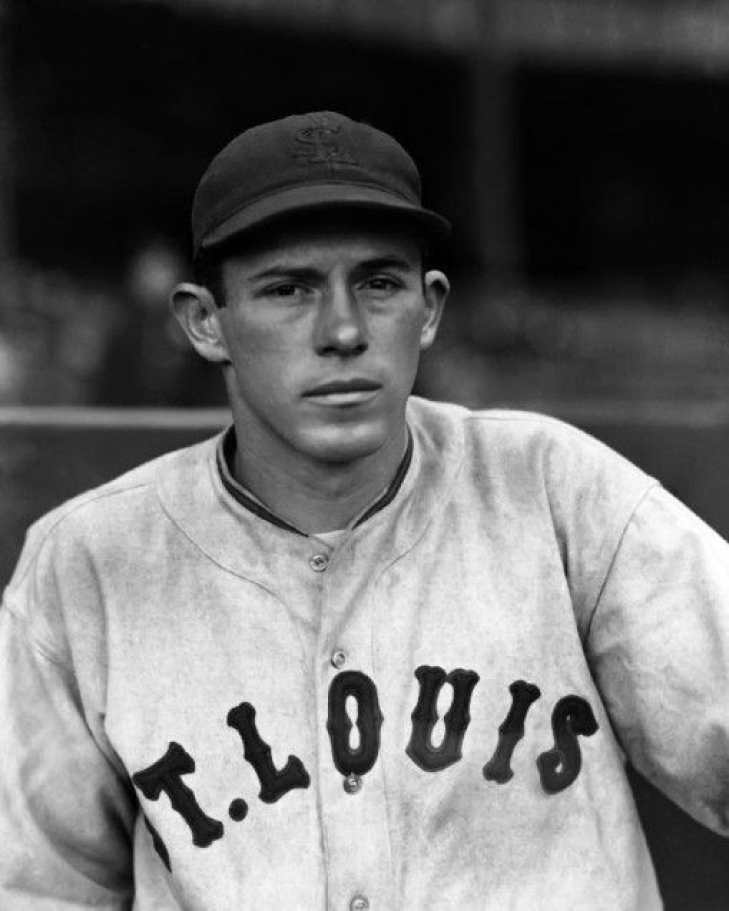
Harlond Clift arrived in St. Louis in 1934, immediately manning third base with a rookie campaign that featured 14 home runs and a .260 average. While he led the American League in strikeouts that year, Clift authored a rare and impressive mid-career adjustment. Unlike many power hitters who remain plagued by the "swing-and-miss," Clift refined his approach, drastically reducing his strikeouts while becoming one of the most disciplined hitters in the game.
This transformation turned Clift into a premier offensive weapon. He paired his power—recording four 20-home run seasons in St. Louis—with elite patience, registering five years with over 100 walks. In 1939, he led the American League in free passes, and from 1935 to 1939, he maintained a staggering on-base percentage of over .400. This relentless ability to reach base allowed him to become a run-scoring machine; Clift crossed the plate 100 or more times in seven different seasons for the Browns.
Beyond the batter's box, Clift was a defensive innovator, setting American League records for double plays and assists at the hot corner that would stand for decades. Though he was dealt to the Washington Senators during the 1943 season, he left an indelible mark on Browns history. He departed St. Louis with 1,013 runs, 1,463 hits, 170 home runs, and a career .394 OBP—numbers that established him as the gold standard for third basemen in the pre-war era.
26. George Stone
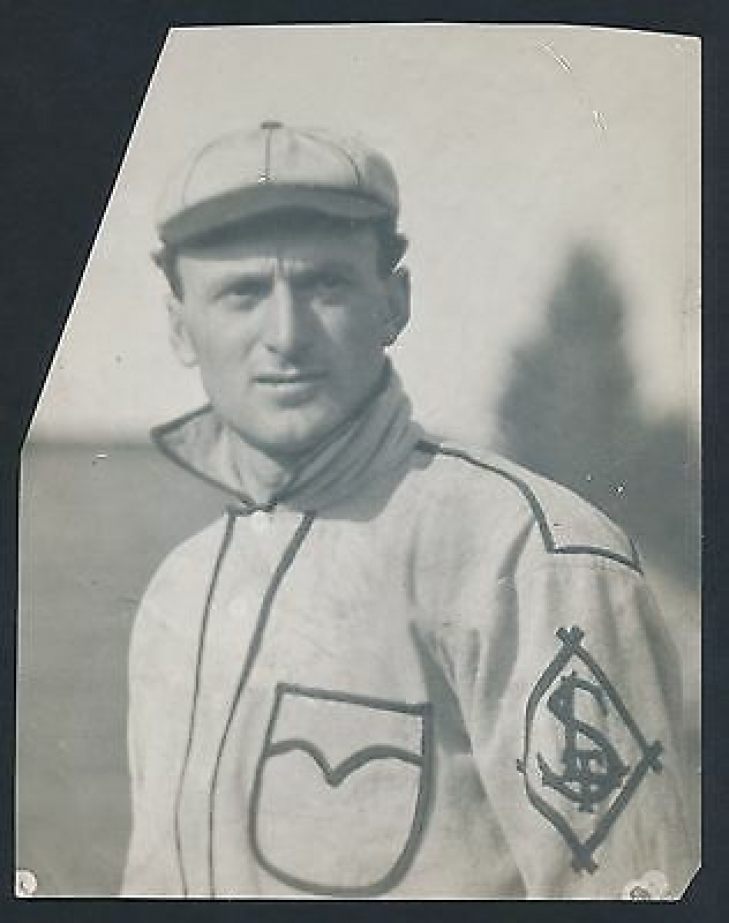
While many stars of the Deadball Era have been immortalized in bronze, George Stone remains one of baseball’s most overlooked offensive giants. A late bloomer who didn't find a permanent home in the Majors until age 28, Stone made up for lost time the moment he arrived in St. Louis. In 1905, his rookie campaign with the Browns, he immediately signaled his arrival by leading the American League with 187 hits.
However, it was his 1906 season that etched his name into the record books—even if history has been slow to remember it. In an era dominated by legends like Ty Cobb and Nap Lajoie, it was George Stone who "swept the slash line," leading the American League in Batting Average (.358), On-Base Percentage (.417), and Slugging Percentage (.501). His 208 hits that year made him the premier offensive force in the league, a "Triple Crown-lite" performance that proved he was the most dangerous hitter in the game at his peak.
Stone remained a highly competent and disciplined hitter for the Browns through 1910, consistently providing the team with elite contact and on-base skills. Though his career ended earlier than many of his Hall of Fame peers, his impact in St. Louis was undeniable. He finished his tenure with the Browns with 984 hits and a sterling .301 career batting average. In the Project Diamond lab, Stone serves as the ultimate "Peak Outlier"—a man who, for one glorious stretch, was the undisputed king of the American League batter's box.
16. Adam Jones
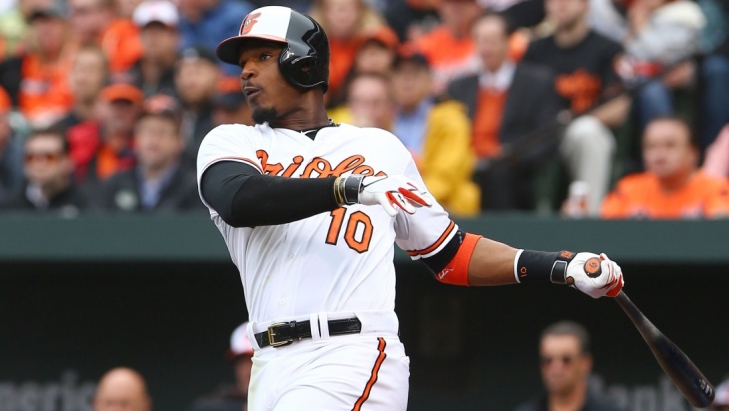
In the winter of 2008, the Baltimore Orioles executed a franchise-altering trade, acquiring Adam Jones as the center jewel of a five-player package from Seattle in exchange for Erik Bedard. It was a transaction that would define an era; had the deal been a simple one-for-one swap, the Orioles still would have emerged as the runaway winners.
Jones stepped into center field as a 22-year-old and anchored the position for the next 11 seasons. A five-time All-Star and four-time Gold Glove winner, "Pappo" became the heartbeat of the clubhouse. He was a model of durable power, swatting at least 25 home runs annually from 2011 to 2017—a stretch that included two 30-homer campaigns. While his aggressive "free-swinging" style led to a lower .319 on-base percentage, his .279 career average and 263 home runs in a Baltimore uniform made him one of the most productive outfielders in the team's history.
Defensively, Jones was a high-energy asset who patrolled center with elite athleticism early in his career. In his debut 2008 season, he showcased a "sparkling" defensive ceiling, leading the American League with 16 Total Zone Runs (and ranking among the league leaders in overall defensive efficiency). While he would never quite reach those specific statistical heights again, his four Gold Gloves (2009, 2012–2014) serve as a testament to his reputation as one of the premier outfield generals of his time.
Beyond the numbers, Jones was the leader of the teams that finally returned Baltimore to October, appearing in three postseasons during his tenure. He left the club as a free agent in 2019, departing with 1,781 hits, 263 home runs, and 866 RBIs. His induction into the Baltimore Orioles Hall of Fame in 2024 (formally announced in 2025) was a mere formality for a man who didn't just play for the Orioles—he carried the torch for them for over a decade.
19. Bobby Grich
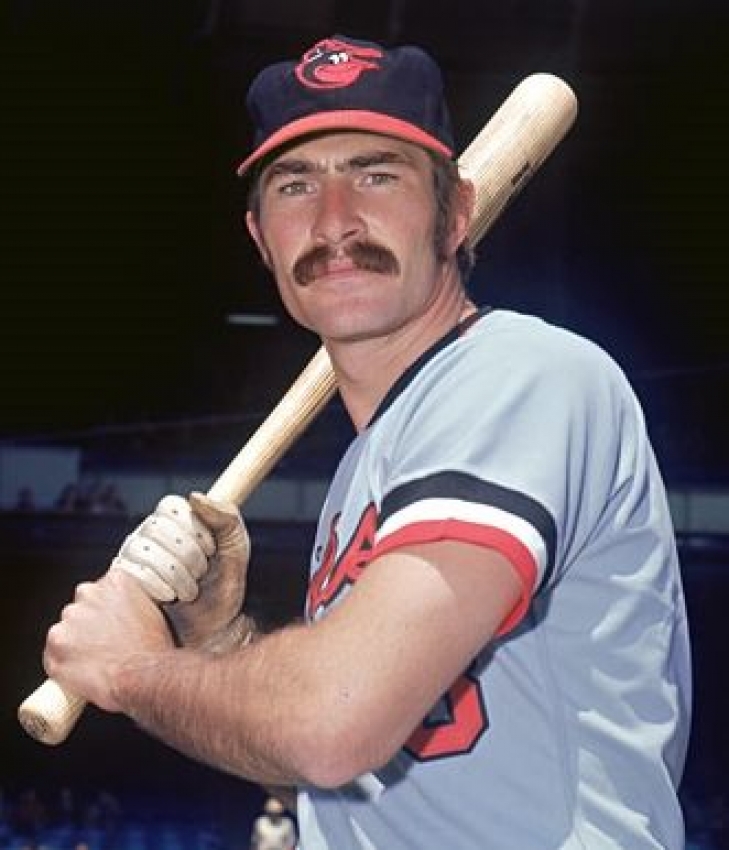
While Bobby Grich is often associated with the California Angels, he "cut his teeth" and reached his statistical zenith as a member of the Baltimore Orioles. A first-round pick in 1967, Grich was so talented that he forced the Orioles to trade away an incumbent All-Star (Davey Johnson) just to get his bat and glove into the lineup full-time by 1972. It was a move that paid immediate dividends, as Grich became the premier all-around second baseman in the American League.
Grich was a cornerstone of the Orioles' defensive "Iron Wall." Between 1973 and 1976, he captured four consecutive Gold Gloves, anchoring a middle infield alongside Mark Belanger that remains the gold standard for run prevention. His 1973 campaign was a masterpiece of "Era Dominance"; he set an all-time Major League record with a .995 fielding percentage and recorded a staggering 4.0 Defensive bWAR. That same year, Grich led the entire American League in total bWAR with an 8.3, proving that his "invisible" value was more impactful than the league's most famous sluggers.
Offensively, Grich was a pioneer of the "on-base revolution." While his .262 Baltimore average was modest for the era, his elite eye produced a .372 on-base percentage and five seasons of 13 or more home runs. He was a three-time All-Star in Charm City before departing for California as a free agent in 1976. Remarkably, though he played nearly 450 more games for the Angels, Grich’s peak value remained in Baltimore, where he accumulated more bWAR (36.0) in just seven seasons.
Inducted into the Baltimore Orioles Hall of Fame in 1998, Grich remains a favorite of historians and analysts alike—a player whose true greatness was revealed not by the back of a baseball card, but by the modern metrics that prove he was a giant of the diamond.