

Our All Time Toronto Blue Jays have been revised to reflect the 2025 Season

Yes, we know that this is taking a while!
As many of you know, we at Notinhalloffame.com are slowly generating the top 50 of each major North American sports team. That being said, we maintain and update our existing Top 50 lists annually. We are pleased to present our pre-2026 revision of our top 50 Toronto Blue Jays.
As for all of our top 50 players in baseball, we look at the following:
1. Duration and Impact.
2. Traditional statistics and how they finished in Major League Baseball.
3. Advanced Statistics.
4. Playoff performance.
5. Their respective legacy on the team.
6. How successful the team was when he was there.
7. Respecting the era in which they played.
Criteria 1-4 will make up the lion’s share of the algorithm. Please note that we have implemented this for the first time. This has changed the rankings all throughout the board.
Last year, the Toronto Blue Jays shocked the baseball world with an unexpected run to the World Series, falling to the heavily favored Los Angeles Dodgers in seven games. There were two new entrants and two elevations as per last year’s season.
As always, we present our top five, which saw one change based on the new algorithm.
1. Dave Stieb
2. Roy Halladay
3. Jose Bautista
4. Carlos Delgado
5. Tony Fernandez
You can find the entire list here.
Within the top five, Carlos Delgado and Tony Fernandez flipped the #4 and #5 spots.
Vladimir Guerrero Jr. rocketed up from #12 to #6.
Bo Bichette, who is now a New York Met, moved up from #27 to #22.
Outfielder George Springer debuted at #34.
Pitcher Kevin Gausman debuted at #35.
We thank you for your continued support of our lists on Notinhalloffame.com.
35. Kevin Gausman

When Kevin Gausman signed a five-year, $110 million deal with the Toronto Blue Jays before the 2022 season, he had a clear, high-stakes goal: to fill the role left by Cy Young winner Robbie Ray and provide the team with a reliable, top-tier pitcher. Ray was known for his unpredictable, high-energy style, while Gausman offers a very different presence—calm, precise, with a focus on a deceptive four-seam fastball and an almost unhittable splitter, which has become one of baseball's most formidable pitches. Over his first four seasons with Toronto, this right-handed pitcher has significantly transformed the Blue Jays' pitching identity.
His early years in Canada showcased elite run suppression and advanced metrics. Gausman quickly overcame any transition hurdles, establishing himself at the top of the rotation with an impressive 2.35 FIP (Fielding Independent Pitching) in 2022, demonstrating his world-class efficiency. In 2023, he reached an even higher level, leading the American League with 237 strikeouts. His outstanding performance earned him an All-Star selection, a spot on the All-MLB Second Team, and a third-place finish in the AL Cy Young voting, solidifying his popularity at Rogers Centre.
Despite a frustrating 2024 campaign marked by minor physical setbacks and typical statistical decline, Gausman demonstrated remarkable resilience, paving the way for a strong and durable rebound in the 2025 season. He consistently took the mound with unwavering reliability, serving as the dependable veteran leader for an assertive Blue Jays team that fought their way into October baseball. His season highlight was an exceptional performance on September 11 against Houston, where he pitched a two-hit complete game shutout using only 100 pitches and achieved a historic 79% strike rate, setting new modern organizational records.
Gausman carried that momentum into a deep 2025 postseason, guiding Toronto to a thrilling seven-game World Series against the Los Angeles Dodgers. Acting as a true October ace, he made six appearances—five starts—and pitched 30.2 innings, setting a new franchise record for postseason innings. Gausman dominated top lineups with a remarkable 2.93 ERA and a 0.91 WHIP, limiting opponents to a .159 batting average. His outstanding performance included a classic 8-strikeout game in the World Series, where he matched historic MLB records by striking out all eight batters in the first three innings.
Gausman enters 2026 on the final season of his deal, and he is looking to bring the Jays back to the playoffs.
34. George Springer

When George Springer put pen to paper on a historic six-year, $150 million blockbuster contract in January 2021, the Toronto Blue Jays weren't just purchasing elite outfield production; they were buying an architectural foundation. The franchise needed a proven, battle-tested standard to lead a highly talented but unproven young core out of the rebuilding wilderness and into October relevance. Over his first five seasons north of the border, the charismatic, high-velocity outfielder has delivered on that mandate, serving as the definitive cultural bridge and top-of-the-order lightning rod at Rogers Centre.
Springer's journey through Toronto has been a striking mix of exceptional talent, resilience, and a remarkable late-career transformation. His early seasons with the team showcased explosive productivity when he was healthy. Despite struggles with persistent lower-body injuries during a disrupted 2021 season, he still used his powerful right-handed swing to hit 22 home runs in just 78 games, giving fans a dazzling debut. In 2022, he truly found his rhythm as the team's regular center fielder and key offensive force, earning an American League All-Star nod after scoring 89 runs, hitting 25 homers, and leading the pace of a 92-win postseason team.
As he entered his mid-thirties and the physical strain from his aggressive style increased, Springer smoothly moved to right field. There, his technical route-running and top-tier positioning kept his defense at an high standard. Although the 2024 schedule revealed a difficult, extended summer slump that challenged the patience of Toronto fans, his inner resilience laid the groundwork for a remarkable, historic comeback.
The remarkable comeback in the 2025 season was a true masterpiece. Springer defied aging with his best season in a Blue Jays uniform, dominating opposing pitchers with a career-high .309 batting average—fourth in Major League Baseball—alongside 32 home runs and 84 RBIs. His exceptional plate discipline was evident in a .399 on-base percentage and an impressive .959 OPS, highlighted by a dominant late-summer streak reminiscent of legendary players of the past. This 140-game performance earned him his third Silver Slugger Award and delivered a powerful message across the junior circuit.
Springer maintained his intense momentum into a remarkable 2025 postseason, leading Toronto to Game 7 of the World Series. Revitalizing his reputation as a clutch October performer, he posted a solid .284 average over 16 high-stakes playoff games. He energized the Blue Jays' offense with 19 hits, 14 runs scored, and showcased his postseason power with 4 home runs and 10 RBIs, providing vital sparks at the top of the order as Toronto bested the Yankees and Mariners to reach the Fall Classic.
Springer enters this season looking to maintain the momentum he has built north of the border.
Our All Time Top 50 Toronto Blue Jays have been revised to reflect the 2024 Season.

Yes, we know that this is taking a while!
As many of you know, we at Notinhalloffame.com are slowly generating the top 50 of each major North American sports team. That being said, we have existing Top 50 lists and consistently look to update them when necessary and based on necessity. As such, we are delighted to present our post-2024 revision of our top 50 Toronto Blue Jays.
As for all of our top 50 players in baseball, we look at the following:
1. Advanced Statistics.
2. Traditional statistics and how they finished in the American League.
3. Playoff accomplishments.
4. Their overall impact on the team and other intangibles that are not reflected in a stat sheet.
Please note that our algorithm has changed, which yielded minor changes throughout the baseball lists.
Last year, the Blue Jays had a disappointing campaign where they had a losing record. There were no new entrants, but two elevations
As always, we present our top five, which saw one change based on the new calculations.
1. Dave Stieb
2. Roy Halladay
You can find the entire list here.
First Baseman Vladimir Guerrero Jr. vaulted ten spots to #12.
Notably, Bo Bichette’s poor year dropped him two spots to #27.
The new algorithm brings Brett Lawrie at #45.
We thank you for your continued support of our lists on Notinhalloffame.com.
45. Brett Lawrie
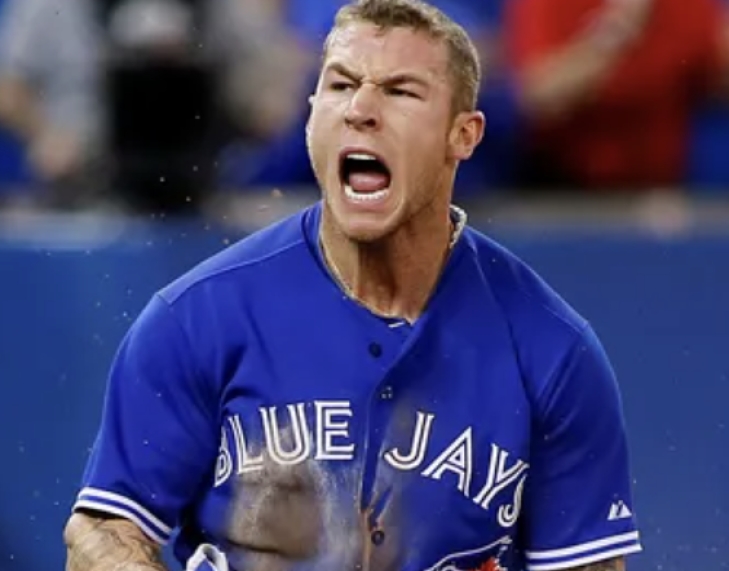
Few players in contemporary Toronto Blue Jays history have ever arrived with the pure, high-velocity emotional intensity of Brett Lawrie. Originating from Langley, British Columbia, the former junior national team star bore the significant burden of being a home-grown Canadian prospect. Drafted sixteenth overall by Milwaukee in 2008, he was transferred to Toronto in a major trade, directly exchanging him for starting pitcher Shaun Marcum in December 2010. Transitioning from second base to the hot corner, Lawrie's highly aggressive style and unwavering energy immediately captivated a fan base eager for a dynamic spark plug.
His debut in late 2011 was overwhelmingly impressive. Skipping the usual rookie period, he posted a remarkable .293 batting average with nine home runs over just 43 games. He rode that momentum into a much-anticipated 2012 season, which marked the pinnacle of his Major League career.
In 2012, Lawrie's sophomore season showcased exceptional defense and high-leverage plays. He played third base with a fearless, aggressive approach, leading American League third basemen with 15 Total Zone Runs and earning the Wilson Defensive Player of the Year Award. Offensively, he posted career-best stats with 135 hits, 26 doubles, and three triples, along with a solid .729 OPS. Known for his spectacular plays at Rogers Centre, his intensely physical style also took a significant toll on his body.
Lawrie spent two additional seasons at third base in Toronto but never quite matched his breakout year's offensive and defensive performance. Ongoing injuries like severe oblique strains, ankle problems, and hand injuries repeatedly limited his playtime, diminishing his quickness in the field and affecting his batting rhythm. His natural energy—sometimes leading to well-known, high-stakes disputes with umpires and teammates—made him a divisive yet memorable figure on the field.
His chapter in Canada ended abruptly in November 2014 when the front office traded Lawrie to Oakland for Josh Donaldson, a move that proved highly successful as Donaldson won the AL MVP in 2015 and helped the Blue Jays reach the postseason. Lawrie's career was cut short by injuries after brief stints in Oakland and Chicago before turning 27.
Lawrie had 345 hits, 61 doubles, 43 home runs, and 139 RBIs as a Blue Jay, with a .265/.315/426 line (101 OPS+). He used his aggressive range to achieve a 5.7 dWAR.
Our All-Time Top 50 Toronto Blue Jays have been revised to reflect the 2023 Season

Our All-Time Top 50 Toronto Blue Jays are now up

Yes, we know that this is taking a while!
As many of you know, we here at Notinhalloffame.com are slowly generating the 50 of each major North American sports team. We have a new one to unveil today, that of the Toronto Blue Jays, which means we have finally completed all of the MLB teams!
Our Top 50 lists in Baseball look at the following:
1. Advanced Statistics.
2. Traditional statistics and how they finished in the American League.
3. Playoff accomplishments.
4. Their overall impact on the team and other intangibles not reflected in a stat sheet.
Remember, this is ONLY based on what a player does on that particular team and not what he accomplished elsewhere and also note that we have placed an increased importance on the first two categories.
This list is updated up until the end of the 2022 Season.
The complete list can be found here, but as always, we announce our top five in this article. They are:
1. Dave Stieb
2. Roy Halladay
4. Carlos Delgado
We will continue our adjustments on our existing lists and will continue developing our new lists.
Look for our more material coming soon!
As always, we thank you for your support.
Jose Bautista will enter the Blue Jays Circle of Excellence
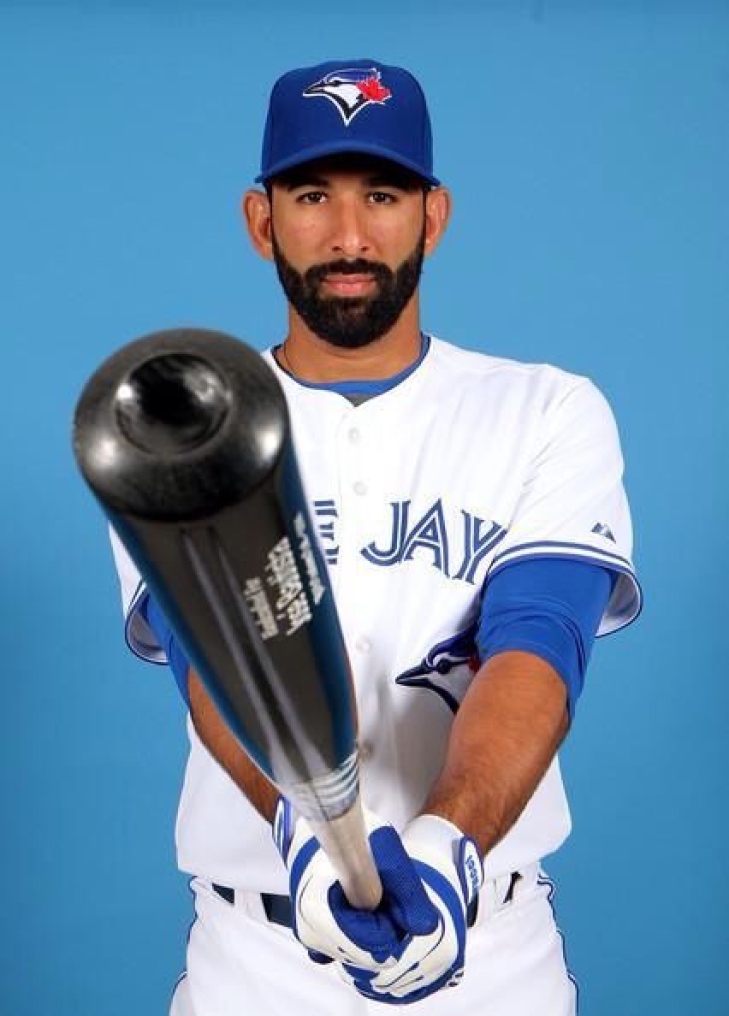
Regular visitors of Notinhalloffame.com know that we are slowly working on the top 50 of every major team in the NHL, NBA, NFL and MLB. Once that is done, we intend to look at how each team honor their past players, coaches and executives. As such, that the Toronto Blue Jays will be inducting Jose Bautista into their Level of Excellence.
Jose Bautista's success in emerging as one of the game's top power hitters might be one of the biggest “Where the hell did this come from?” stories in Baseball.
Bautista was barely even a journeyman, playing briefly for Baltimore, Tampa Bay. and Kansas City before having a respectable season in 2007 as a Pittsburgh Pirate. The Blue Jays traded for him during the 2008 Season, and Bautista began 2009 as the fourth Outfielder. He worked all year with Toronto's hitting coach, Dwayne Murphy, who helped him work on his stance and leg kick. It yielded a coming out part in 2010 that blew everyone away.
After a previous high of 15 Home Runs, Bautista won the Home Run Title with 54. He also had 124 RBI, which would become his personal best. Bautista won the Silver Slugger that year and was fourth in MVP voting. Some in the baseball media thought he had to be a one-year wonder. He wasn't. Bautista won his second straight Home Run Title (43), and he led the AL in Walks (132), Slugging (.608), and OPS (1.056). He added a second Silver Slugger, and this year was third in MVP voting.
Bautista missed quite a few games due to injury in 2012 and 2013, though he still had at least 27 Home Runs in both seasons. Fully healthy in 2014, Bautista won his third Silver Slugger on a 35 HR/103 RBI campaign, blasted 40 taters in 2015, and helped lead the Blue Jays to the playoffs. In the deciding game in the ALDS against Texas, Bautista hit the game-winning Home Run and delivered after the most famous bat flip in Canada. Toronto did not win the Pennant that year, but Bautista's moment will be forever etched in Blue Jays fans.
Age caught up to Batista after, and so did a bit of karma, in terms of a punch to the face by Texas's Rougned Odor. He was not resigned after 2017, and he left the Jays with 1,103 Hits and 288 Home Runs.
Bautista will be officially honored on August 12 before their home game against the Chicago Cubs. He joins George Bell, Dave Stieb, Joe Carter, Cito Gaston, Tony Fernandez, Pat Gillick, Tom Cheek, Paul Beeston, Carlos Delgado and Roy Halladay.
We here at Notinhalloffame.com would like to congratulate Jose Bautista for his impending honor.
50. Adam Lind
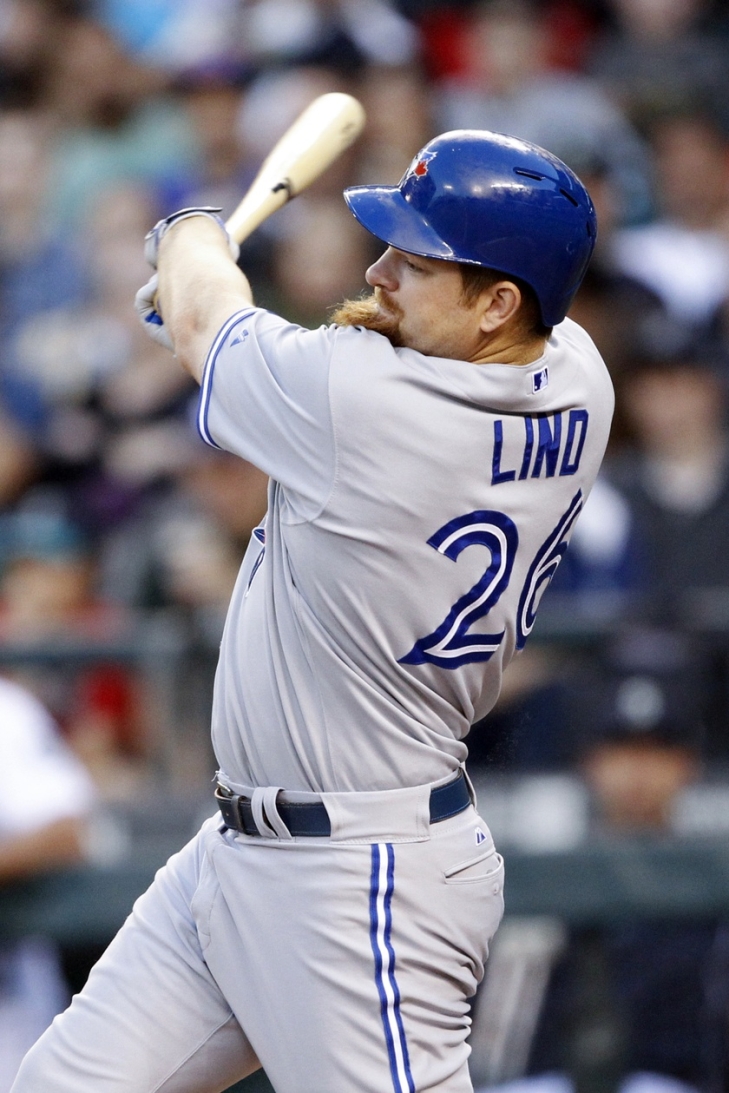
Adam Lind played most of his career with Toronto (2006-14), first showing up to the Jays as a September callup.
Lind proved that he could hit, but he was an abysmal fielder and could only find a place in the Majors as a Designated Hitter, and for a brief time, he was among the best in this role. Lind entered this role full-time in 2009, and he was phenomenal that year, hitting 35 Home Runs with 114 RBI and a .306 Batting Average. He won the Silver Slugger and the Edgar Martinez Award as the game's top DH, but this was his high-water mark.
Lind had three more 20 HR years but struggled with his average and strikeouts, and would spend more time in the Minors. He never got that 2009 level back and was traded to Milwaukee after the 2014 Season, and left the team with 931 Hits, 146 Home Runs, and a .276 Batting Average.
42. Mark Eichhorn
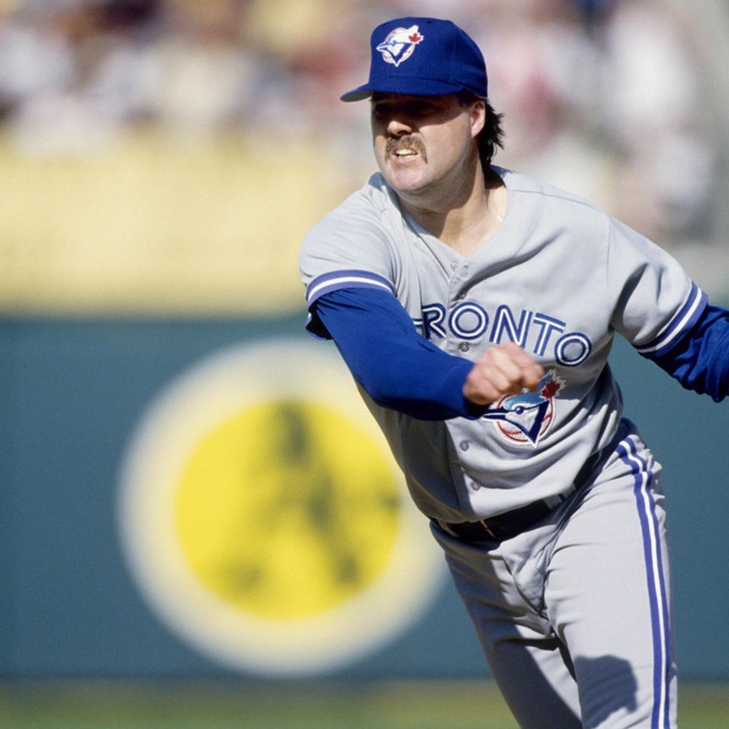
Originally drafted as a standard, overhand starting pitcher, he made a brief big-league debut in 1982 before severe shoulder issues completely derailed his career. Facing an early retirement, Eichhorn reinvented himself out of sheer survival, dropping his arm slot down to a deceptive, frisbee-like sidearm delivery. That mechanical overhaul completely changed his life. When he finally returned to the majors in 1986 after a four-year absence, he didn't just survive—he authored one of the most dominant, high-volume relief seasons in the sport's history.
That 1986 campaign was an absolute masterpiece of bullpen efficiency. Relying on an unhittable, changing-speed changeup and a sinking fastball that defied gravity from his low arm angle, Eichhorn paralyzed American League hitters. He made 69 appearances, swallowed up a jaw-dropping 157.0 innings strictly in relief, and compiled an incredible 14–6 record with a microscopic 1.72 ERA. He was an absolute workhorse, backing up that rookie showcase by leading the entire American League with a staggering 89 pitching appearances in 1987. Across a three-year span, his rubber arm racked up 24 wins out of the bullpen, making him an absolute favorite of the Exhibition Stadium faithful.
As the front office retooled the roster, Toronto sold his contract to the Atlanta Braves in 1989. Eichhorn eventually found his groove again with the California Angels, which set the stage for a dramatic, full-circle homecoming. In August 1992, the Blue Jays traded for their former bullpen star to reinforce their late-inning bridge for the stretch run.
His second tour in Toronto was defined by calm, veteran precision. Operating as a steady middle-relief specialist, Eichhorn became a vital, high-leverage cog in the machine that secured the franchise's back-to-back world championships. He turned in a tidy 2.38 ERA down the stretch in 1992 and followed it up by throwing 45 crucial games with a 2.72 ERA during the historic 1993 title defense, giving Cito Gaston total structural reliability ahead of closer Duane Ward.
Following the 1993 triumph, Eichhorn departed as a free agent to sign with Baltimore, eventually wrapping up his 11-year major league journey with a stop in Anaheim. Over his two stints in Toronto, Eichorn appeared in 279 games (only 7 starts) with a 31–22 record, a 3.03 ERA, and a 1.15 WHIP. He worked 481.1 innings, recording 14 saves and 338 strikeouts while generating an elite 139 ERA+.
49. Kelvim Escobar
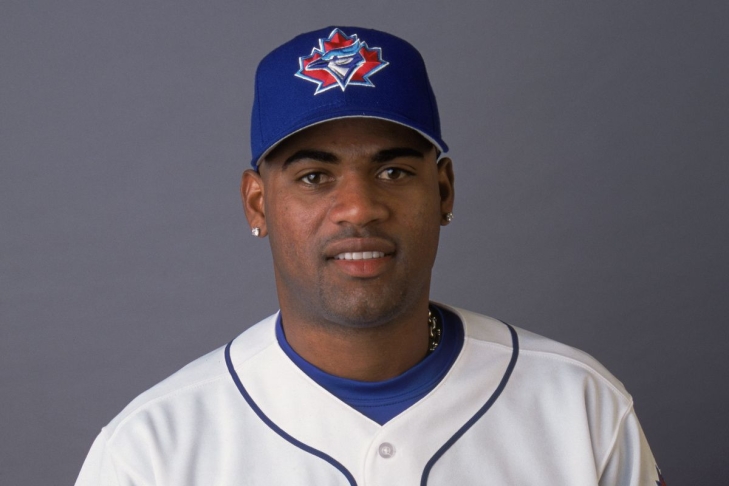
Over his seven seasons in Toronto, Venezuelan hurler Kelvim Escobar tried every role on the mound.
Debuting in 1997, five years after he was signed as an Amateur Free Agent, Escobar saved 14 Games as a rookie, but two years later was a starter, going 14-11, though his ERA was a bloated 5.69. He again had an ERA over five in 2000 (10-14), going back and forth from starter to reliever, and was finding a groove in late relief in 2001.
Toronto promoted Escobar to their closer in 2002, and though he had 38 Saves, the 4.27 ERA was not good, and they tried again in 2003 to figure out what to do with Escobar, who bounced between roles. Escobar signed with the Angels in 2004, and though Escobar’s career as a Blue Jay was inconsistent and somewhat chaotic, he belongs on this list.
43. Damaso Garcia
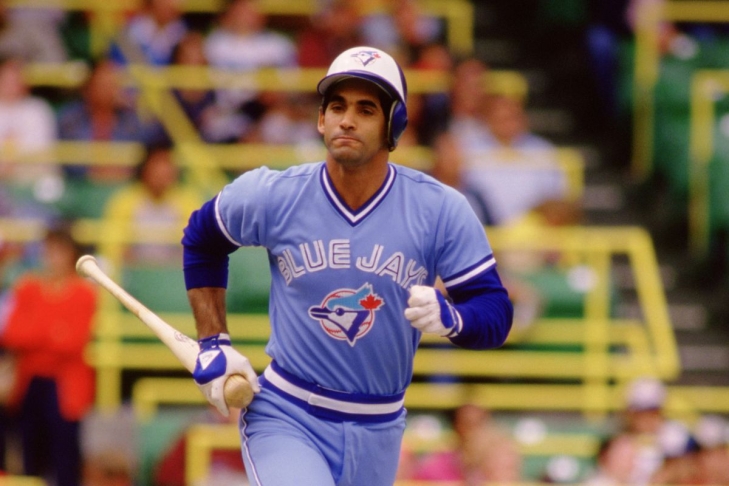
For a generation of Toronto baseball fans navigating the early, expansion-era struggles of the franchise, Dámaso García represented the first real spark of excitement in the middle infield. Acquired from the New York Yankees in November 1979 alongside Alfredo Griffin, García brought a dynamic energy to Exhibition Stadium. While the team was still trying to find its footing in the American League East, his quick hands and baseline speed gave the Toronto faithful an immediate fan favorite to rally behind.
His debut 1980 campaign as a full-time player showcased rookie efficiency. Skipping lengthy adjustment phases, García amassed 151 hits, hit 30 doubles, and posted a solid .278 average, finishing fourth in the AL Rookie of the Year vote.
That early showcase brilliantly laid the groundwork for an outstanding peak in 1982 under manager Bobby Cox. Moving to the leadoff position, García overwhelmed opposing pitchers with a smooth, level right-handed swing, achieving a career-best .310 batting average. He utilized his exceptional athletic instincts to intimidate catchers, stealing an impressive 54 bases—second in the league only after Rickey Henderson—and set franchise records for hits (185) and runs scored (89), earning the American League Silver Slugger Award. He continued this strong performance in 1983, maintaining his clutch hitting with a .307 average and 31 steals, solidifying the top of Toronto's rising lineup.
As the Blue Jays became serious AL contenders, García’s consistent performance in the regular season earned him consecutive All-Star selections in 1984 and 1985. Although his season-ending batting averages were slightly below .300 (.284 and .282), he continued to be a top-tier table-setter, contributing an impressive 46 stolen bases in 1984. His efforts played a key role in Toronto's milestone, making their first-ever postseason appearance in 1985.
The good times quickly unraveled during a disastrous 1986 season. García struggled significantly and became deeply frustrated with his diminished role under new manager Jimy Williams, who moved him to the ninth spot in the batting order. In a moment of intense emotion, García notoriously burned his own uniform in a clubhouse trash can to try to break an unlucky streak. This reckless act provoked Williams’s immediate and harsh reprimand, with the manager publicly lambasting him. Unable to recover from his slump or repair their strained relationship, García made an abrupt exit by getting traded to the Atlanta Braves that winter.
With the Blue Jays, García tabulated 1,028 hits, 180 doubles, 32 home runs, and 296 RBIs while swiping 194 bases and scoring 483 runs. He generated a .283/.312/.378 slash line for the squad.
46. Lyle Overbay

During the 2005–2006 offseason, the Toronto Blue Jays acquired Lyle Overbay aiming to secure a reliable, high-output middle-of-the-order hitter. The front office traded promising pitching prospects to bring the left-handed hitter from Milwaukee, seeking a steady presence at first base. Although Overbay didn’t drastically elevate the franchise’s potential during his five-year stay, his performance was far from disappointing. With a smooth, gap-to-gap swing, "O-Dog" offered the Jays a consistent and resilient level of production.
His debut campaign in Toronto in 2006 was a showcase of outstanding offensive performance. Overbay dominated American League pitchers, marking the peak of his 14-year major league career. He achieved career highs in every category, hitting 22 home runs, driving in 92 runs, and posting an impressive .312 batting average. Utilizing his classic left-handed swing, he hit 46 doubles and posted a remarkable .880 OPS, fueling an explosive Blue Jays lineup that led the league in doubles.
Yet, as subsequent summers rolled in, replicating that spectacular 2006 showcase proved incredibly difficult. Overbay was never able to hit the .300 threshold again, and his offensive impact became more of a steady, mid-tier contribution. After an injury-hampered 2007 season saw his average plummet to .240, he rebounded to establish a remarkably consistent run from 2008 through 2010. He remained an incredibly tough out, showcasing elite plate discipline by drawing 74 walks in back-to-back seasons (2008 and 2009) and establishing a franchise record by reaching base in 12 consecutive plate appearances in May 2008.
Overbay finished his Blue Jays run with a productive 2010 farewell tour, matching his career-high 20 home runs, including a four-hit, seven-RBI game in Boston. Afterward, he signed with the Pittsburgh Pirates. With Toronto, Overbay accumulated 672 hits, 180 doubles, 83 home runs, and 336 RBIs with a .268/.350/.446 slash line.
47. Orlando Hudson
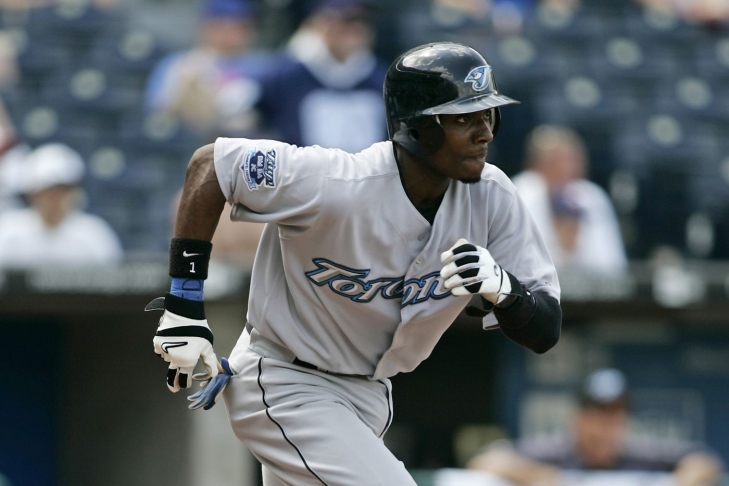
A player drafted in the 43rd round—an extremely late position that barely exists in today's draft—rarely makes it to the major leagues, much less has an eleven-year, decorated career. However, Orlando "O-Dog" Hudson defied these expectations completely. Coming out of Spartanburg Methodist College as a late-round pick in 1997, this switch-hitting second baseman relied on his exceptional defensive skills and a lively, energetic personality to reach the Rogers Centre field. His impact transformed how Toronto fans perceive defensive skill in the middle infield.
His transition to the big leagues was a masterclass in athletic adaptation. Stepping into the starting second base job full-time during a highly productive 2003 campaign, Hudson immediately established himself as a dynamic, run-saving force. He combined a steady .268 batting average with a superb 1.5 defensive bWAR, turning the area behind first and second base into a complete dead end for opposing hitters.
He elevated his defensive execution to an elite, league-leading apex during a brilliant 2004 campaign. That summer remains Hudson's individual masterpiece in a Blue Jays uniform. He completely paralyzed opposing offenses, leading the entire American League with an astronomical 2.7 defensive bWAR, making spectacular diving stops and acrobatic, high-leverage throws. At the plate, he added genuine mid-lineup value, setting career-highs with 32 doubles, 12 home runs, and a .270 average. While the national media inexplicably bypassed him for a Gold Glove that autumn, his spectacular efficiency had already cemented him as one of the premier second basemen in the game.
Justice finally arrived during the 2005 campaign. With the same elite range and a pristine .991 fielding percentage, Hudson officially captured his first American League Gold Glove Award.
Yet, with the front office eager to inject elite power into the middle of their lineup, the veteran infielder was packaged in a blockbuster trade to the Arizona Diamondbacks in December 2005, along with pitcher Miguel Batista, in exchange for third baseman Troy Glaus. Hudson would immediately continue his spectacular, gold-standard defensive showcase in the desert, eventually earning three more National League Gold Gloves and consecutive All-Star selections, cementing his legacy as a true defensive icon of his generation.
In Toronto, Hudson accumulated 437 hits, 88 doubles, 23 triples, 35 home runs, 201 RBIs, and a 7.5 dWAR.
48. Marco Estrada
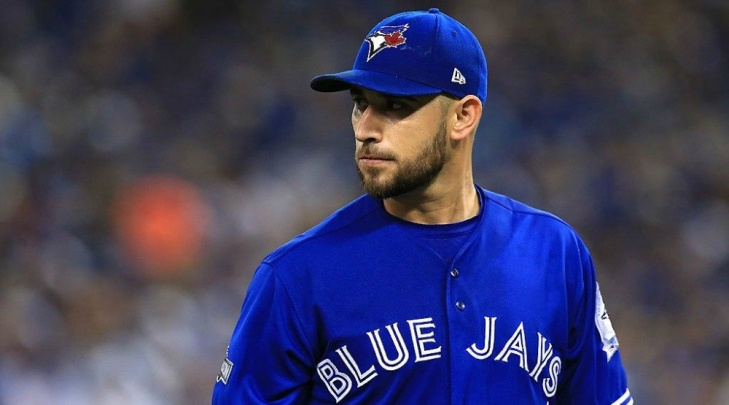
The trade that brought Marco Estrada to Toronto before the 2015 season is often seen as a major steal for the Blue Jays. He was sent directly from Milwaukee for veteran first baseman Adam Lind and was initially considered a versatile depth option to help bridge the rotation and bullpen. However, Estrada unexpectedly sparked a remarkable late-career resurgence, revolutionizing his approach with a high-leverage changeup that effectively neutralized some of the American League’s most potent offenses.
His 2015 debut tour was truly a personal showcase of excellence. Starting as a reliever, Estrada quickly transitioned to the starting rotation in May and maintained his momentum. He kept hitters off balance with a deceptive, late-fading changeup and a low-90s fastball that seemed faster due to its exceptional spin. He finished the season with a career-best 13–8 record and an impressive 3.13 ERA, leading Major League Baseball by allowing just 6.7 hits per nine innings.
When the bright lights of October arrived, Estrada elevated his game to legendary heights. With the Blue Jays facing elimination, down 2-0 in the ALDS against Texas, he took the mound and spun a brilliant, high-leverage gem to save Toronto's season. He repeated the feat in Game 5 of the ALCS, completely stymying the eventual world champion Kansas City Royals and keeping the city's World Series dreams alive.
The front office immediately focused on keeping their postseason hero, re-signing him to a multi-year contract during free agency. Estrada confirmed that his breakout summer was no fluke by delivering an outstanding 2016 season. He earned his only All-Star appearance, posted a solid 3.48 ERA, and led the American League by limiting opponents to only 6.8 hits per nine innings. That fall, he also added another memorable moment to his playoff legacy, nearly pitching a complete-game shutout in Game 1 of the ALDS against Texas, falling just two outs short.
Eventually, the intense workload and ongoing back problems affected him. During his last two seasons with Toronto, his control became inconsistent, and his performance noticeably declined, culminating in 2018 when his ERA exceeded five. He then signed with the Oakland Athletics as a free agent for the 2019 season, but injuries restricted him to only five more major-league games before he retired.
With the Blue Jays, Estrada appeared in 124 games (118 starts) and posted a 39–40 record, a 4.25 ERA, and a 1.22 WHIP. He threw 703.1 regular-season innings with 575 strikeouts.
36. Shawn Green
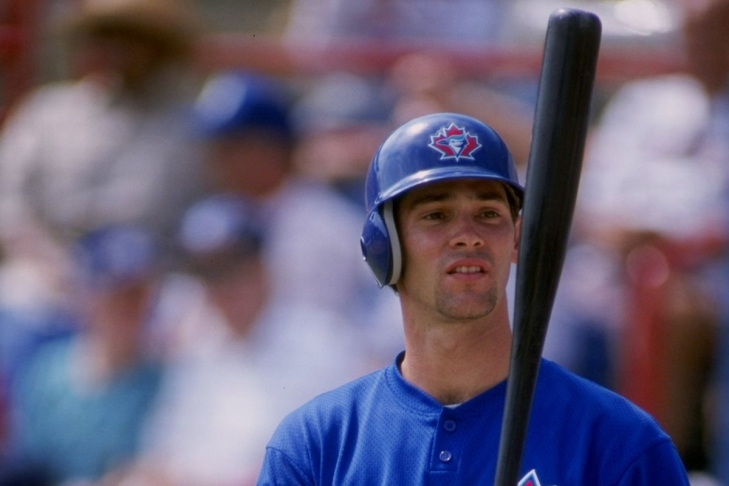
A 1991 First Round Pick in 1991, Shawn Green first made it to the Majors as a September call-up in the 1993 World Series winning season. Green did not play in the post-season and was in the minors for most of 1994, but he was the starting Rightfielder going into 1995, a position he would keep for the rest of the decades.
Green was a middle-of-the-road starter at RF for the Blue Jays for a few years but had an elevated stat line in 1998, belting 35 Home Runs with 1000 RBIs. That was the type of season that the Blue Jays were hoping for, but he took it to another level in 1999.
Green’s 1999 campaign was the best of his life, compiling career-highs in Home Runs (42) and OPS (.972) while obtaining an All-Star, a Gold Glove, and Silver Slugger. The Outfielder was also ninth for the American League MVP. This was a star-making, yea, but Toronto was not a contender and traded Green to the Dodgers after this year.
With Toronto, Green had 119 Home Runs and 718 Hits and batted .286.
32. Rance Mulliniks
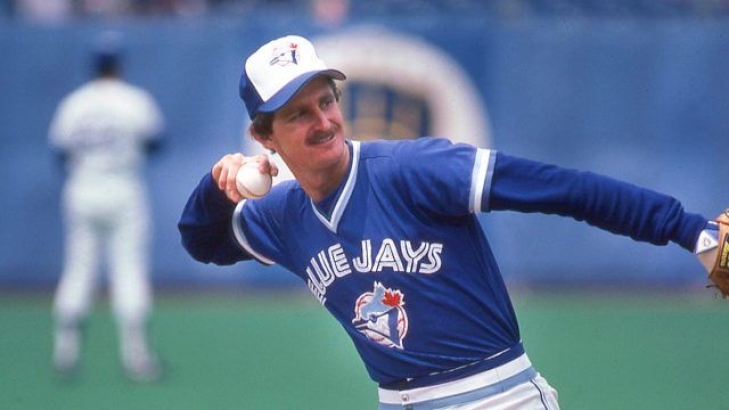
In his first five years in the Majors, Rance Mulliniks saw limited action, three with California and two with Kansas City. A trade to Toronto was just what Mulliniks needed, and for most of the 1980s, he was the main Third Baseman, often in platoons against right-handed pitching.
With the Blue Jays, the versatile Mulliniks had at least five years where he accrued 100 Hits and 10 Home Runs, batting over .300 in three of those years. He was a competent defensive player, and though he would never be a megastar, he would not be a liability either.
As Third Baseman Kelly Gruber emerged, Mulliniks’ time decreased, though his injuries and age grew. Although he barely played that year, he was a member of Toronto's 1992 World Series-winning team. Mulliniks retired after, totaling 843 Hits with a .280 Batting Average.
39. Doyle Alexander
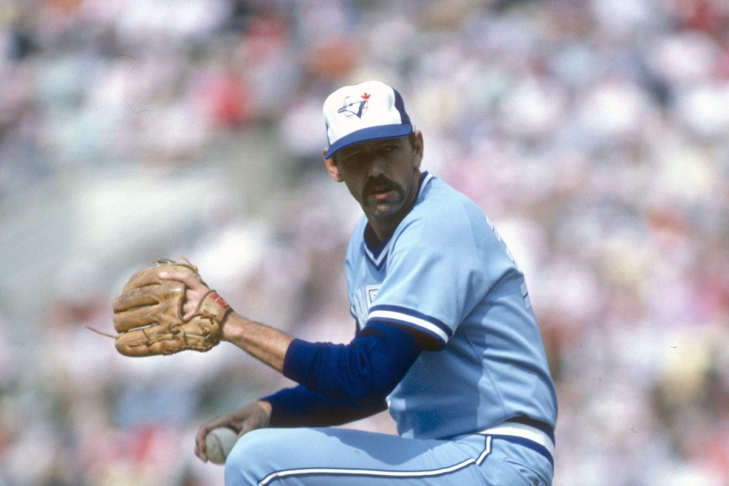
When Doyle Alexander arrived in Toronto in May 1983, his signing appeared to be a low-risk fallback for the roster. The 32-year-old right-hander had recently been released unceremoniously by the New York Yankees after a difficult period, and having moved through six major league teams over 13 seasons, it was understandable if he was nearing the end of his career. However, this familiar story took an unexpected turn. Alexander not only revived his career in Canada, but he also began the most productive and dominant pitching streak of his life.
Alexander quickly showed he still had plenty of strength, maintaining the staff's performance through the rest of the 1983 season by securing seven wins with a consistent 3.93 ERA. This foundation set the stage for an extraordinary breakthrough in 1984. Acting as the calm, reliable counterpart to the fireballing ace Dave Stieb, Alexander delivered a season of excellence. He expertly controlled the strike zone with precise movement, finishing with an impressive 17–6 record and a tight 3.13 ERA, leading the American League with a remarkable .739 winning percentage.
Far from a one-hit wonder, he perfectly echoed that high-volume output in 1985. Alexander delivered another stellar 17-win season, pitching 260.2 innings over 36 starts and posting a solid 3.45 ERA. With his veteran consistency leading the rotation, the Blue Jays achieved their first-ever American League East pennant with 99 wins. Although he struggled against Kansas City in a tough ALCS, his regular-season performance earned him a career-best sixth place in the AL Cy Young voting, the first time he received award votes.
The following summer, after a sluggish, inconsistent start to the 1986 campaign, the front office capitalized on his market value by orchestrating a landscape-shifting trade with the Atlanta Braves. Toronto sent Alexander south in exchange for a young, power-armed prospect named Duane Ward—a transaction that would later solidify the back of the Blue Jays' championship bullpens for years to come. Alexander would go on to enjoy several more famous workhorse seasons, notably carrying the Tigers into the 1987 playoffs.
With Toronto, Alexander appeared in 105 games (104 starts) and posted a magnificent 46–26 record, a 3.56 ERA, and a 1.25 WHIP. He accumulated 721.2 innings and 332 strikeouts.
44. Teoscar Hernandez
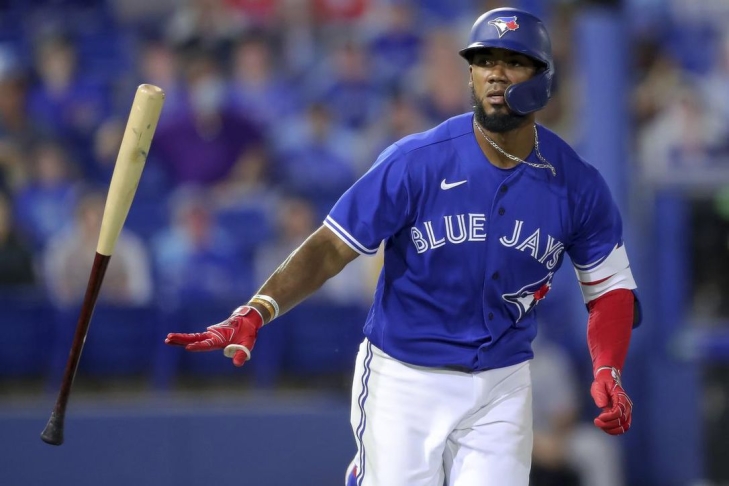
The acquisition of Teoscar Hernández at the 2017 trade deadline is truly one of the most impressive under-the-radar moves in recent Toronto Blue Jays history. The Houston Astros, in a thoughtful trade that included Nori Aoki, exchanged him for veteran pitcher Francisco Liriano. When Hernández first arrived, he was a young Dominican outfielder with raw, high-velocity power, but he had yet to find his footing in the big leagues. Over the next five-and-a-half seasons in Ontario, Hernández’s transformation has been remarkable—going from an inconsistent, strikeout-prone player to one of the most exciting, powerful middle-of-the-order run producers in the American League.
His initial full seasons in Toronto showcased a typical high-power, high-volatility profile. In 2018, he took on a regular outfield position, hitting 22 home runs with impressive strength, but struggled with consistency, posting a .239 batting average and a high strikeout rate in high-pressure situations. The 2019 season followed a similar pattern, with 26 home runs and a .230 batting average. Despite his exceptional exit velocity, defensive issues in the outfield and a tendency to chase outside pitches limited his overall value.
The 2020 schedule, shortened by the pandemic, marked Hernández's major breakout season. In only 50 games, he dominated opposing pitchers by hitting .289, with 16 home runs and 34 RBIs. His improved plate discipline and high barrel rate earned him his first American League Silver Slugger Award and an 11th-place ranking in the AL MVP voting, highlighting his elite offensive potential.
Instead of declining over a 162-game season, Hernández reached a historic peak during the outstanding 2021 season. Batting cleanup in a strong Toronto lineup, he created a remarkable personal achievement, hitting a career-high .296 with 32 homers. He utilized his gap power to drive in an impressive 116 runs—ranking among league leaders—earning a first-time starting spot in the All-Star Game, a second consecutive Silver Slugger award, a place on the All-MLB Second Team, and finishing 19th in MVP voting.
He had another highly productive summer in 2022, hitting 25 home runs with a .267 average to help the Blue Jays reach the postseason. However, as free agency approached and the front office aimed to rebalance the roster with left-handed hitters and top-tier outfield defense, Toronto traded the star outfielder to the Seattle Mariners in November 2022.
Hernández with the Blue Jays had 584 hits, 125 doubles, 129 home runs, and 369 RBIs, with a .263/.320/503 slash line and 121 OPS+.
20. Devon White
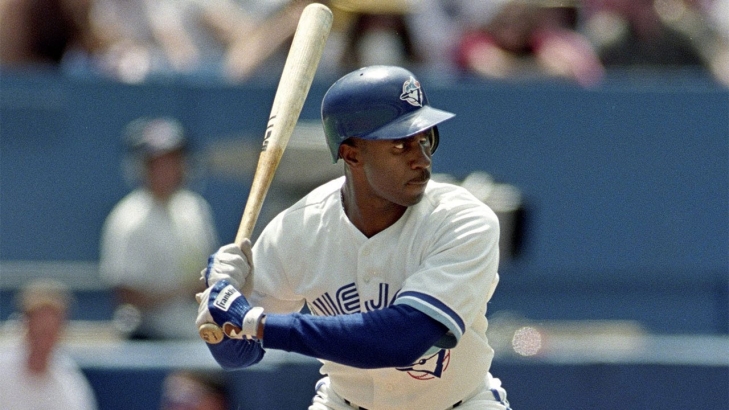
Before he sparked Toronto’s incredible run to back-to-back world championships, Devon White first made a name for himself with the California Angels. He broke into the major leagues in 1985 and earned the everyday center field spot two years later, demonstrating his impressive athleticism and incredible speed right from the start. He earned his first All-Star nod in 1989, but after a dip in his offensive performance in 1990, the Angels became less enthusiastic about his bat. Seeing a great chance, the Blue Jays jumped in with a multi-player trade in December 1990—a deal that fans of Canadian baseball would later call an absolute steal.
"Devo' assumed a pivotal role in the defensive lineup and significantly enhanced the structural defense of the team. His initial three seasons in Toronto exemplified excellence in center-field performance, characterized by smooth, fluid strides that minimized even the deepest gaps of SkyDome. He earned a Gold Glove award in each of his five seasons in Major League Baseball, consistently thwarting opposing hitters by eliminating guaranteed extra-base hits. His defensive prowess reached an exceptional peak during the historic 1992 season, when he led the American League in both Total Zone Runs and defensive Wins Above Replacement (dWAR), notably highlighted by a legendary, wall-crashing catch in Game 3 of the World Series that nearly resulted in an unassisted triple play.
While his glove was considered the gold standard in the junior circuit, White was equally indispensable as the club's high-leverage leadoff man. He set the table with incredible consistency for a powerhouse lineup, rattling off three consecutive summers with at least 155 hits, 15 home runs, and 30 stolen bases. He elevated his game during the 1993 repeat title run, batting .273 with 11 triples and scoring a career-high 116 runs, which secured his second career All-Star selection.
Though his offensive metrics declined slightly in 1994 and 1995 due to the strike, he remained an elite defensive player and a threat in base-stealing. With the core breaking up and the front office shifting priorities, White became a free agent after 1995, signing with the Florida Marlins.
With Toronto, he accumulated 733 hits, 72 home runs, and 126 stolen bases while generating a .270/.323/.419 slash line.
