
gold star for USAHOF

Top 50 Los Angeles Angels

In 1951, Los Angeles had no Major League Baseball teams.

In 1961, they had two.

The Los Angeles Angels came into existence in 1961 as an expansion team, and while they were (and are) still secondary to the Dodgers, the constant name changes didn't help.  They went from the Los Angeles Angels (1961-65) to the California Angels (1965-96), Anaheim Angels (1997-2004), Los Angeles Angels of Anaheim (2005-15), and back to the Los Angeles Angels.

The team did not go to their first postseason until 1979, and in 2002, they won their first Pennant, which is, to date, the only one they have captured.  They made the most of their lone World Series appearance, winning it all.

This list is up to the end of the 2025 season.

Note: Baseball lists are based on an amalgamation of tenure, traditional statistics, advanced statistics, playoff statistics, and postseason accolades.
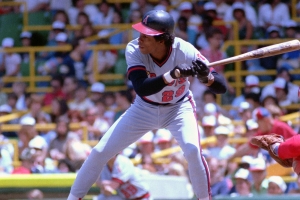
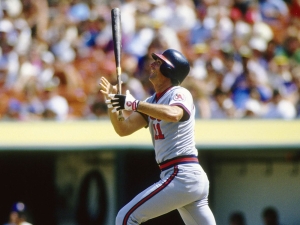
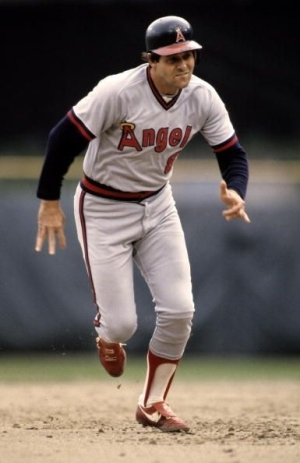
Rod Carew arrived in the California organization via a blockbuster trade in early 1979, bringing a legendary resume that included seven batting titles and a league MVP. While he had already established himself as a generational icon in Minnesota, he proved that his scientific approach to hitting was not dependent on his surroundings. In 1979 and 1983, he batted over .300 each season and maintained an on-base percentage north of .380. He showed the organization he was a foundational professional by earning an All-Star selection in every one of his first six seasons with the club, helping lead the Angels…
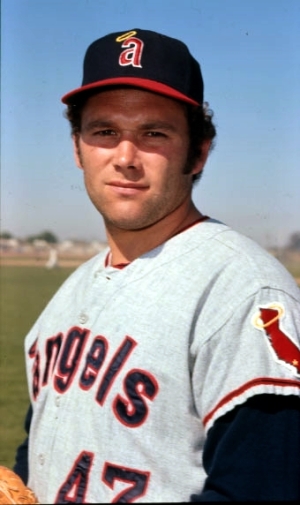
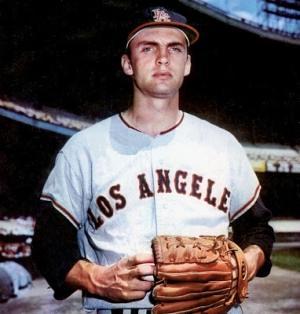
Dean Chance arrived in the California organization as a foundational piece of the original 1961 roster, debuting as a 20-year-old with a high-ceiling repertoire. Known for a unique, back-to-the-plate delivery that baffled hitters’ timing, he quickly transitioned from a young prospect to the premier arm of the expansion era. Chance first demonstrated his ability to handle a full workload during a historic 1962 rookie campaign. That summer, he recorded a 14-10 record with a 2.96 ERA and earned a third-place finish in the American League Rookie of the Year voting. He showed the organization he was a foundational professional by…
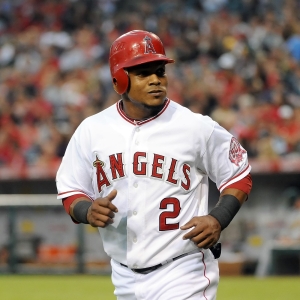
Chone Figgins arrived in the California organization via a July 2001 trade with the Colorado Rockies, a move that sent veteran outfielder Kimera Bartee to Denver. While he was drafted as a middle infielder, Figgins’ elite athleticism allowed him to become one of the most versatile weapons in franchise history. Figgins first demonstrated his ability to impact winning as a high-speed specialist during the 2002 postseason. Called up as a late-season weapon, he appeared in 15 regular-season games before becoming an asset on the basepaths during the Angels' run to their first World Series title.  Figgins transitioned to a full-time…
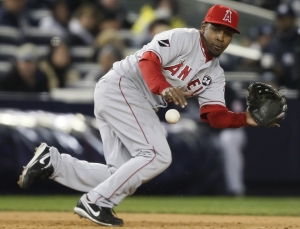
An amateur free agent in 2002, Erick Aybar was a switch-hitting shortstop who would eventually become one of the most reliable fixtures in the middle of the Angels' infield. Debuting in 2006, Aybar spent several seasons as a versatile defensive asset before securing the full-time starting role.  In the 2011 campaign, he demonstrated a specialized ability to lock down the infield by recording a career-high .980 fielding percentage, which earned him his first career Gold Glove Award.  Offensively, Aybar had 30 stolen bases that year, but he had better seasons ahead. The 2014 season represented the peak of Aybar's individual…
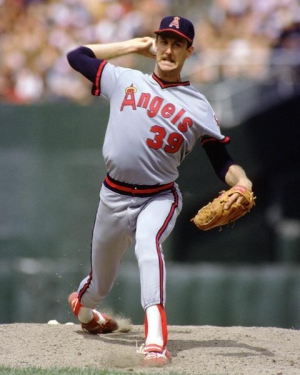
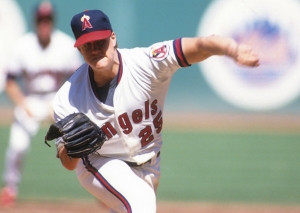
Mike Witt arrived in the California organization as a fourth-round selection in 1978 out of Fullerton’s Servite High School, essentially pitching in his own backyard. Standing 6’ 7”, he possessed a specialized high-release point that made his power curveball nearly unhittable when he was on his game. On the final day of the 1984 season, Witt delivered one of the most statistically dominant performances in baseball history. On September 30, he demonstrated a specialized ability to dominate the Texas Rangers, tossing the 11th perfect game in Major League history using only 94 pitches. This historic gem served as the lead-in…
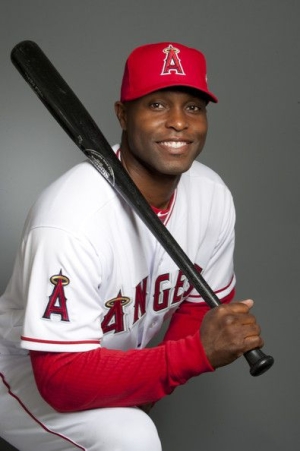
Torii Hunter joined the California organization as one of the most significant free-agent acquisitions in franchise history, signing a five-year deal prior to the 2008 season. After a decade of establishing himself as a defensive icon in Minnesota, he arrived in Anaheim to solidify the outfield for a club in the midst of a competitive window. For five seasons in an Angels uniform, he provided a specialized blend of veteran power and gold-standard defense, proving that his athletic prime extended well into his thirties. In 2008 and 2009, he continued a historic streak by securing his eighth and ninth consecutive…
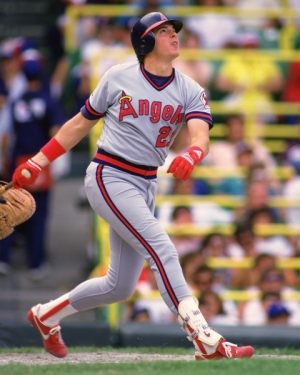
Doug DeCinces arrived in the California organization via a January 1982 trade with the Baltimore Orioles, a move that finally allowed him to step out from the massive shadow of Brooks Robinson. While his time in Baltimore was defined by the impossible task of following a legend, his transition to the West Coast sparked an immediate offensive renaissance. DeCinces had his best season in baseball in 1982, belting a career-high 30 home runs and recording his only career .300 season. He led the club to an American League West title and finished third in the AL MVP voting behind future…
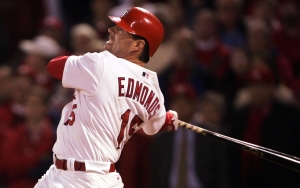
Jim Edmonds arrived in the California organization as a seventh-round selection in 1988, eventually developing into one of the most dynamic all-around center fielders of his generation. While he debuted in late 1993, he established himself as a premier talent during a breakout 1995 campaign. In 1995, Edmonds demonstrated a specialized ability to drive the ball to all fields, belting 33 home runs and recording 107 RBIs while earning his first All-Star selection. He showed the organization he was a foundational professional by pairing this offensive surge with gold-standard defense, leading the American League in putouts by a center fielder.…
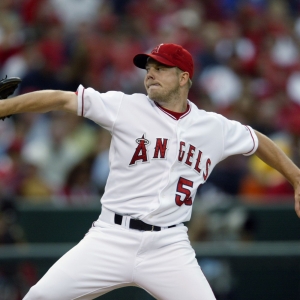
Jarrod Washburn arrived in the California organization as a second-round selection in 1995, eventually serving as the reliable left-handed anchor of the rotation for the better part of a decade. While his early years were marked by frequent moves between the minors and the parent club, he established himself as a full-time fixture by 2001. Washburn reached a historic peak of efficiency during the 2002 championship campaign. That summer, he evolved into the unquestioned ace of the staff, posting a career-best 18-6 record with a 3.15 ERA. He demonstrated a specialized ability to handle a heavy workload, tossing over 200…
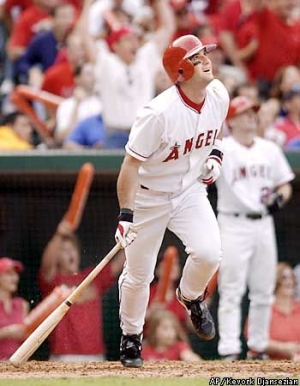
Adam Kennedy arrived in the Anaheim organization via a franchise-altering trade in March 2000, a move that sent fan-favorite Jim Edmonds to the Cardinals in exchange for the young second baseman and pitcher Kent Bottenfield. While following a legend is never easy, Kennedy quickly carved out a specialized niche as the dependable engine of the Angels' middle infield. Kennedy blossomed in 2002, recording a career-best .312 batting average and providing a high-frequency spark from the bottom of the order. He had a phenomenal postseason, particularly in the ALCS against the Twins, where he famously blasted three home runs in the…
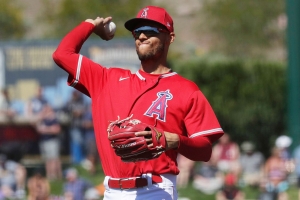
An Atlanta Brave for the first four years of his career, Andrelton Simmons arrived in the Anaheim organization via a high-profile November 2015 trade, a transaction designed to give the Angels the most specialized defensive anchor in the sport. Already a human highlight reel in the National League, Simmons brought a foundational level of run prevention to the shortstop position that redefined the team’s defensive floor. After a solid 2016, Simmons had a defensive season for the ages. That summer, he demonstrated a specialized ability to turn impossible plays into routine outs, leading the American League with a staggering 5.2…
Andy Messersmith arrived in the California organization as a first-round pick in 1966, a right-hander whose specialized, high-velocity arsenal and competitive demeanor made him an immediate cornerstone of the young franchise. After a brief but efficient debut in 1968, he quickly became a workhorse. Messersmith first stepped onto the mound for California in 1968, appearing in 21 games, mostly in relief, and offering a glimpse of the dominance to come. He showed the organization he was a foundational professional by posting a 2.32 ERA over his first 81.1 innings. By 1969, he had fully transitioned into a high-volume starter, demonstrating…
Wally Joyner joined the California organization as a third-round pick in 1983. A smooth swinger and first baseman, he helped spark one of the most passionate local movements in baseball history. Debuting in 1986, he quickly became a key member of a team that went on to win the American League West title. Joyner's debut in 1986 marked a swift rise in popularity and performance. That summer, he proved his ability to handle intense pressure, hitting 22 home runs and maintaining a .290 batting average. His impressive contribution established him as a key player for the organization, becoming the first…
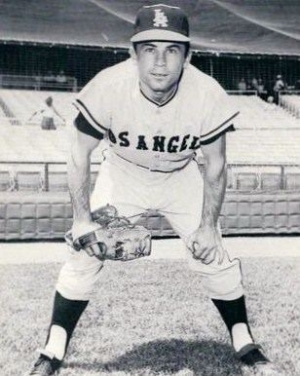
Albie Pearson arrived in the California organization via the 1960 Expansion Draft, a diminutive outfielder whose career seemed to be on the wane after two lackluster seasons in Washington and Baltimore. Standing just 5' 5", he was often dismissed for his stature, yet he provided the spark the fledgling franchise needed during its first five seasons. 1961 marked a significant comeback for Pearson. That summer, he achieved a .420 on-base percentage alongside a solid .288 batting average. He proved to the organization that he was a key professional player by regaining the form that earned him the 1958 Rookie of…
Jim Abbott joined the Anaheim organization as the eighth overall pick in the 1988 draft. Hailing from Michigan, he became a nationwide sensation even before throwing his first professional pitch. Born without a right hand, he mastered a unique technique to switch his glove to his left hand right after delivering the pitch. This seamless skill soon became overshadowed by his impressive performance on the mound.  Abbott’s 1989 rotation debut was historic, skipping the minor leagues to prove he could compete at the Major League level immediately. He demonstrated his professionalism by finishing his rookie season with a 12-12 record…
Bob Boone arrived in the California organization in December 1981 via a purchase from the Philadelphia Phillies, a veteran acquisition intended to stabilize a pitching staff in need of an elite signal-caller. While he was already 34 years old and widely celebrated for his championship run in Philadelphia, he proceeded to author a second act that defied the typical aging curve for a catcher. During his first summer on the West Coast in the 1982 campaign, he showcased a unique skill in stopping the running game by throwing out 21 of the first 34 runners attempting to test him. His…
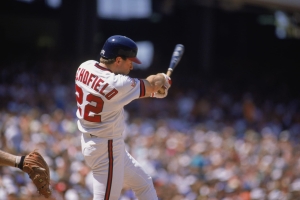
Dick Schofield joined the California organization as the third overall pick in the 1981 draft, highly regarded as a shortstop expected to anchor the infield for a rising team. He debuted in 1983 and quickly demonstrated that, although his hitting was not his primary strength, his glove was an exceptional asset that few in the American League could match. In the mid-1980s, Schofield was establishing himself as one of the most technically skilled shortstops in baseball. He exhibited a unique talent for solidifying the infield, achieving three seasons with a defensive bWAR exceeding 2.0. During the 1986 division-winning season, he…
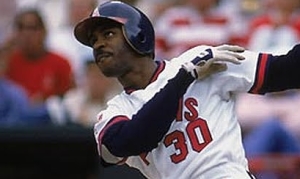
Devon White joined the California organization as a sixth-round pick in 1981. As a switch-hitting center fielder with exceptional speed and defensive skills, he became one of the most promising homegrown prospects in years. After brief appearances in 1985 and 1986, he took over as the starting outfielder and quickly changed the look of the Angels' outfield. In 1987, he entered Major League Baseball and quickly proved his versatility by making an impact in all aspects of the game. That season, he achieved 168 hits, 24 home runs, and 32 stolen bases. He established himself as a key player in…
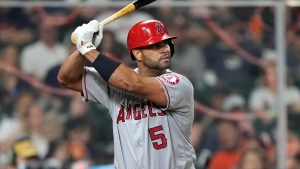
In December 2011, Albert Pujols arrived in Anaheim with a ten-year, $240 million contract, aiming to reshape the American League's power dynamics. Already a first-ballot Hall of Famer after a decade of record-breaking performance in St. Louis, he brought high expectations to the Angels' roster. Over nearly ten seasons in Southern California, he offered a unique veteran power, chasing historic baseball milestones. However, his time there ultimately became a stark reminder of athletic decline. In 2012, he showcased his ability to succeed on the Junior Circuit, hitting 30 home runs and collecting 105 RBIs while maintaining a .285 batting average.…