


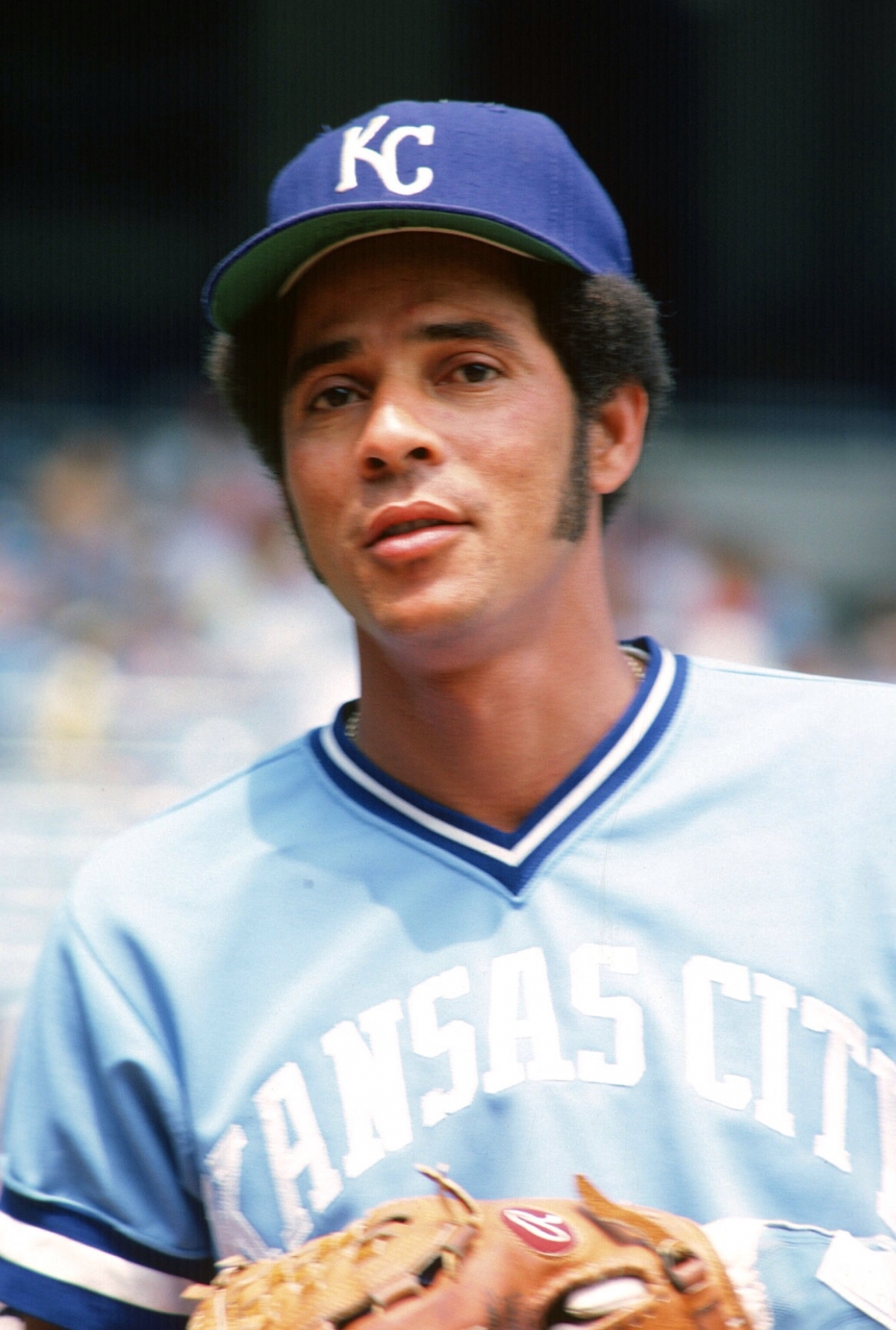



The New York Mets’ decision to part with Amos Otis in 1969 remains one of the most lopsided clerical errors in baseball history. While the Mets saw a player who didn't quite fit their mold, the expansion Kansas City Royals recognized a foundational catalyst. Arriving in the Midwest just as the franchise was finding its pulse, "A.O." didn't just occupy center field; he patrolled it with a predatory grace that defined the "Royal Way" for more than a decade. He was the prototype for the organization’s identity, a high-speed athlete who turned the cavernous gaps of Royals Stadium into his personal playground.
Otis’s tenure in Kansas City served as a definitive study in the "small ball" revolution. In 1971, a season in which he led the American League with 52 stolen bases. This wasn't merely track-star velocity; it was a weapon that pressured opposing rotations from the moment he reached first. He twice led the circuit in doubles and has amassed five seasons with at least 30 steals. His ability to manufacture runs in a park that swallowed home runs made him the primary engine of the Kansas City offense long before the arrival of the club's later icons.
Another tool he had was his defensive range that felt nearly limitless. Otis possessed a specialized athleticism that earned him three Gold Gloves in center field, utilizing his sprinter's kick to erase extra-base hits before they could find the turf. He reached a historic outlier status during the 1980 World Series, a stage where he transformed from a steady contributor into a postseason supernova. Despite the Royals falling to the Phillies, Otis authored a masterpiece in the Fall Classic, batting a staggering .478 with three home runs and seven RBIs. It was a performance of such high-leverage brilliance that it remains etched in the franchise's early playoff lore.
The 1983 season, which should have been a celebration of his veteran-like poise, instead became a high-stakes crossroads. Following the legal proceedings, Commissioner Bowie Kuhn issued a suspension that sidelined Otis for the beginning of the 1984 campaign. It was a moment of intense public scrutiny that threatened to obscure over a decade of elite production.
As for ’84, that was with Pittsburgh, as he was a Free Agent, and he finished his career at Three Rivers.
With the Royals, Otis compiled 1,977 hits and 340 stolen bases while securing three Gold Gloves. He entered the Royals Hall of Fame in 1986 as part of the first class.








Comments powered by CComment