

The Top 50 Houston Astros of All-Time are now up

We return to the world of Baseball with the Houston Astros and that we believe are Top 50 players ever from that organization.
We encourage you to see the complete list here, but for those who can’t wait, here are the top five Houston Astros of all-time:
1.Jeff Bagwell
2. Craig Biggio
3. Lance Berkman
4. Cesar Cedeno
5. Jose Cruz
This won’t be the last of this, as we have the Detroit Lions up next.
As always, we thank you for your support and look for your input!
43. Rusty Staub
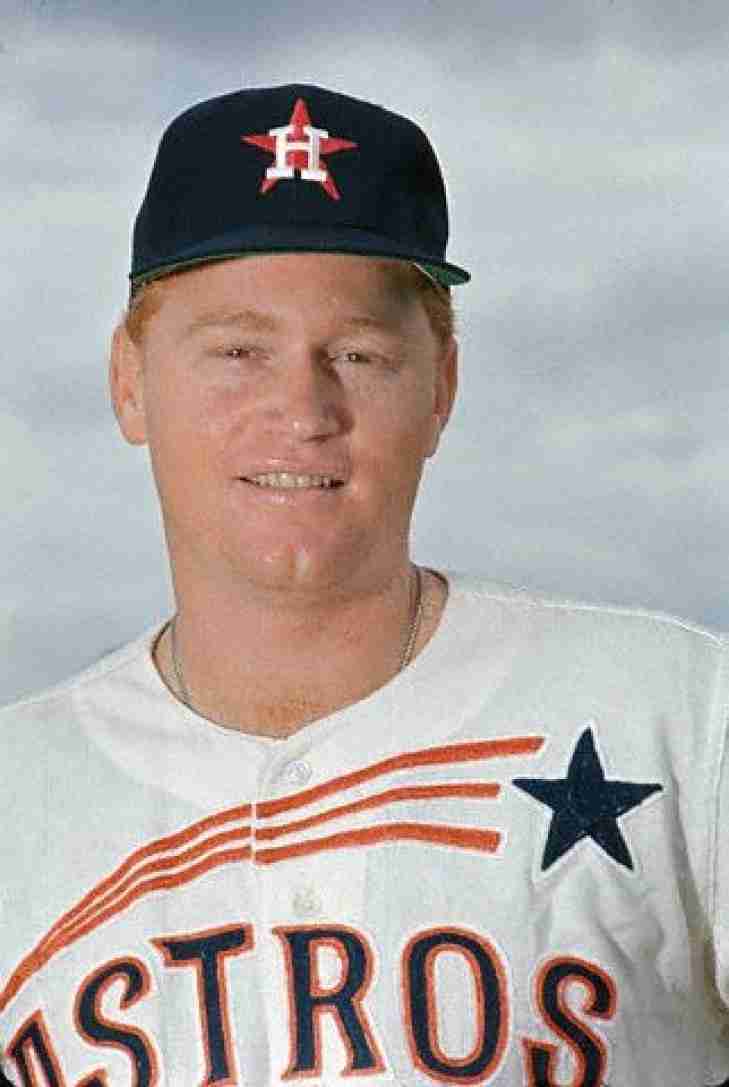
Rusty Staub arrived in the organization as a teenager in 1963, debuting for the Houston Colt .45s before the franchise even transitioned into the Astrodome. Known for his shock of red hair and a sophisticated left-handed swing, he quickly evolved from a young prospect into the team’s first genuine offensive threat.
Seemingly improving every season, Staub had a coming-out party in 1967, where he led the National League with 44 doubles and recorded a career-high .333 batting average. He showed the organization he was a foundational superstar by earning the first of his back-to-back All-Star selections and finishing the year with 182 hits. Despite the cavernous dimensions of the dome, he maintained a high-frequency of extra-base hits, proving that his line-drive approach was a tactical success against any pitching staff.
The final stretch of his Houston tenure was defined by unwavering offensive volume. Between 1966 and 1968, Staub recorded at least 150 hits each season, providing the steady production required for a developing expansion club. While his defensive range in the outfield prevented him from reaching a higher tier of overall value, his bat remained a constant.
Before the 1969 season, Staub was traded to the Montreal Expos. The move, a swap for Donn Clendenon and Jesús Alou, was driven by a contract dispute with Houston management and a tactical desire to shake up the roster. With the Astros, Staub compiled 792 hits, 115 doubles, and two All-Star selections.
23. Rusty Staub
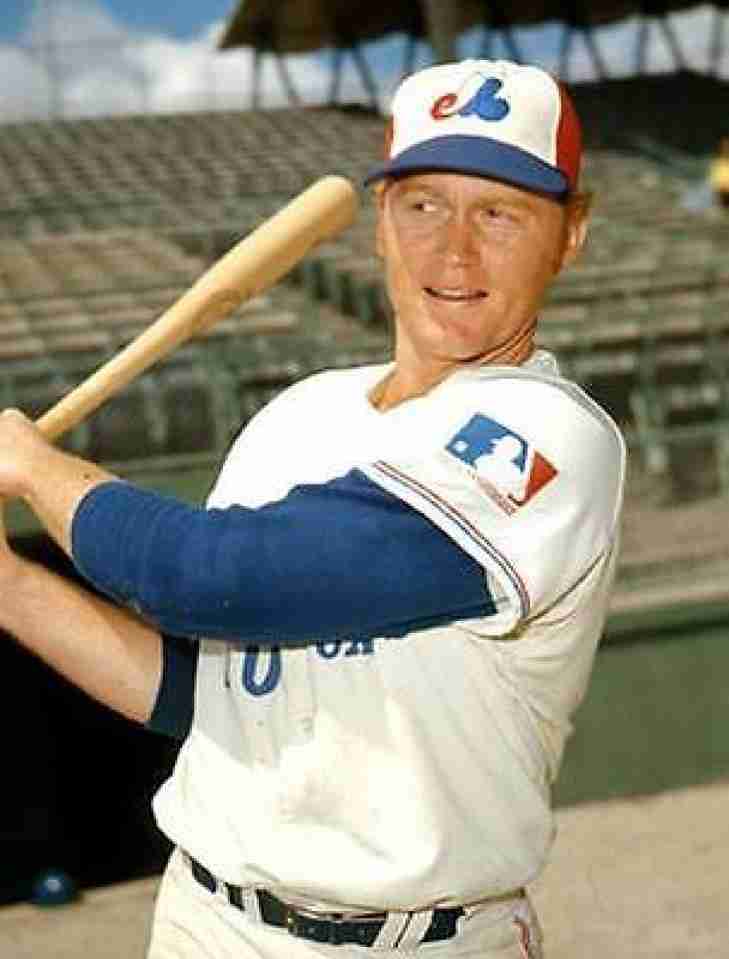
When the expansion Montreal Expos took the field for their inaugural season in 1969, they desperately needed an identity. They found it in Rusty Staub. With an unmistakable shock of red hair, an incredibly disciplined left-handed approach, and a genuine eagerness to learn French so he could converse directly with the fans, Staub didn't just become the young franchise’s first legitimate star—he became a cultural icon in Quebec. Completely embraced by the local faithful, who affectionately christened him Le Grande Orange, Staub turned Parc Jarry into his personal sanctuary during three of the most dazzling, high-volume offensive seasons the city would ever witness.
His introductory 1969 campaign in Canada was a masterclass in elite plate discipline and high-leverage execution. Staub completely paralyzed National League pitchers, launching 29 home runs, drawing an astonishing 110 walks, and batting a brilliant .302. He weaponized his deep understanding of the strike zone to generate a magnificent, league-leading .426 on-base percentage—an explosive franchise-record clip that set the gold standard for expansion team table-setters.
Far from a single-summer outlier, he sustained that elite efficiency through the next two calendars. In 1970, Staub clubbed a career-high 30 home runs and walked 112 times while driving in 94 runs. He backed it up in 1971 by playing in all 162 games, collecting a career-best 186 hits and batting .311. Across all three full seasons of his initial Montreal residency, he earned consecutive All-Star selections and was arguably one of the toughest outs in the Senior Circuit.
Yet, as the small-market Expos scrambled for roster depth, the front office made the highly unpopular decision to trade their franchise face to the New York Mets prior to the 1972 season. It broke the hearts of Montreal fans, but the deep-seated mutual adoration never truly faded. After a long, productive journey through New York, Detroit, and Texas, Staub engineered a brief, highly emotional homecoming in July 1979. Though it was just a short "cup of coffee" consisting of 38 games primarily as a veteran pinch-hitter, the roar of the Montreal crowd upon his return beautifully underscored his permanent place in the fabric of Canadian baseball history.
With the Expos, Staub appeared in 518 games. He accumulated 508 hits, 86 doubles, 78 home runs, and 289 RBIs. Driven by 310 walks against just 206 strikeouts, he generated an exceptional .296/.402/.481 slash line—good for an elite 146 OPS+.
51. Rusty Staub
If the main criteria for the Hall are perseverance and effort, then Rusty Staub should have been a first-ballot Hall of Famer. His hard work resulted in over 2,700 hits in a Major League career that many people who saw him early on would never have pegged him for.
Nobody could ever accuse Staub of not giving everything he had, regardless of the endeavor. Those efforts included cooking, history, and, of course, baseball. They called him eccentric for these things, but his meticulous nature turned him into a pure hitter and gained him respect throughout the league. He made six All-Star Games but did so without showing much power (though he hit 25 homers twice) and without any real speed. What he did do was hit for average consistently and walk frequently, which enabled him, even late in his career, to be a solid pinch-hitter.
Staub may have been freakishly consistent, but he was never dominant and was never a serious contender for any postseason award. Six All-Star appearances were impressive, but rarely has the Baseball Hall of Fame rewarded longevity without at least a flash of immortality. If they did, Staub would be a good place to start.
Should Rusty Staub be in the Hall of Fame?
