
gold star for USAHOF

Top 50 Chicago White Sox

An inaugural team when the American League formed in 1901, the Chicago White Sox were first called the Chicago White Stockings, but that would be a brief moniker as they would shorten that to the Chicago White Sox, the name that they hold today.

Despite the lengthy existence of the franchise, this has not been one of the more successful teams in the AL.  Chicago won their first World Series in 1906, and in 1917 they captured their second.  In 1919, they were considered the best team in baseball and were expected the crush the Cincinnati Reds of the National League.  Chicago lost, and it later came out that the players on the team conspired to throw games for financial benefit.  The ChiSox struggled for decades after and would not win another Pennant until 1959.  They lost the World Series, and it would take until 2005 until they reached the Fall Classic again.  This time, they won, marking their third World Series win.


This list is up to the end of the 2025 season.

Note: Baseball lists are based on an amalgamation of tenure, traditional statistics, advanced statistics, playoff statistics, and post-season accolades.
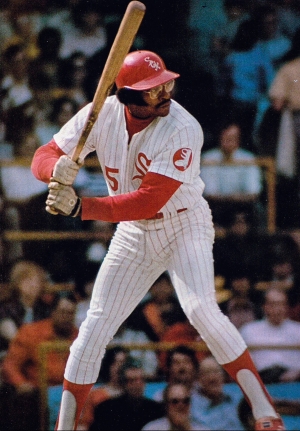
Allen’s journey in Chicago began with a franchise-altering trade from the Dodgers after the 1971 season. He matured instantly under the relaxed, player-first management of Chuck Tanner, shedding the "troublemaker" labels of his youth and emerging as the definitive statistical titan of the American League. He arrived with a "tree trunk" of a bat and a clinical approach to hitting, and he was rewarded immediately with the 1972 AL MVP award. That season was a masterclass in run production: Allen led the league in home runs (37), RBIs (113), walks (99), on-base percentage (.420), and slugging (.603). He was an…
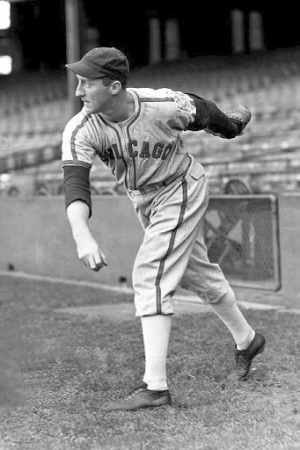
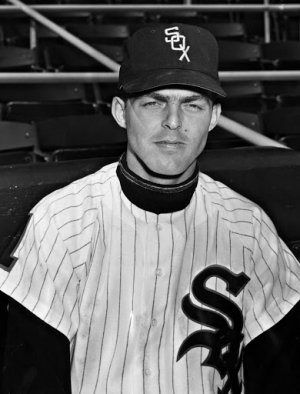
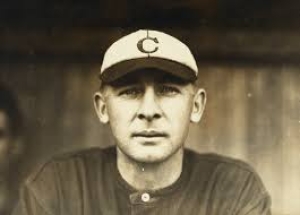
Johnny Rigney’s journey in Chicago began in 1937, but it was the 1939 campaign when he instantly matured into a cornerstone of the franchise. He arrived with a "live" arm and a clinical approach to hitters, evolving from a prospect into a statistical titan by the time he was 24. Between 1939 and 1941, Rigney was a model of consistency, winning at least 13 games in each of those three seasons while serving as the tactical heartbeat of a White Sox staff that relied on his ability to miss bats. The absolute pinnacle of his career was marked by a…
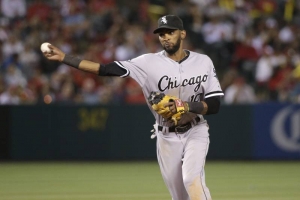
Alexei Ramirez surfaced in the Chicago lineup in 2008 and matured instantly into a premier threat at the plate. He emerged as a versatile standout, initially taking over at second base and providing an immediate spark for a division-winning squad. That summer, he showcased a rare blend of contact and power, batting .290 with 21 home runs—including a franchise-record four grand slams- on his way to a runner-up finish in the American League Rookie of the Year voting. He was a model of consistency from the jump, proving that his game could translate to the highest level of professional competition…
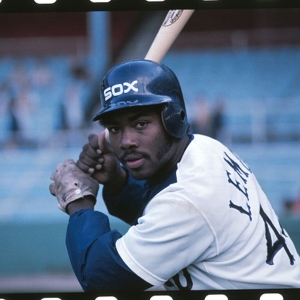
Chet Lemon debuted in the Chicago lineup in 1976 and matured instantly into a premier threat at the plate and in the field. He emerged as a versatile standout, taking over the starting center field job and providing an immediate defensive upgrade for the club. That summer, he showcased a rare blend of contact and power, batting over .300 for the first of three times in his Chicago stay. He was a model of consistency from the jump, proving that his game was built on a sophisticated balance of offensive production and elite run prevention. The most impressive aspect of…
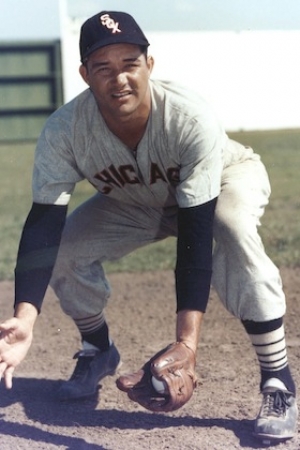
In 1950, Chico Carrasquel arrived in Chicag with a flair for the spectacular, possessing a "vacuum" of a glove and a lightning-fast release that turned certain hits into routine outs. His impact was felt immediately across the league; in 1951, he made history as the first Venezuelan player ever selected for the All-Star Game. He was a model of consistency from his first day on the dirt, providing a specialized level of run prevention that allowed the White Sox pitching staff to attack the strike zone with complete confidence. The most impressive aspect of his tenure was the sustained defensive…
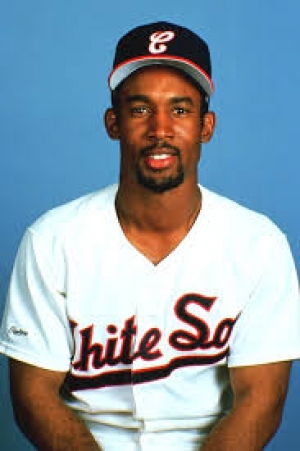
Ray Durham made it to the Chicago lineup in the mid-90s and matured instantly into a premier leadoff threat. He arrived with a "slash-and-dash" style that put immediate pressure on opposing batteries, utilizing a compact swing and aggressive baserunning to create scoring opportunities. Between 1996 and 2000, he authored a remarkably consistent stretch of production, batting at least .270 and launching double-digit home runs in five consecutive campaigns. He was a model of versatility from the leadoff spot, proving that a primary run-scorer could also provide the specialized power needed to turn a game around with one swing. The most…
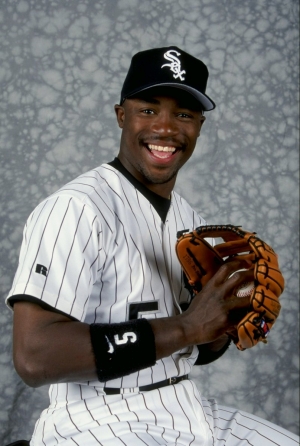
Johnson’s path to Chicago was the result of a lopsided 1987 swap with the St. Louis Cardinals, a deal that sent Jose DeLeon to the Senior Circuit. While the trade was headlined by other names at the time, it was Johnson who matured into the ultimate prize of the transaction. He emerged as a regular in 1990 and quickly became the premier leadoff threat for a surging squad. He possessed a "slap-and-run" style that relied on elite acceleration and a clinical ability to find holes in the defense, turning the trade from a simple roster move into a franchise-altering steal.…
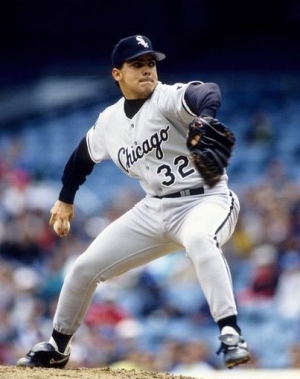
Alex Fernandez surfaced in Chicago during a whirlwind 1990 campaign, making his Major League debut just months after being selected fourth overall and sweeping the Golden Spikes and Dick Howser awards at the University of Miami. While his initial transition to the professional ranks required a brief period of adjustment, he matured into a cornerstone of the staff by 1993. That summer, he emerged as a premier force in the Junior Circuit, authored by an 18–9 record and a .313 ERA. He was a model of specialized control from the start, proving that his game was built on a sophisticated…
Landis emerged in the Chicago lineup in 1957 and matured into the premier defensive presence of the era by the following spring. He possessed a specialized ability to read the ball off the bat, a gift that allowed him to patrol the vast gaps of Comiskey Park with a grace that few could replicate. During the historic 1959 campaign, he became the engine of the "Go-Go" spirit, leading the American League with 25 Total Zone Runs while adding a dynamic spark to the offense with 140 hits and 20 stolen bases. He was the rare talent who could win a…

2026 TORONTO BLUE JAYS FLEX PACKS

Mar 26, 2026

Buy your Tickets to see 2026 Toronto Blue Jays Flex Packs HERE!

2026 TD EXECUTIVE SUITES

Mar 26, 2026

Buy your Tickets to see 2026 TD Executive Suites HERE!

2026 SEATTLE MARINERS FLEX MEMBERSHIPS

Jan 01, 1970

Buy your Tickets to see 2026 Seattle Mariners Flex Memberships HERE!

ARIZONA DIAMONDBACKS VS. ATLANTA BRAVES

Apr 03, 2026

Buy your Tickets to see Arizona Diamondbacks vs. Atlanta Braves HERE!

 
Lee Tannehill surfaced in the Chicago lineup in 1903 and rapidly established himself as a fixture of the infield. He arrived with a reputation for sure-handedness, a trait that became the tactical engine of the 1906 "Hitless Wonders." During that historic season, he provided the defensive stability at third base and shortstop that allowed the White Sox to capture the World Series despite a collective lack of offensive punch. He was a model of specialized efficiency, proving that in an era of small ball and low scores, a master of the leather was just as vital as a heavy hitter.…
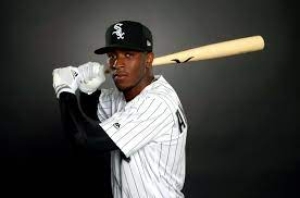
Tim Anderson debuted in the Chicago lineup in 2016 and matured instantly into a dynamic force at the top of the order. He emerged with a specialized, aggressive approach at the plate, utilizing his elite hand-speed to drive the ball to all fields. His breakout reached a massive ceiling in 2019 when he stood as the undisputed batting king of the American League, securing the Batting Title with a .335 average. He was a model of multi-tool production, proving he could pair his contact skills with consistent power, launching double-digit home runs over five consecutive summers between 2017 and 2021.…
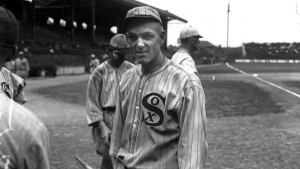
Arriving in the Chicago lineup in 1912, Buck Weaver rapidly established himself as a fixture of the infield. He arrived with a reputation for a relentless, aggressive style of play, transitioning from shortstop to third base, where his range and arm strength became a cornerstone of the club’s run prevention. He was a model of defensive reliability, never posting a negative defensive bWAR throughout his nine seasons and consistently shrinking the field for opposing hitters. He was the rare talent who understood the nuances of the "deadball" era, twice leading the American League in sacrifice hits and swiping 173 bases…