
gold star for USAHOF
 

Top 50 Chicago Cubs

When it comes to iconic sports teams in North America, few can come close to the Chicago Cubs.

The Cubs first came into existence in 1870 as the Chicago White Stockings would join the National League in 1876.  Before 1900, Chicago was one of the most successful teams.  Led by Cap Anson, Chicago would win the National League Pennant in 1876, 1880, 1881, 1882, 1885 & 1886.  They would go through a couple of name changes to the Colts, Orphans and would officially adopt the name of the Cubs in 1903.

The Cubs did well in the first decade of the 1900s where with stars like Joe Tinker, Johnny Evers, Frank Chance, and Three Finger Brown and would win the World Series in 1907 and 1908.  That would begin the longest championship drought in sports.

You know the story.  The alleged curse of the goat.  Steve Bartman. 

It would take until 2016 when they would win the World Series again, although they did win the National League Pennant multiple times between them (1910, 1918, 1929, 1932, 1935, 1938 & 1945).  They also had Hall of Famers at that time, like Ernie Banks and Ryne Sandberg.

As of this writing, three World Series Championships is not very many for a team that has been around since the beginning, but again, how many organizations are as well known as the Cubbies!

Not too many!

This list is up to the end of the 2025 season.

Note: Baseball lists are based on an amalgamation of tenure, traditional statistics, advanced statistics, playoff statistics, and post-season accolades.
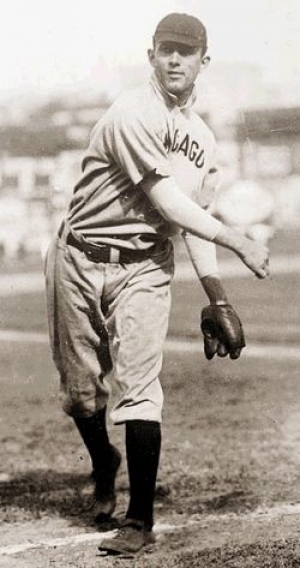
When Ed Reulbach arrived in 1905, he transitioned instantly from a standout college athlete into one of the most difficult pitchers to hit in the National League. He matured into a mainstay of the Cubs’ rotation just as the team began its historic run toward back-to-back championships in 1907 and 1908. His success was staggering; he led the National League in winning percentage for three consecutive years (1906–1908), a feat of consistency matched only by the legendary Lefty Grove. He arrived with a "shadowing" windup that hid the ball from hitters and quickly became a force who could suppress runs…
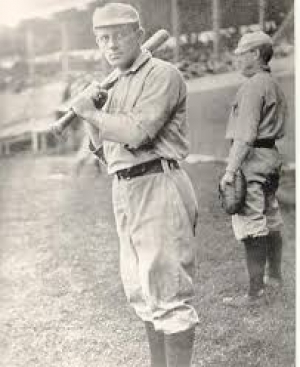
Dahlen arrived in Chicago in 1891 and quickly became a cornerstone of the lineup, offering a level of offensive production that was rare for a shortstop in the pre-modern era. He was a model of consistency at the plate, surpassing the .300 mark in three different seasons and maintaining a remarkable .299 average over his eight-year tenure with the team. His game was built on a rare blend of discipline and extra-base power; he started as a raw talent and rapidly evolved into a strategic threat capable of driving in runs as effectively as manufacturing them with his legs. The…
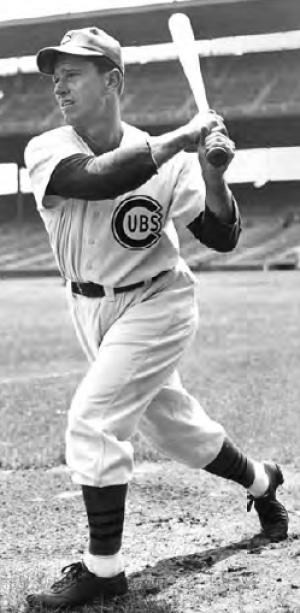
Pafko’s journey in Chicago began in 1943, but it was the 1945 campaign where he matured into a legitimate cornerstone of the franchise. That year, he tallied 159 hits and served as a vital tactical piece for a Cubs team that captured the National League Pennant. While many wartime players saw their opportunities vanish when the veterans returned from service, Pafko’s production only intensified. He arrived as a young talent and evolved into a statistical powerhouse, rattling off four consecutive All-Star selections from 1947 to 1950, proving he was one of the elite outfielders in the senior circuit. The peak…
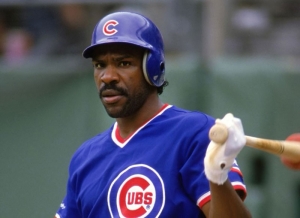
The legend of Dawson’s arrival in 1987 is etched into baseball lore, a victim of "collusion" who famously presented the Cubs management with a signed, blank contract, essentially daring them to name a price for his services. They settled on a half-million dollars, a bargain that matured instantly into a championship-caliber investment. Despite the heavy physical toll of a decade on artificial turf, "The Hawk" thrived on the natural grass of Wrigley Field. He arrived as a man with something to prove and evolved into a statistical titan, authoring a breakout campaign for the ages in his very first summer…
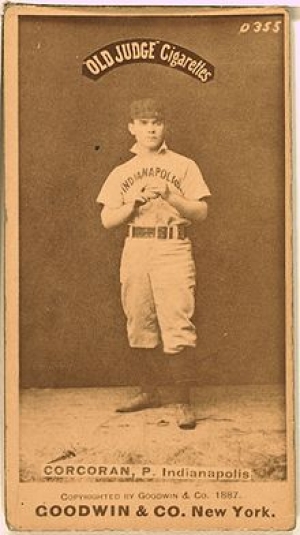
Corcoran debuted in 1880 and bypassed the usual maturation process, maturing instantly into the most feared right-hander (and occasional left-hander) in the National League. He was the definition of a workhorse for a White Stockings club that terrorized the league during the early 1880s. Between 1880 and 1884, Corcoran amassed a staggering 170 wins, a total that speaks to a level of durability that is almost incomprehensible by modern standards. He relied on a rare, "switch-pitching" ability that allowed him to alternate arms to combat fatigue or exploit a hitter's weakness, a tactical outlier in an era of iron-man rotations.…
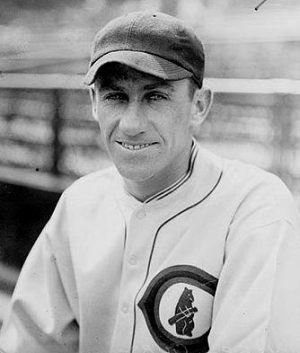
Kiki Cuyler joined the Cubs in 1928 and bypassed any need for an adjustment period, maturing instantly into the premier leadoff threat in the senior circuit. He arrived with a reputation for game-breaking speed and a disciplined eye, and he wasted no time validating the investment. His initial three-year burst in Chicago was a masterclass in aggressive baserunning, as he led the National League in stolen bases for three consecutive seasons (1928–1930). He wasn't just a track star in cleats, though; he was a refined hitter who maintained a staggering .325 career average during his stay, proving that his value…
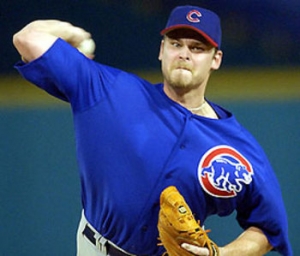
Kerry Wood’s journey in Chicago began with the most explosive entrance in baseball history. In 1998, as a 21-year-old rookie, he instantly matured into a national phenomenon by striking out 20 Houston Astros in a single game, a masterpiece of power pitching that many still consider the greatest individual performance ever on a mound. He arrived with a "flamethrower" reputation and quickly evolved into a statistical titan, proving that his raw velocity was matched only by his competitive fire. Despite a career that was later reshaped by injuries, he remained the primary engine of the Cubs' pitching staff during their…
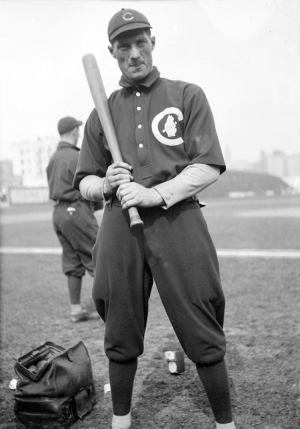
Heinie Zimmerman’s journey began as a young utility man on the legendary 1907 and 1908 World Series championship teams. During those early years, he matured slowly in the shadow of established icons, waiting for the path to clear at third base. He arrived with a raw, aggressive hitting style and eventually evolved into a statistical titan as the new decade dawned. By the early 1910s, he had transformed from a bench option into the primary force of the Cubs' lineup, a high-volume producer who could change the complexion of a game with a single swing. The absolute pinnacle of his…
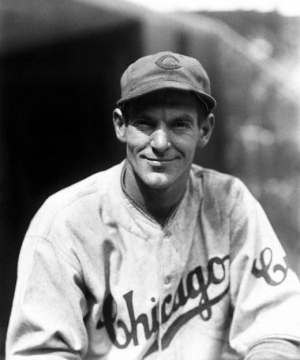
English joined the Cubs in 1927 and bypassed the usual maturation process, quickly maturing into a versatile defensive standout who split his time between shortstop and third base. He arrived with a vacuum glove and a rare internal clock, consistently shrinking the diamond against opposing hitters. He was an efficiency machine on the dirt, finishing in the top five in defensive bWAR five different times during his stay in Chicago. This defensive reliability provided the stability that allowed the organization to capture National League Pennants in 1929 and 1932. The absolute pinnacle of his offensive career arrived during a blistering…
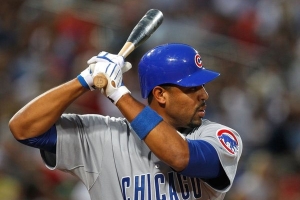
Derrek Lee joined the Cubs in 2004 and bypassed any adjustment period, maturing instantly into a cornerstone of the franchise. He arrived with a World Series ring and a refined approach at the plate, and he wasted no time validating the trade. His tenure was a masterclass in professional consistency, as he maintained a beautiful .298/.378/.524 slash line over his stay. He wasn't just a slugger; he was a sophisticated, high-volume producer who provided the defensive and offensive stability that allowed the organization to capture back-to-back division titles later in the decade. The absolute pinnacle of his career, and one…
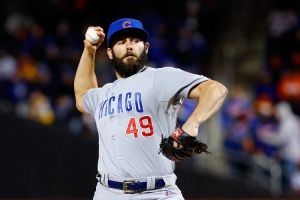
Jake Arrieta’s journey in Chicago began with a 2013 trade with the Baltimore Orioles that would eventually go down as one of the most lopsided heists in franchise history. Sent to the North Side alongside Pedro Strop in exchange for Scott Feldman and Steve Clevenger, Arrieta matured instantly under the tutelage of the Cubs' staff. He shed his inconsistencies and emerged as a statistical titan by 2014, arriving with a "cross-fire" delivery and a heavy sinker that saw him finish fifth in bWAR for pitchers during his first full season in the rotation. It was a warning shot to the…
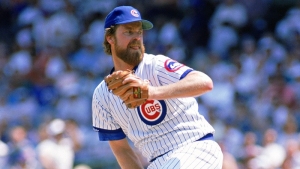
Rick Sutcliffe’s journey in Chicago began with a season-altering trade in June 1984. Sent from the Cleveland Indians while carrying a losing record and an ERA over five, he matured instantly under the afternoon sun of Wrigley Field. He arrived with a fierce competitive scowl and a downward-tilting fastball that decimated National League lineups. He didn’t just settle into the rotation; he went on a historic tear, winning 16 of his 17 decisions and serving as the emotional and tactical engine that propelled the Cubs to their first-ever NL East Title. The absolute pinnacle of his career arrived at the…