


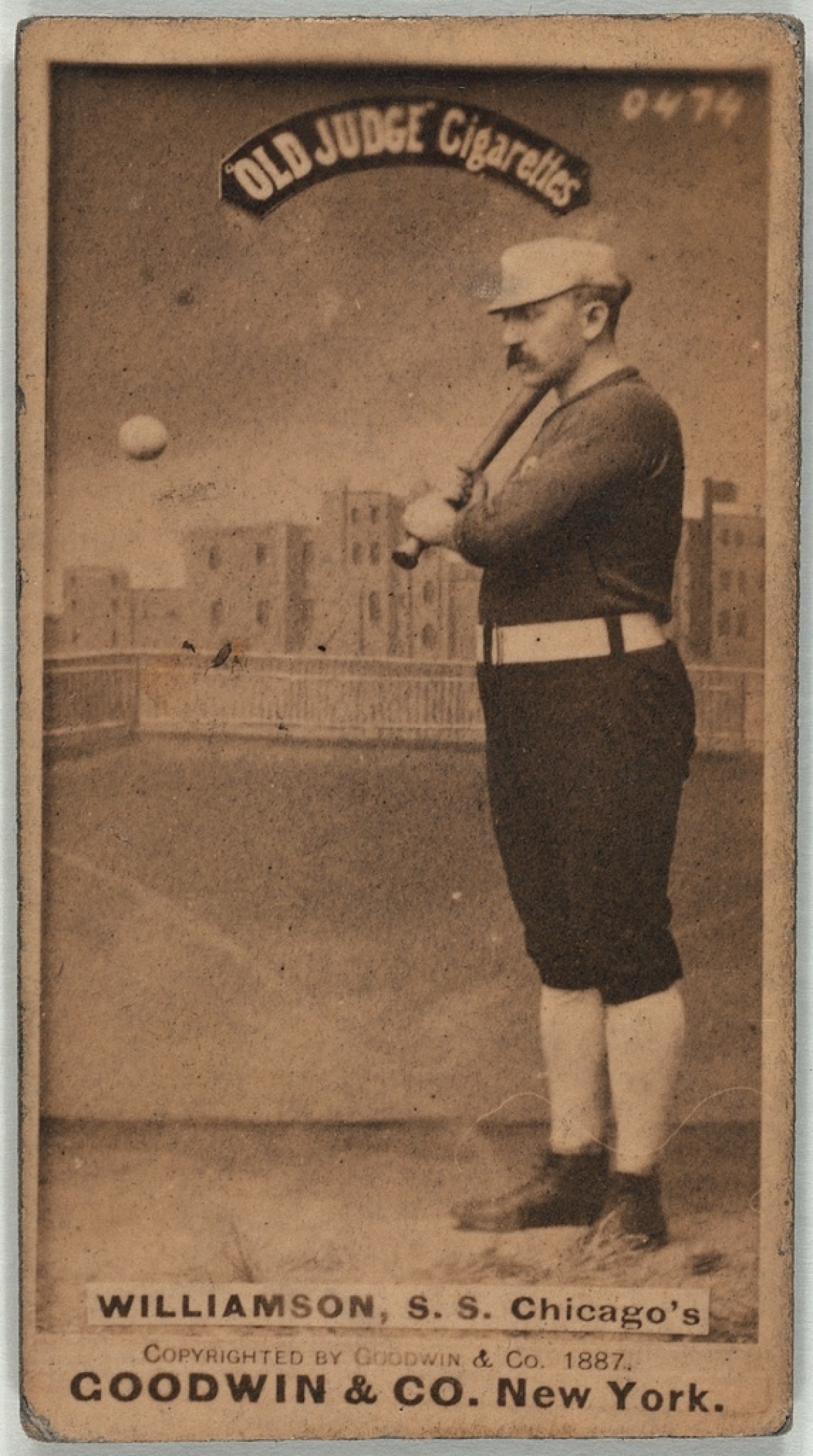
Chicago’s 1880s dynasty derived its defensive spine from a man whose reflexes were considered supernatural by his peers. Williamson established himself as a tactical anchor almost immediately, shifting between third base and shortstop without losing a step of his elite efficiency. His impact in the field was statistically staggering; he twice led the National League in defensive bWAR and consistently ranked among the top five throughout his decade-long stay. Had the Gold Glove existed in the age of the horse and buggy, his trophy case would have been overflowing, as he led the league in assists six times and double plays turned on five occasions.
Reliability remained his calling card at the plate, even if his glove was his primary tool. His offensive output reached a historic crescendo in 1884 when he benefited from a temporary ground-rule change at Chicago's home park to blast 27 home runs. That total was so massive for the era that it stood as the single-season major league record for 35 years until it was finally eclipsed by Babe Ruth. Beyond that power surge, he was a disciplined hitter who finished in the top ten in on-base percentage five different times. He provided the identity of a high-IQ contributor who understood that a walk was just as lethal as a long ball when it came to fueling a championship rally.
Williamson was the rare player who could dominate a game without ever picking up a bat, using his defensive range to kill rallies before they could even begin. He concluded his Chicago residency with over 1,000 hits and a reputation as the most complete infielder of his generation. While his 27-homer season remains a fascinating historical outlier, the true weight of his legacy was found in the thousands of outs he recorded with a glove that seemed to have its own gravitational pull.
The curtain came down on his time in Chicago following the 1889 season, marking the end of an era for the most successful infield in early baseball history.

Comments powered by CComment