


Site Admin
8. Hank Greenberg
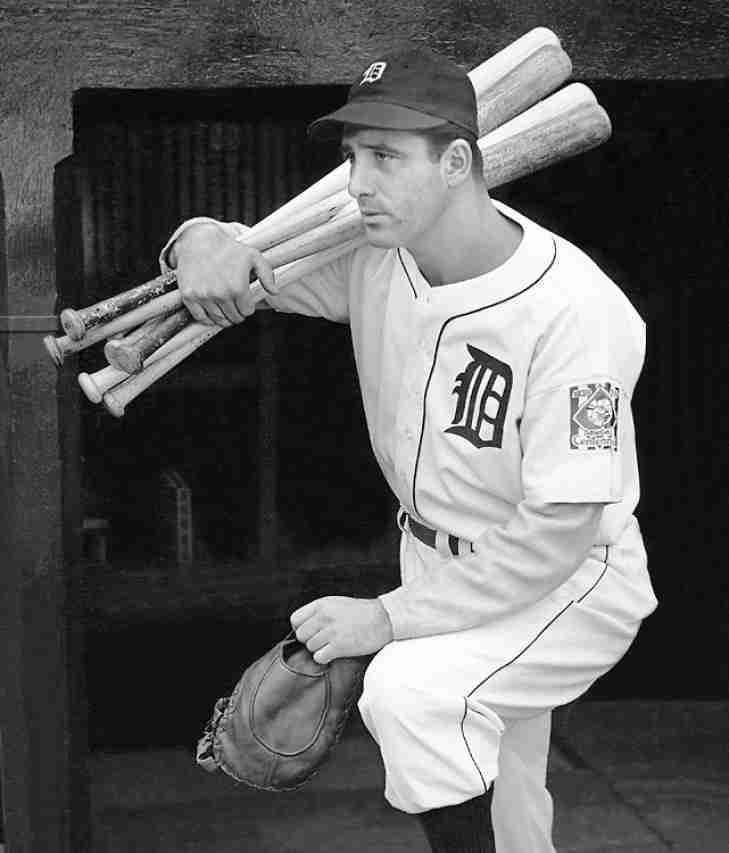
The story of Hank Greenberg is an intriguing "what-if" narrative in the history of the game. For twelve years, he was the heartbeat of the Detroit Tigers, a man whose presence in the lineup guaranteed a level of offensive production that bordered on the surreal. Yet, his legacy is defined as much by his absence as his presence; as the first major star to enlist in the military during World War II, he surrendered 47 months of his absolute athletic prime to the service of his country. Had he not spent those four years in the Army Air Forces, the record books would likely be a much different place today.
Greenberg’s tenure in Detroit was a masterclass in hitting for both power and average. He broke into the everyday lineup in 1933 and immediately set a standard of excellence that never wavered. He reached an early high-water mark in 1935, capturing his first American League MVP after leading the circuit with 36 home runs and a staggering 170 RBIs. His offensive output was a primary driver for the Tigers' first-ever World Series championship that autumn. He was a model of disciplined strength, possessing a unique ability to drive the ball to all fields, culminating in his historic 1938 run, in which he finished with 58 home runs, falling just two shy of Babe Ruth’s then-record.
The middle chapters of his career were defined by a historic transition and a profound commitment to duty. In 1940, at the height of his powers, Greenberg agreed to move from first base to left field to accommodate teammate Rudy York, a selfless adjustment that resulted in his second MVP award. He became the first player in major league history to win the honor at two different positions, hitting .340 and leading the Tigers to another pennant. However, after only 19 games in 1941, he traded his Detroit uniform for a military one. He spent the next four years serving as a captain in the China-Burma-India theater, returning to the club midway through 1945 just in time to hit a pennant-clinching grand slam and lead the Tigers to their second World Series title of his era.
In early 1947, his contract was sold to the Pittsburgh Pirates. With the Tigers, Greenberg compiled 306 home runs and 1,202 RBIs while capturing two MVP awards and two World Series titles.
The organization and the baseball world provided the final punctuation on his legacy when he was inducted into the Baseball Hall of Fame in 1956. In 1983, the Tigers ensured his name would forever be part of the franchise's skyline by retiring his number 5.
9. Alan Trammell
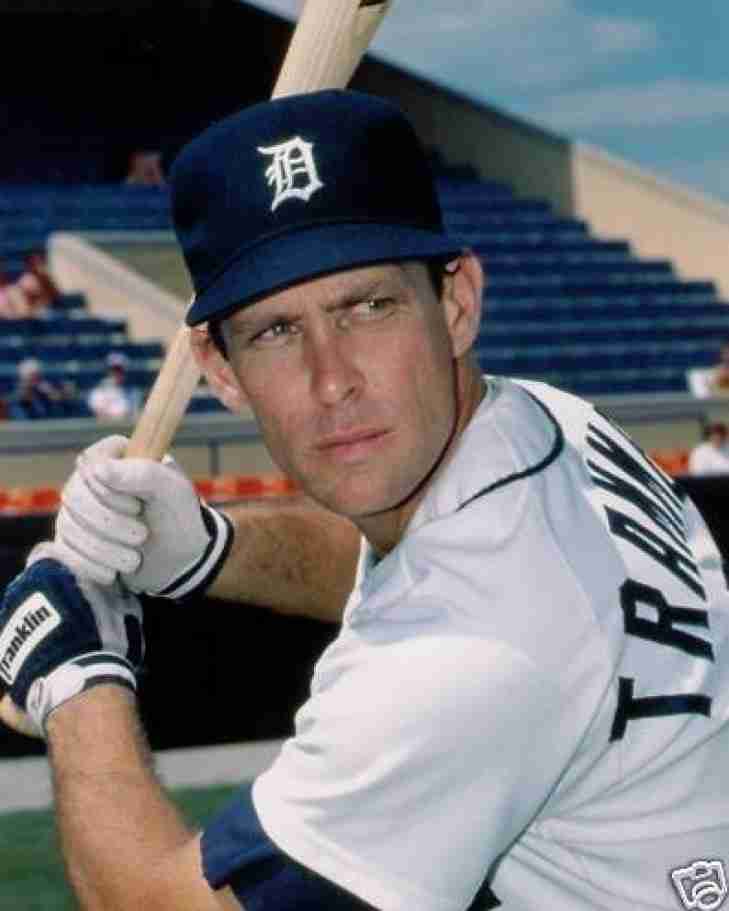
For two decades, Alan Trammell was the steady, brilliant pulse of the Detroit Tigers. Arriving as a teenager in 1977, he didn't just occupy the shortstop position; he revolutionized it alongside his double-play partner, Lou Whitaker. Together, they formed the longest-running middle infield duo in the history of the sport, a partnership that defined the Tigers' identity throughout the 1980s. While he often found himself in the shadow of contemporary giants like Cal Ripken Jr., Trammell’s mix of defensive elegance and offensive punch eventually forced the baseball world to acknowledge him as one of the premier shortstops of any generation.
Trammell’s career in Detroit was a study in all-around excellence. He established himself as a premier run-preventer early on, securing four Gold Gloves between 1980 and 1984. However, it was during the historic 1984 campaign that he cemented his status as a big-game performer. As the Tigers roared to a 35-5 start and an eventual World Series title, Trammell served as the catalyst, hitting .314 in the regular season before exploding in the Fall Classic. He earned World Series MVP honors by batting a staggering .450 against the Padres, including a two-homer performance in Game 4 that accounted for all of Detroit's scoring.
His offensive game reached an even higher level in 1987, a season that saw him nearly carry the Tigers to another championship single-handedly. Moving to the cleanup spot at the request of manager Sparky Anderson, Trammell responded with a .343 average, 28 home runs, and 105 RBIs. He became the first shortstop in major league history to hit at least .340 with 20 homers and 100 RBIs in a single season. Despite these historic numbers and a late-season surge that secured the AL East division title, he narrowly finished as the MVP runner-up, a result that many modern analysts point to as one of the great voting oversights in history.
He was a model of consistency, batting over .300 in seven different seasons and amassing 2,365 hits. Whether he was turning a signature double play or delivering a clutch hit, he played with a quiet, focused intensity that made him the unquestioned leader of the clubhouse.
The story in Detroit reached its long-awaited conclusion in 2018 when the Veterans Committee finally inducted him into the Baseball Hall of Fame. With the Tigers, Trammell compiled 2,365 hits, 185 home runs, and 1,003 RBIs while securing the 1984 World Series MVP.
10. Lou Whitaker
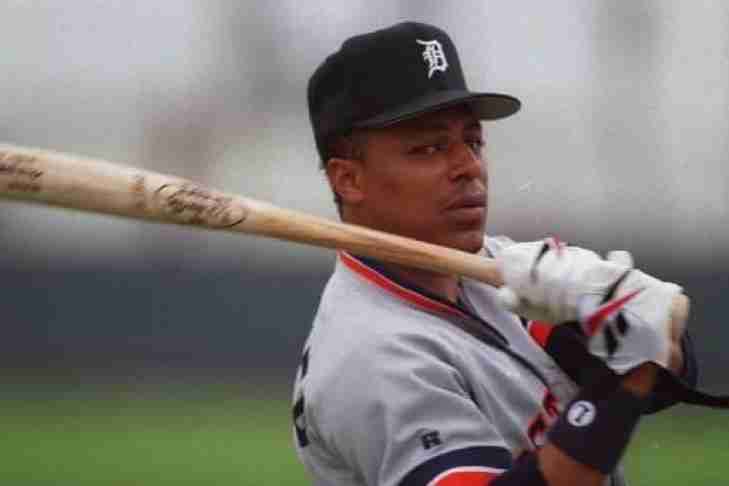
The story of Lou Whitaker is one of the most baffling oversights in the annals of Cooperstown, a narrative where the traditional gatekeepers somehow missed a generational masterpiece hidden in plain sight. For 19 seasons, "Sweet Lou" was the left-handed half of the most enduring double-play tandem in baseball history, patrolling second base for the Detroit Tigers with a grace that made the difficult look routine. While he famously vanished from the Hall of Fame ballot after just one year in 2001, the modern lens of analytics has reaffirmed what Tiger fans knew all along: Whitaker wasn't just a star; he was a revolutionary force at his position.
Whitaker’s arrival in Detroit was punctuated by an immediate and sophisticated impact, as he captured the 1978 American League Rookie of the Year award. He didn't just fill a gap in the lineup; he redefined the expectations for a second baseman, blending elite defensive range with a disciplined, high-velocity offensive approach. He sustained a run of excellence between 1983 and 1987, a five-year stretch during which he was a perennial All-Star and the gold standard at his position. During this run, he collected three Gold Gloves and four Silver Sluggers, proving he was the most efficient two-way threat in the American League.
The hallmark of his tenure was a rare combination of power and patience, decades ahead of its time. Whitaker was a model of specialized discipline, finishing his career with nearly 1,200 walks and a .363 on-base percentage—numbers that made him the ideal table-setter for the powerhouse 1984 World Champions. Yet, he also possessed a surprising punch, belting 244 home runs, a figure that placed him among the elite power-hitting second basemen of the 20th century. He served as the primary engine for the Detroit offense from the leadoff spot, utilizing a veteran-like poise to dismantle opposing pitching staffs through a mix of extra-base hits and high-leverage walks.
His presence in the clubhouse and on the diamond was defined by a quiet, focused intensity that anchored the franchise through two decades of transition. Whether he was famously turning a pivot with Alan Trammell or providing the steady-state production needed to keep the Tigers in the hunt for the 1987 division title, he competed with a professional resilience that never wavered.
He left the game as the only second baseman in history to retire with over 2,000 hits, 200 home runs, and 1,000 walks. In 2021, the Tigers officially retired his number 1, punctuating his status as a Detroit icon.
7. Harry Heilmann
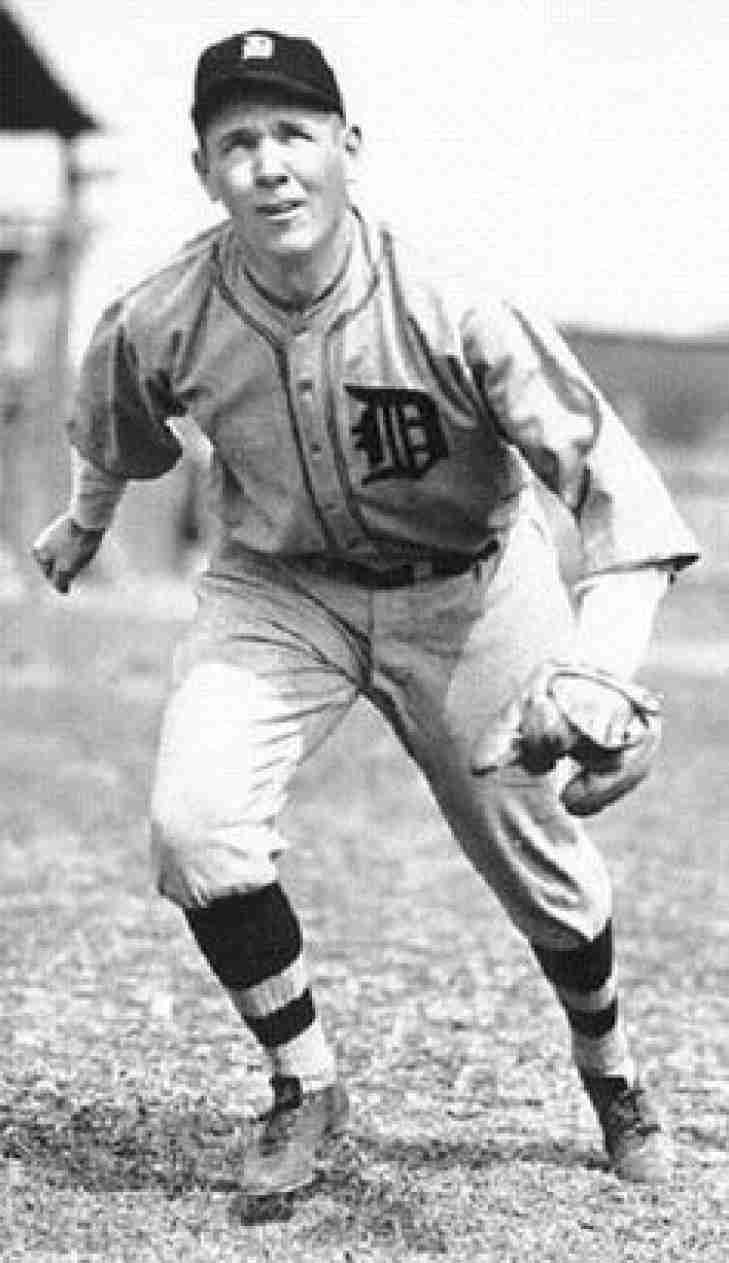
While the shadow of Ty Cobb loomed large over the Detroit outfield for two decades, it was Harry Heilmann who emerged as the most refined right-handed hitter of the 1920s. Often overlooked because he shared the grass with the "Georgia Peach," Heilmann actually served as Cobb’s most successful protégé, crediting the legend’s mentorship for his transformation from a struggling first baseman into a batting champion. With a swing as smooth as it was powerful, "Harry the Horse" became the primary engine of the Tigers' offense during a decade in which he made hitting over .390 look routine.
Heilmann’s tenure in Detroit was a story of offensive efficiency, marked by a peculiar yet spectacular pattern of dominance. He captured four American League batting titles during the 1920s, all in odd-numbered years (1921, 1923, 1925, and 1927)—and remarkably, he surpassed the .390 mark in every single one of those championship seasons. In 1923, he hit a staggering .403, joining an elite fraternity of only six American League players to ever breach the .400 plateau. He was a model of steady-state excellence, never dipping below a .328 average for the entire decade and serving as the tactical anchor for some of the greatest offensive outfields in history.
Though he played in the shadow of the era's massive power boom, Heilmann possessed a specialized strength that allowed him to consistently rank among the league’s most dangerous sluggers. He was a high-frequency producer of extra-base hits, six times finishing in the top five for slugging percentage and five times exceeding a 1.000 OPS. His production was not merely a product of the lively ball; it was the result of focused intensity and professional resilience that saw him drive in over 100 runs across eight seasons for the Tigers.
Heilmann was a fixture in the MVP conversation, finishing in the top ten in voting for five consecutive years. His most significant brush with the award came in 1927, when his league-leading .398 average and 120 RBIs earned him a second-place finish behind Lou Gehrig. Whether he was famously diving into the Detroit River to save a drowning woman in 1916 or providing the veteran poise required to mentor younger teammates, he competed with an energy that solidified his status as a franchise icon.
After the 1929 season, when he was sold to the Cincinnati Reds, his legacy remained firmly rooted in Michigan. After his playing days, he transitioned into a legendary second career as the voice of the Tigers, serving as the team's primary radio broadcaster for 17 years. He departed the organization with a career .342 batting average, the third-highest ever for a right-handed hitter, and a reputation as one of the most beloved figures in the city’s sports history.
Heilmann compiled 2,499 hits and 1,446 RBIs while capturing four batting titles across 15 seasons.