


Site Admin
16. Bill Freehan
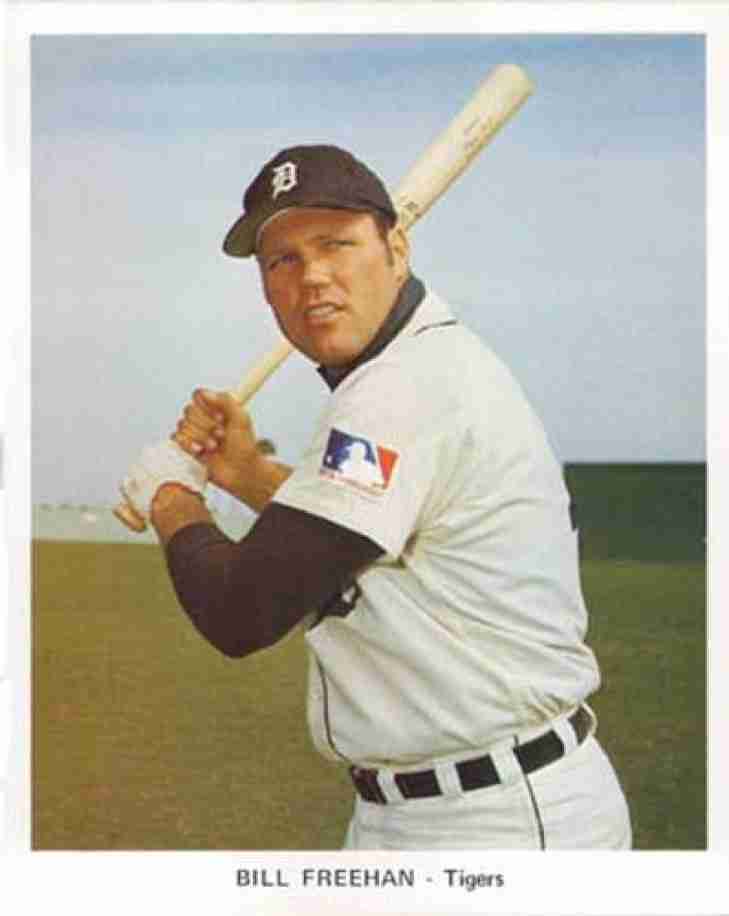
Bill Freehan’s journey in Detroit began as a local standout at the University of Michigan before arriving in the Tigers' clubhouse in the early 1960s. After a brief cup of coffee, he took over the starting catching duties in 1963 and immediately established a reputation for physical resilience. By 1964, he had earned his first All-Star nod—the start of a ten-year streak where he was virtually synonymous with the American League starting lineup. He wasn't a flashy performer; he was a model of specialized durability who played through the bruises and foul tips that defined the era's catching experience.
As the mid-60s progressed, Freehan evolved into one of the league's most feared offensive threats at his position. He reached a professional high point in 1967, hitting .282 with 20 home runs and finishing third in the AL MVP race. He possessed a fearless, focused intensity at the plate, frequently leading the league in hit-by-pitches because he refused to give up the inner half of the zone. This grit provided the middle-order muscle that kept the Tigers in the pennant race, setting the stage for the most iconic summer in the city's history.
Everything culminated in the legendary 1968 "Year of the Pitcher." That season, Freehan had a defensive season for the ages, directing a pitching staff that included 31-game winner Denny McLain and World Series hero Mickey Lolich. While the pitchers grabbed the headlines, Freehan set American League single-season records for putouts and total chances, proving to be the indispensable anchor of the defense. He finished as the runner-up for the MVP Award and capped the year by famously tagging out Lou Brock at the plate in Game 5 of the World Series, a moment that shifted the momentum toward Detroit's eventual championship.
The final chapters of his career saw Freehan maintain a steady state of excellence, earning five consecutive Gold Gloves and adding a final All-Star selection in 1975. He eventually retired in 1976 with 200 home runs and 1,591 hits, having spent all fifteen of his professional seasons in a Tigers uniform. He showed the organization that a catcher could become a franchise pillar by simply being the most reliable man on the field, leaving the diamond as the all-time leader in games caught for the club.
With the Tigers, Freehan compiled 1,591 hits and 200 home runs while earning 11 All-Star selections and five Gold Gloves.
14. Mickey Lolich
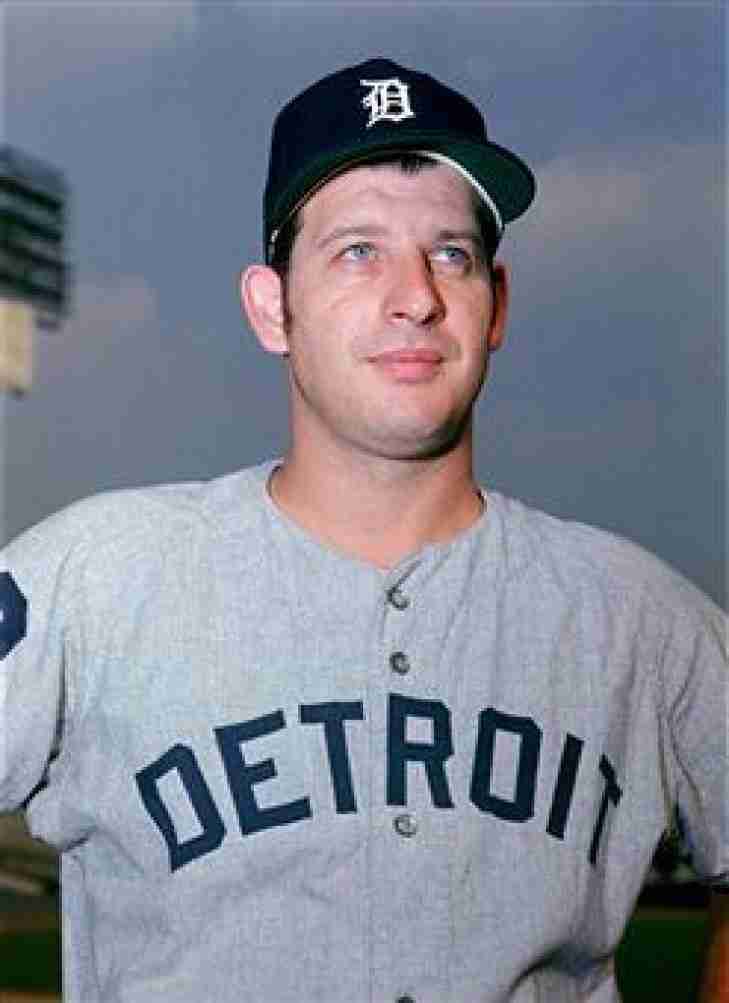
For much of his tenure in Detroit, Mickey Lolich operated as the persistent, left-handed shadow to more flamboyant headlines. While others captured the national imagination with historic win totals or fiery personalities, Lolich simply went to work, building a resume defined by a relentless, rubber-armed durability. He wasn't just a cog in the rotation; he was the primary engine of the Tigers' pitching staff for over a decade.
Lolich’s time in the Motor City was a study in high-volume excellence. He established himself as a model of specialized endurance, eventually setting franchise records for starts (436), innings pitched (3,361.1), and strikeouts (2,679). While the 1968 regular season belonged to Denny McLain’s historic 31 victories, the postseason narrative was authored entirely by Lolich. In one of the most legendary displays of professional resilience in the history of the sport, he started and won three games during the 1968 World Series. His career is best known for his historic performance in Game 7, where he outdueled the great Bob Gibson on just two days' rest to secure Detroit's first title in over twenty years.
The hallmark of his game was a unique ability to maintain his velocity and command deep into games and seasons. In 1971, Lolich reached a statistical outlier status by leading the American League in wins (25), strikeouts (308), and innings pitched (376). He finished second in the Cy Young voting that year, a season of such profound individual value that he famously completed 29 of his 45 starts. He possessed a specialized stamina that allowed him to remain the most efficient run-preventer on the roster long after his contemporaries had faded, proving that a player could become a franchise pillar through sheer, unyielding reliability.
His presence on the mound was defined by a focused intensity and a workmanlike approach that endeared him to the blue-collar Detroit fan base. Whether he was famously striking out over 200 batters in seven different seasons or providing the veteran-like poise needed to guide the Tigers to the 1972 division title, he competed with an energy that solidified his status as a local icon.
In 1975, he was traded to the New York Mets, marking the end of a thirteen-year journey. He departed as a three-time All-Star and a World Series MVP, benchmarks that reflect a career built on technical mastery and physical toughness. With the Tigers, Lolich compiled 207 wins and 2,679 strikeouts.
6. Justin Verlander
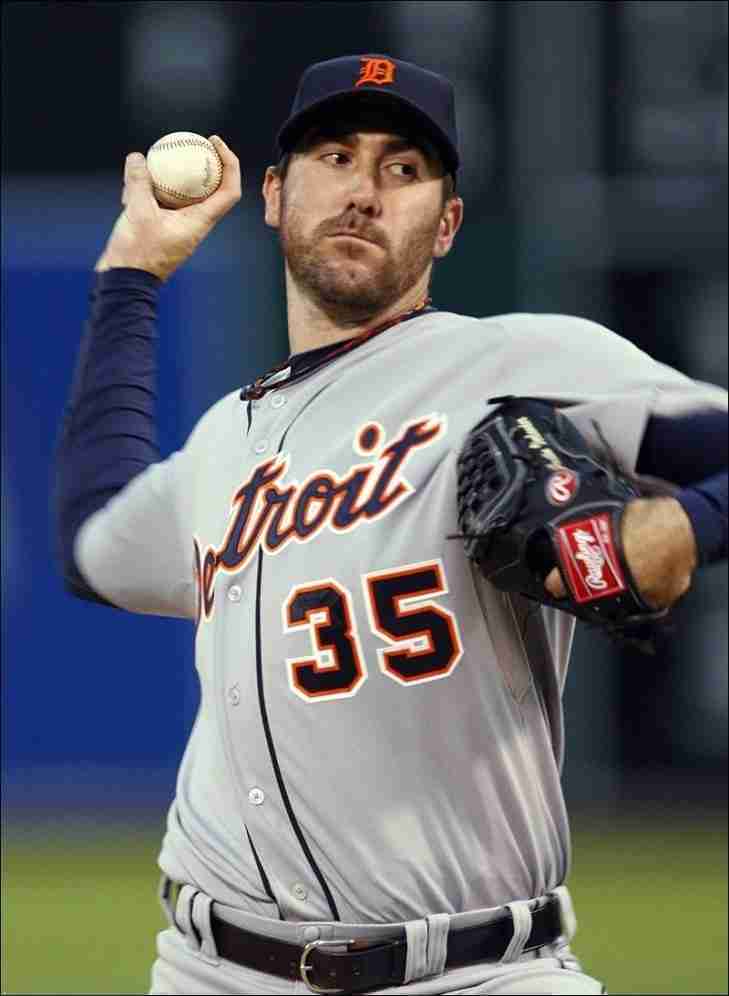
The arrival of Justin Verlander in 2005 was the first tremor of a seismic shift in Detroit baseball. While he debuted as a high-velocity prospect, he quickly matured into the undisputed titan of the American League, a right-hander whose combination of an elite fastball and a relentless competitive fire restored the Tigers to national relevance. Across two distinct eras in the Motor City, Verlander evolved from a fireballing Rookie of the Year into a sophisticated, first-ballot immortal, serving as the high-leverage anchor for a decade of championship aspirations.
Verlander’s rise was instantaneous, capturing the 2006 Rookie of the Year award and immediately leading the club to its first World Series in over twenty years. He established a standard of specialized durability that became his trademark, but the true ascension occurred in 2011. That summer remains a pillar of modern pitching history; he secured the rare Triple Crown—leading the league in wins (24), strikeouts (250), and ERA (2.40)—en route to a historic sweep of both the Cy Young and the American League MVP. He was a model of high-frequency dominance, utilizing a professional resilience to carry the staff through four consecutive postseason runs from 2011 to 2014.
The middle chapters of his Detroit tenure were defined by his tactical mastery of the "big game." Verlander was the primary engine of the 2012 pennant-winning rotation, famously out-dueling the league’s best in October to cement his status as a franchise icon. He possessed a specialized ability to maintain his velocity into the late innings, a craftsmanship that earned him six All-Star nods and two no-hitters in a Tigers uniform. Even as the team’s competitive window began to close in 2017, leading to a blockbuster trade to Houston, where he finally secured a World Series ring, his heartbeat remained tied to the city that raised him.
After a legendary journey through Houston, New York, and San Francisco, the narrative came full circle in February 2026. Following a resilient 2025 campaign with the Giants, where he proved his health by logging 152 innings, Verlander signed a one-year deal to return to Detroit for a final act.
17. Bobby Veach
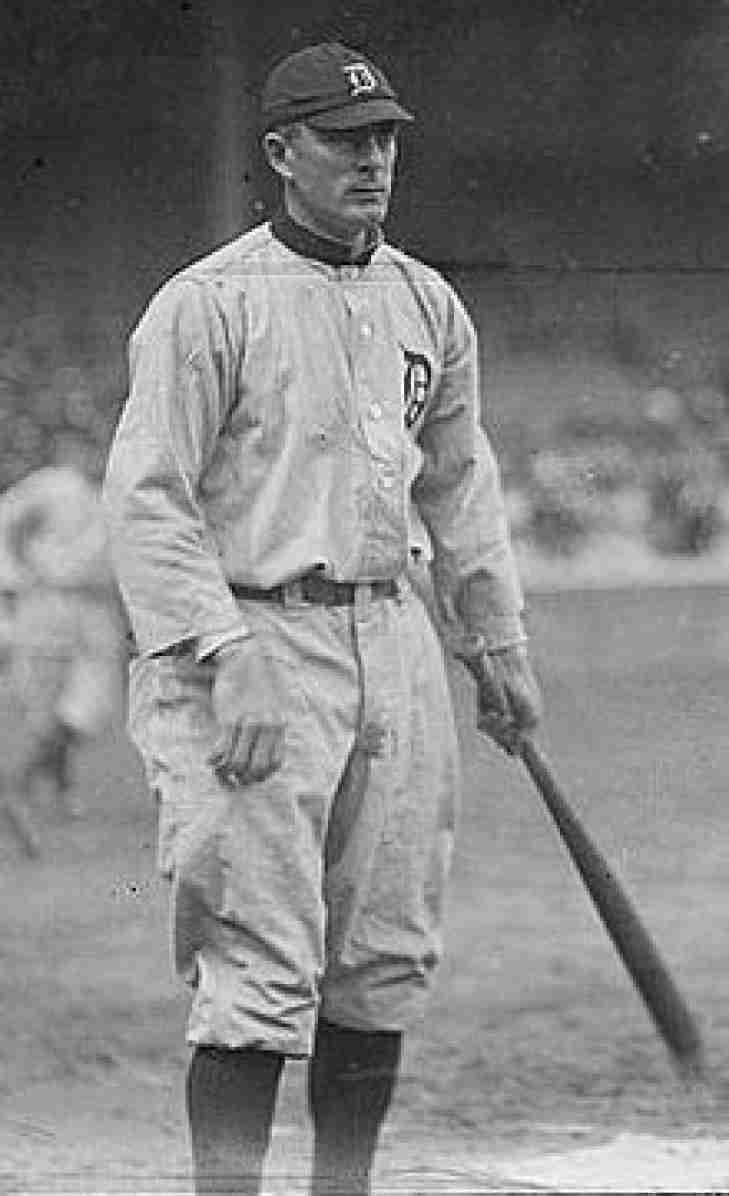
Bobby Veach had the singular misfortune of being an elite ballplayer who spent his entire prime in the physical and historical shadow of three Hall of Fame legends. While he patrolled left field for the Detroit Tigers, the other two spots in the grass were occupied by Ty Cobb and either Sam Crawford or Harry Heilmann. Because he wasn't a "character" like Cobb or a refined technician, Veach was often dismissed as a mere product of his environment, a "cleanup hitter" who just happened to be standing there when Cobb and Crawford crossed the plate. But a look at the linear progression of his career reveals a player who was arguably the most consistent run-producer in the American League for a decade.
Veach’s arrival in Detroit in late 1912 was an immediate spark; he hit .342 in a 23-game audition, convincing the Tigers they had finally found a permanent solution for left field. By 1915, he had reached his first major campaign, leading the American League in both doubles (40) and RBIs (112), tying his teammate Crawford for the latter. It was the birth of what sportswriters called the "$100,000 Outfield." While Cobb and Crawford played "inside baseball”, choking up and bunting, Veach was a specialized power threat who swung from the heels, a style that made him a statistical outlier in the height of the Deadball Era.
The center of his career was a relentless run of high-frequency production. He secured back-to-back RBI titles in 1917 and 1918, proving he was more than just a supporting actor for Cobb. In 1919, he excelled again, leading the league in hits (191), doubles (45), and triples (17) while batting a career-high .355. He was a model of specialized durability, rarely missing a game and providing above-average defense; his range factor and assist totals frequently topped the league's left fielders, showing a defensive craftsmanship that Cobb famously (and perhaps unfairly) criticized as lacking "fire."
The final years of his Detroit residency were marked by a bizarre psychological experiment. In 1921, Cobb, now the player-manager, instructed Harry Heilmann to shout insults at Veach from the dugout to "toughen up" his easygoing nature. The result was another elite plateau: Veach responded with 128 RBIs and 207 hits. However, the tension with Cobb eventually led to his exit; despite hitting .321 in 1923, he was sold to the Boston Red Sox to make room for a younger Heinie Manush. He finished his Tigers tenure with 1,859 hits and a .311 average, leaving as the only player in franchise history to lead the league in hits, doubles, triples, and RBIs who isn't currently in Cooperstown.
With the Tigers, Veach compiled 1,859 hits, 393 doubles, and three RBI titles while maintaining a .311 career average.