

Top 50 Washington Nationals
The Nation’s Capital of Washington D.C. may have seen a World Series Championship but it was not from the current incarnation of their team, the Washington Nationals.The Nationals originally began in French Canada as the Montreal Expos in 1969, a team that finally made the MLB playoffs in 1981. In 1994, prior to the MLB strike, they had the best record in the game, but as imagined they would not have the opportunity to compete for the World Series.
The franchise would relocate to the Washington D.C. area, marking the third time that America's capital hosted a baseball team. After making the playoffs multiple times, the Nationals finally won their first World Series in 2019.
Note: Baseball lists are based on an amalgamation of tenure, traditional statistics, advanced statistics, playoff statistics, and post-season accolades.
This list is updated up until the end of the 2025 Season.
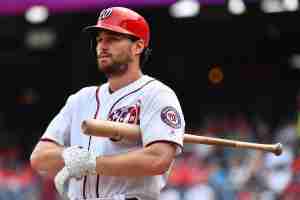
Some free-agent signings aim to develop the team for the future, while others serve as powerful accelerants. When the Washington Nationals signed Daniel Murphy to a three-year, $37.5 million deal in December 2015, they expected a seasoned hitter emerging from a remarkable postseason with the New York Mets. Instead, they experienced two and a half seasons of some of the most precise and efficient hitting ever seen in the nation's capital. From his first day in a Nationals uniform, Murphy established himself as a surgical offensive specialist, approaching the batter's box with the finesse of an artist. Murphy's 2016 debut…
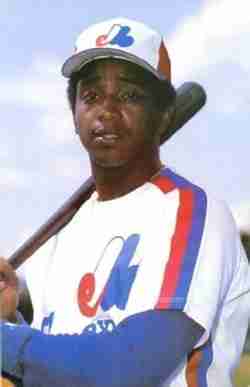
When the Montreal Expos traded franchise icon Gary Carter to the New York Mets in December 1984, it caused a significant public relations setback. To soothe an angry fan base, new players had to make an immediate impact. Although no player could replace "The Kid," Hubie Brooks arrived in Quebec and quickly became the offensive catalyst for the post-Carter era. Originally a natural third baseman with the Mets, Brooks generously moved to shortstop in Montreal, developing into one of the top middle infielders for producing runs in the league. His debut before the Stade Olympique crowd showcased exceptional offensive versatility.…
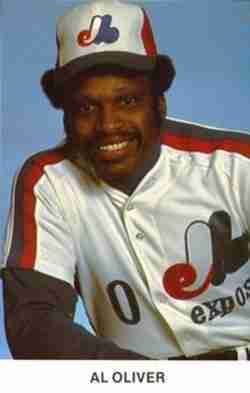
When the Montreal Expos traded third baseman Larry Parrish to the Texas Rangers in March 1982, they did so to acquire a pure, unadulterated hitting machine. Al Oliver, affectionately known as "Scoop," was a highly seasoned, vocal leader who had spent a decade lashing line drives all over the National League. Though he would only spend two seasons wearing the tri-color cap, Oliver treated Canadian fans to a pair of the most historically concentrated and dominant offensive exhibitions ever witnessed in the franchise's history. His inaugural 1982 campaign in Montreal stands as a clinic of batting prowess. Oliver completely paced…
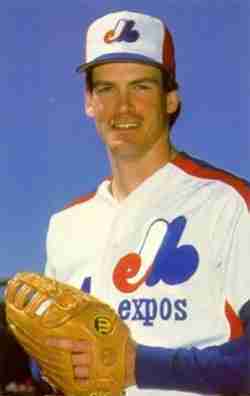
Before the rise of highly specialized, one-inning bullpen specialists, relief pitchers in Major League Baseball needed a rare combination of durability and versatility. In Montreal, Tim Burke exemplified that adaptability. Acquired from the Texas Rangers organization in late 1982, this right-hander spent seven seasons as a key figure in the Expos’ bullpen. With a strong sinking fastball and remarkable lateral movement, Burke was capable of calming fires in the sixth inning or closing out games in the ninth with equal effectiveness. Burke's 1985 debut showcased remarkable rookie quick adaptation. Instead of being sheltered in low-pressure roles, he was instantly activated…
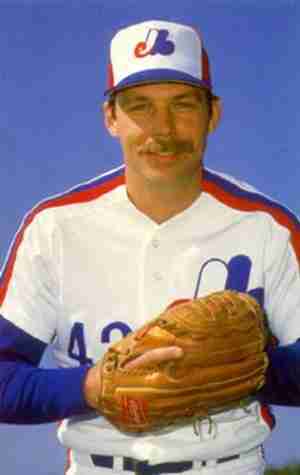
While star players and award-winning closers often make headlines, the true backbone of championships and competitive eras is built by versatile pitchers who fill every role on the staff. For eight seasons, spanning two separate periods with the Montreal Expos, left-hander Dan Schatzeder proved to be the ultimate utility pitcher. Whether stepping in to start unexpectedly, covering multiple innings out of the bullpen, or facing a tough left-handed hitter in a critical late-game situation, "Schatz" consistently responded with a dependable, hard-working style that exceeded what his basic stats might suggest. His first stint with the Expos in the late 1970s…
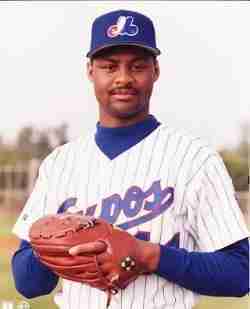
To understand the sheer dominance of the Montreal Expos in the early 1990s, one need only look at the trade that brought Ken Hill to Quebec. In November 1991, the Expos sent budding star Andrés Galarraga to St. Louis in exchange for Hill. While losing "The Big Cat" was a tough pill for local fans to swallow, Hill immediately sweetened the deal by transforming into the unquestioned, high-velocity ace of a pitching staff that would soon capture the imagination of the baseball world. His arrival in Montreal in 1992 represented an exemplary demonstration of leadership in frontline rotation. Equipped with…
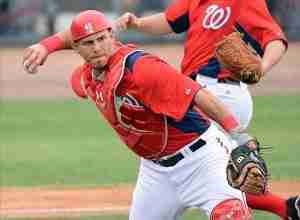
Catching is physically demanding, and Wilson Ramos's Washington experience was a true test of endurance. Acquired from the Minnesota Twins in a trade for Matt Capps in 2010, this Venezuelan catcher—nicknamed "The Buffalo" for his strong, muscular build—had some of the best raw power among catchers. However, during his seven years with the Nationals, his potential was often hindered by serious injuries, including knee injuries, hamstring tears, and hand fractures, which led to him being platooned and sidelined during key periods. But when he was healthy, Ramos was the undisputed physical anchor behind the plate for a perennial contender, culminating…
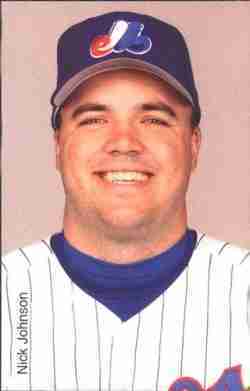
Evaluating the career of Nick Johnson is an exercise in appreciating pure, mathematical plate discipline operating under a constant state of physical siege. Drafted by the Yankees and traded to Montreal prior to the 2004 season, the left-handed first baseman was a master of the strike zone. He did not merely possess a good eye; he treated walk-to-strikeout ratios with the precise focus of an accountant. Yet, his body was frustratingly fragile, acting as a magnet for freak injuries—including a cheekbone fracture in 2004 and a horrific broken leg in late 2006—that repeatedly fractured his timeline just as he was…
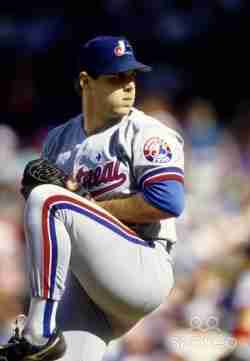
Great closers are characterized by their unwavering confidence when pitching, but John Wetteland brought an additional element of physical intimidation to the ninth inning. After joining the Montreal Expos from the Cincinnati Reds in December 1991, this broad-shouldered right-hander showcased a blazing fastball in the high-90s and a fierce competitive spirit. During a focused three-year period in French Canada, Wetteland evolved from a talented yet inconsistent young pitcher into one of the most dominant and feared closers in Major League Baseball, setting the benchmark for late-inning mastery. His debut at the Stade Olympique bullpen in 1992 immediately highlighted his elite…
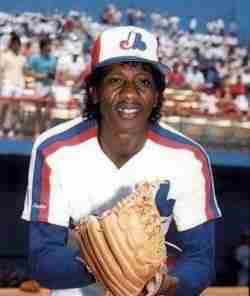
Few players in baseball history have ever matched the pure, theatrical charisma of Pascual Pérez, but underneath the eccentric mannerisms lay a profoundly sharp pitching mind. Signed by Montreal in August 1987 after a drug suspension and release by Atlanta had nearly derailed his career, the Dominican right-hander found a second home in Canada. Known to fans as "I-285" and famous for his flamboyant antics—including peeking through his legs to check runners, sprinting off the mound after strikeouts, and throwing a legendary "pascual ball" eephus pitch—Pérez completely reinvented his approach at Stade Olympique, morphing from a wild thrower into a…
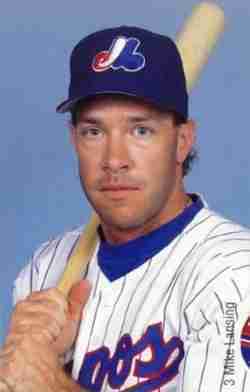
Uncovering a hidden talent in professional baseball often means searching beyond the usual areas. For Mike Lansing, the Montreal Expos discovered their long-term second baseman through an unexpected route. Originally drafted from Wichita State by the Miami Miracle, an independent minor league team, Lansing was later sold to Montreal in late 1991. Known as "The Laser" because of his quick reflexes and sharp line-drive swing, the dedicated infielder made his debut in 1993 and quickly secured the starting second base position, bringing a competitive edge to a talented young core. His early years in Quebec featured consistent, line-drive hitting and…
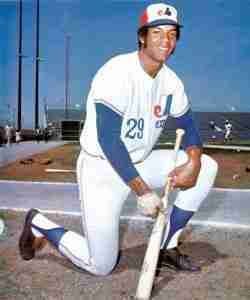
An elite switch-hitter can neutralize opposing pitchers’ strategies. In April 1972, when the Montreal Expos traded Rusty Staub to the New York Mets, they gained Ken Singleton, a tall 6-foot-4 batter recognized for his keen batting eye. Singleton's composed approach at the plate distinguished him in French Canada; he carefully avoided widening his strike zone, making walks a significant offensive advantage and achieving some of the best on-base statistics of the 1970s. His 1972 introduction to the Jarry Park faithful showed his disciplined style, but it was his 1973 season that truly displayed his offensive skill. Singleton appeared in all…
