

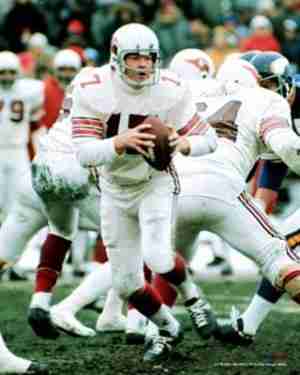
124. Jim Hart
57. Marty Marion
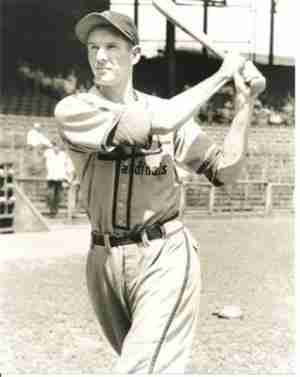
Marty Marion won the NL 1944 MVP based primarily on his leadership and fielding skills as opposed to anything he did with his lumber. His victory is certainly a reminder that there is a lot more to baseball than sexy offensive stats.
Marty Marion was taller than the average Shortstop of his era, but he used that to his advantage. He was deceptively quick, but he used his large wingspan to gobble up any ground ball that got remotely near him. He was called the “octopus”, and he would have used those tentacles to grab every Gold Glove Award….if they existed at the time. Marion usually batted at the bottom of the order, but he was consistent and an excellent bunter.
Marty Marion was not just a defensive wizard; he was a leader whose patience was evident when he became a manager and teacher to young ballplayers. It is often these traits that are pointed to when pundits and ex-colleagues point to Marty Marion and the Baseball Hall of Fame.
Should Marty Marion be in the Hall of Fame?
69. Ottis Anderson
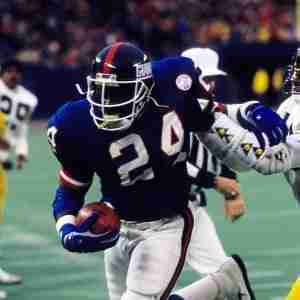
Anderson would prove he was not a one-season wonder. Although he would never again equal his rookie numbers he still posted decent ground numbers and was the highlight of a poor Cardinals team. As it does in football, injuries piled up and he lost his explosiveness. Anderson was however reinvented as a short-yardage specialist by the New York Giants and he again accumulated impressive tallies. He was a natural leader and as he rarely fumbled he was a strong key to the Giants ability to control the ball for extended periods of time. As a Giant, Ottis Anderson twice won the Super Bowl, capped with an MVP performance in Super Bowl XXV.
50. Reggie Smith
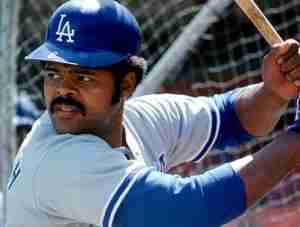
In the late 70’s, Hall of Fame pitcher Don Sutton famously noted that Steve Garvey was not the best player on the Dodgers; it was Reggie Smith. Garvey may have been the most popular, but Sutton was not alone in his assessment of Reggie Smith.
In his prime, Reggie Smith was a legitimate five-tool player. He had decent power, decent speed, and was a smart player who always knew how to get on base. In retrospect, it is hard to find a real criticism of his game, as he was above average in every aspect of his baseball acumen. In fact, should we ever look to do the most underrated players in baseball history, Reggie Smith might very well make the top (or at least top ten) of our list.
Reggie Smith failed to gain the attention of fans and writers alike, as good as he was at different baseball skills, he was not the best at any of them. He could hit homers, but many hit more. He could steal, but many swiped more. He could field, but many were better. Reggie did everything so well, but without one “great” on the baseball report card, he failed to achieve the fame he should have despite playing for high-profile squads.
Should Reggie Smith be in the Hall of Fame?
16. Mark McGwire
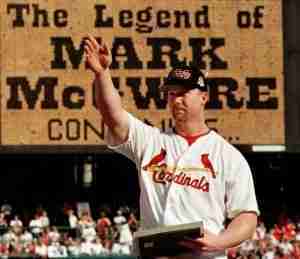
It is possible that this candidate is shrouded with more controversy than our top three candidates combined?
35. Jim Edmonds
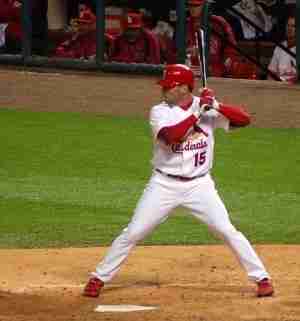
Many who first think of Jim Edmonds and the Hall of Fame may think automatically of what we wrote about Moises Alou and that he is likely a candidate for the “Hall of Very Good”. However, the more we really thought about it, the more we liked “Jimmy Baseball’s” resume.
Although Edmonds is under 2,000 for career hits and his four All-Star appearances are relatively low for a potential Hall of Fame Baseball inductee, he brought a very respectable 393 Home Runs and 1,199 RBIs, and a very good career OPS of .903. Edmonds was more than a hitter; he won the Gold Glove eight times, and with a very good career WAR of 60.3, Jim Edmonds has a list of accomplishments that might make him a dark horse for the Hall of Fame. We will be watching this one intensely.
Should Jim Edmonds be in the Hall of Fame?
161. Larry Jackson
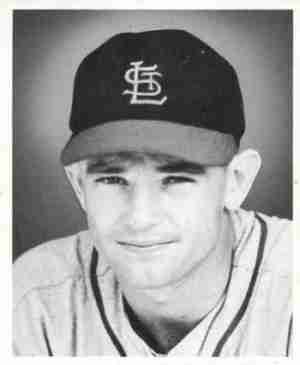
Larry Jackson played for some good teams, but never any great ones (he never played in the postseason). As such, Jackson never made the 200 Win club, but his value as an innings eater was essential to the success of many of his teams.
Once Larry Jackson worked his way permanently into the Cardinals’ rotation, he seemingly never left. Jackson would become the ace of many average teams and would go on to set the modern record for right-handers in Wins without winning a pennant. Still, he parlayed his famous slider to a Cy Young runner-up in 1964, and though this was the closest he would come to a big award, he was one of the most respected starting pitchers in the National League. Larry Jackson never received a vote for the Hall of Fame, but a look at his career sabremetrics has given us cause to wonder why.