

14. Roger Maris
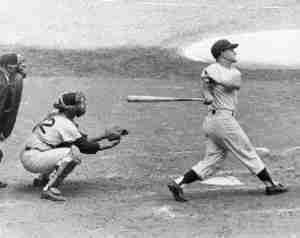
This one is a little tough. We recognize (and we are sure most people agree) that the overall career numbers of Roger Maris do not equate to a Hall of Fame Baseball player. However, many very good players have been excluded from Cooperstown because they lacked moments of greatness. Nobody could ever doubt that Roger Maris had a year that was part of baseball immortality.
Roger Maris was not a one-season wonder, as it is often forgotten that he won the 1960 AL MVP before his legendary season and helped the Cardinals win the World Series in 1967. However, it would be on the strength of that 1961 season that he shocked the entire sporting world with his assault on Babe Ruth’s Home Run record. Please consider the adversity Maris faced in accomplishing it. He broke the record in an era of no PEDs; he broke it with sportswriters constantly writing about how they didn’t want him to, and he did so when New York fans cheered against him and wanted the more popular Mickey Mantle to be the one to chase down the Bambino. Granted, the media attention was not the same as in this era of ESPN and the internet, but the pressure on the Midwest farm kid had to be unbearable. Maris would break one of the most coveted records in sports despite a nation cheering against him, and though he did not have the most statistically perfect season, it may have been the hardest ever.
Roger Maris had two great seasons, a couple of good ones, and an average career. He may not have had the career numbers the Hall covets, but what he did in 1961 was Hall of Fame worthy. Maris could very well remain the most immense Hall of Fame debate this side of Rose and Shoeless Joe.
Should Roger Maris be in the Hall of Fame?
40. Allie Reynolds
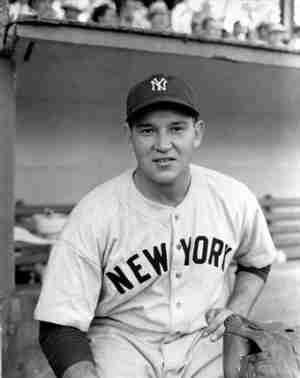
The man called “Superchief” was one of the great right-handed pitchers of the New York Yankees. Allie Reynolds was the first man to toss two no-hitters in a season in the American League, though that was just a small sample of what he accomplished.
The Yankees were a loaded team, and Allie Reynolds was a huge part of that. During the Superchief’s tenure, the Bronx Bombers captured six World Series. His post-season record was 7-2, and he was starting as well as relieving, as shown by his four saves. This was the same type of way he was used in the regular season, as Allie often came out of the pen as well as started. Basically, the flamethrower did whatever was called upon to get the win for his team.
Because of this, Allie Reynolds cannot be judged solely on wins and losses. He was not always placed in positions where he could win games, and he would have easily had more victories if he had been used primarily as a starter. Regardless, baseball knew what they had as he was a perennial All-Star regardless of how he was used.
Should Allie Reynolds be in the Hall of Fame?
27. Don Mattingly
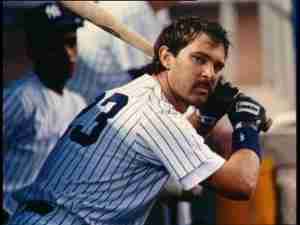
One of the most popular Yankees of all time was Don Mattingly. This was a very impressive reality considering that the year before he turned pro, the Bronx Bombers lost to the Dodgers in the World Series, and the year after he retired, they won the championship. During Mattingly’s entire tenure, the Yankees never went to the Fall Classic, the largest stretch of postseason futility in franchise history.
The failure of the Yanks to win the World Series was through no fault of Don Mattingly. He was easily amongst the best in the game in the last half of the ’80s, winning an MVP, multiple Gold Gloves, and churning out hits.
Once the 90’s hit, Mattingly’s production steadily declined (though his popularity in the Bronx remained high) due to constant back issues. He finally made it to the postseason in 1995, and though he performed admirably, the Yankees failed to make the World Series. He abruptly retired at the age of 34 after New York signed Tino Martinez, though he could still have contributed to a Major League Baseball team. Had he continued to play, he would not have been an All-Star anymore, but his career numbers may have been padded enough to make him a more serious contender for the Hall. As it is now, the bulk of career stats were generated from six of his years, and it appears that the Hall is looking down upon him. Regardless of whether “Donnie Baseball” is honored in Cooperstown, he will always be honored in the Big Apple.
Should Don Mattingly be in the Hall of Fame?
12. Tommy John
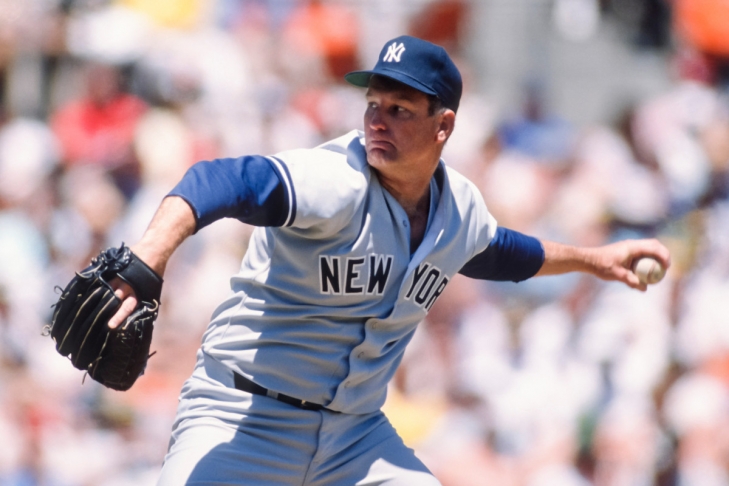
We imagine that there are younger baseball fans who are oblivious that there really was a Tommy John and that it was not just the name of a surgery. This would be unfortunate, as Tommy John has to go down as one of the most durable pitchers in baseball history.
Likely the most amazing statistic about Tommy John is that he lasted twenty-six seasons. Considering that he missed a season and a half due to arm trouble, it would have been expected that his career would not be a long one. Not only did he come back from revolutionary surgery to repair his tendon (what we become known as “Tommy John” surgery), but he would post the most productive period of his career, where he won twenty games three times in four years and was a Cy Young contender for that aforementioned four-year span
John was an effective sinkerball pitcher using his control to get batters out on the ground rather than put it past them. This isn’t to say that he couldn’t strike out batters, but he was not among the leaders in that category. Had Tommy John been more of a strikeout pitcher (which is a far sexier stat) or been part of a World Series win, he may have received more votes. As his overall career numbers are similar to those of Bert Blyleven, who finally made it to Cooperstown, a very strong case could be made by the Veterans Committee for Tommy John.
Should Tommy John be in the Hall of Fame?
59. Thurman Munson
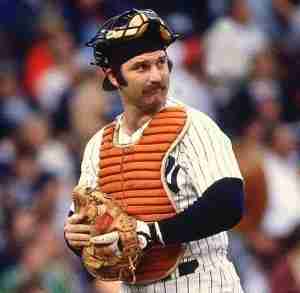
What more would Thurman Munson have accomplished had he not been killed in a plane crash on August 2, 1979? We will never know, but prior to his untimely death, Munson’s accomplishments on the diamond were already sizable.
Thurman Munson was a leader on the field, in the clubhouse, and everywhere else in life. He broke through in the Majors in 1970 and won the coveted Rookie of the Year, cementing himself as a force to be reckoned with in the catcher’s position for the decade. For a catcher, he hit the ball well and consistently provided a solid Batting Average, and showed moderate power numbers. Munson was a perennial All-Star and even won the MVP in 1976. He was known early in his career for his quick release, and he was very difficult to steal from. In each of his six postseason series, he never batted below .300, thus showing his ability to come through when his team needed him the most.
Had Munson not perished, would he have racked up career milestones that would have made it hard for the Hall to ignore? It is possible, but Munson did not have a high On Base Percentage, nor was he really more than a singles hitter. His main asset, though, was his leadership and his ability to make those around him better. This should trump a few walks and doubles on most days.
Should Thurman Munson be in the Hall of Fame?
61. Carl Mays
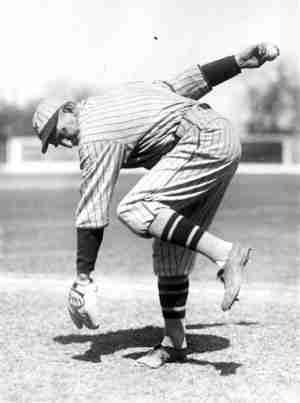
It is often the case for various Halls of Fame to discriminate based on the likeability of the candidate. Carl Mays was not necessarily the most liked player in his day, and his brushes with controversy probably pushed Mays on the opposite side of the bubble.
Sadly, Carl Mays is not best remembered for his four World Series rings or his 208 career wins. He is best known for a beanball he pitched that killed the Cleveland Indians’ Ray Chapman. Mays was also not the most liked player and was a spitball pitcher (legal at the time) which has not necessarily shone him in the brightest of lights. He was a very adept submarine style pitcher and though he won his share of games he could never shake the cloud of Ray Chapman.
Mays may eventually be considered, as the sting of his accident may have washed away. What doesn’t is that he was a purveyor of the spitball, and that in itself could be enough to keep him out.
Should Carl Mays be in the Hall of Fame?
77. Willie Randolph
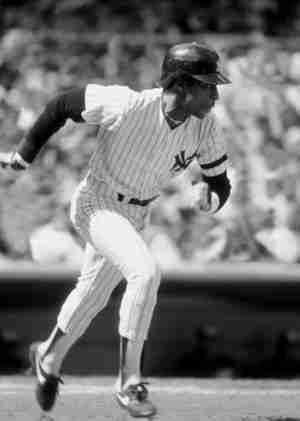
It is strange to say that Willie Randolph played in a bit of a shadow as he was a long-time Yankee, but that is somewhat true. He was in the shadow of other more flamboyant New York stars, and his strong defensive play never got him a Gold Glove as he played at the same time as Lou Whitaker or Frank White. Hell, even his current Coaching career seems to overshadow his accomplishments on the diamond. It shouldn’t, though, as Willie Randolph was a very good ballplayer.
Willie Randolph may have been a multi-time AAll-Star but it was many of the little things that got him there. He showed incredible patience at the plate and drew many free passes to help set the table for his squad’s power hitters. He was an excellent fielder and a clubhouse leader. He may not have been an offensive juggernaut, but he was a consistent performer and often the most reliable.
Randolph did not receive an abundant amount of support for the Hall of Fame, but the Bronx faithful remember him as one of the better players in their history. Considering the New York Yankees' history, this is indeed high praise.
Should Willie Randolph be in the Hall of Fame?
33. David Cone
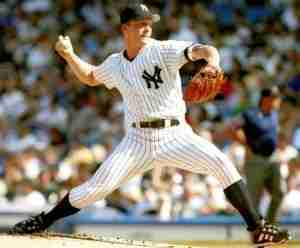
David Cone may not be best remembered for winning a Cy Young Award. He may be best known as a true hired gun that baseball teams coveted in their stretch drives.
Cone had the coveted label as a big game pitcher. Cone was at his best during high-pressure situations and showcased his abilities as a member of five World Series-winning teams. He was a very smart pitcher who used a variety of skills to defeat opposing batters. Cone was the subject of various sex scandals, yet was able to shut out those distractions and often had his best outings while the target of public ridicule. As such, he shook off those labels and kept only one: winner.
What prevented David Cone from making a serious run at the Hall of Fame was a few bad seasons that really brought down his overall career numbers. He failed to make the 200-win milestone, though had he had more offensive run support, he could have made it. His “hired gun” status also gave him a label that was unsatisfactory to some, though he was one of many to receive it. Flat out, David Cone was one of the top pitchers of the ’90s, and that should not be denied.
Should David Cone be in the Hall of Fame?
34. Graig Nettles
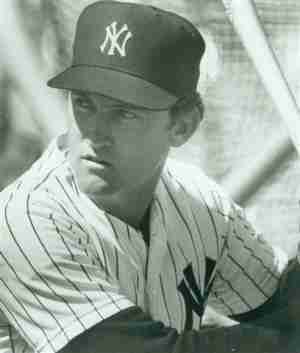
Many baseball players are known for their clutch performances at the plate. Graig Nettles certainly had many clutch hits in his long career, but he may have been known for having more clutch performances with his glove.
Many players start off fast and tail off, but Graig Nettles really hit his stride eight years into his pro career. He was a power-hitting third baseman and was a big part of the Yankees' three consecutive American League Pennants in the ’70s. As his bat came alive, more people paid attention to his aggressive fielding and noticed his wide range at the hot corner. Although he did it well in the 1978 World Series, his defensive expertise was never better, and he robbed Reggie Smith of extra-base hits twice in Game 3.
Despite his ability to hit the long ball, Graig Nettles had a fairly low Batting Average and only hit higher than .270 once. He did walk a lot, though, and for a power hitter, did not strike out that much. Still, justifying Nettles for the Hall with a .248 career Batting Average does prove difficult, and without an MVP season proves harder. Of course, how many teams in the ’70s wanted Nettles as their third baseman? Likely, the answer is almost all of them.
Should Graig Nettles be in the Hall of Fame?
46. Ron Guidry
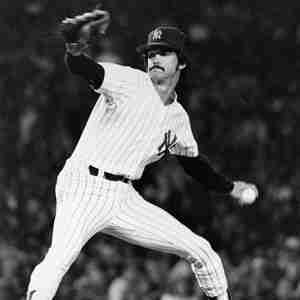
With a magical season, a pair of exceptional ones, and a few very good ones, Ron Guidry had an excellent career in Baseball all with the Yankees. Theoretically, “Louisiana Lightning” did everything you want to accomplish in a career as he won the Cy Young Award (and was in the hunt for a few others) and won the World Series, which he did twice. However, the knock on Guidry is that he was only a full-time player for nine seasons, and though he has one of the most impressive winning percentages in Baseball, his longevity is questioned in comparison to the immortals. Regarding the Hall of Fame, this generally doesn't matter!
RIP: Yogi Berra
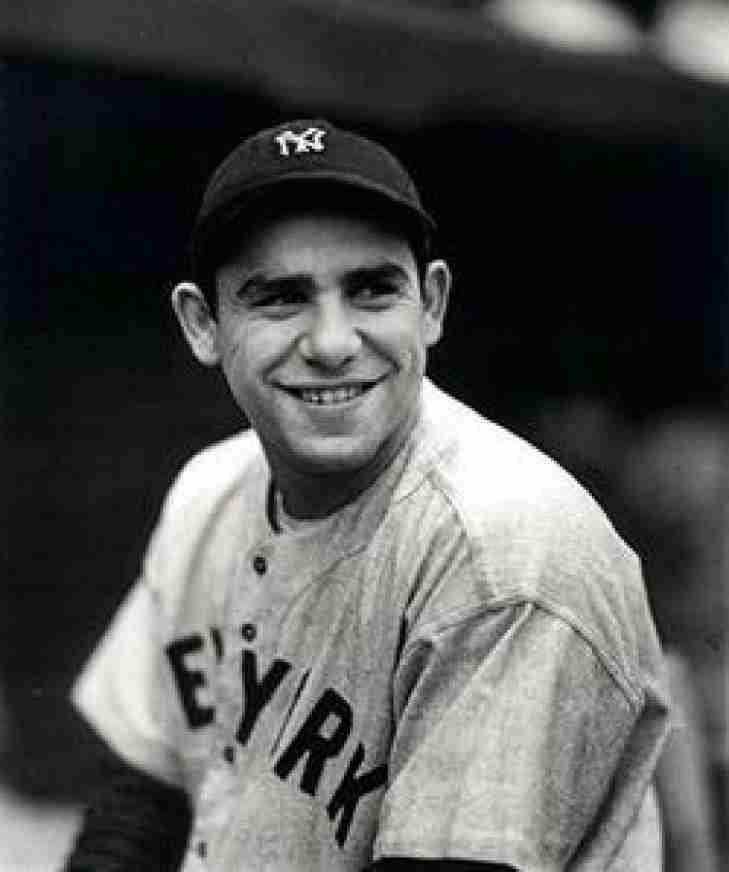
The Hall of Fame Catcher and three time American League MVP was one of the best hitting Catchers of all time and holds the distinction of playing in more World Series Games than anyone else. Berra would win ten World Series rings as a player and three as a coach and would retire as a player with 358 Home Runs and 1,430 Runs Batted In.
The popular Catcher would become known not only for his on field play but for his expressions, the top of which we ripped off from an ESPN article this morning.
10. "It's like deja vu all over again."
9. "You better cut the pizza in four pieces because I'm not hungry enough to eat six."
8. "The future ain't what it used to be."
7. "We made too many wrong mistakes."
6. "Nobody goes there anymore. It's too crowded."
5. "You can observe a lot just by watching."
4. "You should always go to other people's funerals; otherwise, they won't come to yours."
3. "When you come to a fork in the road, take it."
2. "Baseball is 90 percent mental. The other half is physical."
1. "It ain't over 'til it's over."
While Berra’s life may be over his Yogi-isms will forever live on as will his memory.
We here at Notinhalloffame.com would like to offer condolences to the friends and family of Yogi Berra at this time.
Monument Park officially welcomes Andy Pettitte and Jorge Posada
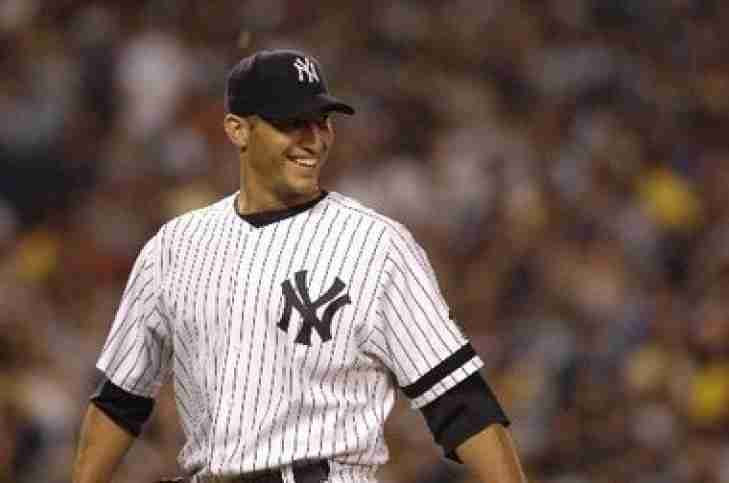
Posada had his number #20 retired on Saturday by the only MLB organization he ever played for. Posada was a member of four World Series Championship teams, was a five time All Star and five time Silver Slugger Award winner.
Pettitte’s ceremony took place on Sunday. As a Yankee, #46 won five World Series Rings won 219 Games and another 18 in the post-season. He also has the most Strikeouts in Yankees history.
This is no small honor as they join a very exclusive list of legends which includes:
Billy Martin #1
Babe Ruth #3
Lou Gehrig #4
Joe DiMaggio #5
Joe Torre #6
Mickey Mantle #7
Bill Dickey #8
Yogi Berra #8
Roger Maris #9
Phil Rizzuto #10
Thurman Munson #15
Whitey Ford #16
Don Mattingly #23
Elston Howard #32
Casey Stengel #37
Mariano Rivera #42
Reggie Jackson #44
Ron Guidry #49
Bernie Williams #51
It should be noted that the numbers are displayed in Monument Park, adjacent to left field. It is expected that Derek Jeter’s #2 will join this list shortly.
Congratulations go out to the New York Yankees, which have the best lot of retired numbers in Baseball.
39. Andy Pettitte

Andy Pettitte took PEDs and apologized for it. He was forgiven not just by the New York Yankees' fans but by baseball fans in general. That fact (an important one) makes him the most intriguing candidate this year, as his contrition might make him Hall of Fame-worthy.
Still, if the PED issue is not a factor, is Andy Pettitte a HOF contender? Let’s take a look!
While Pettitte was only an All-Star three times, he was a top-five finisher in Cy Young voting four times and retired with 256 Wins and 2,448 Strikeouts. That is good, but aside from leading the American League in Wins in 1996 and HR/9 in 1997, he never led his league in any pitching category, be it traditional or sabermetric. Pettitte does have a 19-11 postseason record and five World Series Rings, but his playoff numbers are only marginally better than his regular-season ones, though it should be noted that he won the ALCS MVP in 2001.
Andy Pettitte is definitely a bubble candidate, though which side of the bubble is very much open for debate.
55. Bernie Williams

We admit we made a mistake not ranking Bernie Williams last year. Were we rebelling against a Yankee bias, or was it that we just considered him just not good enough? Regardless, that is the beauty of Baseball is that you can easily reevaluate what you may have missed the first time. Lord knows it happens all the time during the actual balloting process for the Hall of Fame.
Maybe our initial thought was that the Yankees themselves were confused about Bernie Williams, too. He had some power, but was not a primary threat in that department. He was fast, but did not steal many bases. For years, New York did not know where to bat him in their lineup. Eventually, they knew what they had: a very consistent hitter who had decent enough pop in his bat to place in the cleanup role. He batted over .300 eight consecutive seasons (including a batting title) and had very respectable slash numbers in that period. He won the Gold Glove four times, and his career postseason numbers (remember, he was a Yankee, so there was a lot) were virtually identical to his regular season tallies.
Williams hit near the ten percent mark on his first year of eligibility, which was enough to keep him on the ballot, but not enough to consider him a serious threat for the Hall. Our guess is that the career Yankee will stay at the bottom of the eligible candidates for a while.
Should Bernie Williams be in the Hall of Fame?
2. Roger Clemens
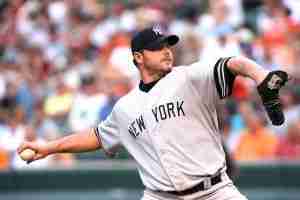
Like Bonds, Clemens may have had a Hall of Fame career before he allegedly took PEDs, and like Bonds, he dominated the steroid era as he did the decade before. He has the career statistics (353 wins and 4,672 strikeouts), the dominating seasons (seven Cy Youngs and an MVP), and two World Series Rings. “Rocket” Roger Clemens is arguably the best Pitcher in the past forty years.
None of this may matter. A solid percentage of his accomplishments took place under the shroud of steroids. Clemens was never known as the nicest baseball player (as Mike Piazza can attest to), but his post-career handling of scandals has made him even less likable than the surly Bonds. We have a feeling that Roger Clemens will forever go down in history as the Pitcher with the most Wins (and Strikeouts & Cy Youngs) who is not in the Baseball Hall of Fame. His only chance (like many others) will lie in how the Steroids Era is perceived.
As it stands, Clemens is in the same abyss as Bonds, having failed to make the regular ballot and been rejected by the Veterans Committee.
