

7. Jose Cruz
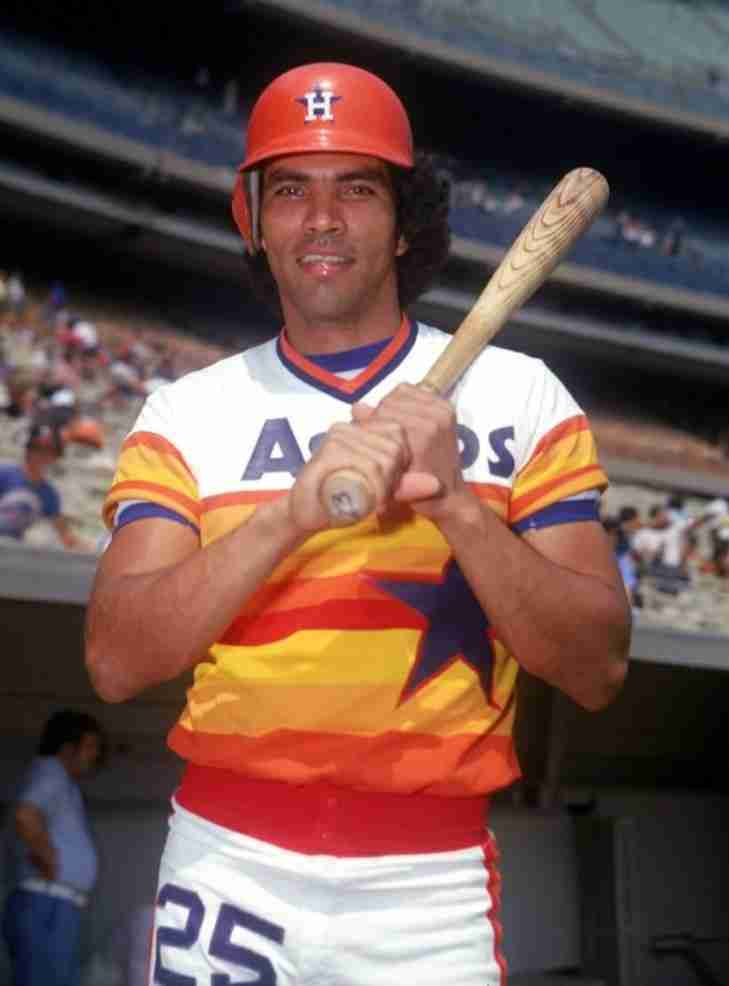
Long before the "Killer B's" took over Houston, the Astrodome belonged to a left-handed contact artist from Puerto Rico named Jose Cruz. Arriving in 1975 after a stint in St. Louis, "Cheo" became the definitive face of the franchise during the most pitcher-friendly era in baseball history. In a cavernous ballpark where home runs went to die, Cruz mastered the art of the line drive, carving out a legacy as one of the most consistent and beloved hitters to ever wear the tequila-sunrise stripes.
Cruz’s tenure in Houston was a masterclass in hitting for average and creating chaos on the basepaths. He hit his stride in the late 1970s and stayed there for a decade, posting a batting average of .300 or better in six different seasons. His best year was in 1983, a summer where he led the National League with 189 hits and drove in 92 runs, earning a Silver Slugger and a third-place finish in the MVP race. He was a model of specialized efficiency, utilizing a short, lightning-quick stroke to slice doubles into the gaps and providing the steady-state production that carried the Astros to their first-ever division titles in 1980 and 1986.
Cruz’s versatile athleticism often went overlooked in the national spotlight. He wasn't just a slap hitter; he possessed a deceptive burst of speed that saw him eclipse the 30-stolen base plateau five times as an Astro. He possessed a professional resilience that allowed him to remain a high-frequency contributor well into his late 30s, eventually amassing 1,937 hits in a Houston uniform. He served as the primary engine for the 1980 "Cardiac Kids," utilizing his veteran-like poise to lead the club through a grueling one-game playoff and into the postseason for the first time in franchise history.
He left for the New York Yankees after the 1987 season and would go on to amass 1,937 hits, 288 stolen bases, and a .292 batting average while finishing in the top ten of the MVP voting three times. Houston bestowed the ultimate honor on Cruz: a franchise Hall of Fame induction in 2019.
6. Roy Oswalt
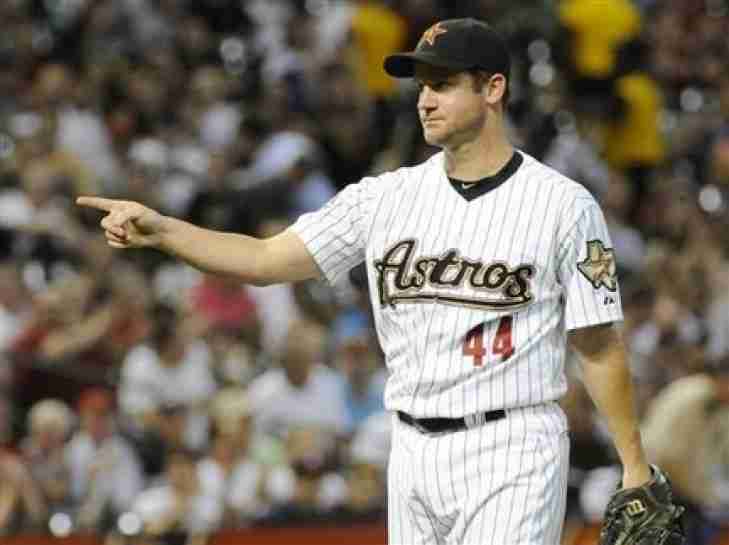
Roy Oswalt’s arrival in Houston in 2001 was like a jolt of electricity to a franchise already boasting legendary arms. A 23rd-round draft pick with a mid-90s heater and a "12-to-6" curveball that dropped off a table, Oswalt skipped the traditional grace period for rookies. He stepped onto the mound at Enron Field and immediately began dismantling big-league lineups with a surgical precision that made his 6'0" frame seem much larger.
He burst onto the scene in 2001 with a 14-3 record and a 2.73 ERA, finishing second for the Rookie of the Year and fifth in the Cy Young race. This wasn't a fluke; it was a blueprint. His best years were between 2004 and 2005, when he recorded back-to-back 20-win seasons, the first Astro to do so in a quarter-century. During this run, he led the National League in wins (2004) and provided a masterclass in durability, consistently eclipsing the 200-inning mark with a focused intensity that demoralized opposing hitters.
The hallmark of his time in Houston was his ability to rise to the occasion when the stakes were highest. During the 2005 postseason, Oswalt reached a historic outlier status. In the NLCS against St. Louis, he delivered a legendary performance in Game 6, pitching seven innings of one-run ball to clinch the pennant. His efforts earned him the NLCS MVP and famously won him a brand-new Caterpillar bulldozer from owner Drayton McLane. He possessed a specialized mental toughness that allowed him to thrive alongside Hall of Fame teammates like Roger Clemens and Andy Pettitte, often outshining them as the most reliable arm on the staff.
During the 2010 season, Oswalt was traded to Philadelphia, marking the end of a decade-long journey that saw him transform from a late-round sleeper into a statistical titan. He departed with 1,593 strikeouts and a reputation as a man who simply refused to be beaten, especially with a championship on the line.
As an Astro, Oswalt compiled 143 wins and 1,593 strikeouts while securing the 2005 NLCS MVP and an NL ERA title. The organization provided the final punctuation on his legacy in 2020 by inducting him into the Astros Hall of Fame.
22. Bill Doran
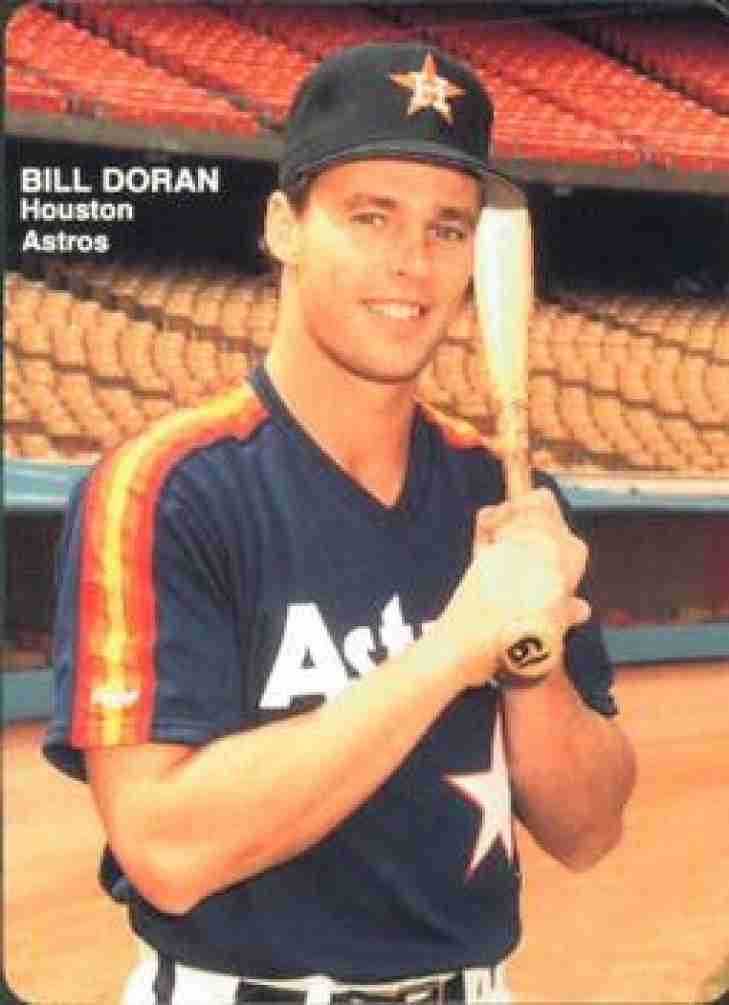
Bill Doran emerged from the Houston farm system to stabilize second base for nearly a decade, providing a high-speed, disciplined presence that defined the team's style during the 1980s. After being drafted in 1979 and debuting in late 1982, he quickly secured a permanent spot in the lineup, becoming a foundational piece of the squad that captured the 1986 division title.
Doran’s impact in a Houston uniform reached a rapid peak during the mid-eighties. In 1985 and 1986, he showcased a focused intensity, surpassing 150 hits in consecutive years while maintaining an on-base percentage consistently above .350. This performance signaled a transition from a young prospect to a premier table-setter for a club built on pitching and defense. He demonstrated a specialized eye at the plate, drawing over 80 walks in four different seasons and proving he could be a statistical force without relying on home run power.
The bulk of his Houston years were characterized by elite defensive reliability and a reputation for "plucky" play that resonated with the local fans. He reached a career peak for individual recognition during the historic 1986 campaign, where he batted .276 with 42 stolen bases and finished 11th in the National League MVP voting. Despite never receiving an All-Star selection, he remained a model of offensive efficiency, twice leading the league in games played at his position and recording four seasons with at least 20 stolen bases. He provided the steady-state production that allowed the Astros to remain a factor in the National League West throughout his tenure.
During the 1990 season, the organization moved toward a youth movement, and Doran was traded to the Cincinnati Reds in exchange for three players, an exit that allowed him to contribute to a World Series winner later that fall. He eventually retired with nearly 2,000 career hits and 209 stolen bases accumulated in a Houston uniform.
18. Joe Morgan
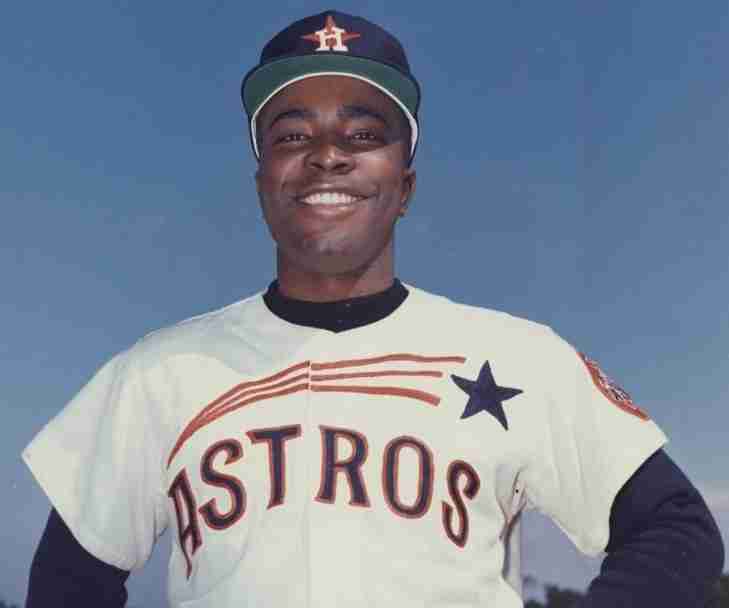
Joe Morgan arrived in Houston as a diminutive spark plug with a specialized batting stance that involved a rhythmic flap of his left arm, a tic designed to keep his elbow up that soon became a nightmare for National League pitchers. While his name is synonymous with the "Big Red Machine" of the seventies, it was in the humid confines of the Astrodome where he first refined the patient, high-velocity style that eventually made him the greatest second baseman of his generation.
Morgan’s rise in Houston began during the franchise’s transition from the Colt .45s to the Astros. He reached a career-defining breakout in 1965, finishing second in the Rookie of the Year voting after leading the league in walks with 97. This early display of plate discipline signaled a transition from a young prospect to a premier table-setter who prioritized on-base percentage long before it was a standard metric. He possessed a focused intensity on the basepaths, paired with a specialized ability to disrupt a pitcher's rhythm, which allowed him to score 100 runs in his first full season.
The heart of his first tenure was defined by a steady-state of elite, all-around production. Between 1966 and 1970, Morgan reached a new gear of consistency, earning two All-Star selections and leading the National League in walks again in 1967. Despite the Astrodome’s reputation as a "pitcher’s graveyard," he showed the organization that he could still provide occasional power, routinely reaching double digits in home runs while maintaining a high-frequency stolen base threat. However, a clash of philosophies with team management led to a sudden shift in direction; following the 1971 season, he was traded to Cincinnati in a blockbuster deal that many Houston fans still view as a franchise-altering mistake.
The story in Houston reached a surprising and poetic second act in 1980. After a legendary run of MVPs and World Series titles in Cincinnati, a veteran Morgan returned to the Astros as a free agent. He reached a final peak of leadership, providing the veteran-like poise that helped guide Houston to its first-ever postseason appearance. Even at age 36, he led the National League in walks for a third time, proving that his eye for the strike zone remained as sharp as ever. He left the club for good after that single-season homecoming, having amassed 972 hits and 219 stolen bases across his two stints in the city.
14. Larry Dierker
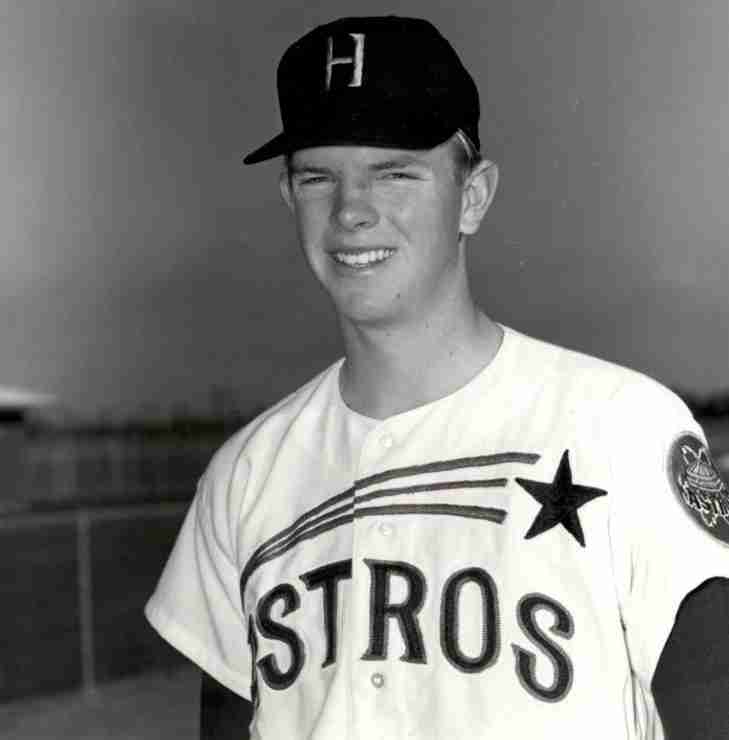
Larry Dierker is the story of the Houston franchise itself, stretching from its infancy as the Colt .45s through the dome-dwelling decades of the Astros. A right-hander with a focused intensity and a professional poise that belied his age, Dierker didn't just grow up in the organization; he became its defining voice and strategist. While he later achieved fame in the dugout and the broadcast booth, his primary legacy was forged on the mound as the first homegrown ace to reach the 20-win plateau in the Lone Star State.
Dierker’s ascent in Houston began with a moment of high-leverage theatre that has become part of baseball lore. On his 18th birthday in 1964, he made his major league debut and proceeded to strike out Willie Mays, signaling a transition from a schoolboy phenomenon to a legitimate big-league outlier. He spent the next several seasons navigating the growing pains of a young expansion club, establishing a reputation for specialized durability. By 1969, he became the first 20-game winner in franchise history. That season, he threw a staggering 282 innings with a 2.33 ERA, earning his first All-Star selection and proving he could maintain a steady-state excellence even in the most demanding workloads.
The middle of his residency was marked by a relentless, high-frequency presence in the rotation. He reached a second peak in 1971, earning another All-Star nod and continuing to pile up strikeouts despite the physical toll of pitching in the Astrodome’s humid, artificial environment. He possessed a tactical understanding of the game that allowed him to outthink hitters even as his velocity plateaued. He eventually amassed 137 wins and 1,487 strikeouts for the club, including a memorable no-hitter against the Expos in 1976. However, in 1977, when he was traded to the Cardinals, ending a 13-year run during which he had become the face of the rotation.
The final chapters of his Houston story were defined by a remarkable veteran-like second act. Following his retirement, Dierker transitioned into the broadcast booth, serving as the team’s voice for twenty years before being named the club’s manager in 1997. His shift from the microphone to the dugout was a statistical outlier in itself; he led the Astros to four division titles in five years, proving that his tactical mind was as sharp as his fastball had once been. He showed the organization that a "lifer" could provide value across three different decades and three different roles, weaving his personal narrative into the very fabric of the team.
The story in Houston reached its final punctuation in 2002 when the Astros retired his number 49, followed by his induction into the inaugural class of the Astros Hall of Fame in 2019. He showed the world that when you have the heart of a competitor and the discipline of a lifer, you don't just play for a franchise, you become its history.
With the Astros, Dierker compiled 137 wins, 1,487 strikeouts, and four division titles as a manager.
51. Rusty Staub
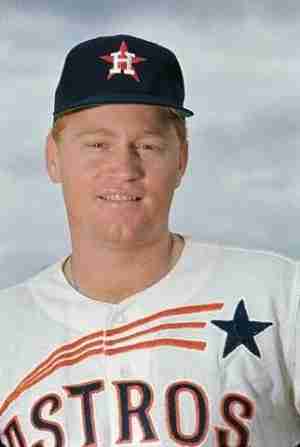
If the main criteria for the Hall are perseverance and effort, then Rusty Staub should have been a first-ballot Hall of Famer. His hard work resulted in over 2,700 hits in a Major League career that many people who saw him early on would never have pegged him for.
Nobody could ever accuse Staub of not giving everything he had, regardless of the endeavor. Those efforts included cooking, history, and, of course, baseball. They called him eccentric for these things, but his meticulous nature turned him into a pure hitter and gained him respect throughout the league. He made six All-Star Games but did so without showing much power (though he hit 25 homers twice) and without any real speed. What he did do was hit for average consistently and walk frequently, which enabled him, even late in his career, to be a solid pinch-hitter.
Staub may have been freakishly consistent, but he was never dominant and was never a serious contender for any postseason award. Six All-Star appearances were impressive, but rarely has the Baseball Hall of Fame rewarded longevity without at least a flash of immortality. If they did, Staub would be a good place to start.
Should Rusty Staub be in the Hall of Fame?
111. Jim Wynn
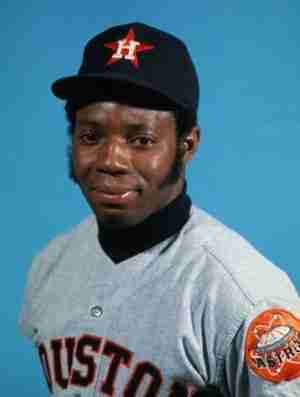
How does a guy with a lifetime Batting Average of .250, who never received a single vote for the Hall, even make this list? It reminds us of a band that fails to earn any real respect, but, in retrospect, is viewed as ahead of its time by the generation that follows. The metaphor we are talking about is Jim Wynn, the man dubbed the “Toy Cannon”.
Jim Wynn played the bulk of his career for an awful (and barely noticed) Houston Astro team in the gigantic Astrodome. The stadium was far from a hitter’s paradise, yet Wynn managed to put up decent power numbers there. He never posted what would be considered a decent Batting Average, but Jim Wynn walked… a lot. Two times he led the league in free passes and always had an On Base Percentage well over 100 points higher than his Batting Average. He could also steal, and he was great in the field, not that anybody was watching him when he played in Houston.
Wynn would later have a couple of good seasons in L.A., but he went from a team that nobody saw to a loaded club where nobody paid attention to him. Jim Wynn could be the best player in the ’60s and 70’s that nobody ever saw.
Should Jim Wynn be in the Hall of Fame?
A Special Day in Cooperstown
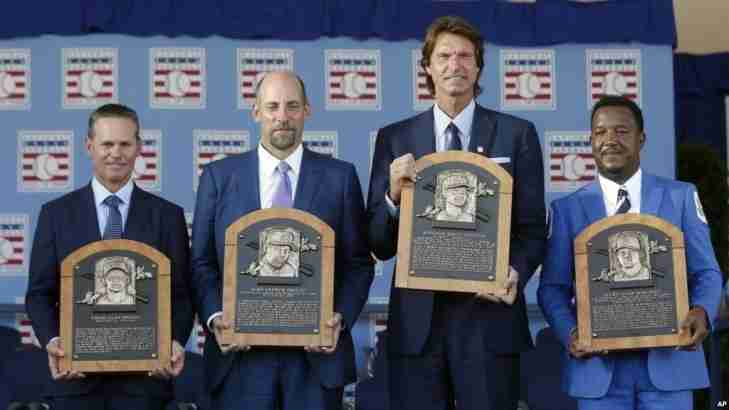
This year they have four.
On what was a beautiful summer day in front of 40,000 fans and forty-nine Hall of Famers in upstate New York, four baseball legends are now enshrined with a bronze bust that will forever be on display.
Rather than recap the accomplishments of the four (regular visitors know that we have done that often), let’s read the etchings on each of the four new inductees.
CRAIG ALLAN BIGGIO: HOUSTON, N.L. 1988-2007
GRITTY SPARK PLUG WHO IGNITED ASTROS OFFENSE FOR 20 MAJOR LEAGUE SEASONS, BECOMING FIRST PLAYER IN HISTORY WITH AT LEAST 3,000 HITS, 600 DOUBLES, 400 STOLEN BASES AND 250 HOME RUNS. TRANSITIONED FROM ALL-STAR CATCHER TO GOLD GLOVE SECOND BASEMAN TO EVERYDAY OUTFIELDER, AMASSING 3,060 HITS, INCLUDING 668 DOUBLES – MOST BY A RIGHT-HANDED BATTER – AND A MODERN-DAY RECORD 285 TIMES HIT BY A PITCH. A SEVEN-TIME ALL-STAR, WON FIVE SILVER SLUGGER AWARDS AND FOUR GOLD GLOVE AWARDS.
JOHN ANDREW SMOLTZ: ATLANTA N.L. 1988-99, 2001-08; BOSTON, A.L. 2009; ST.LOUIS, N.L. 2009
A WORKHOUSE POWER PITCHER, TRADED HIS STARTING DOMINANCE TO DEVELOP INTO PREMIER CLOSER BEFORE RETURNING TO ROTATION. BECAME THE FIRST PLAYER IN HISTORY WITH 200 WINS AND 150 SAVES. WITH A DYNAMIC FASTBALL, A DECEPTIVE SLIDER AND A DARTING SPLITTER, FANNED 3,084 BATTERS AND WAS NAMED TO EIGHT ALL-STAR TEAMS, THE 1996 N.L. CY YOUNG AWARD WINNER AND 1992 NLCS MVP. SET N.L. RECORD WITH 55 SAVES IN 2002. PITCHED BEST WHEN GAME WAS BIGGEST, RECORDING A 15-4 POST-SEASON RECORD, HELPING BRAVES TO 1995 WORLD SERIES TITLE.
PEDRO JAIME MARTINEZ: LOS ANGELES, N.L. 1992-93; MONTREAL. N.L. 1994-97; BOSTON, A.L. 1998-2004; NEW YORK, N.L. 2005-08; PHILADELPHIA, N.L. 2009
FEATURING AN ELECTRIC ARSENAL OF PITCHES THAT VANQUISHED BATTERS DURING AN ERA OF HIGH OCTANE OFFENSE, THE FIERY RIGHTY FROM THE DOMINICAN REPUBLIC OWNED THE INSIDE PART OF THE PLATE WITH AN EXPLODING FASTBALL AND CONFOUNDING CHANGE-UP. LED LEAGUE IN E.R.A. FIVE TIMES AND STRIKEOUTS THREE TIMES EN ROUTE TO THREE CY YOUNG AWARDS AND EIGHT ALL-STAR SELECTIONS. FIRST PITCHER TO RETIRE WITH 3,154 STRIKEOUTS IN FEWER THAN 3,000 INNINGS. WON 219 GAMES WITH AN ASTOUNDING .687 WINNING PERCENTAGE. POSTED 117-37 RECORD IN BOSTON HELPING TO LEAD RED SOX TO 2004 WORLD SERIES CHAMPIONSHIP.
RANDALL DAVID JOHNSON: “RANDY” “THE BIG UNIT”: MONTREAL, N.L. 1988-89; SEATTLE, A.L. 1989-98; HOUSTON, N.L. 1998; ARIZONA, N.L. 1999-2004, 2007-08; NEW YORK, A.L. 2005-06; SAN FRANCISCO, N.L. 2009
AT 6’10’, A TOWERING AND INTIMIDATING LEFTHANDER WHOSE CRACKLING FASTBALL AND DEVASTATING SLIDER PARALYZED HITTERS FOR MORE THAN TWO DECADES, FIVE-TIMES CY YOUNG AWARD WINNER, INCLUDING FOUR CONSECUTIVE, 1999-2002. LED LEAGUE IN STRIKEOUTS NINE TIMES AND POSTED SIX 300 STRIKEOUT SEASONS. TEN-TIME ALL-STAR AND THREE-TIME 20-GAME WINNER, RANKED SECONS ALL-TIME ON STRIKEOUT LIST (4,875) AND FIRST IN STRIKEOUTS PER NINE INNINGS (10.6) UPON RETIREMENT. WON 303 GAMES AND LED LEAGUE IN E.R.A. FOUR TIMES, WON THREE GAMES IN 2001 WORLD SERIES WITH CHAMPION DIAMONDBACKS EARNING CO-MVP HONORS.
Capital letters do make it more emphatic doesn’t it?
Do you want to know what makes it even better?
The fact that Randy Johnson was inducted with his mullet is far greater to us than his hat (the first for Arizona) and the hat worn by Craig Biggio (Astros, also a first.
So what do we do now?
What we always do!
We look forward to the next class of Baseball Hall of Famers and debate their merits.
Hopefully, all of you will participate and lend us your opinions as to who you want to see in the next Baseball Hall of Fame class.
130. Roy Oswalt
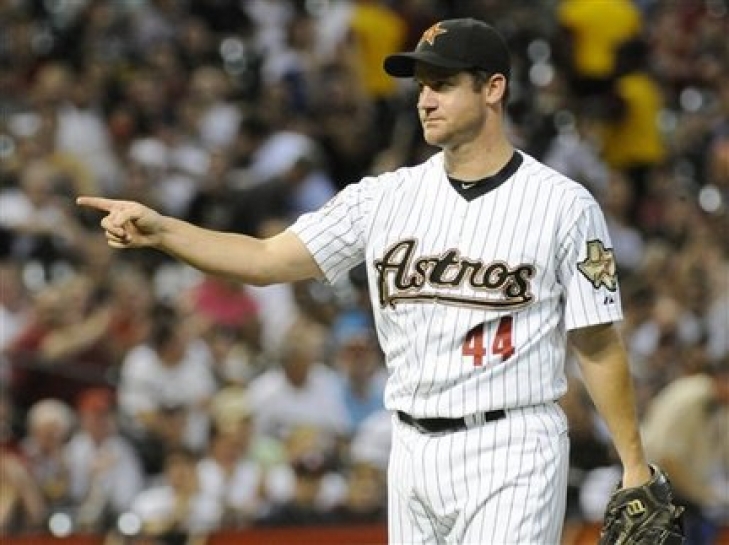
In the mid-2000s, Roy Oswalt was considered one of the top pitchers in the National League. “Os” would have five seasons where he was voted in the top five in National League Cy Young balloting, and it was his arm that won the NLCS MVP in 2005, getting Houston to their lone World Series appearance.
Oswalt was a very good starter for an extended period of time, but was it enough for Cooperstown? It probably isn’t, though it can not be forgotten that in a six-year period, he finished in the top five in Cy Young voting for five of those years.
101. Lance Berkman
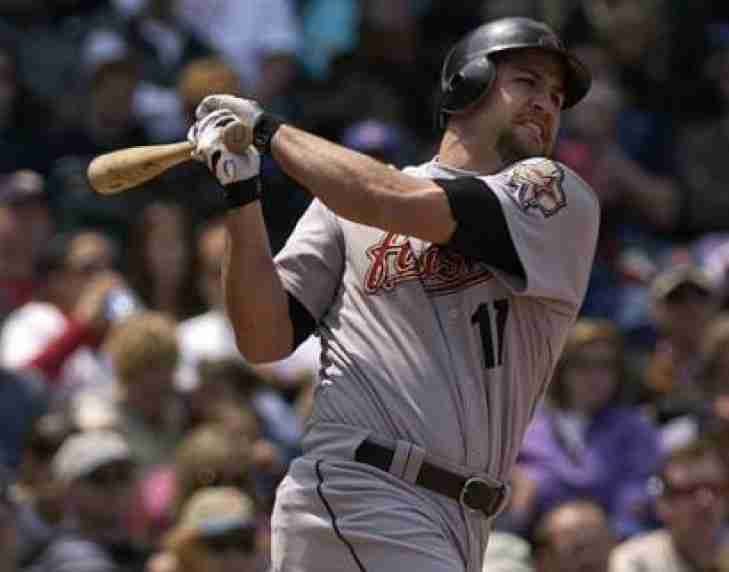
Lance Berkman was the third “Killer B” of the Houston Astros, though it was his Comeback Player of the Year season with St. Louis (that also netted him his only World Series Ring) that he might hold most dear.
Berkman’s overall Hall of Fame candidacy is an interesting one as he is a six-time All-Star, finished in the Top Ten in MVP voting six times, and put up very good power numbers with 366 Home Runs, 1,234 RBIs, and a .934 OPS. His overall numbers, complete with a 52.0 bWAR, are good, but with poor defensive numbers, a relatively low profile amongst most fans, and what is still likely to be a loaded ballot, Berkman will have more trouble than he should to get into Cooperstown.
