

42. Fred Lynn
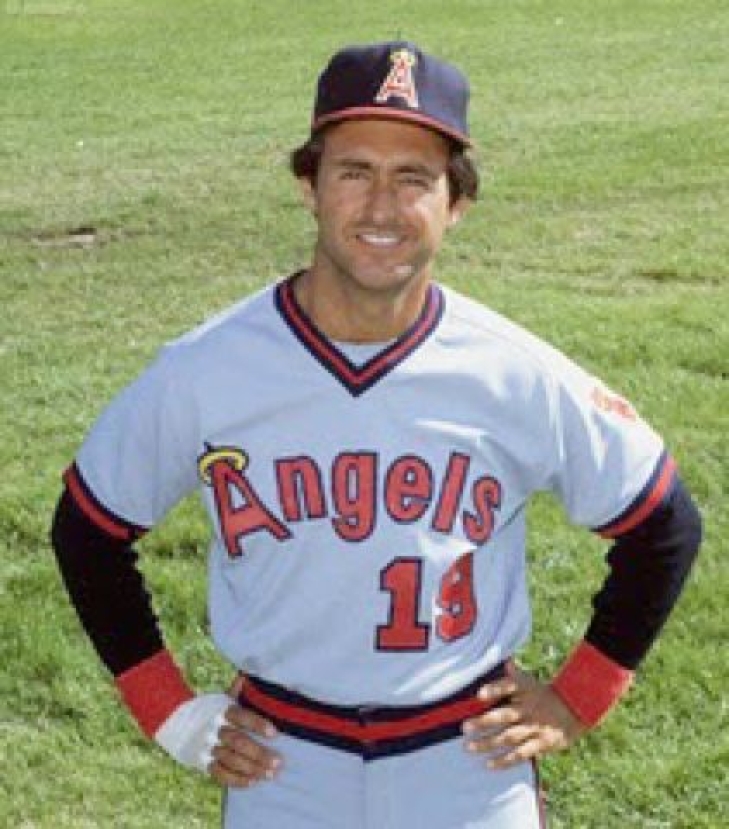
Fred Lynn arrived in Anaheim in 1981 via a blockbuster trade from the Red Sox, a move that sent shockwaves through the league as the Angels looked to pair a legitimate superstar with their burgeoning core. Having already achieved legendary status in Boston as the first man to win the Rookie of the Year and MVP in the same season, Lynn carried the weight of massive expectations into Orange County.
The first part of his tenure was marked by a difficult transition that challenged the patience of Anaheim fans. In the shortened 1981 season, Lynn showed an unusual lack of rhythm at the plate, ending with a career-low .219 batting average and just five home runs. Although he was still selected for the All-Star Game due to his reputation, he exhibited particular difficulty adjusting to the unique dimensions of the Big A.
During the 1982 campaign, he had a bounce-back season, showing he still had a superstar's toolkit. He could drive the ball high-frequency, hitting 21 home runs and earning an All-Star nod. He quickly became a mainstay, leading by example as a tactical anchor for the AL West champions. This run helped him regain his high-caliber offensive status, providing the organization with the production they envisioned when trading for him a year earlier.
The 1982 postseason marked his peak in California, a performance etched in franchise lore. In the ALCS against Milwaukee, Lynn had a remarkable .611/.650/889 slash line over five games. Though the Angels lost the pennant, he was named ALCS MVP, the first from a losing team to win. He was a high-stakes performer, keeping the Halos in the hunt with offensive dominance.
Lynn would belt 45 home runs over the next two seasons, but departed back to the AL East in 1985, signing with the Baltimore Orioles.
With the Angels, Lynn had 71 Home Runs while batting .271.
88. Fred Lynn
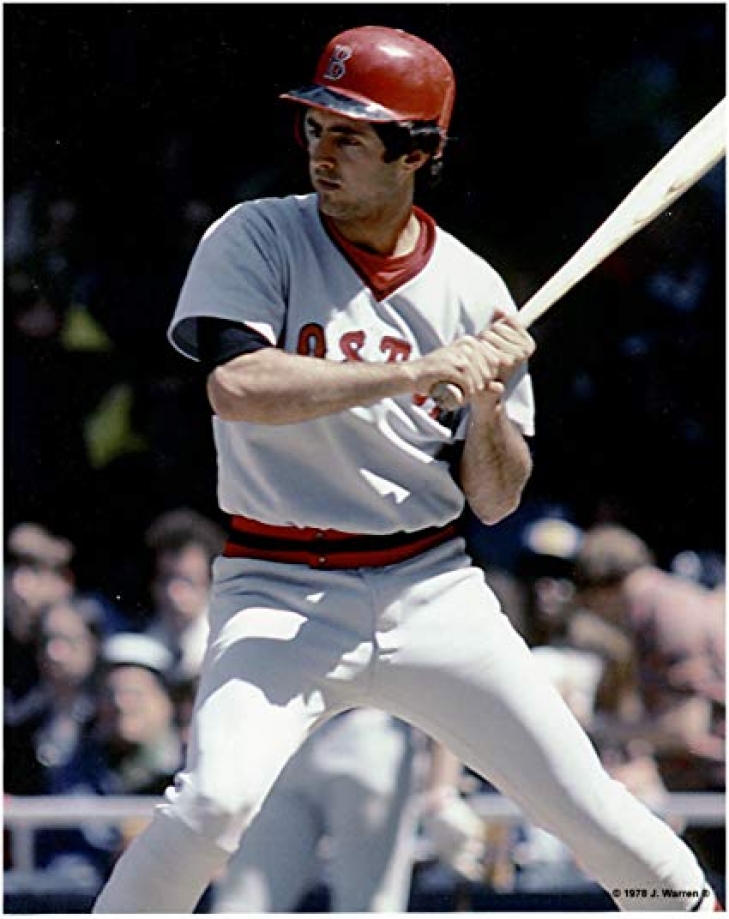
Nobody shot out of the gate quicker than Fred Lynn, as he made history when in 1975, he became the first player in Major League history to win the Rookie of the Year and the MVP in the same season. As the other one who accomplished that feat was Ichiro Suzuki, an established veteran of the Japanese Leagues, this is a beyond-spectacular achievement.
In the previous year, Lynn would not only secure the ROY and MVP, but he would also win his first of four Gold Gloves, win the Slugging Title (.566), and finish first in OPS (.967), Runs Scored (103), and Doubles (47). That season, he would power the Red Sox into the World Series, but they went down to defeat against the Cincinnati Reds.
Lynn remained a great player for years, and while he did not win the MVP again, he probably should have in 1979, when he swept the Slash Line (.333/.423/.637) and had career-highs in Home Runs (39) and RBIs (122). After six straight All-Star years with the Red Sox, he was traded to the California Angels, and he kept his streak alive with three more All-Star appearances.
He continued his career with Baltimore, Detroit, and San Diego, and retired in 1990 with 306 Home Runs and a .484 Slugging Percentage.
20. Fred Lynn
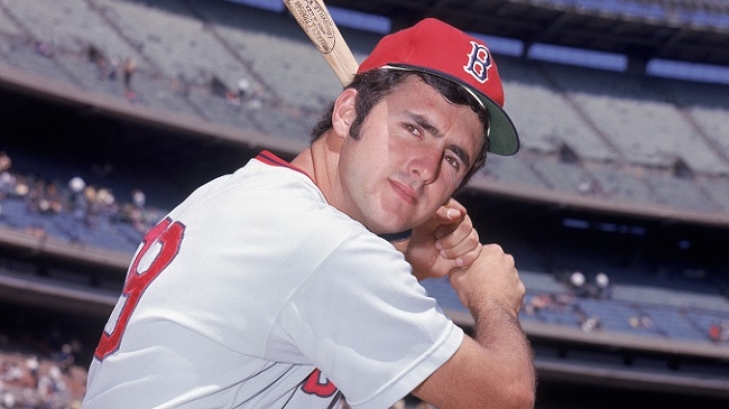
Fred Lynn arrived in Boston as a winner, having led USC to three consecutive College World Series titles before being drafted in 1973. After a brief 15-game cup of coffee in 1974, he entered 1975 ready to make history. In a feat that remained unmatched for decades, Lynn became the first player in Major League history to sweep the AL Rookie of the Year and MVP awards in the same season. As the defensive anchor in center field, he combined acrobatic catches with a bat that led the league in Runs (103), Doubles (47), Slugging (.566), and OPS (.967), propelling the Red Sox to an unforgettable World Series appearance.
Lynn’s brilliance wasn't limited to his historic debut. Over his seven seasons in a Red Sox uniform (1974–1980), he was a perennial force, being named an All-Star every single year he was in Boston. While his 1975 season is more famous, his 1979 campaign was statistically superior in nearly every significant metric. That year, he reached an untouchable offensive ceiling, winning the AL Batting Title (.333) and leading the league in OBP (.423) and Slugging (.637) while smacking a career-high 39 home runs and 122 RBIs. Despite this Triple Crown-caliber slash line, he finished a controversial fourth in MVP voting, losing to a statistically inferior Don Baylor.
Defensively, Lynn was the gold standard, earning four Gold Gloves during his Fenway tenure. His run in Boston was defined by his fearlessness; in Game 6 of the 1975 World Series, he famously crashed into the unpadded center-field wall, a moment of high-leverage sacrifice that defines his Boston legacy. Though he was traded to the California Angels after the 1980 season, he left a statistical footprint that includes 944 hits, 124 home runs, and a stellar .308/.383/.520 slash line.
