
4. Luis Gonzalez
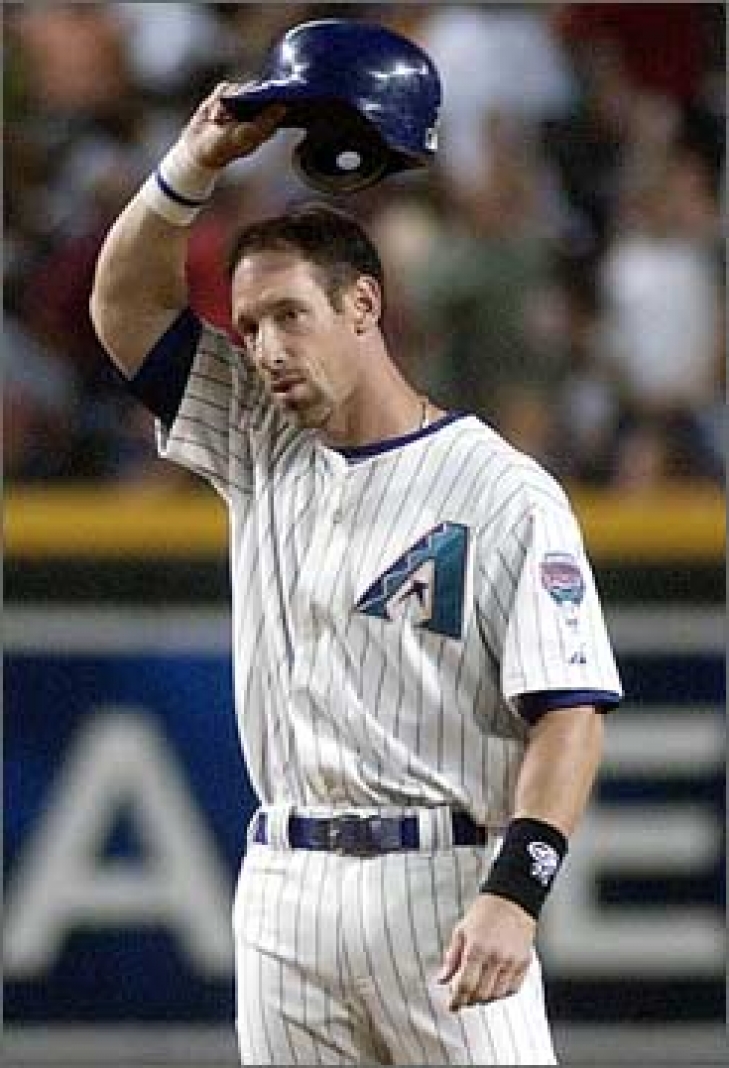
Luis Gonzalez was a good baseball player before he was traded to the Arizona Diamondbacks, but it was in the desert where he became an All-Star and the team’s premier offensive threat.
Gonzalez’s 1999 debut season with the D-Backs saw him post career highs in Hits (206), and Batting Average (.336), and it would be his first of three .300/.400/.500 Slash Lines. It also marked the first of five consecutive RBI seasons.
2001 was, without a doubt, the best season of his career. “Gonzo” would blast 57 Home Runs with a Slash Line of .325/.429/.688 and finished third in MVP voting. More importantly, he would help the Diamondbacks win the World Series in 2001 and would have the Series-winning hit with the most famous bloop single of all time. That secured Gonzalez as a forever legend in the state of Arizona.
Luis Gonzalez would represent Arizona five times in the All-Star Game and accrued 224 Home Runs over his career with the team. Arizona would also make Gonzalez the first former Diamondback to have his number retired, which occurred when his number 20 was put out of circulation in 2010.
Gonzo may not be #1 on this list, but for many, he will always be the most beloved Diamondback that ever existed.
23. Orlando Hudson
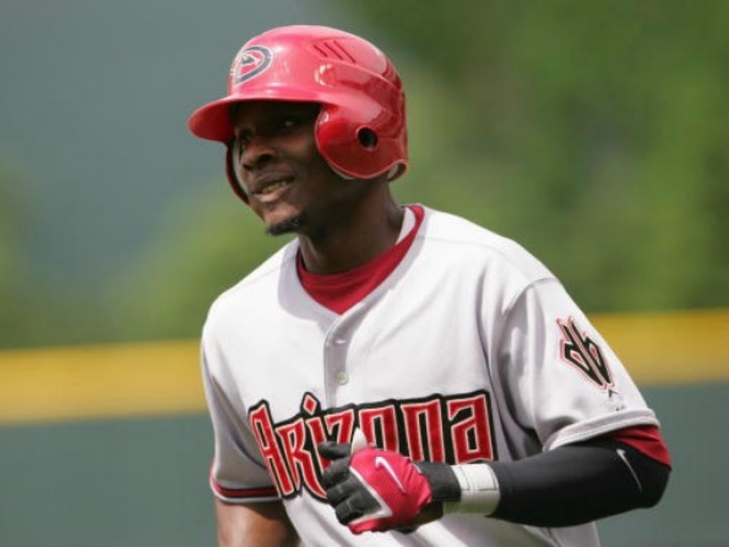
Before the 2006 Season, Orlando Hudson was traded from the Toronto Blue Jays to the Arizona Diamondbacks, and the D-Backs were not disappointed with the defensive presence he would bring to their infield.
Already a Gold Glove winner in Toronto, Hudson would win two more Gold Gloves (2006 & 2007) with Arizona. Hudson would also hit 150 Hits in back-to-back years, both of which saw him bat over .280, and he was a nice spark to their 2007 NL West Title. The O-Dog would also go to the All-Star Game in 2007 and had 442 Hits for Arizona.
26. Gerardo Parra
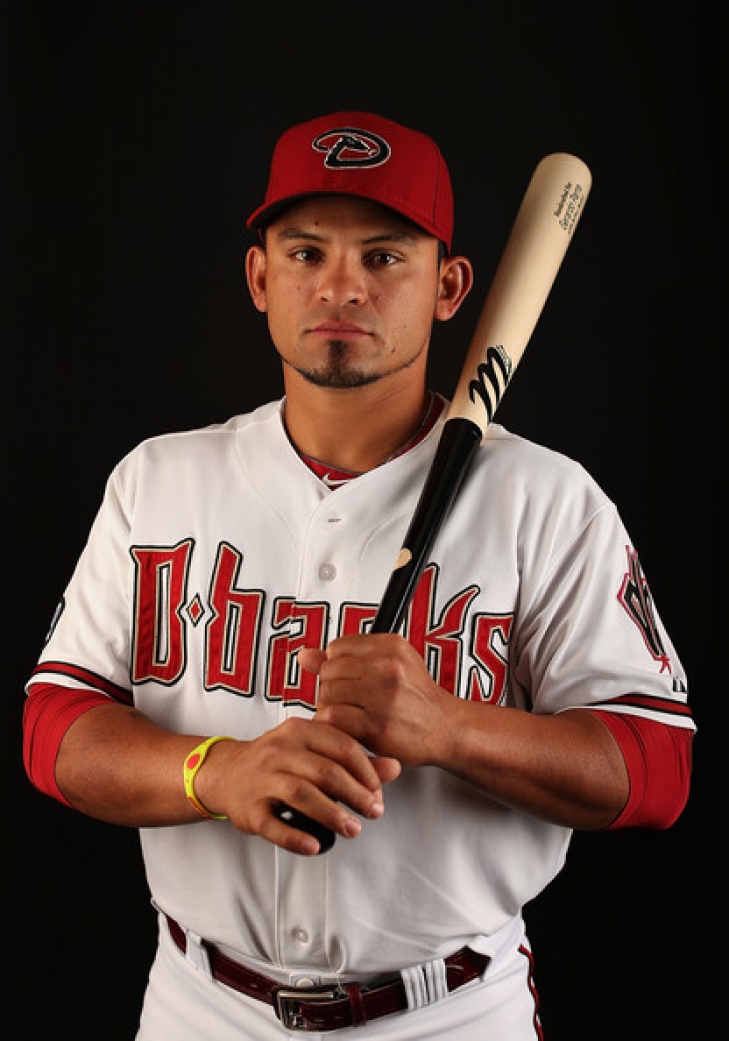
While Gerardo Parra was never known for his power numbers (his season-high is 14), he made history when he became the 100th player in Major League Baseball history to hit a Home Run in his first-ever at-bat. Parra may not have had many more of those for Arizona, but he did have three 130 Hit seasons and an impressive defensive resume. Parra would win a Gold Glove playing both Leftfield (2011) and Rightfield (2013), the latter of which would see him win the Wilson Overall Defensive Player Award. In both of those Gold Glove years, Parra showcased his cannon of an arm, leading the NL in Outfield Assists
Parra batted .274 with 728 Hits with Arizona, but his main contribution was his defensive skills.
5. Curt Schilling
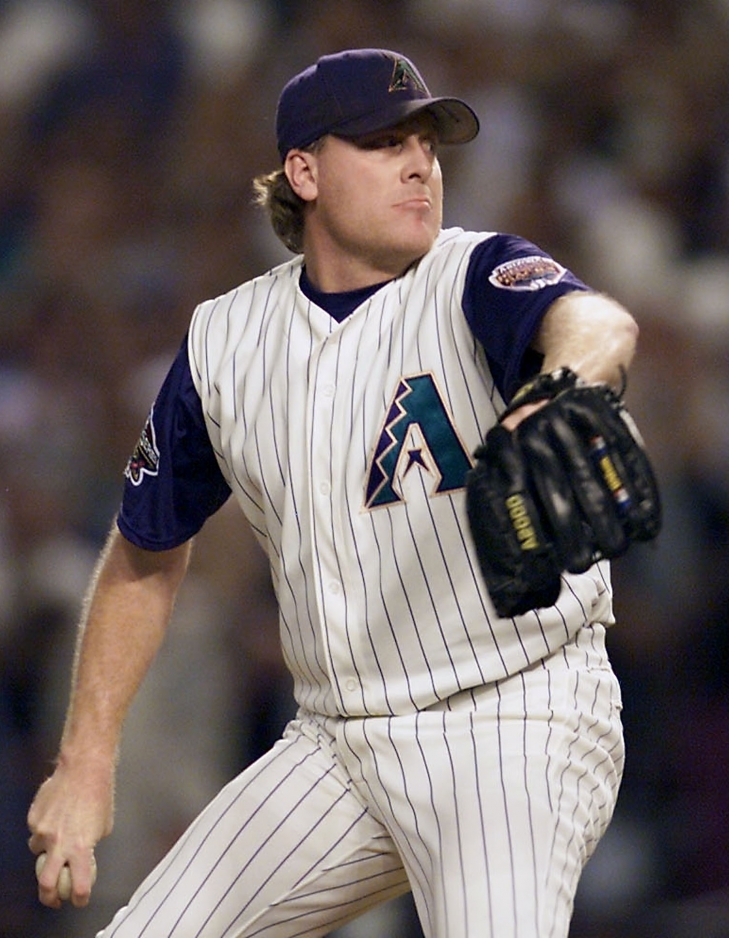
Curt Schilling did not spend a long time in Arizona (three and a half years) but nobody can dispute the impact that he had as a Diamondback.
29. Miguel Batista
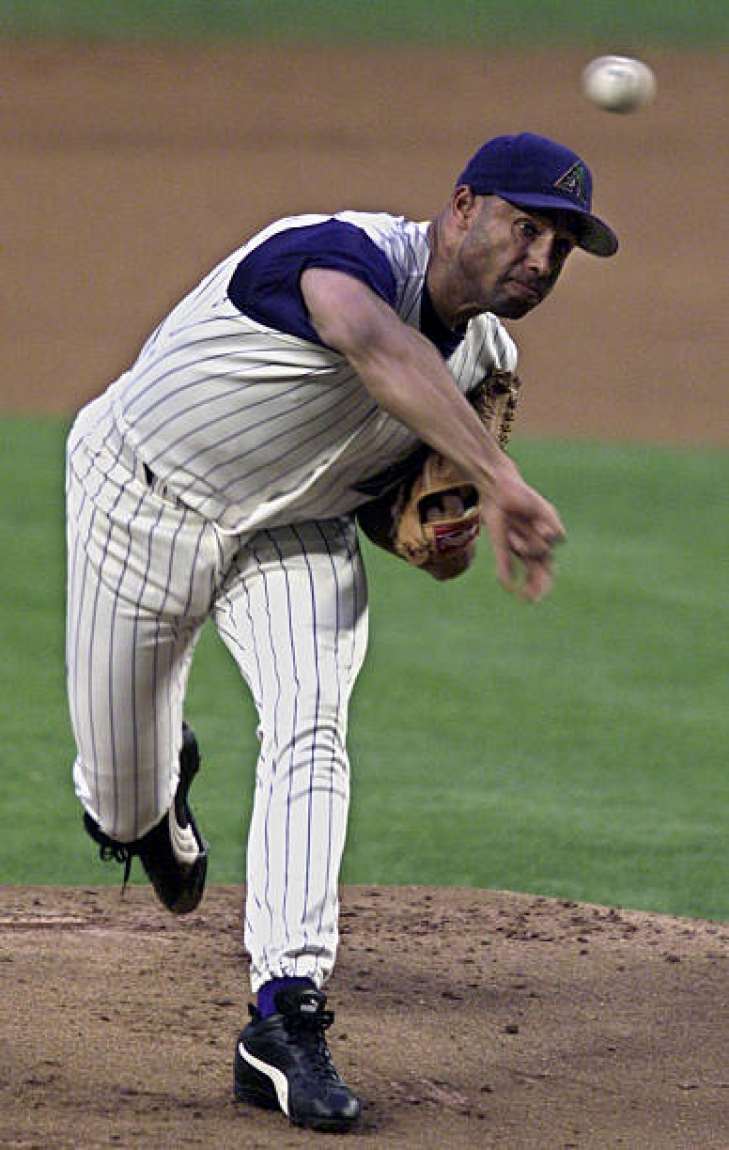
Miguel Batista played for ten teams over his eighteen seasons in the Majors, but it was clear that he was at his most productive as a member of the Arizona Diamondbacks. It was also the place where he had his most opportunities as a Starting Pitcher.
Batista started 109 of his 156 Games in Arizona as a starter and was often used in long relief. Basically, the native of the Dominican Republic was used; however, the Diamondbacks could use him, which turned out to be quite a lot! The hurler would assist Arizona in winning the 2001 World Series, and in the postseason, he pitched six times, three as a starter and three from the bullpen, which was certainly fitting. Even more notable, he did not give up a run in any of those appearances. Batista would win 40 Games for Arizona over his two runs.
25. Stephen Drew
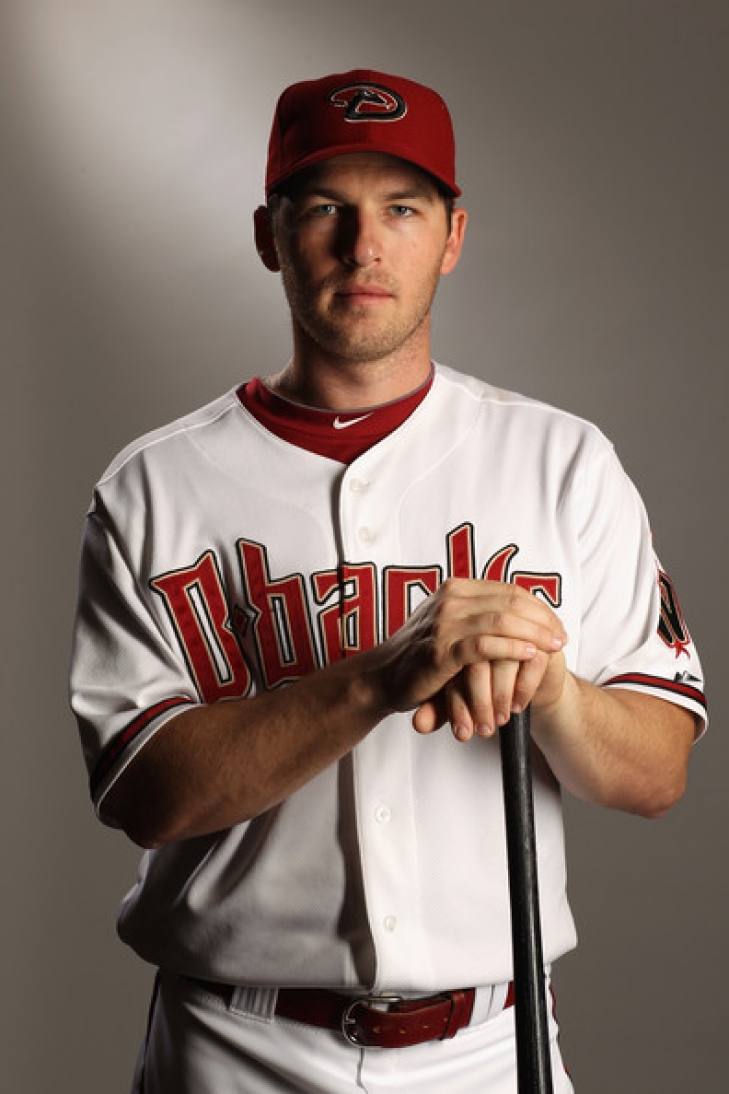
A First Round pick in 2004, Infielder Stephen Drew played his first six-and-a-half seasons with the Diamondbacks, with his peak coming from 2008 to 2010. In those campaigns, Drew managed at least 10 Triples (he had 52 overall with Arizona). He was not a power hitter, but did have a 21-Home Run year in 2008, with a surprising .502 Slugging Percentage. Traded to Oakland in the 2012 season, “Dirt” had 776 Hits with a .266 Batting Average for the D-Backs.
Drew later won a World Series with the Boston Red Sox in 2013.
17. Miguel Montero
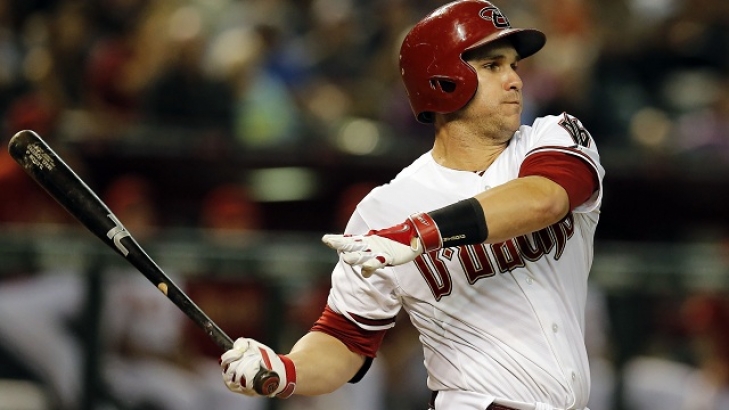
With Arizona, Montero had 795 Hits, and was well regarded for his durability and intelligence behind the plate. The two-time All-Star (2011 & 2014) also received MVP votes twice, which was a testament to his overall skill.
18. Chris Young
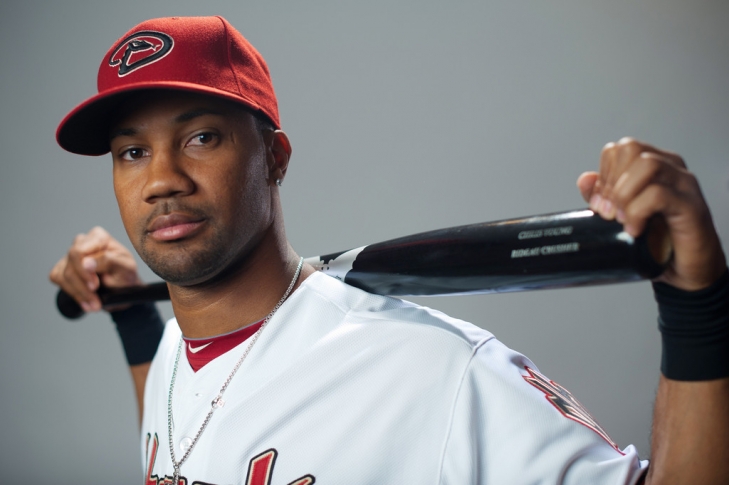
While Chris Young was never known for having a great Batting Average, he would bring some good power numbers to the Diamondbacks lineup. In his rookie season (2007), Young went yard 32 times, swiped 27 bases, and finished fourth in Rookie of the Year balloting. He would have three other seasons with 20 or more Home Runs, and three 20-Stolen Bases years for the D-Backs, but as good as the Power-Speed combo was, he did not take that consistent leap to the next level, which was the initial expectation for a number one overall pick..
Young was named an All-Star in 2010 and was also a solid defensive presence at Centerfield for the club. Traded to the Oakland A’s in 2013, Young belted 132 Home Runs with 112 Stolen Bases and 758 Hits, though only batted .239 and had five years with over 130 Strikeouts. That knocks him down a few spots.
21. Matt Williams
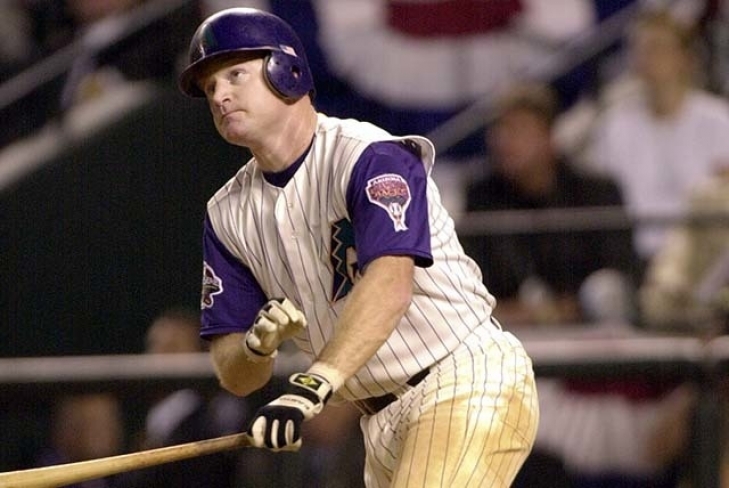
While the best years were well behind him by the time Matt Williams arrived in Arizona, he proved to be very popular among Diamondbacks fans as one of the team’s original members and instantly brought gravitas before the team ever played a game.
This is not to say that Williams still did not have some great moments left in him. In 1999, Williams would blast 35 Home Runs, 142 Runs Batted In (a career high) with a .303 Batting Average, which was enough for him to finish third in National League MVP voting. Williams would later help Arizona win the 2001 World Series, notably with a three-run Game 2 blast.
Overall, as a Diamondback, Williams had 629 Hits, 99 Home Runs with a Batting Average of .278, and the lunch pail work ethic made him the perfect man to bring attention to a winning attitude to the state of Arizona.
20. Patrick Corbin
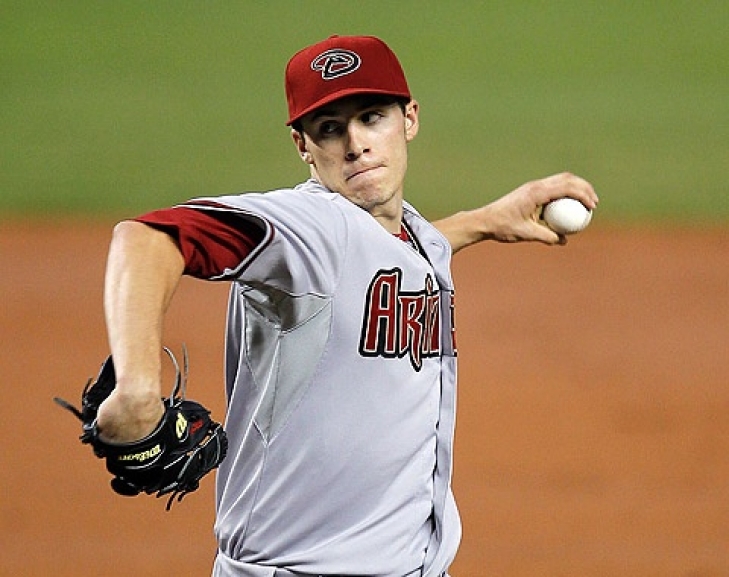
Patrick Corbin played the first six seasons of his career with the Arizona Diamondbacks. The southpaw has had an up-and-down career in the desert, the ups being a pair of 14 Win seasons, the first of which saw him make the All-Star Game (2013). The lows are Tommy John Surgery, taking him out of the entire 2014 Season and the 2016 campaign, when he lost his role as a Starter. Lows are lows and highs are highs, and since 2016, Corbin returned to the All-Star Game in 2018 as a Starter, and he was third overall in the NL in both Strikeouts and SO/BB while also finishing fourth in WHIP and a fifth-place Cy Young finish. That ended Corbin’s stay in Arizona, as he left via free agency to join the Washington Nationals, where he won a World Series Ring.
With Arizona, Corbin had a 56-54 record with 897 Strikeouts.
3. Brandon Webb
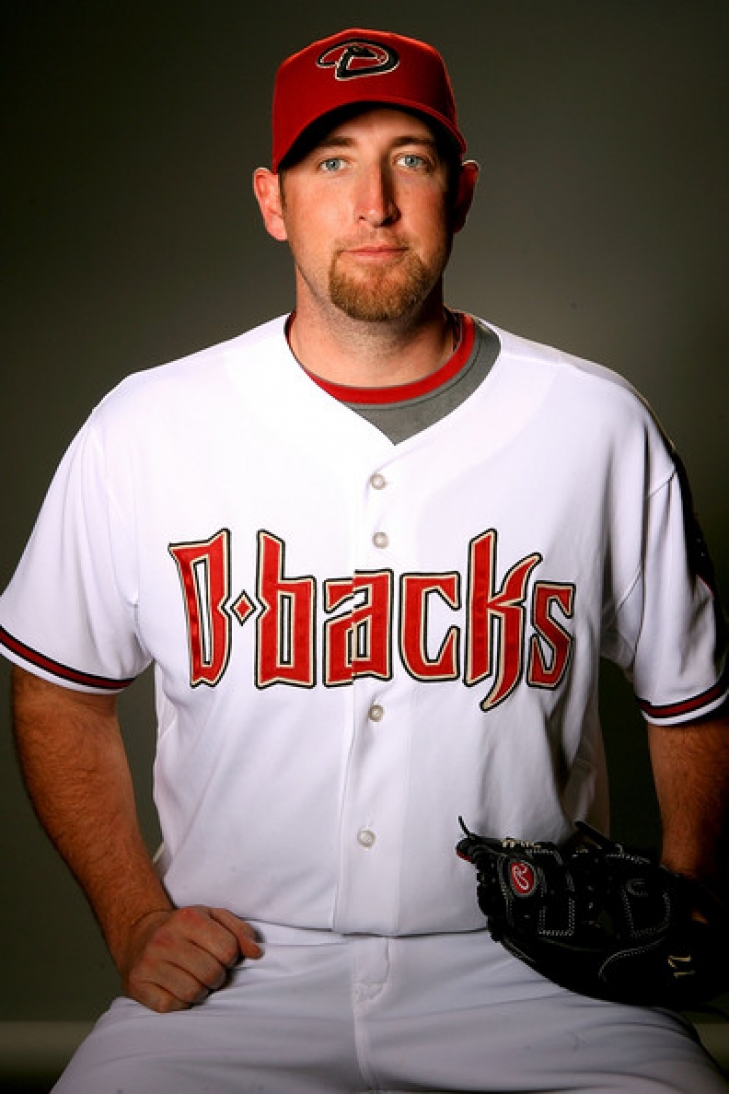
Playing his entire career with the Diamondbacks, sinkerball specialist Brandon Webb had a rough start. In his second season in the Majors, Webb led the National League in Losses and Walks allowed. That was 2004. Two years later, Webb transformed himself into the best hurlerin the National League.
Webb would win the National League Cy Young Award while leading the NL in Wins, FIP, and bWAR for Pitchers. This would be the first All-Star Game appearance but not the last. Webb remained in All-Star form in 2007 and 2008, and in both years he was the Cy Young Award runner-up.
Sadly, Webb’s shoulder gave out, and he went from an elite pitcher to out of baseball quickly. Still, those three excellent seasons on a franchise this young earned Webb this high rank, and his sinker will love forever.
Webb left the game with a record of 87-62 and 1,065 Strikeouts in a career spent entirely in Arizona.
1. Randy Johnson
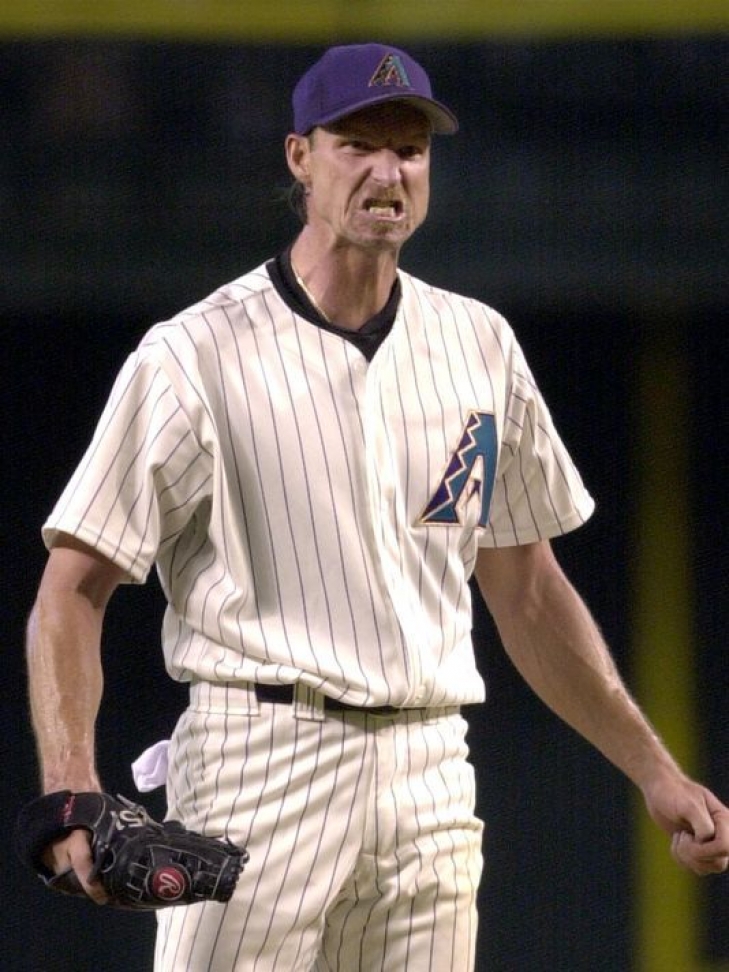
Going into this process we knew that Randy Johnson was likely going to be ranked number one. What we didn’t realize is just how wide that chasm was going to be between him and everyone else!
11. Justin Upton
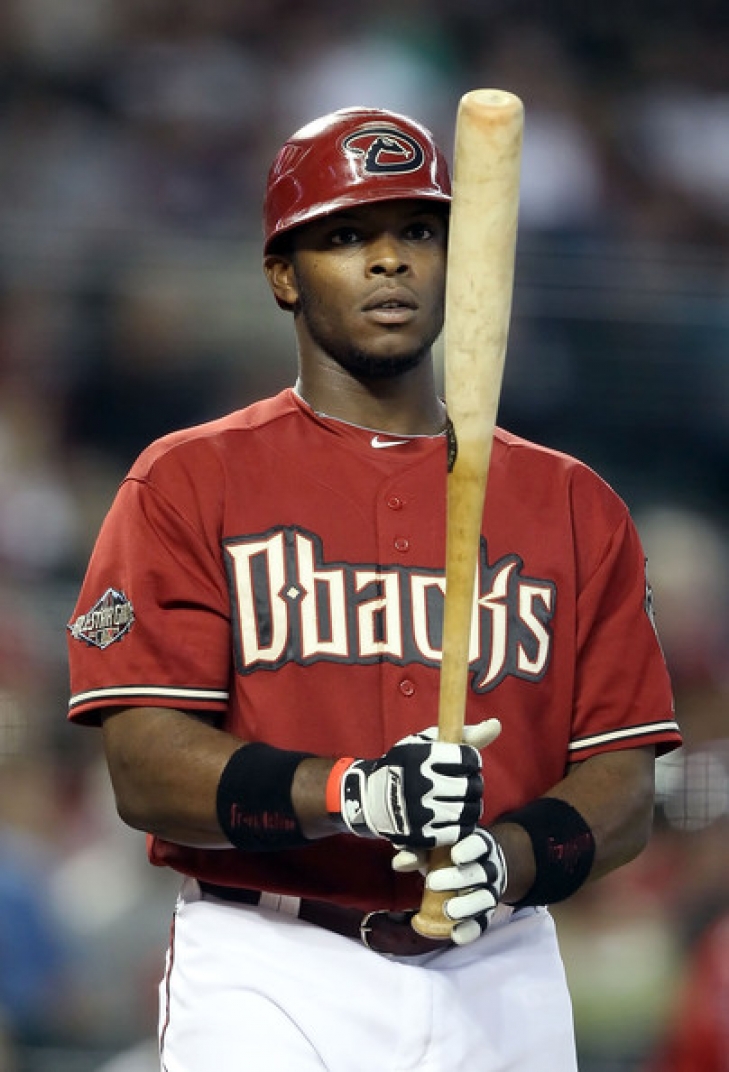
Justin Upton was the number one draft pick in 2005, and to nobody’s surprise, he was able to crack the Diamondbacks roster as a teenager. Upton would quickly take over as the team’s starting left fielder, and in 2009, he was named a National League All-Star, a feat he would repeat for Arizona in 2011. That was his best season for the Diamondbacks, where he smacked 31 Home Runs with a .529 Slugging Percentage while finishing fourth in MVP voting. Upton also had two 20-20 seasons with Arizona, with 739 Hits and 108 Home Runs, before he was traded to the Atlanta Braves in 2013.
Upton might not have been the supernova expected, but it was a decent run in Arizona, whose legacy is affected by the high expectations.
15. David Peralta
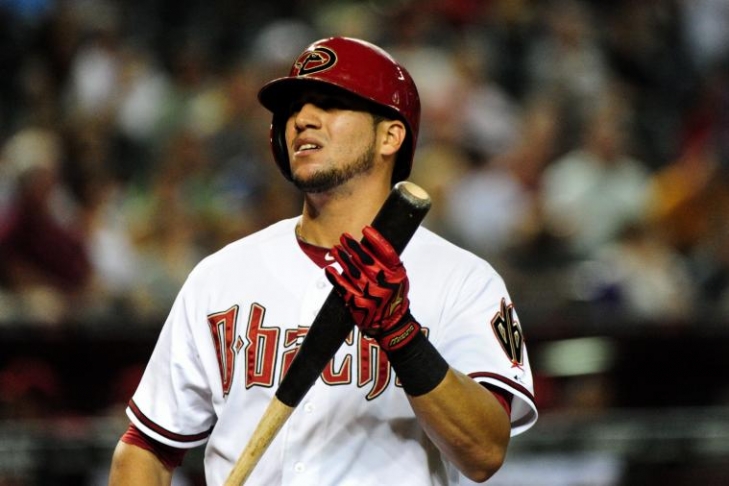
The first nine seasons of David Peralta’s career were in the desert, but to get there, the Venezuelan-born player had to convert from a failed Pitcher in the St. Louis Cardinals organization.
“The Freight Train” played at Leftfield and truly arrived in 2015, when he led the National League in Triples (10) and batted .312 with 17 taters. He later won a Silver Slugger (2018) when he had career highs in Home Runs (30), RBIs (87), Slugging (.516), and OPS (.868), and a year later, he won a Silver Slugger.
Arizona traded Peralta to the contending Tampa Bay Rays during the 2022 Season, but the way that he grinded out a career in the Majors, and connected with the D-Backs faithful place him high on this list.
He concluded his Diamondbacks run with 960 Hits, 110 Home Runs, and a .283 Batting Average.
8. Zack Greinke
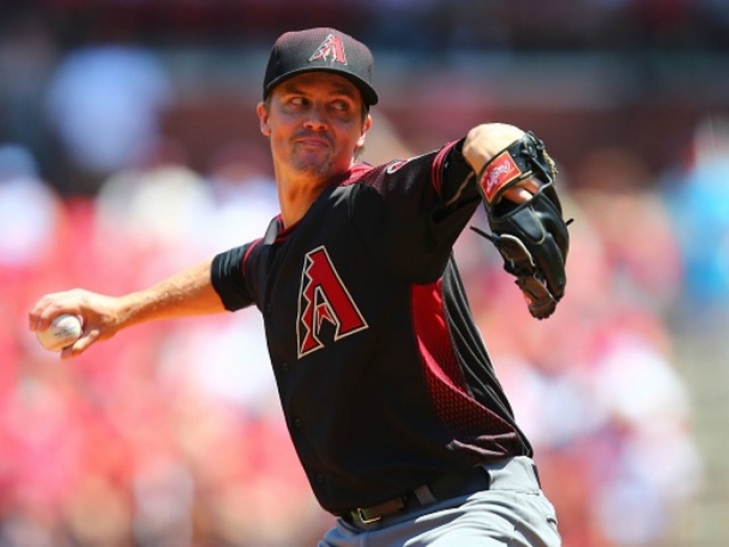
Zack Greinke was with the Arizona Diamondbacks for only three and a half years, but in that time, he showcased skills that helped him win the Cy Young Award as a Kansas City Royal in 2009.
Arriving in 2016 as a Free Agent, Greinke was named an All-Star in 2017, where he also finished 4th in Cy Young voting. He repeated as an All-Star in 2018, and in '17 and ’18, he ranked in the top ten in the NL in bWAR for Pitchers and WHIP. Grienke was again an All-Star in 2019, but shortly afterward, he was traded to the Houston Astros for their playoff run.
With overall Diamondback numbers of 55-29 and 683 Strikeouts, Grienke's rank is also aided by the fact that he was an excellent fielder and a good hitter for a Pitcher, who had a .230 Batting Average with Arizona.
The surgically precise professor of pitching was outstanding while a Diamondback, and Arizona fans could only imagine what it would have been like to have had the hurler for a longer time.
9. Steve Finley
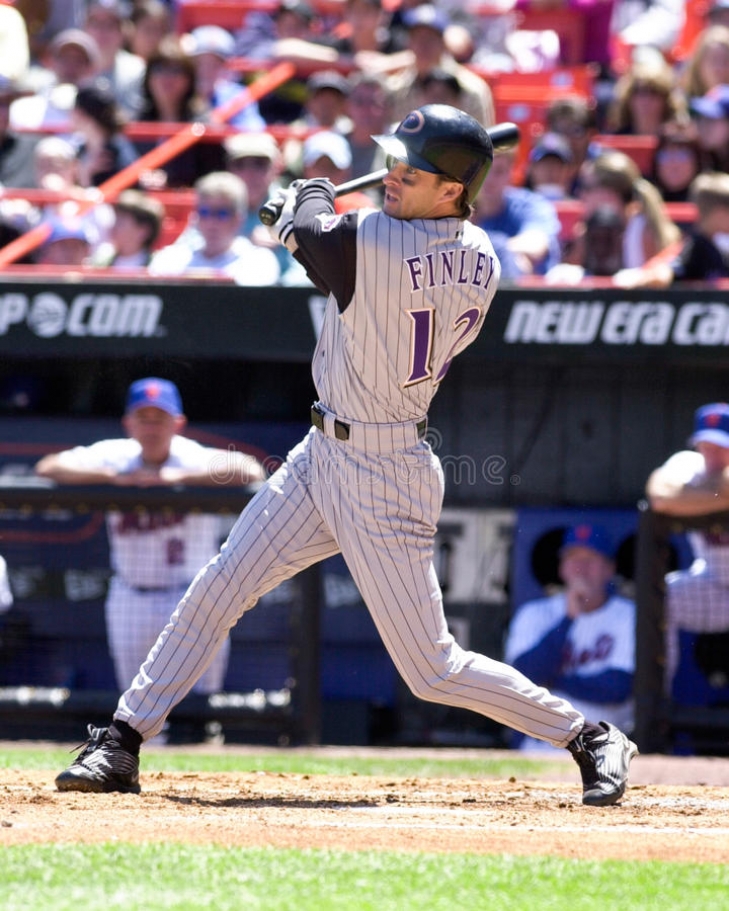
The signing of Steve Finley via free agency proved to be a fruitful one for the Arizona Diamondbacks, as the Outfielder would put forth some of his best offensive seasons playing in Arizona.
The “Third Man of the Offensive Corps” of Arizona’s World Series offense, Finley would have two 30 Home Run seasons and three more 20 Home Run years for the Diamondbacks, and provided a respectable Batting Average and On Base Percentage. Finley represented Arizona twice in the All-Star Game and also won a pair of Gold Gloves there.
Perhaps most significantly in this ranking is Finley's postseason performance in the 2001 World Series run, where he batted .421 in the Division Series, .286 in the Championship Series (with a .412 OBP), and .368 in the World Series (with a .478 OBP). Johnson, Schilling, and Gonzalez receive a lot of the credit for 2001, but Steve Finley was a major part of that championship season. After a few more good years, he was traded to the Dodgers during the 2004 Season.
Finley overall had 847 Hits, 153 Home Runs and batted .278 for Arizona.
13. A.J. Pollock
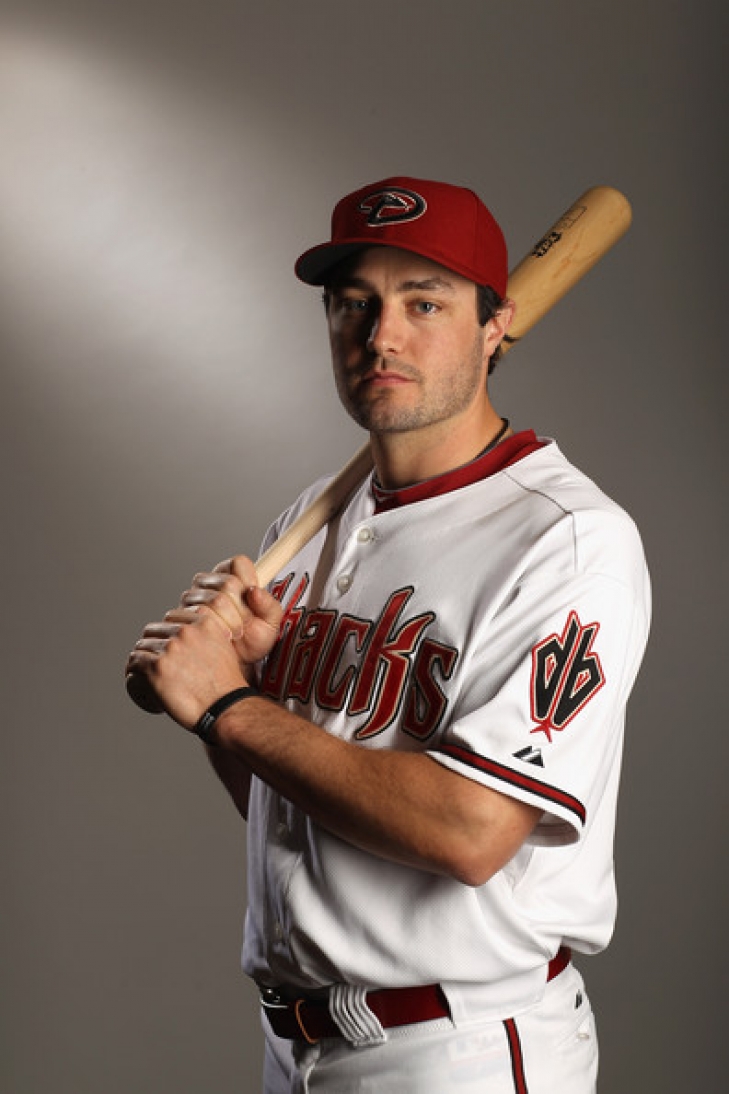
The first seven seasons of A.J. Pollock's career were with the Arizona Diamondbacks, where he may have displayed flashes of greatness, but was often known for injuries derailing complete seasons.
Pollock had a full year in 2015, when the Outfielder was named an All-Star, won a Gold Glove, and finished 14th in MVP voting. That year, he also had 20 Home Runs with 194 Hits and batted over .300. At the end of the 2018 season, Pollock signed with the Los Angeles Dodgers, thus ending his run in Arizona. With the Diamondbacks, he had 640 Hits, with a Batting Average of .281, and had he not dealt with constant ailments, could have had so much more.
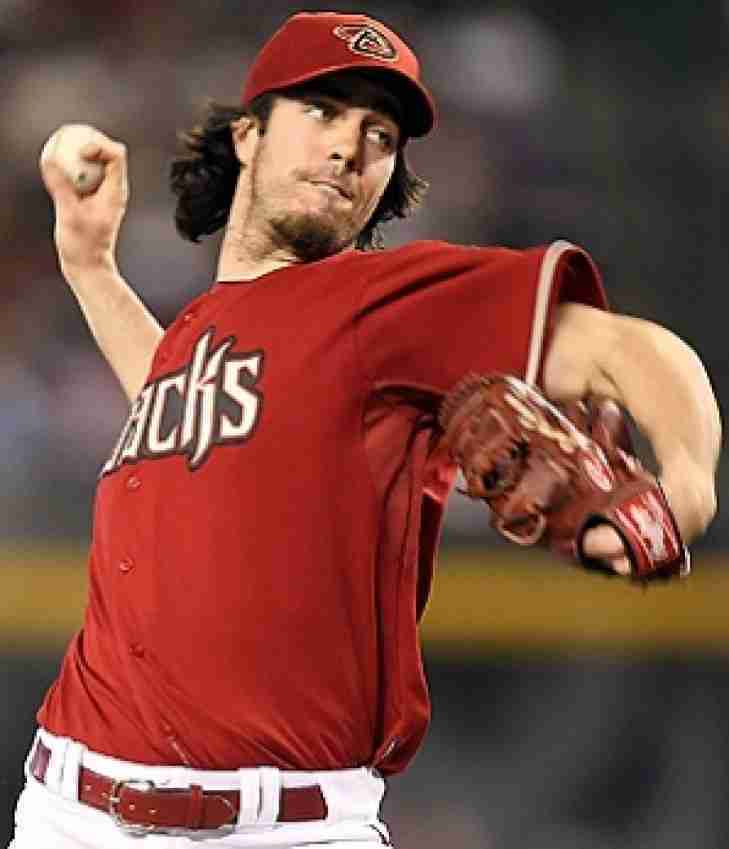
10. Dan Haren
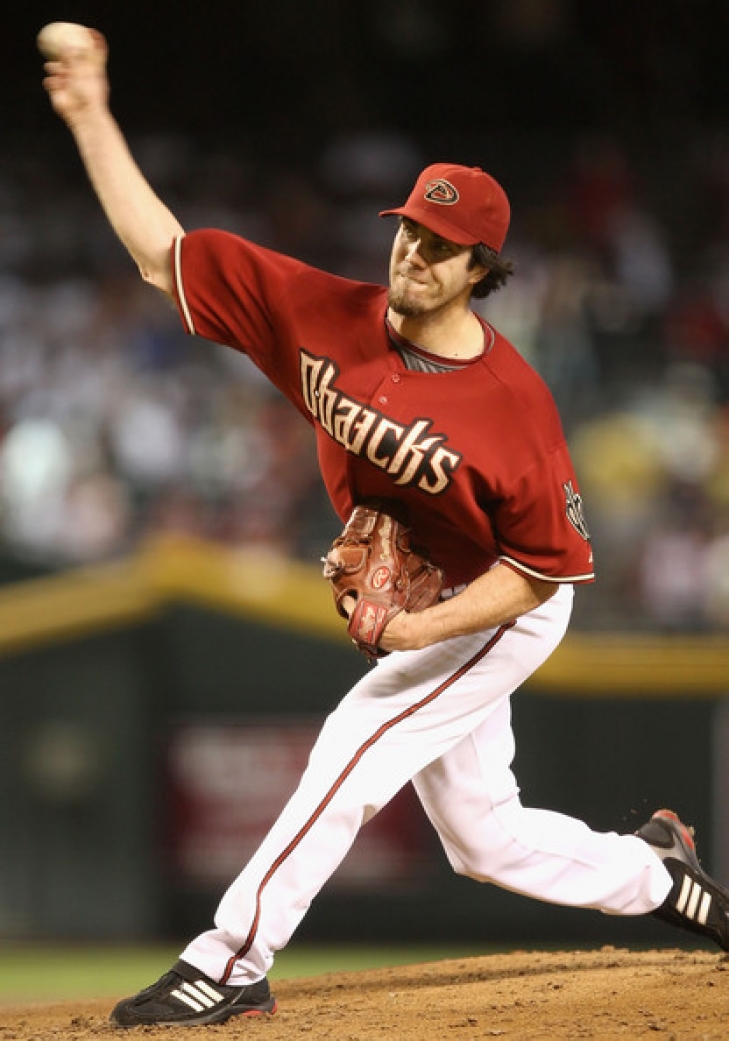
With a wide variety of pitches, Dan Haren used equal parts skill and craftiness to carve out an effective thirteen-year career in Major League Baseball, the best of which was spent with the Diamondbacks.
While Haren’s rank may seem high for someone who only played two full seasons and a large chunk of a third, it was what he accomplished in those two full seasons that helped to warrant him such a high rank. In both of those years, Haren would lead the National League in SO/BB and would finish fourth in bWAR for Pitchers. He was also the league leader in WHIP in 2009 and was sixth in Strikeouts both years. His rank is also aided by his high Batting Average (.265) for a Pitcher as a D-Back. On the mound, Haren went 37-26 with 570 Strikeouts with Arizona.
2. Paul Goldschmidt
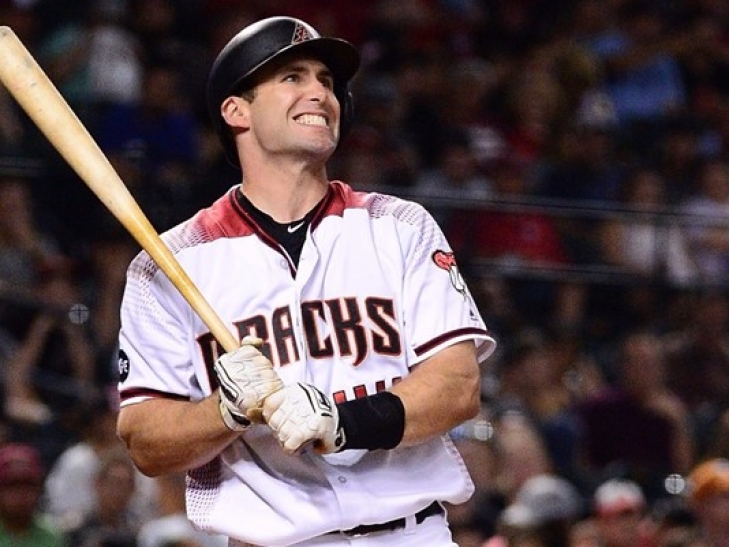
For nearly a decade, "Goldy" served as the quiet, relentless heartbeat of the Diamondbacks, transforming from an unheralded 8th-round draft pick into the greatest position player in franchise history.
Bursting onto the scene in late 2011, he famously announced his arrival with a massive postseason grand slam that ignited the desert. By 2013, he had evolved into a full-blown supernova. That season remains a masterclass in offensive and defensive dominance: That season, he won the Hank Aaron Award, along with his first Gold Glove and Silver Slugger, while leading the NL in Home Runs (36), RBIs (125), and Slugging (.551), and was second in MVP voting. Goldy had arrived, and he was ready to dominate the rest of the decade.
Over eight seasons in Arizona, he became a fixture at the All-Star game and a perennial MVP candidate, finishing in the top three of voting three different times. In 2016, he led the NL in walks (110) while remarkably stealing 32 bases—an unheard-of feat for a powerhouse first baseman. As the D-Back’s fortunes fell, Goldschmidt left Arizona with 209 home runs, over 1,100 hits, and a staggering career slash line of .297/.398/.532.
He later won the 2022 NL MVP as a St. Louis Cardinal, and Paul Goldschmidt remains the benchmark by which all future Diamondback position players are measured.
297. Dan Haren