

33. Sonny Randle
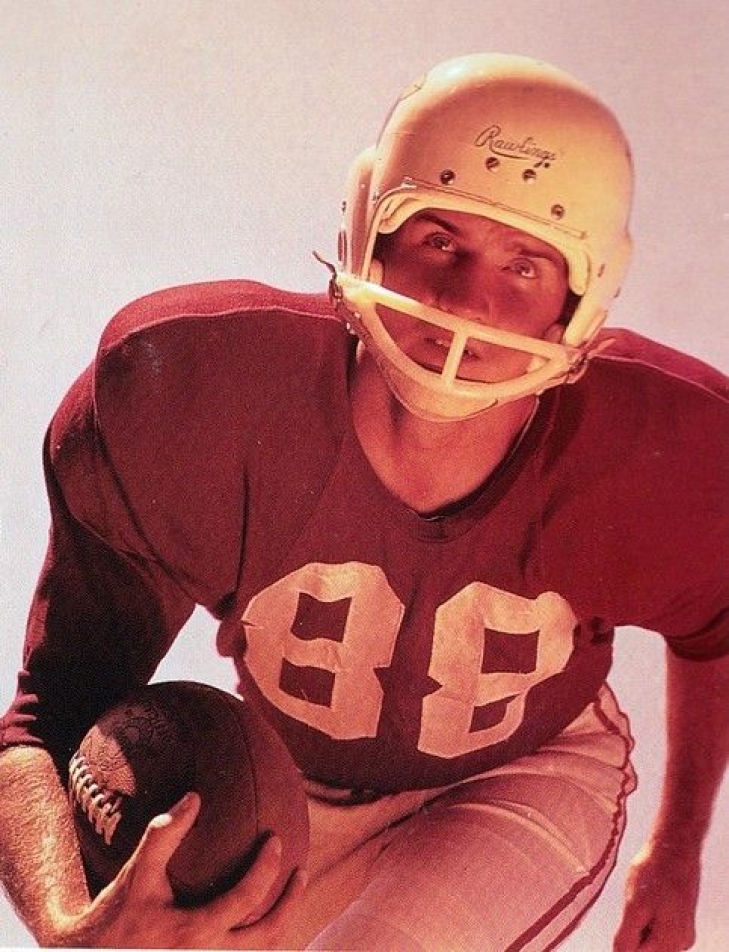
Sonny Randle was selected in the 19th round (218th overall) of the 1958 NFL Draft as a "futures" pick from Virginia. During his final college year, he focused on improving his track speed before joining the Chicago team in 1959. As a rookie, his playing time was limited, but he dedicated the offseason to refining his route running, practicing against teammates Dick "Night Train" Lane and Jimmy Hill. This effort helped convert his raw vertical speed into a highly developed skill. When the franchise relocated to St. Louis in 1960, Randle became a key player, leading the Big Red's passing attack and gaining national recognition.
Randle had explosive long strides that often outpaced coverage. His precise head fakes and quick breaks made him nearly unstoppable on double moves. In the red zone, his tracking ability and body position made him a top goal-line threat of his time.
His breakout season in 1960 showcased exceptional scoring efficiency. Randle led the NFL with 15 receiving touchdowns, setting a franchise record for a single season, and also recorded 62 receptions for 893 yards. His outstanding performance earned him First-Team All-Pro honors and initiated a three-year streak of Pro Bowl appearances from 1960 to 1962.
In the 1962 season, he achieved a career-high in yardage, with 63 receptions for 1,158 yards and 7 touchdowns, earning Second-Team All-Pro honors. The season’s highlight was a remarkable game at Yankee Stadium on November 4, 1962, when Randle set franchise records with 16 catches and 256 receiving yards against the New York Giants, records that remain unbroken.
Randle proved equally lethal in 1963, catching 51 passes for 1,014 yards and 12 touchdowns. After a shoulder injury shortened his 1964 campaign, he returned to peak form in 1965 with 845 receiving yards and 9 touchdowns, earning his fourth career Pro Bowl invitation.
Randle's 15 touchdown catches in 1960 remain the single-season Cardinals benchmark, and his 16 receptions for 256 yards against the Giants in 1962 stand as the team's untouched single-game records. Randle departed for San Francisco in 1967, leaving St. Louis with an extraordinary legacy. Across eight seasons in a Cardinals uniform, he accumulated 328 receptions, 5,438 receiving yards, and 60 touchdown catches.
32. Dale Meinert
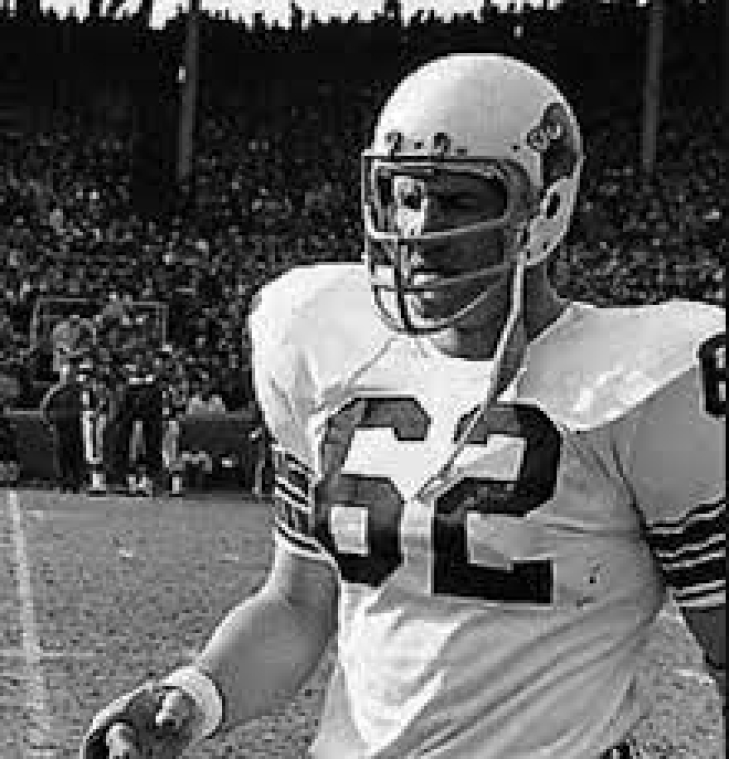
Drafted in the eighth round of the 1955 NFL Draft by the Baltimore Colts from Oklahoma A&M, Dale Meinert originally took a different route to professional football. He moved north to Canada, playing three seasons with the Edmonton Eskimos under coach Pop Ivy and earning two Grey Cups as an offensive lineman. When Ivy became head coach of the Chicago Cardinals in 1958, Meinert followed him to the United States, beginning as a guard for his first two NFL seasons before a positional change significantly altered his career.
Meinert was initially seen as undersized for interior offensive line positions. Switching permanently to middle linebacker in 1960 turned out to be an excellent decision. With sharp instincts, quick lateral pursuit, and a tough, downhill tackling approach, he soon became the strategic leader of the defense. Meinert assumed pre-snap play-calling responsibilities, often using a laid-back Oklahoma voice and sometimes tapping his defensive tackles on the buttocks to shift the defensive front into the correct position.
Following the franchise's move to St. Louis in 1960, Meinert's defensive impact was immediate. He picked off a pass in his very first start at linebacker and earned St. Louis Cardinals Team MVP honors in 1961. Over the next several seasons, he anchored the middle of the field against the run while dropping efficiently into pass coverage, picking up three Pro Bowl selections (1963, 1965, 1967). His pinnacle individual campaign arrived in 1967, when his leadership and field vision earned him Second-Team All-Pro honors alongside his third Pro Bowl invitation. Teammates frequently compared Meinert's impact directly to Hall of Fame contemporaries like Ray Nitschke and Dick Butkus, noting that his play-calling speed and range made him the heartbeat of the Big Red defense.
After capping off his career with that 1967 All-Pro campaign, Meinert decided it was time to step away from the game ahead of the 1968 training camp. It wasn't a spur-of-the-moment choice; after a decade of grinding collisions in the NFL trenches, he felt it was the right time to hang up his cleats and return to his home state of Oklahoma. He transitioned seamlessly into life after football, farming, teaching junior high math, and coaching eight-man high school football at Lone Wolf High School for 15 years.
Over his ten-year NFL career (all as a Cardinal), Meinert recorded 9 interceptions, 13 fumble recoveries, 12 unofficial sacks, and a defensive touchdown in 125 games.
44. Pat Tilley
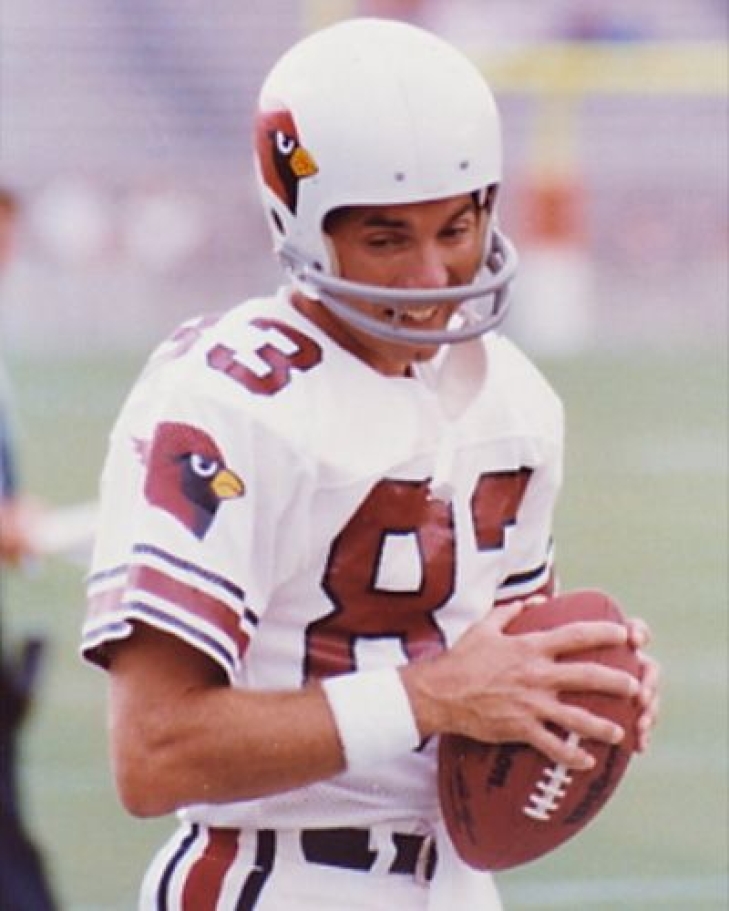
Although high-profile deep threats like Mel Gray and Roy Green grabbed national attention, the St. Louis Cardinals discovered their key possession receiver in the 1976 NFL Draft's fourth round. Drafted 114th overall from Louisiana Tech, Pat Tilley entered the Big Red offense discreetly, but his route precision, fearless catches over the middle, and durability made him a dependable target for 11 seasons, establishing himself as one of the franchise's most reliable players.
Tilley didn't have elite speed for breakaways, but he compensated with precise route running and excellent spatial awareness against zone defenses. Whether in the slot or near the sideline, he served as a reliable safety valve for quarterbacks Jim Hart and later Neil Lomax, regularly converting crucial third downs.
Tilley took full control of a starting job in 1978, launching a run in which he led the Cardinals in receiving yards for five consecutive seasons (1978–1982). He recorded four straight years with at least 900 receiving yards. His performance earned him a Pro Bowl selection in 1980 after hauling in 68 passes for 966 yards and six touchdowns.
His statistical peak arrived during the 1981 campaign. Tilley posted his first career 1,000-yard season, catching 66 passes for 1,040 receiving yards while averaging 15.8 yards per catch. He remained a vital piece of the offense through the mid-1980s, starting every game from 1983 through 1985.
Tilley retired following the 1986 season, spending his entire 11-year NFL career wearing a St. Louis jersey. At the time of his retirement, his 468 receptions ranked second in franchise history, behind only Jackie Smith. Across 147 regular-season games, he accumulated 7,005 receiving yards and 37 touchdown catches.
36. Neil Lomax
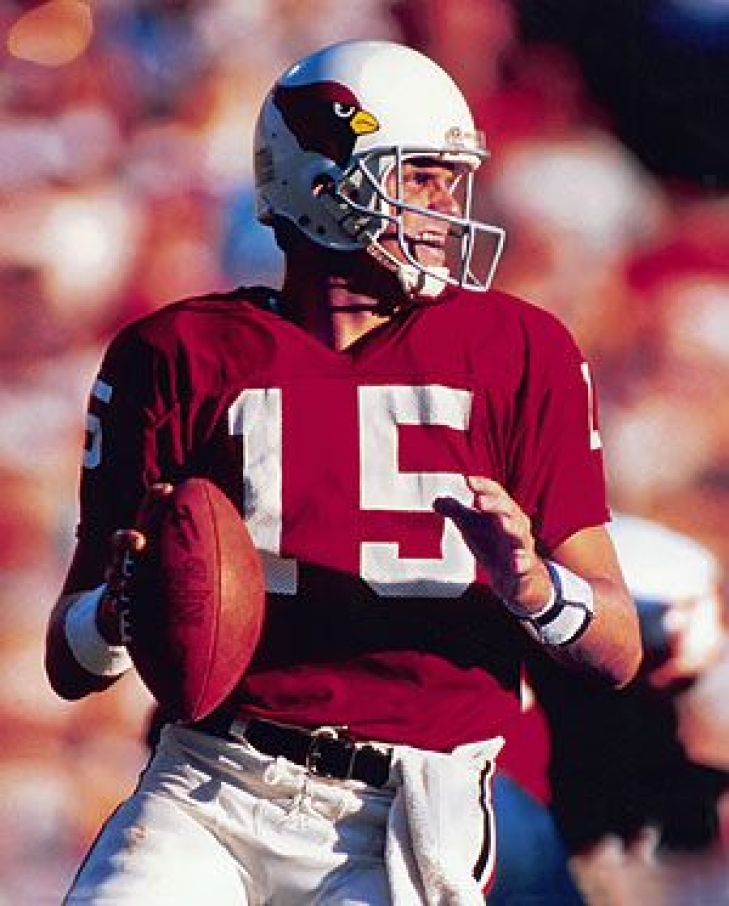
In the past, small-school quarterbacks often drew first-round draft attention, but a prolific passer from Portland State showed that strong arm talent can succeed anywhere. Neil Lomax set NCAA records in Mouse Davis’s renowned Run and Shoot offense, showcasing his arm strength. He entered the 1981 NFL Draft, where the St. Louis Cardinals picked him in the second round (33rd overall). With Jim Hart as a franchise legend in the locker room, Lomax was positioned as the heir and quickly proved that his quick release could uplift an entire team.
Lomax had a traditional drop-back frame, a quick release, and a knack for deep balls. In a tough, physical NFC East, he thrived by speeding up the game, confusing safeties, and allowing deep routes to unfold. With talented receivers like Roy Green and Pat Tilley, Lomax made St. Louis one of the most explosive passing teams in the league.
After earning PFWA All-Rookie honors and taking over late in his first 1981 season, Lomax officially became the starting quarterback in 1983. He had a standout 1984 season, setting a personal best with 4,614 passing yards and 28 touchdowns, which earned him his first Pro Bowl selection. His passing total that year was one of the most impressive single-season performances in league history at the time. Lomax's 4,614 yards in 1984 set a franchise record and marked a period when his deep throws were considered among the most dangerous in professional football.
Lomax delivered another masterclass during the strike-shortened 1987 season. Pacing the NFL with 3,387 passing yards and 275 completions, he threw 24 touchdown passes in just 12 games, earning his second Pro Bowl selection. He remained a steady presence under center as the franchise relocated to Phoenix in 1988, throwing for nearly 3,400 yards in his debut desert campaign.
Sadly, severe hip arthritis ended his career at his physical prime. The joint deterioration sidelined him for the entire 1989 season. Despite intense rehabilitation efforts, he couldn't overcome the pain, leading to his retirement in early 1990 at only 30 years old. Over his career, Lomax achieved 22,771 passing yards, 136 touchdown passes, and 10 rushing touchdowns in 108 regular-season games.
30. Jim Bakken
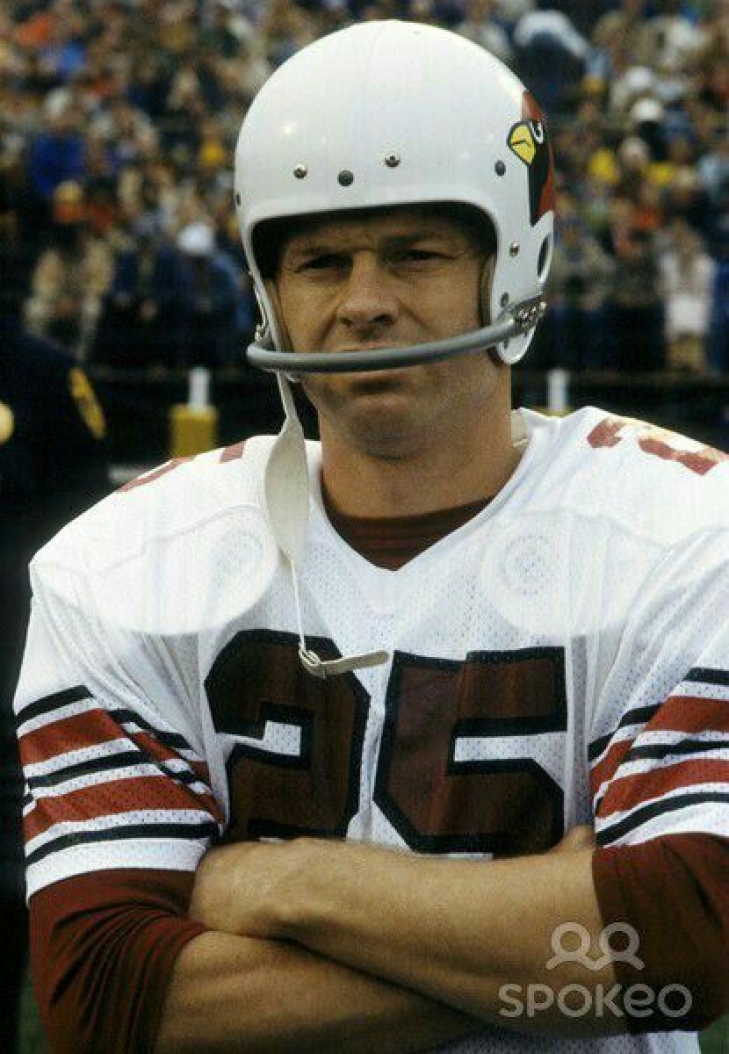
An undrafted free agent pickup after being released by the Los Angeles Rams, Jim Bakken signed with St. Louis in 1962 and proceeded to anchor the franchise's kicking game for 17 seasons. His arrival coincided with a rapid evolution in special teams tactics, turning a former Wisconsin defensive back into one of the sport's pioneering full-time placekicking specialists.
Operating with a traditional, straight-on kicking style, Bakken was renowned for his mental composure, trajectory control, and execution in heavy crosswinds. Beyond his scoring, his endurance was exceptional: between 1963 and 1978, he appeared in 234 consecutive regular-season games for the Cardinals, establishing an ironclad attendance record at the position.
Bakken's early peak included an iconic performance on September 24, 1967, against Pittsburgh. Playing through gusting winds at Pitt Stadium, Bakken converted 7 field goals in a single game, setting an NFL record that stood untouched for four decades. That historic afternoon propelled him to the 1967 NFL scoring title with 117 points while earning his second career Pro Bowl invitation.
He sustained an elite competitive level straight into the mid-1970s as the high-scoring "Air Coryell" offenses provided constant field-position scoring opportunities. Bakken turned in back-to-back dominant years in 1975 and 1976, earning consensus First-Team All-Pro honors and Pro Bowl nods in both campaigns. His consistency across two distinct decades earned him selections to both the NFL 1960s All-Decade Team and the NFL 1970s All-Decade Team.
By the time he hung up his cleats following the 1978 season, Bakken had accumulated 1,380 total points, converting 282 field goals and 534 extra points. That total ranked second in NFL history at the time of his retirement and remains an untouched Cardinals franchise scoring record.
29. Bob DeMarco
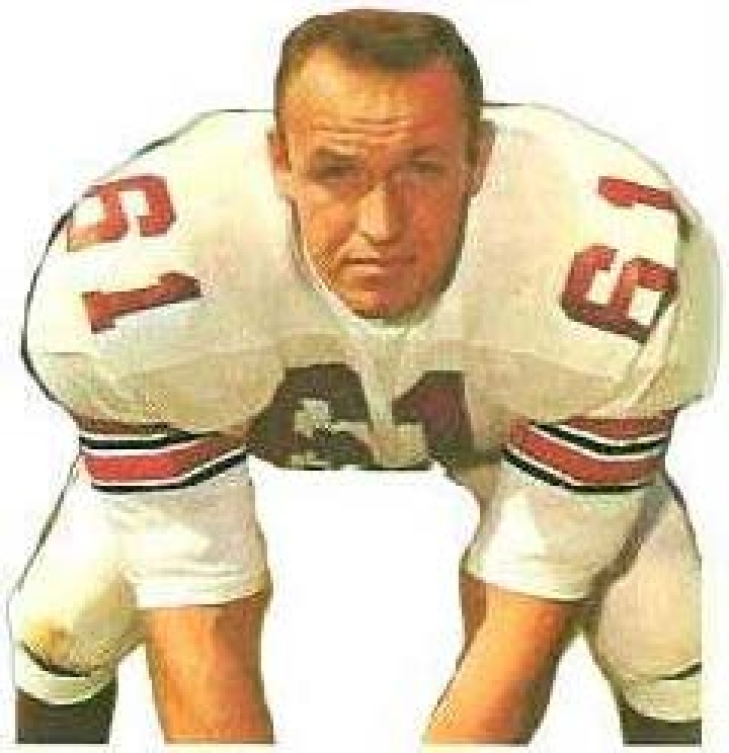
Drafted in the 14th round of the 1960 NFL Draft from Dayton, Bob DeMarco arrived in St. Louis with modest expectations but soon became a key part of the team. After playing a few games as a rookie guard in 1961, he took over as the starting center in 1962 and kept that role for the rest of the decade.
DeMarco was a resilient and technically skilled interior blocker, thriving in an era focused on physical, ground-and-pound football. Renowned for his sharp pre-snap line calls and quick snap-and-step execution, he consistently managed tough head-up nose tackles while creating running lanes for backs like John David Crow and Johnny Roland. His durability at the pivot offered essential continuity for an offense that frequently changed backfield setups during the 1960s.
DeMarco earned his first national recognition during the 1963 campaign, garnering his first Pro Bowl selection and AP Second-Team All-Pro honors. He maintained a high standard of play at center, securing a second Pro Bowl invitation in 1965.
His career peaked in the 1967 season, when his dominant play in the trenches earned him consensus First-Team All-Pro honors and his third Pro Bowl selection. He continued to build on his reputation with a Second-Team All-Pro selection in 1968, cementing his status as one of the NFC's top interior linemen. From 1962 to 1969, DeMarco started 103 of 107 games at center for St. Louis, anchoring the offensive line during the height of his career.
Following nine seasons in St. Louis, DeMarco departed after the 1969 campaign. He went on to play six more seasons across stints with Miami, Cleveland, and Los Angeles before retiring in 1975 with 185 total games played.
27. Mel Gray
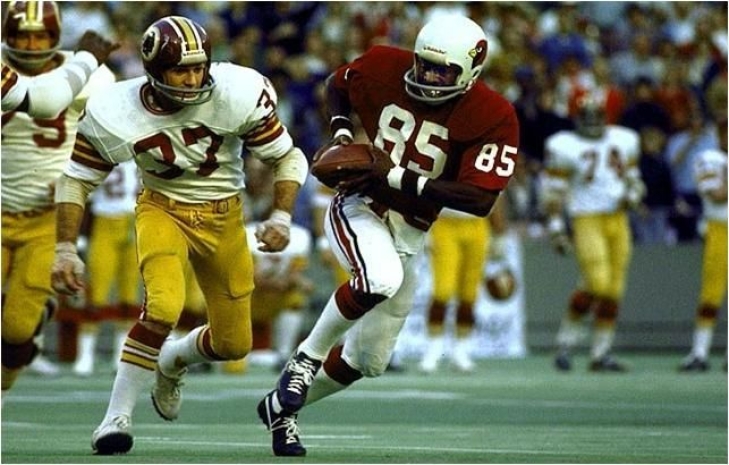
Before modern spread offenses made the deep pass a regular part of the game, only a few receivers could truly stretch the field like the track star who remained in his college hometown. Mel Gray, a world-class sprinter at the University of Missouri who matched national high school and conference records in the 100-yard dash, chose to stay local when the St. Louis Cardinals selected him in the sixth round of the 1971 NFL Draft. The team discovered a top home-run threat of 1970s football, a receiver capable of changing the scoreboard with a single stride.
Gray didn't have the bulky build typical of perimeter targets, but his proven acceleration was unmatched. With a genuine sub-9.5 second speed in the 100-yard dash, he only needed two or three strides to bypass boundary cornerbacks and eliminate safety support deep. In addition to his speed, his remarkable skill in tracking deep passes over his shoulder without losing momentum made him the perfect downfield safety option for quarterback Jim Hart.
Gray's career reached elite status as Don Coryell's high-powered offense gained prominence. Starting in 1974, Gray earned four straight Pro Bowl appearances (1974–1977). Although he rarely achieved high reception totals in an era focused on the run—never exceeding 50 catches or 1,000 yards in a season—his yards per catch were remarkable. He consistently ranked among the NFL's best in yards per reception, averaging an impressive 19.7 yards in 1974 and reaching a peak of 20.6 yards in 1977.
His individual peak arrived during the 1975 season, when he emerged as the undisputed king of big plays. Gray hauled in 48 receptions for 926 yards while tying for the league lead with 11 receiving touchdowns, earning his sole career First-Team All-Pro selection as the Cardinals captured the NFC East crown.
Notably, out of Gray's 46 career total touchdowns, an astonishing 28 of them spanned more than 40 yards, highlighting an explosive downfield capability rarely equaled in NFL history.
Gray remained a trusted focal point in St. Louis through the early 1980s, establishing a franchise-record streak by catching at least one pass in 121 consecutive games. By the time he departed St. Louis following the 1982 season, he had compiled 351 receptions, 6,644 receiving yards, and 45 receiving touchdowns across 145 regular-season contests.
23. Luis Sharpe
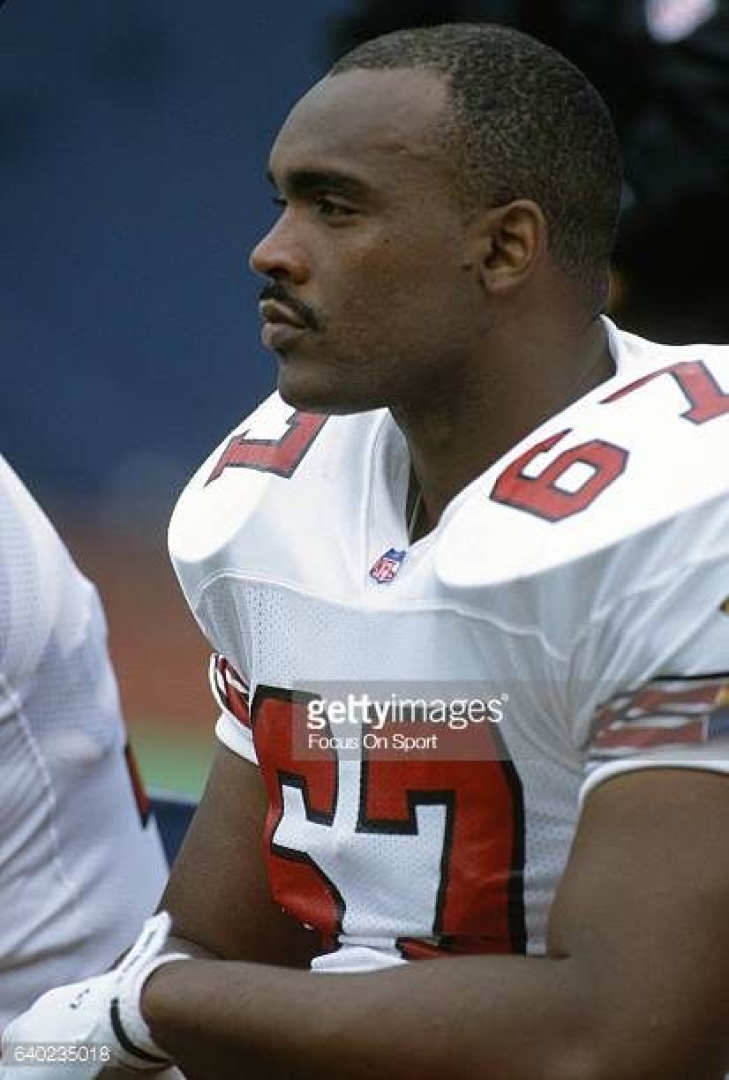
Selected in the first round (16th overall) of the 1982 NFL Draft out of UCLA, Luis Sharpe was the second offensive tackle off the board behind future Hall of Famer Mike Munchak. That draft investment paid off immediately, as the Cuban-born edge protector stepped into the starting lineup and anchored the left side of the Cardinals' offensive line for 13 seasons (1982–1994).
Standing 6 feet 5 inches and weighing 295 pounds, Sharpe possessed exceptional long-arm extension and quick footwork, allowing him to neutralize pass rushers on the blindside. His physical durability was a constant staple during turbulent years for the franchise; he holds the rare distinction of starting all 189 regular-season games he played for the organization, bridging the team's geographical shifts across St. Louis, Phoenix, and Arizona.
Sharpe's individual reputation hit its stride in the late 1980s as he transformed into one of the premier left tackles in the NFC. He earned three consecutive Pro Bowl invitations (1987, 1988, 1989) and picked up Second-Team All-Pro honors in 1988 and 1990. Despite playing on rosters that rarely competed in January—appearing in just one career playoff game—Sharpe remained a trusted, reliable building block for over a decade.
Across 13 seasons in a Cardinals uniform, Sharpe started 189 games, earning 3 Pro Bowl selections and 2 Second-Team All-Pro honors.
26. Tom Banks
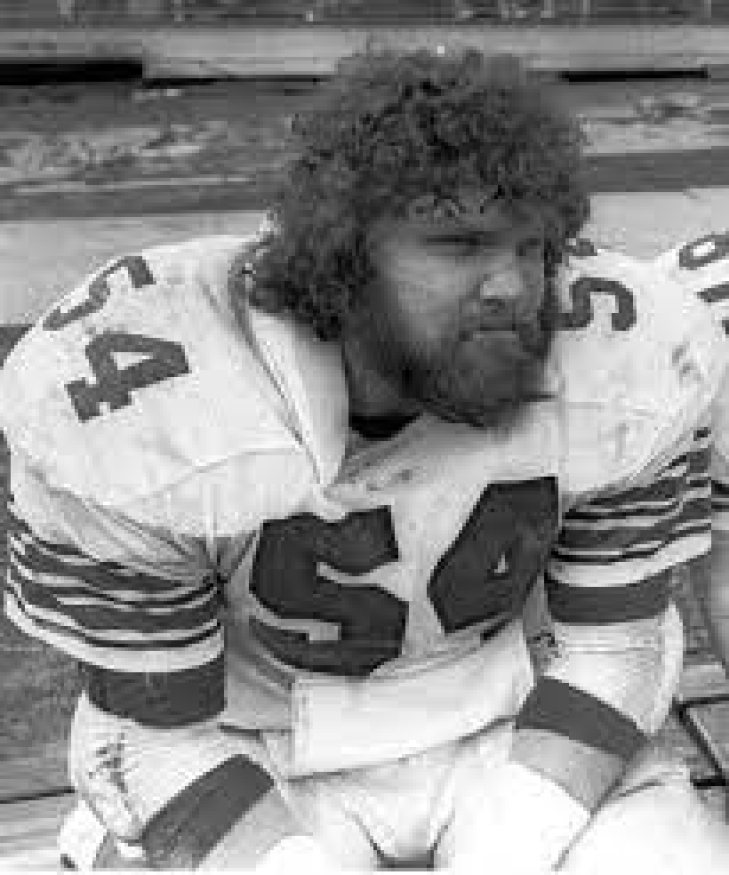
Selected in the eighth round (189th overall) of the 1970 NFL Draft out of Auburn, Tom Banks arrived in St. Louis as a completely overlooked prospect. A severe injury forced him to miss his entire rookie season, but once he stepped onto the field, he transformed into the cerebral, uncompromising anchor of one of the most dominant offensive lines in professional football history.
Standing 6 feet 1 inch and weighing 245 pounds, Banks operated as the quick-snapping, hyper-intelligent brain of the front five. What he lacked in towering stature, he more than made up for with explosive leverage, a relentless lower-body drive, and masterclass pre-snap callouts. Linebacker blitzes and complex interior fronts rarely caught St. Louis off guard because Banks identified defensive stunts before the ball was snapped. Alongside legendary linemates like Dan Dierdorf and Conrad Dobler, he spearheaded an offensive front famously dubbed the "Great Wall of St. Louis”.
After overcoming early-career injuries, including a knee injury that cut short nearly all of his 1974 season, Banks fully took charge of the quarterback position in 1975. He played all 14 games at center, leading an offensive line that permitted only eight sacks throughout the season, the second-lowest total in NFL history for a 14-game season. His exceptional line calls earned him his first Pro Bowl appearance and helped the Cardinals post an 11-3 record and win their division.
That breakout performance launched a four-year run of individual brilliance. Banks hit his career apex during the 1976 season, earning consensus First-Team All-Pro honors and a second Pro Bowl selection as the St. Louis offense again paced the league in pass protection. He added two more Pro Bowl invitations in 1977 and 1978, cementing his status as arguably the premier center in the NFC.
Banks played two more seasons in St. Louis, battling through wear and tear before retiring from the NFL following the 1980 campaign. Across ten active seasons with the franchise, he appeared in 116 regular-season games and made 110 starts.
19. Ernie McMillan
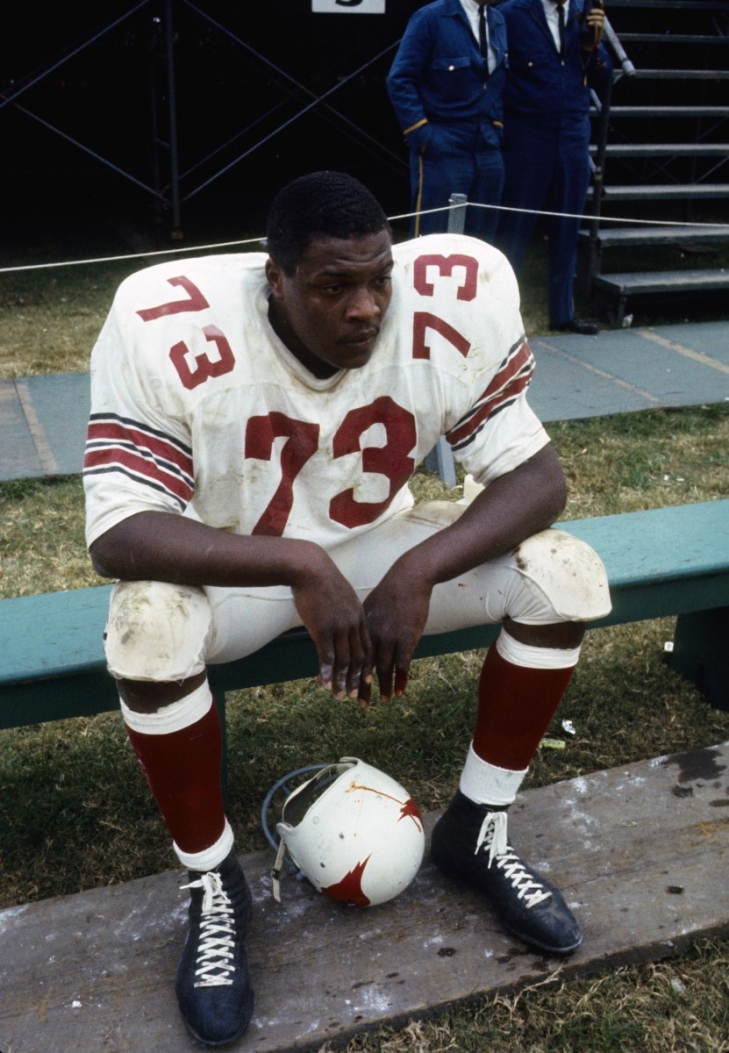
Before the "Air Coryell" offenses of the mid-1970s captivated the football world, the trench work in St. Louis was anchored by a quiet, unheralded draft steal out of Illinois. Selected in the 13th round (176th overall) of the 1961 NFL Draft, Ernie McMillan arrived at training camp as a converted college tight end. The Cardinals quickly shifted his 6-foot-5, 275-pound frame to offensive tackle, unleashing a cerebral, technically sound blocker who would anchor the edge for fourteen consecutive seasons (1961–1974).
The mechanics of his play relied heavily on leverage, geometry, and exceptional lateral balance. In an era where pass protection was a hand-to-hand brawl against legendary edge rushers, McMillan excelled through calculated body control and precise angles. He was a textbook technician who mastered the art of mirroring pass rushers, once grading out at a staggering 96 percent efficiency on pass blocks across a single season. His endurance was equally remarkable; after taking over as the full-time starter in his second year, he set a franchise record by starting 162 consecutive games without missing a single contest due to injury over his first twelve seasons.
In a testament to his selflessness and leadership, McMillan willingly moved from his longtime right tackle slot to left tackle late in his St. Louis tenure to accommodate the rise of young star Dan Dierdorf. That positional sacrifice allowed the Cardinals to field one of the most formidable tackle tandems in league history. After a final 1974 season in St. Louis where he helped secure a division title, he finished his career with a brief stint in Green Bay in 1975, retiring with 190 career regular-season games.
22. Roy Green
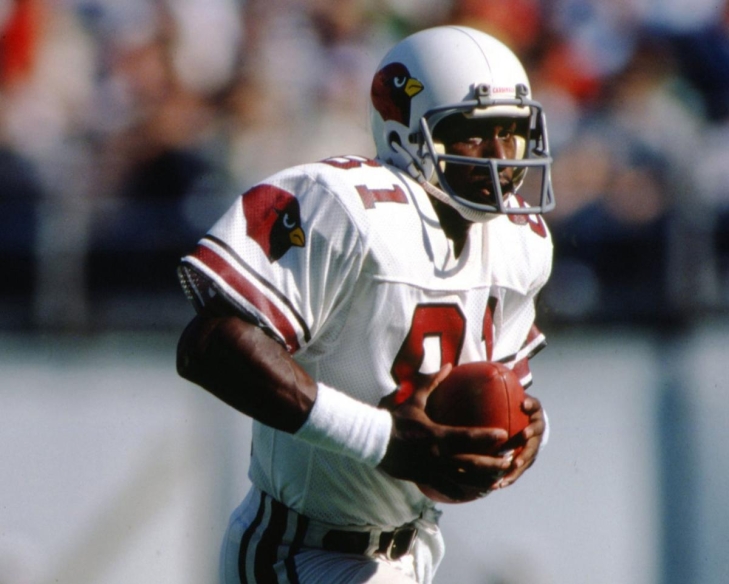
In the same draft that delivered star running back Ottis Anderson to St. Louis, the Cardinals landed a fourth-round steal out of Henderson State named Roy Green. Drafted as a defensive back, "Jet Stream" Green began his career playing safety and returning kicks, famously tying an NFL record in 1979 with a 106-yard kickoff return touchdown against Dallas. His elite vertical speed and ball skills eventually forced the coaching staff to give him snaps on offense, creating a rare two-way threat who intercepted passes and caught touchdowns in the same game.
Green possessed game-breaking, long-striding acceleration that allowed him to run past boundary corners with ease. His tracking ability on deep passes was elite, and his background in the secondary gave him a violent edge in open-field running after the catch.
After becoming a full-time wide receiver in 1982, Green quickly established himself as one of the top deep threats in professional football. His 1983 season was a showcase of aerial prowess: with 78 receptions, 1,227 yards, and 14 touchdowns, the most in the league, earning him his first First-Team All-Pro honor and a Pro Bowl selection.
Green elevated his performance even further during the 1984 season. As the main target of Neil Lomax's passing game, he led the NFL with 1,555 receiving yards, an impressive 19.9 yards per catch, and scored 12 touchdowns, earning his second straight First-Team All-Pro honor. Over the two seasons of 1983 and 1984 combined, Green totaled 156 receptions for 2,782 yards and 26 touchdowns, establishing himself as one of the most deadly big-play receivers in the league.
While nagging injuries slowed his production over the mid-1980s, Green remained an essential offensive weapon when the franchise relocated to Arizona in 1988. In his debut season in Phoenix, he notched his third career 1,000-yard campaign, catching 68 passes for 1,097 yards and 7 touchdowns. He played two more seasons in the desert before finishing his career with a brief stint in Philadelphia, retiring after the 1992 season. In a Cardinals uniform, Green logged 522 receptions, 8,496 receiving yards, and 66 touchdown catches.
In 2016, he was inducted into the Arizona Cardinals Ring of Honor.
16. Duke Slater
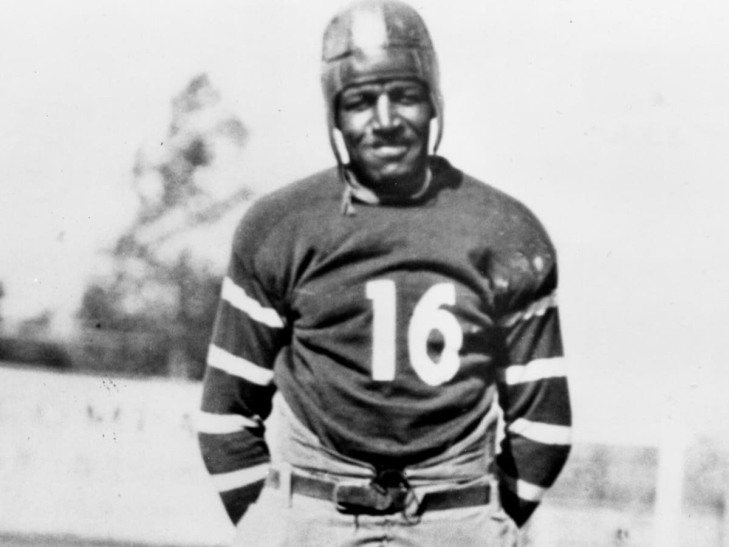
Long before the modern gridiron era of professional football, Duke Slater emerged as a formidable figure who transformed line play. An All-American at the University of Iowa and a leader in guiding the Hawkeyes to a national championship, Slater contributed exceptional strength and leverage to early professional football. He joined the Rock Island Independents, becoming the first African-American lineman in NFL history. Later, with the Chicago Cardinals, he again broke barriers as the first Black player for a franchise that still exists in the NFL today.
Operating in an era of constant 60-minute two-way trench warfare, he played both offense and defense nonstop. His powerful drive-blocks opened large running lanes for stars like Ernie Nevers and Jim Thorpe. On defense, his quick initial punch and ability to shed blocks made it nearly impossible for opponents to run to his side. His dominance led Chicago Bears founder George Halas to famously call him a "one-man line.”
During his time with the Cardinals, Slater was regarded as the top tackle in the league. His most notable performance came on Thanksgiving Day in 1929, when he played the full 60 minutes on the icy field of Comiskey Park. In that game, Slater effectively shut down the edge to support teammate Ernie Nevers' remarkable 40-point game against the Bears, setting an NFL single-game scoring record that remains unbroken.
Over ten years in the professional league, Slater received All-Pro honors for seven straight seasons (1923–1929), establishing himself as an unstoppable force on the line. During many of those years, he was the only Black player in the entire league, persistently breaking barriers through his exceptional skill until an unofficial color barrier temporarily arose after his departure. Slater made history as the first lineman in NFL history to be named All-Pro for seven consecutive seasons, consistently anchoring the offensive or defensive line for a full 60 minutes.
Off the field, Slater combined intelligence and strong work ethic with his athletic achievements. During his NFL seasons, he also attended law school and graduated in 1928. After ending his football career in 1931, he started a legal practice in Chicago, eventually serving as an assistant district attorney. He made history as one of Chicago's earliest Black judges. In 2020, Slater was inducted into the Pro Football Hall of Fame as part of the Centennial Class, posthumously.
17. Ottis Anderson
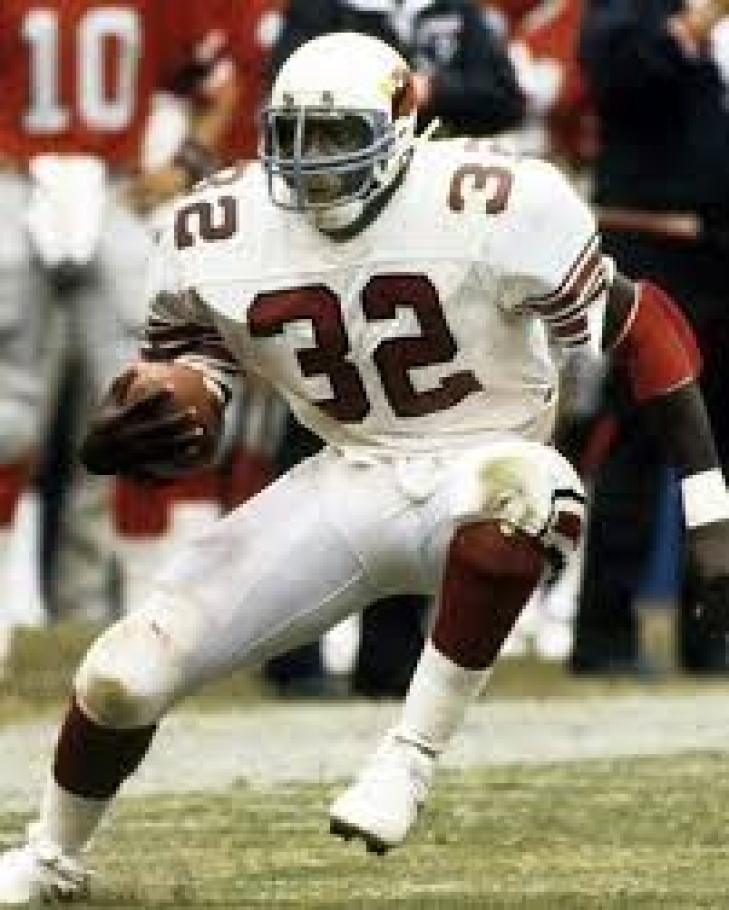
After setting the University of Miami school record as the first player in Hurricanes history to break the 1,000-yard mark, Ottis Anderson entered the professional ranks with immense expectations. Selected eighth overall in the first round of the 1979 NFL Draft by the St. Louis Cardinals, Anderson stepped into the backfield and instantly altered the physical identity of the franchise.
Anderson was the ultimate blend of power-back violence and open-field elusiveness. Running with a high-knee stride, lower-body drive, and sharp vision, he routinely punished defenders at the second level and had enough top-end speed to erase angle pursuits. Beyond his rushing volume, his smooth hands out of the backfield made him a lethal dual-threat weapon on third downs.
His professional debut in 1979 was one of the most remarkable in NFL history. In his very first regular-season game against Dallas, Anderson made an immediate impact with 193 rushing yards. He finished the season with a career-best 1,605 rushing yards and 1,913 total yards from scrimmage, earning AP NFL Offensive Rookie of the Year, a First-Team All-Pro honor, and his first Pro Bowl selection. Additionally, both UPI and The Sporting News named him NFC Player of the Year.
Anderson maintained a demanding workload into his 1980 sophomore season, rushing for 1,352 yards and 9 touchdowns while also catching 36 passes, earning his second Pro Bowl. During his first six seasons with St. Louis (1979–1984), Anderson exceeded 1,000 rushing yards five times, an achievement that would probably have been six straight if the 1982 strike hadn't shortened the season.
This set the stage for four years of consistent, high-volume production from 1981 to 1984. Anderson started the 1981 season by rushing for 1,376 yards and gaining 1,763 yards from scrimmage, becoming the franchise's all-time leading rusher halfway through his third season. In the strike-affected 1982 season, he helped keep the offense active with 587 rushing yards in just eight games, equivalent to a 1,000-yard season—and played a key role in leading the Cardinals to the playoffs. Fully healthy again, he posted consecutive 1,000-yard seasons in 1983 (1,270 yards) and 1984 (1,174 yards), anchoring a potent Big Red offense alongside quarterback Neil Lomax and establishing himself as an essential offensive force.
After injuries slowed his production in mid-1985 and 1986, the Cardinals executed a surprise mid-season trade, sending their legendary back to division rival New York. While his initial stint with the Giants was spent in a situational role, Anderson engineered a famous second act, winning the 1989 NFL Comeback Player of the Year Award and capturing Super Bowl XXV MVP honors in 1991.
He accumulated 7,999 rushing yards, 2,495 receiving yards, 10,494 yards from scrimmage, and 53 total touchdowns across 99 games as a Cardinal.
15. Ken Gray
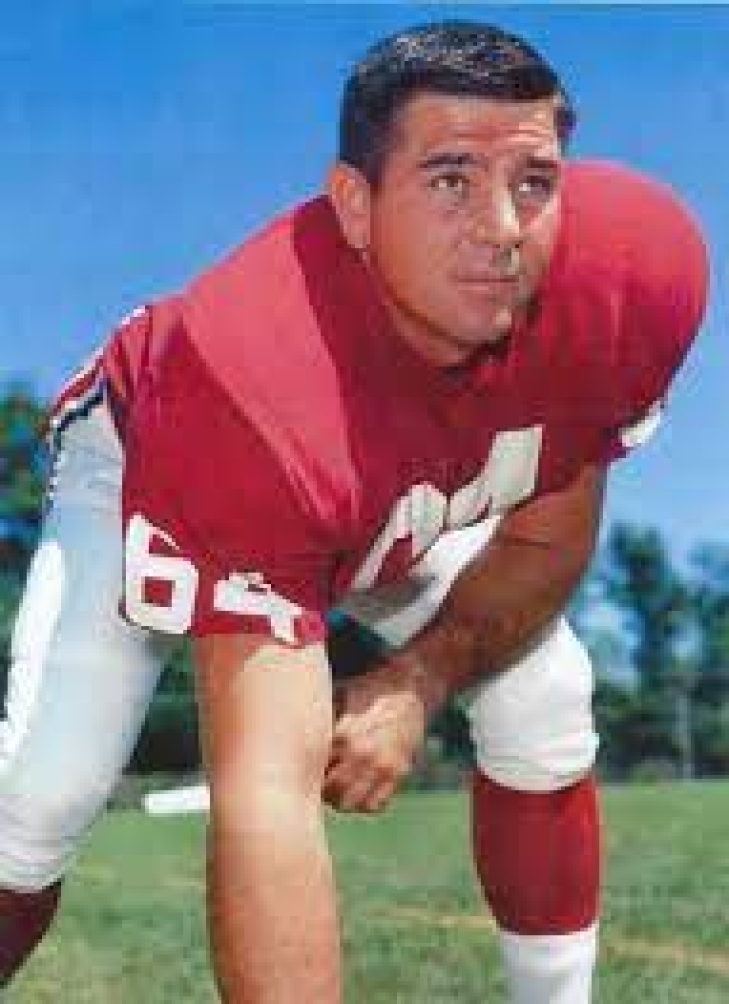
Selected in the sixth round of the 1958 NFL Draft by Green Bay, Ken Gray faced tough competition in a deep roster, playing alongside future Hall of Famers. Unable to secure a permanent spot with the Packers, the Texas native was claimed by the Chicago Cardinals, making his debut as a defensive end in his rookie year. However, this defensive stint was short-lived; before his second season, the coaching staff moved him back to right guard, where he became one of the most formidable interior blockers of his time.
Gray epitomized the classic open-field pulling guard with a perfect blueprint. He had explosive short-area quickness from his stance, enabling him to lead-block on the perimeter with devastating impact. With a fierce, punishing attitude, Gray often dominated defensive ends and linebackers in single coverage, creating large running lanes for stars like John David Crow, Johnny Roland, and Prentice Gautt. His legendary toughness made him a teammate favorite; he was a respected team captain for seven straight seasons and frequently played through serious knee injuries.
While his initial years in Chicago were spent establishing his footing, the franchise's relocation to St. Louis in 1960 coincided with Gray's rise to absolute individual stardom. He secured his first career Pro Bowl invitation in 1961, establishing himself as an elite interior presence. By 1963, Gray had evolved into an untouchable force at right guard, kicking off a seven-year stretch of consensus postseason honors.
His peak performance arrived during the 1964 season, when his dominant drive-blocking and pass protection earned him consensus First-Team All-Pro honors alongside his third Pro Bowl selection. Between 1961 and 1968, Gray was voted to six Pro Bowls (1961, 1963, 1964, 1966, 1967, 1968), serving as the undisputed anchor of the Cardinals' offensive line throughout the entire decade. Gray's relentless individual consistency at right guard earned him All-Pro or All-Conference recognition in seven consecutive seasons from 1963 through 1969.
After twelve seasons and 151 games in a Cardinals uniform, knee injuries finally caught up with the veteran leader, leading to his release prior to the 1970 season. He closed out his career with a single season in Houston before hanging up his cleats.
Gray was named as a First-Team guard on the NFL 1960s All-Decade Team, cementing his status as one of the premier interior linemen of his generation.
13. Jim Hart
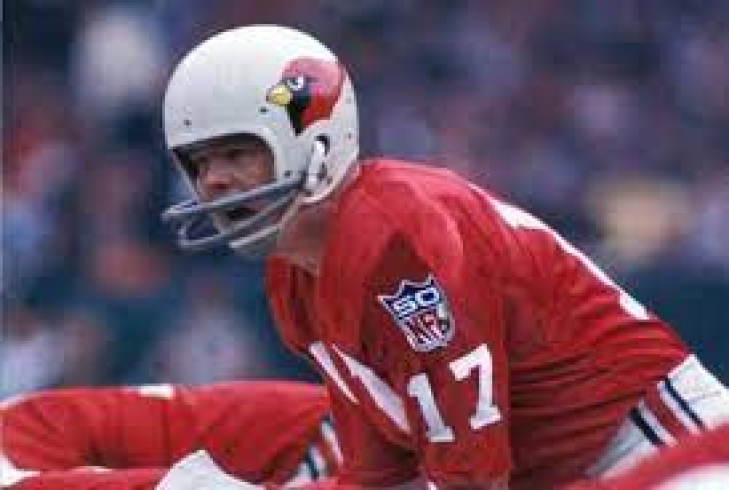
The path from an unheralded, undrafted free agent to the absolute standard-bearer of an NFL franchise is rarely traveled, but Jim Hart walked it for nearly two decades. Arriving out of Southern Illinois in 1966, Hart signed with the St. Louis Cardinals without a shred of fanfare. What followed was an eighteen-year demonstration of sheer durability, quiet toughness, and relentless aerial volume that fundamentally anchored the franchise's identity through the peak of the 1970s.
Hart did not have the aristocratic draft pedigree or the flashy athletic fame of his urban peers, but he had a powerful, fearless arm and sharp diagnostic skills. Playing behind a legendary offensive line led by Dan Dierdorf, he thrived as a pocket passer willing to take deep risks, trusting his quick processing to challenge defenses downfield. His most notable quality was his relentless durability; despite enduring physical punishment in the late 1960s, he consistently remained the starting quarterback, often absorbing hits to make crucial throws down the seam.
Hart’s career soared to new heights after head coach Don Coryell joined in 1973. With Coryell’s dynamic "Air Coryell" passing system, Hart became the perfect signal-caller for one of football’s most exciting offenses. Their partnership quickly proved successful in 1974, as Hart led several dramatic fourth-quarter comebacks, earning the team the nickname: the "Cardiac Cards.” That season, Hart threw for 2,411 yards and 20 touchdowns, helping the Cardinals achieve a 10-4 record and their first division title in nearly thirty years. His outstanding performance earned him the NFC Offensive Player of the Year award from UPI and his first of four straight Pro Bowl selections (1974–1977). From 1974 to 1976, Hart guided the Cardinals through three consecutive seasons with ten or more wins, including two NFC East titles, and orchestrated ten game-winning drives in the fourth quarter.
He maintained a stellar peak through the mid-1970s, guiding the franchise to an 11-3 record in 1975 and a 10-4 record in 1976. Although the postseason saw early, painful losses to NFC giants like Minnesota and Los Angeles, Hart’s status as a top-tier passer was undisputed. Even as the team aged and records declined later in the decade, Hart stayed the consistent force, achieving a career-high 3,121 passing yards in 1978.
By the time he ceded the starting job to Neil Lomax in the early 1980s, Hart had established numbers that shattered every passing threshold in franchise history. Over his 18 seasons in St. Louis (1966–1983), he threw for 34,639 yards and 209 touchdowns—marks that still stand as the absolute zenith of Cardinals passing records.
In 2017, Hart was selected to join the Cardinals Ring of Honor in 2017.
8. Jackie Smith
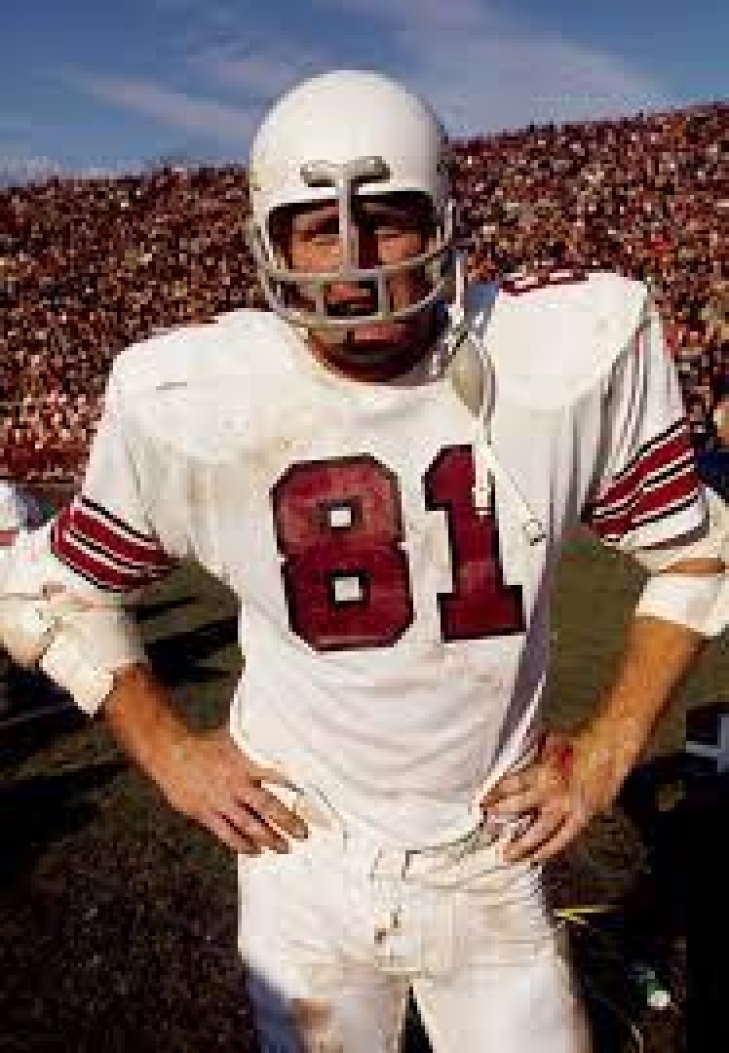
Modern offensive football evolved significantly with the emergence of an underrated draft pick from Northwestern State. Jackie Smith, standing 6’4" and weighing 235 pounds of muscular build, was talented both as a college receiver and a track athlete. His unique blend of height and explosive speed attracted the attention of the St. Louis Cardinals, who selected him in the tenth round of the 1963 NFL Draft. Initially projected as a flanker, Smith was soon transitioned to tight end, a shift that dramatically expanded the tactical role of the position for future generations.
His game mechanics introduced a groundbreaking archetype to professional football. While tight ends were traditionally seen as extra offensive tackles who occasionally ran short curl routes, Smith showcased genuine, field-changing speed. He had the strength to overpower linebackers at the line of scrimmage during runs and the vertical quickness to outrun safeties down the seam. Once he caught the ball, he was a relentless runner after the catch, often dragging defenders for extra yards. To emphasize his exceptional athletic versatility, Smith also served as the team's main punter during his first three seasons (1963–1965), averaging nearly 5,000 yards with 127 punts.
His move to the professional league was immediate. In his rookie year of 1963, Smith quickly became the starting tight end and made an instant impact during a fifth-week game against Pittsburgh. In that game, he surpassed the Steelers' defense with 9 receptions, 212 yards, and 2 touchdowns, marking the rise of a matchup nightmare.
By the mid-1960s, Smith had become one of football's top pass-catchers. His remarkable streak started in 1966, marking his first of five straight Pro Bowl selections (1966–1970). The highlight of this period was his exceptional 1967 season, where he served as the ultimate vertical threat, catching 56 passes for 1,205 yards and 9 touchdowns in 14 games. His impressive 21.5 yards per reception that year was extraordinary for a tight end and earned him First-Team All-Pro honors. That season's 1,205 receiving yards shattered typical tight end benchmarks of the era and remains one of the most explosive individual seasons by a tight end in NFL history.
Throughout his career, Smith played through severe injuries and remained the core of the St. Louis offense for fifteen seasons (1963–1977). He appeared in 198 games for the team, achieving a streak of 45 consecutive games with a reception. His brief final stint with the Dallas Cowboys in 1978 included participation in Super Bowl XIII. When he retired, Smith had set records with 7,918 receiving yards and 480 receptions, the highest ever by a tight end in NFL history.
Smith was enshrined in the Pro Football Hall of Fame in 1994, becoming just the third tight end in history to enter the Hall. Amazingly, as of this writing, he is not part of the Cardinals Ring of Honor.
5. Dan Dierdorf
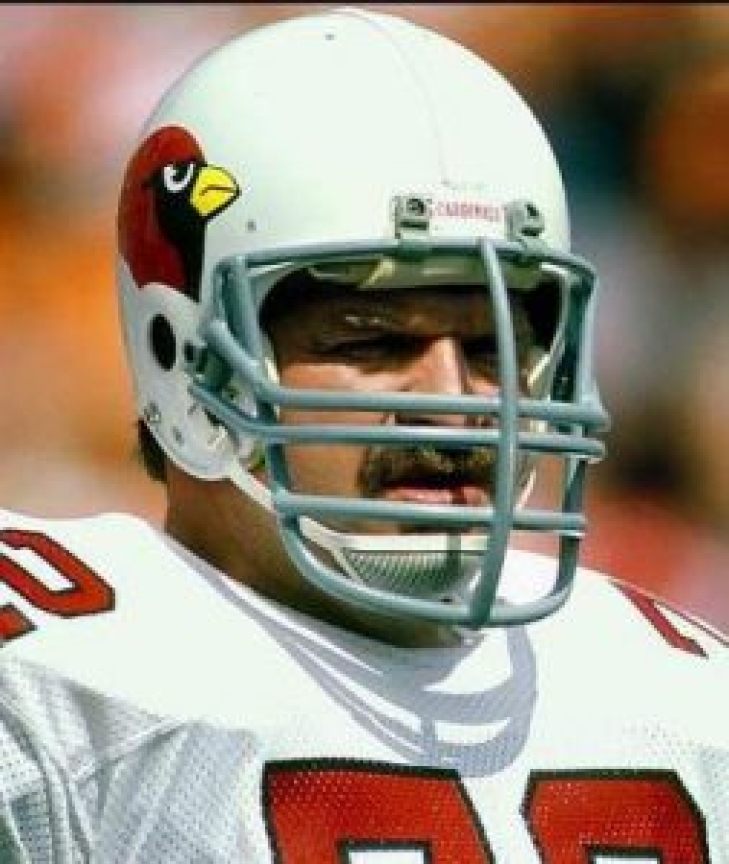
The mid-1970s revival of modern Cardinals football was built on strong offensive line play, led by a legendary technician who became the benchmark for excellence. Dan Dierdorf, a consensus All-American at Michigan under Bo Schembechler, brought exceptional size and agility to the NFL when the St. Louis Cardinals took him in the second round of the 1971 draft. He then spent an impressive thirteen seasons with the team, combining physical prowess with technical mastery to become the top offensive tackle of his era.
His game showcased expert pass protection and run-blocking leverage, resembling a masterclass. Standing 6’3" and weighing 275 pounds, Dierdorf had a strong foundation, a powerful initial punch, and excellent lateral mirroring. Although he demonstrated versatility at guard and left tackle early on, his true breakthrough came in 1974 during his fourth season. After permanently moving to right tackle, Dierdorf became nearly unstoppable, earning his first Pro Bowl and second-team All-Pro honors while contributing to Don Coryell’s dynamic "Air Coryell" offense.
That breakout campaign sparked a five-year period of unparalleled individual dominance. Between 1974 and 1978, Dierdorf was recognized as the top tackle in the league, earning five straight Pro Bowl selections and four consecutive first-team All-Pro honors. He led a legendary St. Louis offensive line—alongside Conrad Dobler and Tom Banks—that consistently shut down the most formidable pass rushes of that era. His peak performance came in the 1975 season, when the Cardinals’ offensive line set an NFL record by allowing just eight sacks in 14 regular-season games.
Over the next two years, Dierdorf's dominance became nearly legendary. During the 1976 and 1977 seasons, he completely neutralized opposing pass rushers, going two years without allowing a single sack. His perfect mirroring technique was clearly shown in internal coaching footage, which displayed a player consistently winning crucial battles against top-tier edge rushers without needing help from tight ends. Due to his exceptional performance, the NFL Players Association named Dierdorf the NFL Offensive Lineman of the Year for three straight years (1976–1978). Dierdorf's legendary streak of allowing no sacks over the 1976 and 1977 seasons remains the gold standard for pass-blocking efficiency in franchise history.
Even when a severe knee injury sidelined him for most of the 1979 season, the veteran anchor displayed immense resilience. He authored a brilliant individual bounce-back during the 1980 campaign, returning to full strength to start all 16 games at right tackle, earning his sixth career Pro Bowl invitation and his fifth first-team All-Pro nod. Ever the consummate professional, Dierdorf willingly shifted to the center position for his final two years in 1982 and 1983, stabilizing an evolving interior front with his high-level diagnostic intelligence. The historic marathon in St. Louis reached its final punctuation following the 1983 campaign, when the veteran leader hung up his cleats after 160 regular-season games.
Dierdorf was named to the prestigious NFL 1970s All-Decade Team, and his journey came full circle in 1996 when the Canton, Ohio native was fittingly enshrined into the Pro Football Hall of Fame right in his own hometown. The Cardinals also honored Dierdorf in 2006 as a member of the inaugural group in their Ring of Honor.
4. Roger Wehrli
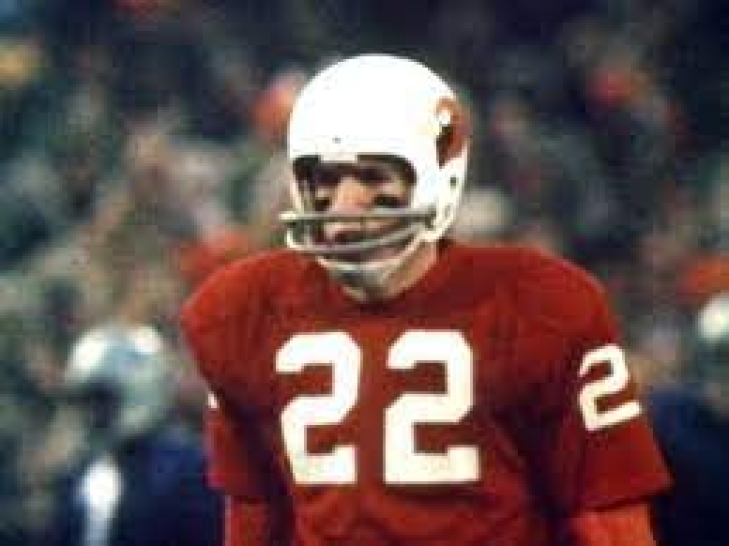
As Larry Wilson’s legendary career neared its end in the late 1960s, the St. Louis Cardinals’ secondary urgently needed a new core leader. They found their solution in spring 1969, effectively bridging generations. Roger Wehrli, a consensus All-American and Big Eight Defensive Player of the Year from the University of Missouri, completely changed the way individual pass coverage was viewed. Initially expected to be picked in the second round by some analysts, he defied scouting expectations at the combine by running a rapid 4.5-second 40-yard dash. This exceptional display of speed catapulted him into the first round as the 19th overall pick—a choice that quickly silenced critics and redefined NFL passing strategies for the next fourteen years.
Wehrli was an outstanding fluid mover, combining extraordinary recovery speed with a PhD in spatial trail technique. Unlike the physical, bump-and-run cornerbacks of his time who depended on boundary positioning, he demonstrated a highly poised diagnostic ability, matching the top route runners without giving up cushion. His quick closing burst enabled him to undercut routes with precision, turning deep threats into dead zones. His technical discipline was enhanced by excellent ball-tracking skills, making him a prolific playmaker who collected loose footballs, with 40 career interceptions and 22 fumble recoveries. Roger Staubach famously called Wehrli a "shutdown corner,” highlighting his complete containment of elite wide receivers and shaping new terminology for scouts.
His debut in the professional ranks in 1969 immediately demonstrated his dominance in his position. Wehrli joined the starting lineup, secured his side of the field, intercepted three passes, and earned consensus All-Rookie honors, finishing as the runner-up for NFL Defensive Rookie of the Year. He carried this momentum into 1970, posting a remarkable statistical season with 6 interceptions, which earned him his first of seven career Pro Bowl selections and his first first-team All-Pro recognition.
After a brief transitional phase for the Cardinals’ defense in the early 1970s, Wehrli fully established himself as an unstoppable perimeter defender by the mid-1970s. His exceptional coverage skills drew praise from Dallas Cowboys legend Roger Staubach, who famously called Wehrli a "shutdown corner"—a phrase widely regarded by football historians as the first time it was used to describe a defensive back. With this recognition from his toughest rival, Wehrli became a key player for Don Coryell's competitive St. Louis teams, earning four straight Pro Bowl selections (1973–1976) and three consecutive first-team All-Pro honors (1974–1976). His peak performance came in 1975, when he intercepted six passes, helping the Cardinals finish with an 11-3 record and win the NFC East.
As Wehrli’s career neared its end, his exceptional technical skills kept him highly effective, despite a natural decline in his elite vertical speed. In 1979, he earned his final Pro Bowl selection as a veteran and continued mentoring an evolving secondary. His long, historic stint in a St. Louis uniform concluded after the strike-shortened 1982 season, when he retired after 193 regular-season games, never having worn another professional jersey.
Wehrli was named to the NFL 1970s All-Decade Team, and in 2007, he was enshrined in the Pro Football Hall of Fame. That same year, Wehrli was part of the inaugural Cardinals Ring of Honor Class.
2. Larry Wilson
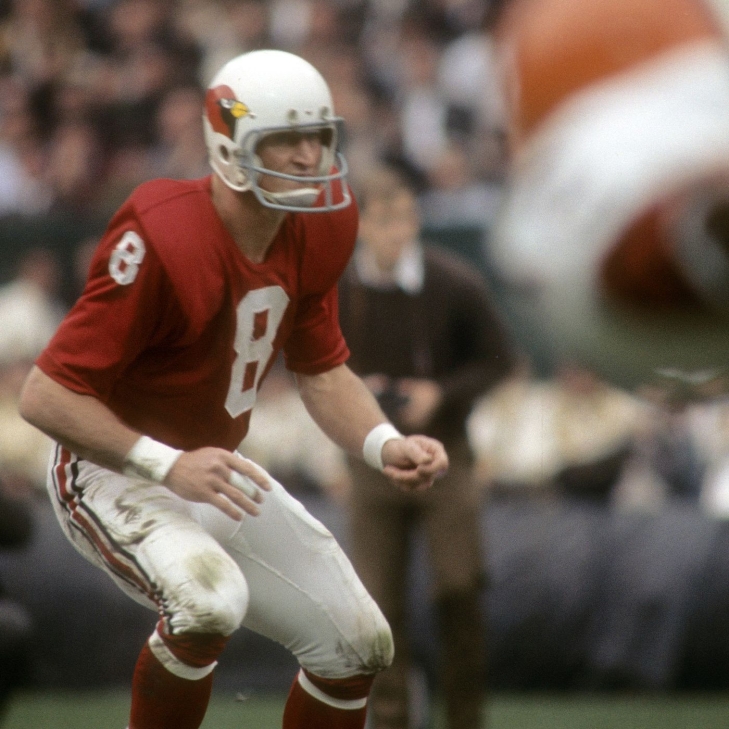
A two-way star at Utah, Larry Wilson barely reached six feet, which was primarily why he dropped to the Seventh Round of the 1960 NFL Draft, and it would not take long to see that he was the steal of the day.
A Cardinal for the entirety of his 12 NFL campaigns, Wilson was one of the most outstanding Safety of the 1960s and helped redefine the position. With his speed and tackling ability, the Cardinals had a player who could execute the Safety Blitz, a novelty at the time. Wilson had 21 (unofficial) Sacks over his career, and in traditional Defensive Back stats, he recorded 52 Interceptions, including a league-leading 10 in 1966, a year where he was second in MVP voting. He was also known for his toughness, having once played with casts on both arms.
From 1962 to 1970, Wilson was named to the Pro Bowl, and he rattled off five consecutive First Team Selections from 1966 to 1970. Not surprisingly, Wilson was chosen for the 50th, 75th, and 100th NFL Anniversary Teams.
Wilson entered the Pro Football of Fame in his first year of eligibility, one of two people (Tom Nix) being the other, to accomplish this astounding feat.
He may never have appeared in a playoff game, but many a game was won for St. Louis because Wilson was on their squad. The Cardinals retired his number 8 in 1970; in 2006, he entered their Ring of Honor.
Our All-Time Top 50 St. Louis Cardinals have been revised to reflect the 2022 Season

Yes, we know that this is taking a while!
As many of you know, we here at Notinhalloffame.com are slowly generating the 50 of each major North American sports team. That being said, we have existing Top 50 lists out and we always consistently look to update them when we can and based on necessity. As such, we are very happy to present our post 2022 revision of our top 50 St. Louis Cardinals.
As for all of our top 50 players in baseball we look at the following:
1. Advanced Statistics.
2. Traditional statistics and how they finished in the National League.
3. Playoff accomplishments.
4. Their overall impact on the team and other intangibles not reflected in a stat sheet.
Last year, the storied history of the Cardinals saw another playoff appearance, but with the 100 years more of existence, it is hard to crack into the top 50. There are noe new entrants into the top 50, with only one elevation.
As always, we present our top five, which had no changes.
1. Stan Musial
3. Bob Gibson
5. Ozzie Smith
You can find the entire list here.
Please note that Pujols, who returned to St. Louis for one final season, was not able to overtake Musial for the top spot.
The only change was Starting Pitcher, Adam Wainwright, who inched up one rank to #10.
We welcome your input and comments and as always, we thank you for your support.
