

The St. Louis Cardinals will announce their franchise Hall of Fame Class next month

Regular visitors of notinhalloffame.com know that we are slowly working on the top 50 of every major team in the NHL, NBA, NFL, and MLB. Once that is done, we will examine how each team honors its past players, coaches, and executives. As such, it is important to us that the St. Louis Cardinals will select a new class this May.
The four players on the modern ballot are:
George Hendrick, Outfield & First Base, 1978-84. Hendrick went to two All-Star Games and won two Silver Sluggers with the Cardinals, and helped them win the 1982 World Series, where he had the go-ahead RBI in Game 7. With the Redbirds, Hendrick batted .294 with 978 hits with 122 taters.
Brian Jordan, Outfield, 1992-98. A Cardinal for seven seasons, Jordan had 671 Hits, 122 Home Runs with a .291 Batting Average. Notably, he was eighth in MVP voting in 1996.
Yadier Molina, Catcher, 2004-22. Easily in the conversation as one of the top Catchers of his day, Molina played his entire career with the Cards, where he was a ten-time All-Star, nine-time Gold Glove winner, four-time Platinum Glove winner, and a one-time Silver Slugger. Molina was pivotal in their 2006 and 2011 World Series wins, and he was also a Roberto Clemente Award winner. Molina retired with 2,168 Hits, 176 Home Runs, 1,022 RBIs, and a .277 Batting Average.
Albert Pujols, First Base, 2001-11. A first ballot Baseball Hall of Famer, Pujols looks to be first ballot in this Hall, and with all due respect to Molina, likely will be. Like Molina, Pujols helped St. Louis to World Series wins in 2006 and 2011, but his individual trophy case is much larger. With the Cardinals, Pujols won three MVPs and was the runner-up in four others. He also won the Rookie of the Year, nine All-Stars, six Silver Sluggers, two Gold Gloves, a Roberto Clemente Award, and a Batting Title. Statistically speaking, Pujols blasted 469 Home Runs, 1,397 RBIs, with a Slash Line of .326/.417/.614 with St. Louis.
The results will be announced next month, with the enshrinees officially entering in a ceremony on September 12.
We here at Notinhalloffame.com would like to congratulate those whose careers have been deemed worthy enough to be considered for the St. Louis Cardinals Hall of Fame.
Our All Time Top 50 St. Louis Cardinals have been revised to reflect the 2024 Season

Yes, we know that this is taking a while!
As many of you know, we at Notinhalloffame.com are slowly generating the top 50 of each major North American sports team. That being said, we have existing Top 50 lists and consistently look to update them when necessary and based on necessity. As such, we are delighted to present our post-2024 revision of our top 50 St. Louis Cardinals.
As for all of our top 50 players in baseball, we look at the following:
1. Advanced Statistics.
2. Traditional statistics and how they finished in the National League.
3. Playoff accomplishments.
4. Their overall impact on the team and other intangibles that are not reflected in a stat sheet.
Please note that our algorithm has changed, which yielded minor changes throughout the baseball lists.
Last year, the Cardinals won 83 Games, but did not make the playoffs. The rebuilding squad saw minimal movement in the top 50, and the only new entrant was based on the new algorithm.
As always, we present our top five, which saw no changes
1. Stan Musial
2. Albert Pujols
3. Rogers Hornsby
4. Bob Gibson
5. Ozzie Smith
You can find the entire list here.
The only new addition was Ripper Collins, who as discussed above, enters via the new system.
We thank you for your continued support of our lists on Notinhalloffame.com.
49. Terry Moore
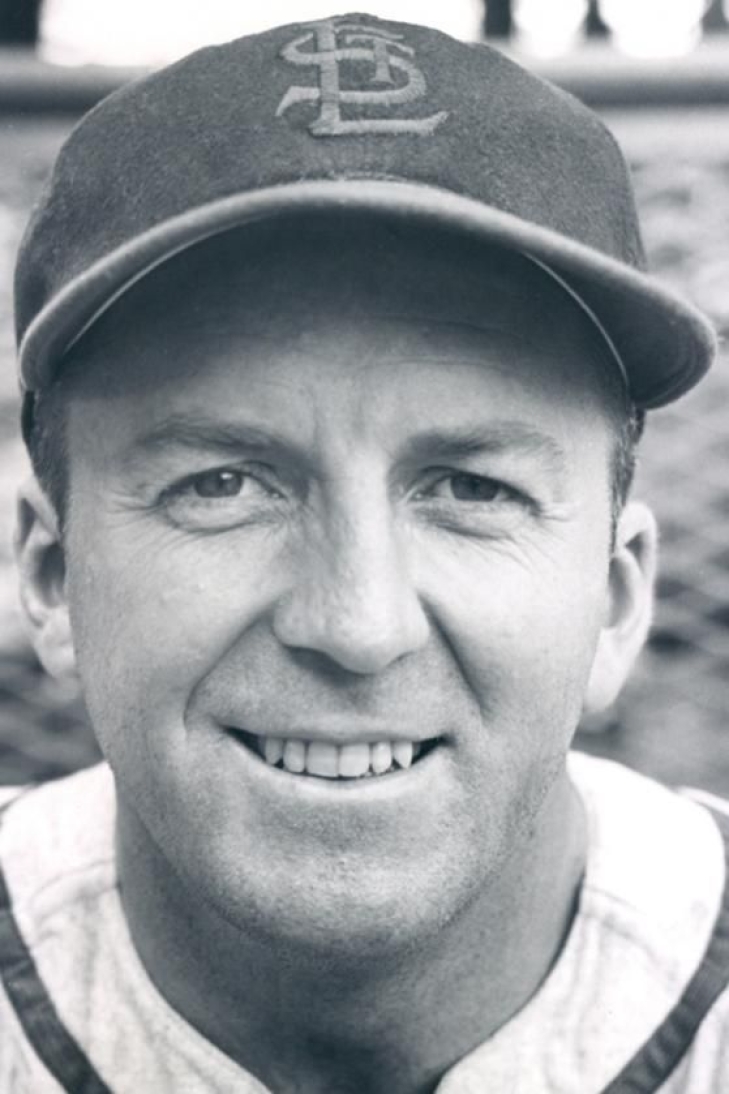
A Cardinal for the entirety of his playing career, Terry Moore was a n excellent defensive Outfielder, who likely would have been a multi-time Gold Glove winner, had that been an accolade at the time.
Moore, who was named to four straight All-Stars (1939-42), was also a decent hitter with a lifetime Batting Average of .280 with 1,318 career Hits. He also helped the Cards win the World Series in 1942 and 1946.
RIP: Whitey Herzog
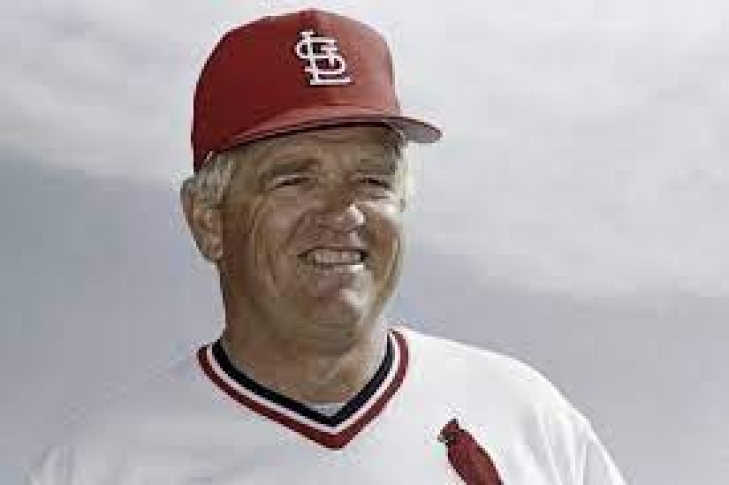
Baseball lost one of its great Managers today with the passing of Whitey Herzog. He was 92.
Herzog played in the Majors from 1956 to 1963 (Washington, Kansas City, Baltimore and Detroit) but achieved his best success as a Manager, with an overall record of 1,281 and 1,125.
His road to Cooperstown began as a scout and later coach for the Athletics, and he joined the Mets as their Third Base Coach in 1966 and then was their Director of Player Development, where he won a World Series ring in 1969. Herzog got his first chance to manage a Texas in 1972, however the club was atrocious, and he was fired before the end of the 1973 Season. He signed with the California Angels as their Third Base Coach, but that was brief as the Kansas City Royals gave him his second chance to run a team. Kansas City was more successful for Herzog, who won three consecutive Western Division Titles (1976-78).
Herzog then joined on to manage the St. Louis Cardinals through the 80s, and he maximized the speed and elite defence of the team to three National League Pennants (1982, 1985 & 1987) and a World Series Title in 1982.
Herzog was inducted into the Baseball Hall of Fame in 2010 and is also a member of the Kansas City Royals and St. Louis Cardinals Halls of Fame. His number 24 was also retired by the Cards.
We here at Notinhalloffame.com would like to extend our condolences to the fans, friends and family of Whitey Herzog.
Yadier Molina
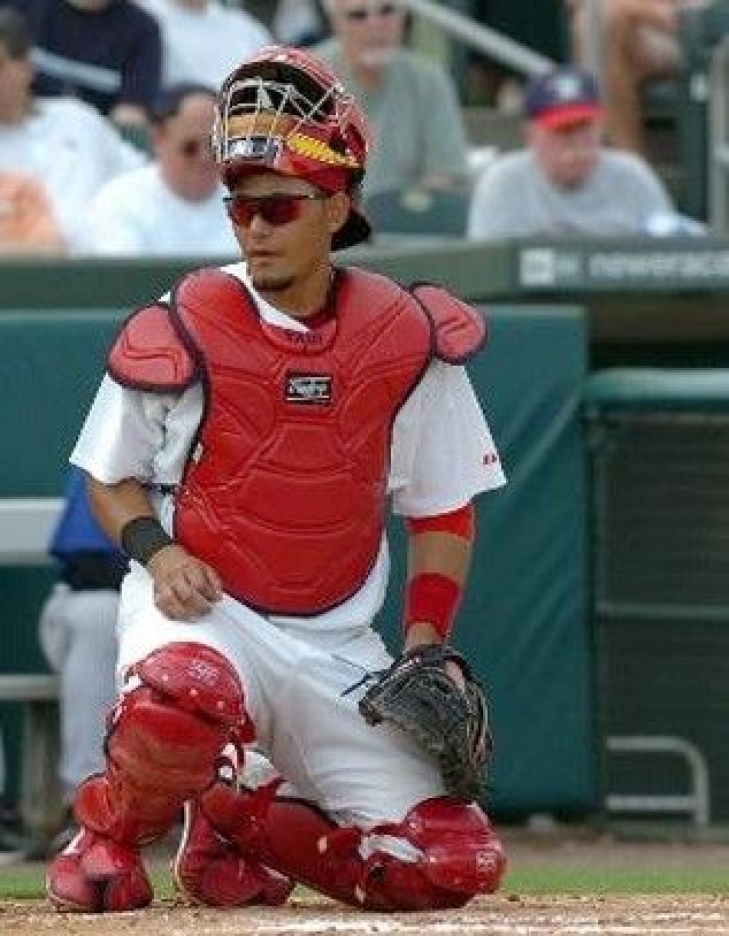
Yadier Molina is considered one of the best defensive catchers in baseball history. He played his entire career for the St. Louis Cardinals, from 2004 to 2022, and was one of the most successful catchers in the National League.
Molina became the Cardinals' starting catcher in 2005, after debuting the year before. However, he really broke out in 2008, with his first season batting over .300. At this point, he was already a World Series Champion (2006). Molina went on a streak of seven consecutive All-Star appearances from 2009, all of which were Gold Glove-winning. Although he was never a great power hitter (he hit 176 home runs, with only two years of at least 20), he had five seasons batting over .300 and a lifetime batting average of .277. His overall play was respected enough that he finished fourth in MVP voting in 2012 (the year after he anchored the Cardinals to another World Series win), with an .874 OPS and 7.2 bWAR. He finished third in the same voting the year after, with an .836 OPS and 6.2 bWAR. Molina won the Silver Slugger that year, his only one.
Molina retired as the all-time leader among catchers in putouts (15,122) and second in Total Zone Runs (163), and is 14th among all players in Defensive bWAR (28.0), second only to Ivan Rodriguez among catchers. He won nine Gold Gloves, four Platinum Gloves, and two Wilson Defensive Player Awards in his career.
While Molina's overall offensive statistics (2,168 hits, 176 home runs, 1,022 RBIs) might fall short for the Baseball Hall of Fame, his leadership, All-Star appearances, defense, and association with one team could put him over the top.
Albert Pujols
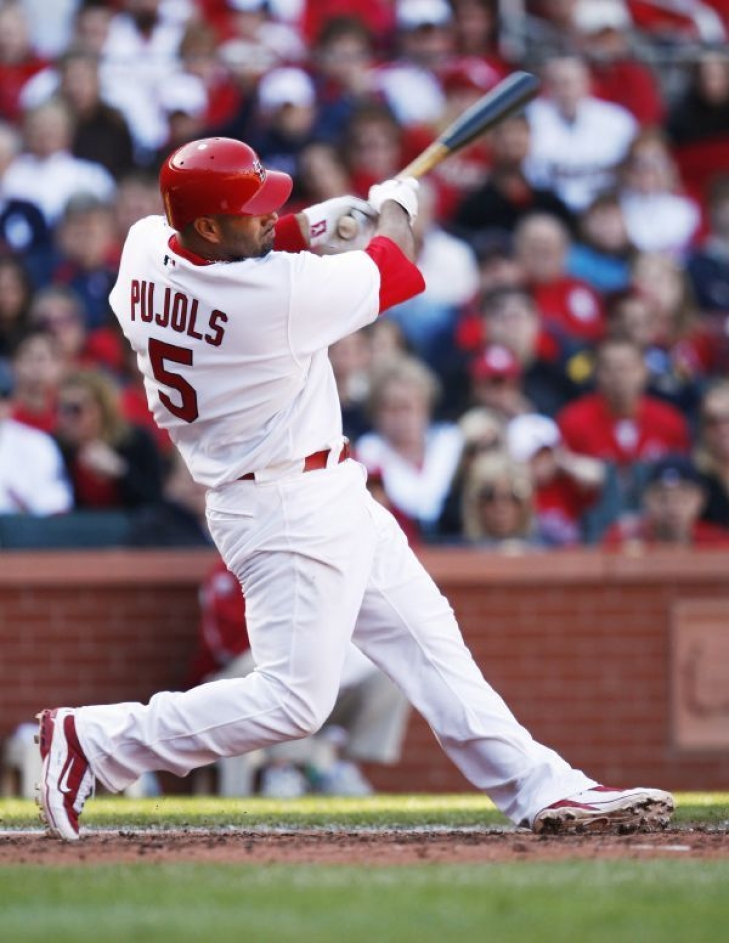
Albert Pujols was a dominant player in Major League Baseball during the 2000s, and many believe that if there was an MVP award for the decade, he would have won it. Pujols made his debut for the St. Louis Cardinals in 2001, and quickly established himself as a superstar. He won the Rookie of the Year award and finished fourth in the MVP voting in his first season. Over the next decade, he won the MVP award three times (2005, 2008, and 2009) and was the runner-up four times. He never finished lower than ninth in the voting while playing for the Cardinals.
Pujols was an outstanding hitter who could do it all at the plate. He won the Silver Slugger award six times, hit at least 32 home runs every season in St. Louis, won two home run titles, and collected at least 100 RBIs in every season except for 2011. Pujols batted over .300 in his first ten seasons, won the batting title in 2003, drew substantial walks, and had an OPS of over 1.000 eight times. From 2005 to 2010, he led the National League in bWAR every year.
Not only did Pujols win a lot of games for the Cardinals, but he also helped them win two World Series titles (in 2006 and 2011). He led them to the playoffs in eight of his eleven years there. When he became a free agent in 2011, his only rival in Redbird history was Stan Musial. Pujols left the Cardinals for the Los Angeles Angels, signing a massive contract, but saw diminishing returns every year, and his contract became a burden on the team. He was designated for assignment in 2021, signed with the Dodgers, and returned to St. Louis for one last year.
At the time of his retirement, Pujols was second in runs batted in (2,218), fourth in home runs (703), 10th all-time in hits (3,384), and 20th in bWAR (101.8). The only question left for Albert Pujols is whether he will be unanimously elected to the Baseball Hall of Fame or not.
Our All-Time Top 50 St. Louis Cardinals Have Been Revised to Reflect the 2023 Season
Yes, we know that this is taking a while!
As many of you know, we here at Notinhalloffame.com are slowly generating the top 50 of each major North American sports team. That being said, we have existing Top 50 lists out, and we always consistently look to update them when we can and based on necessity. As such, we are very happy to present our post-2023 revision of our top 50 St. Louis Cardinals.
As for all of our top 50 players in baseball, we look at the following:
1. Advanced Statistics.
2. Traditional statistics and how they finished in Major League Baseball.
3. Playoff accomplishments.
4. Their overall impact on the team and other intangibles that are not reflected in a stat sheet.
Last year, St. Louis had a very disappointing season, and were nowhere close to the playoffs. Regardless, there was one new entrant and one change.
As always, we present our top five, which saw no changes:
1. Stan Musial
4. Bob Gibson
5. Ozzie Smith
You can find the entire list here.
Adam Wainwright reached 200 Wins last year, but bluntly, he was not very good. He had an ERA near 8 and a bWAR of -2.0. As such, he dropped a spot, going from #10 to #11.
The only new entrant was Paul Goldschmidt. The 2022 National League MVP debuts at #46.
We thank you for your continued support of our lists on Notinhalloffame.com.
41. Paul Goldschmidt
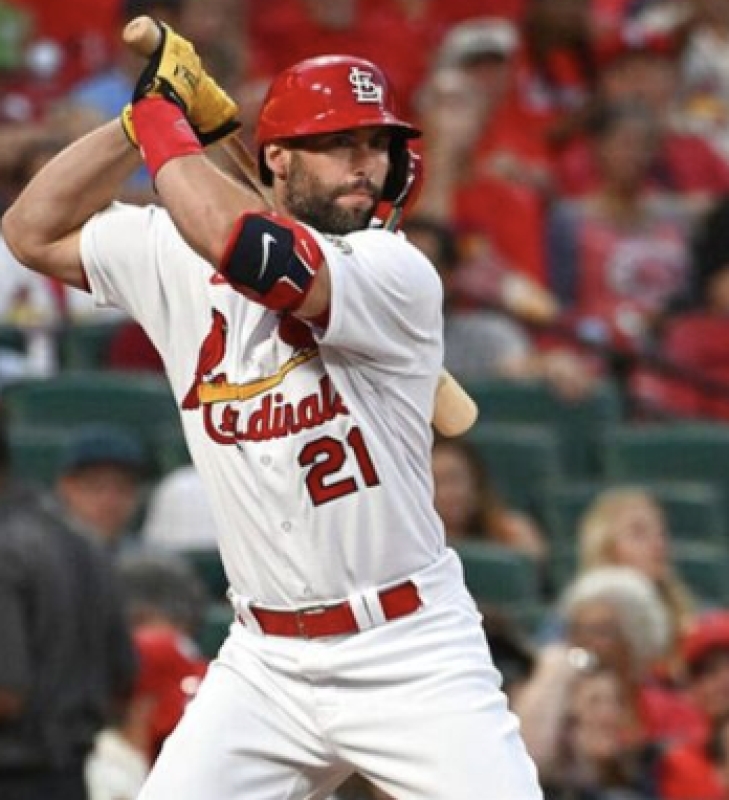
When Paul Goldschmidt joined the Cardinals before the 2019 season, he came with a strong reputation from his time with the Diamondbacks. Since the Diamondbacks knew they probably wouldn't keep their star first baseman once he hit free agency, they traded the multi-time All-Star and MVP runner-up to the Cardinals. The Cardinals quickly secured his place in their infield by signing him to a significant long-term contract extension.
His early years in St. Louis were productive, though not quite matching fans’ sky-high expectations. He hit 34 home runs with an .821 OPS in his 2019 debut and remained consistent through the unpredictable, pandemic-shortened 2020 season.
Goldschmidt’s peak in Missouri was firmly established in 2021. Partnering with Nolan Arenado to create a top-tier corner-infield duo, he led a powerful September run that helped the Cardinals set a franchise record with 17 straight wins and secure a postseason spot. That season, he ended with 31 home runs, 99 RBIs, and a strong .514 slugging percentage, showcasing his versatile skills and earning a sixth-place finish in MVP voting.
That momentum surged wonderfully into a historic high in 2022. During a fantastic summer where he proved himself beyond doubt, Goldschmidt finally earned the National League MVP award that had previously slipped away in Arizona. For much of that summer, he was close to achieving a Triple Crown, impressively challenging National League pitchers with his well-rounded hitting approach. He finished the season with a remarkable .317/.404/578 slash line, leaving a significant mark on the league leaderboard by leading in slugging percentage, OPS (.981), and a solid 177 OPS+. Highlights included a thrilling walk-off grand slam in May that captured his clutch performance that summer, along with a Silver Slugger award and a spot on the All-MLB First Team. It truly was the peak achievement of his amazing time with the Cardinals.
His decline was rapid. In 2023, his performance dipped to 25 home runs and an .810 OPS, the first time in nearly ten years he didn't receive an MVP vote. The trend worsened in 2024 as aging affected his game, reducing his stats to 22 homers and a bWAR below 2.0. When his contract ended that winter, he chose to bring his veteran experience to the American League, signing with the New York Yankees as a free agent.
While his six years in Missouri showed signs of aging, Goldschmidt’s impact on modern Cardinals remains undeniable. He provided a superstar anchor, leaving with 874 hits, 153 home runs, and a major individual award.
The St. Louis Cardinals Hall of Fame name their four nominees
The St. Louis Cardinals have announced the four Finalists for their franchise Hall of Fame, and the former Cardinal who receives the most fan votes will gain induction. That winner will be joined by a veteran player chosen by the special Red Ribbon Panel, and a selection by the Cardinals organization.
You can vote at cardinals.com/HOF, which will be open until April 26.
The nominees are:
Steve Carlton, Pitcher, 1965-71. Carlton helped St. Louis win the 1967 World Series, and had a record of 76-62 with a 3.10 ERA and 951 Strikeouts. He later would win another World Series with the Philadelphia Phillies ad became a multi-time Cy Young Winner.
George Hendrick, Outfield, 1978-84. Hendrick delivered the game-winning RBI in Game 7 of the World Series to win it all for the Redbirds in 1982, and he was twice an All-Star and one-time Silver Slugger for the club.
Matt Morris, Pitcher, 1997-05. Morris had a record of 101-62 with a 3.61 ERA and 986 Strikeouts. He was a two-time All-Star with the Cardinals, and finished third in Cy Young voting in 2001.
Edgar Renteria, Shortstop, 1999-04. Renteria was a three-time All-Star with St. Louis where he collected 973 Hits, three Silver Sluggers and two Gold Gloves.
We here at Notinhalloffame.com would like to congratulate the four candidates who have made it this far.
41. Pat Fischer
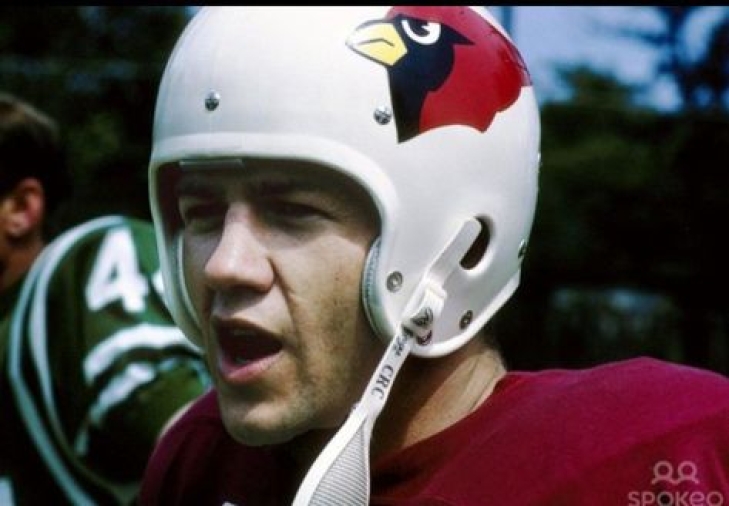
As good as Pat Fischer was at Nebraska, he stood at only 5' 9" and fell all the way to the 17th Round (232nd Overall) in the 1961 Draft. Fischer was barely expected to make the team, let alone win a starting job, but once he did, he would become one of the most seasoned Cornerbacks in NFL history.
Fischer saw more time as a Returner as a rookie, but by his third season, he was a full-time starter at Left Cornerback, pioneering the bump and run coverage and picking eight interceptions in 1963. Fischer had a career-best 10 Interceptions the season after, returning two for Touchdowns. The voters named him a First Team All-Pro, the first and only time that would happen in his career. Fischer would add a second Pro Bowl in 1965, but he was targeted far less after his explosive 1964 campaign, thus seeing his Interceptions drop.
Fischer signed with the Redskins after the 1967 Season and achieved far greater fame. Twenty-nine of his 57 Interceptions were as a Cardinal, though he is best remembered as a Redskin.
45. John David Crow
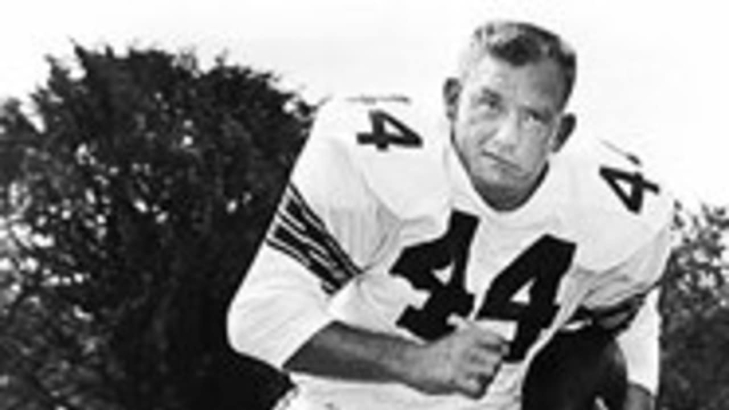
When Bear Bryant famously remarked that if voters didn't award John David Crow the 1957 Heisman Trophy, "they ought to do away with the thing," the college football landscape took notice. The Chicago Cardinals certainly did, selecting the Texas A&M star second overall in the 1958 NFL Draft. After a knee injury limited his rookie campaign to seven games, Crow quickly validated the hype, evolving into one of the most versatile backfield threats of his era.
At 6 feet 2 inches and 220 pounds, Crow possessed rare size and functional power for a 1960s halfback, combining a bruising inside running style with smooth hands out of the backfield and elite blocking ability. Beyond his primary duties, he stood as one of the most lethal halfback-passers in league history, completing 33 career passes for 759 yards and five touchdowns.
His initial breakout arrived in 1959, when he generated 994 scrimmage yards and seven touchdowns to secure his first Pro Bowl selection. However, his game reached legendary status during the franchise's inaugural season in St. Louis in 1960. Crow spearheaded the offense by rushing for a career-high 1,071 yards, averaging an astounding 5.9 yards per carry—while adding 462 receiving yards. His 1,533 yards from scrimmage led the entire NFL, earning him Second-Team All-Pro honors and his second Pro Bowl invitation.
Crow’s physical, violent running style frequently exposed him to severe injuries. He was restricted to eight games in 1961, but responded with a monster rebound in 1962. Pounding the rock in goal-line sets, Crow scored a league-leading 17 total touchdowns (14 rushing, 3 receiving) while racking up nearly 1,000 yards from scrimmage to capture his third Pro Bowl selection in St. Louis.
Crow’s 14 rushing touchdowns in 1962 set a single-season Cardinals record, showcasing the punishing goal-line efficiency that defined his prime years.
Plagued by a knee injury that limited him to three games in 1963 and a quiet 1964 season, Crow departed for San Francisco in 1965. He made one final Pro Bowl as a 49er before retiring in 1968. In seven years wearing the Big Red jersey, Crow compiled 5,450 scrimmage yards and 50 total touchdowns (33 rushing, 17 receiving), earning a spot on the NFL 1960s All-Decade Team.
50. Irv Goode
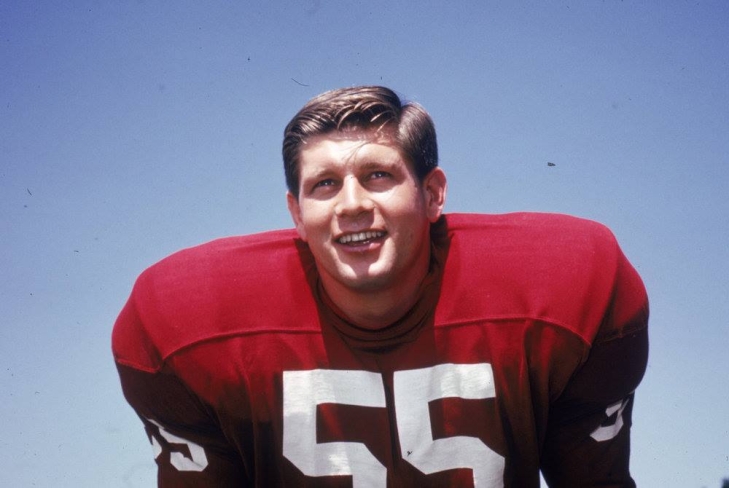
Irv Goode was a beast at the University of Kentucky, which led to his high selection by the St. Louis Cardinals, who nabbed him 12th Overall in 1961. Goode accomplished a rare feat as a rookie, earning Rookie of the Year votes (4th), and though St. Louis was not impressive in the 1960s, the versatile lineman (he played at Left Tackle, Left Guard, and Center) won Pro Bowl honors in both 1964 and 1967.
He would later win a Super Bowl in a reserve capacity with the Miami Dolphins at SB VIII.
46. Charley Johnson
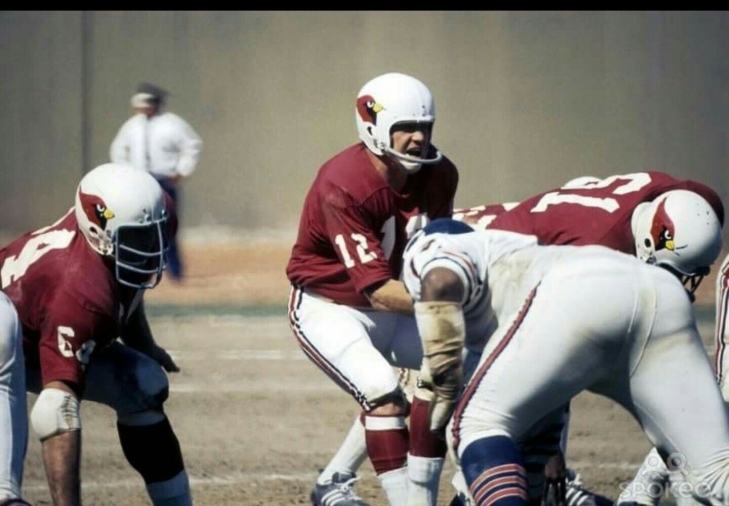
Before ever taking his first NFL snap, Charley Johnson had already etched his name into college football history. A tenth-round draft choice in 1960 out of New Mexico State, Johnson remains the only player to win back-to-back Sun Bowl MVP awards (1959, 1960) and became the first athlete in NMSU history to have his jersey number retired. After serving as a reserve during his 1961 rookie season, he inherited the starting job in 1962 and quickly proved that his intellect matched his arm talent.
Johnson brought a cerebral approach to the quarterback position. In fact, his off-field intellect was literally academic: while serving as the Big Red's starting signal-caller, he earned both a master's degree and a doctorate in chemical engineering from Washington University in St. Louis. On the field, he weaponized deep vertical routes to receivers like Sonny Randle and Bobby Joe Conrad, establishing St. Louis as one of the NFC's premier big-play offenses.
Johnson hit his absolute peak during the 1963 season. Guiding the Cardinals to a 9-5 record, he led the entire NFL in both completions (223) and passing yards (3,045) while throwing 21 touchdown passes to earn his first career Pro Bowl selection. He followed that performance up in 1964 by leading the Big Red to another 9-3-2 record—just missing the postseason—while throwing for 3,045 yards and 21 touchdowns. In 1963 and 1964, Johnson posted back-to-back 3,000-yard passing seasons, leading the NFL in yardage in '63 and anchoring the franchise's highest-scoring era of the decade.
Johnson's tenure in St. Louis was also marked by unique military service; while actively playing for the Cardinals, he fulfilled a two-year commitment in the U.S. Army Reserve working as a second lieutenant with NASA.
As injuries caught up to him and youngster Jim Hart emerged under center, Johnson was traded to the Houston Oilers in 1970. He later capped his 15-year NFL career by leading the Denver Broncos to their first-ever winning season in 1973. Across nine seasons in a Cardinals uniform, Johnson threw for 14,928 yards and 108 touchdowns in 105 regular-season games.
43. E.J. Junior
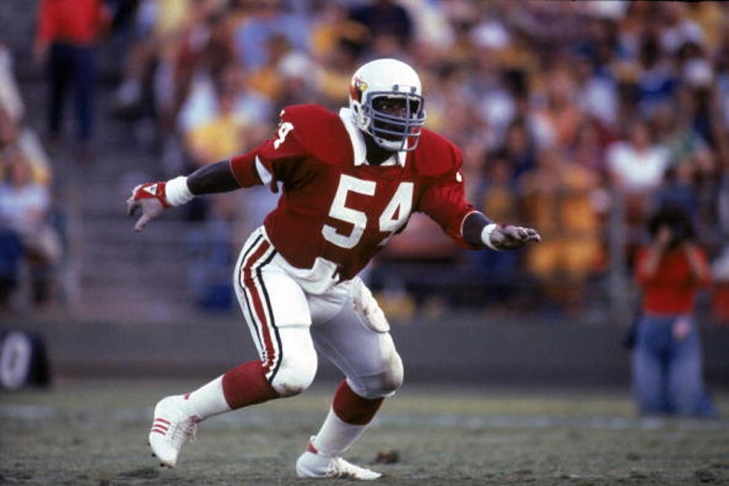
With the Fifth Overall Pick in the 1981 Draft, the St. Louis Cardinals selected E.J. Junior, who was the second Linebacker taken behind someone you may have heard of; Lawrence Taylor. Junior did not have Taylor’s career (who could?) but the Cardinals got a lot of good football from the eventual College Football Hall of Fame inductee.
Junior won the starting job during the season and, by the mid-80s, was one of the best interior Linebackers in the NFC. His best season was in 1984 when he was a First Team All-Pro and began a two-year run of Pro Bowls. From 183 to 1985, Junior had eight Interceptions and 19.0 Sacks, and though he tailed off afterward, he was still a solid NFL player.
He left the Cardinals behind in 1988, joining Miami as a Free Agent. The Cardinals were not significant in the 1980s, but this does not detract from Junior's work in St.Louis/Phoenix.
47. Freddie Joe Nunn

Freddie Joe Nunn was selected 18th overall from Ole Miss in the 1985 NFL Draft, bringing exceptional speed and athletic flexibility to St. Louis. During his nine seasons with the Cardinals, he was frequently moved between a traditional 4-3 defensive end and a stand-up outside linebacker. This constant position switching, along with playing for struggling teams in St. Louis and Phoenix, kept him out of the national spotlight. However, when allowed to pursue pass rushes, Nunn proved to be extremely effective.
Nunn demonstrated exceptional quickness right from the start, often leveraging a fast first step to consistently beat boundary tackles and turn the corner. Whether he was positioned with his hand in the dirt or in space, his pure speed enabled him to make impactful tackles early, often before the offensive pockets were fully formed.
Nunn reached his peak in 1988 as the franchise moved across the country. During a season focused solely on rushing the quarterback, he achieved a career-high 14.0 sacks in Arizona's first desert season. He then continued with two solid years, recording 11.0 sacks in 1989 and 9.5 in 1990, cementing his role as the defense’s main disruptor.
Despite off-field legal distractions and a roster that struggled to contend in the NFC East, Nunn’s back-to-back-to-back sack totals anchored the franchise's front seven through the late 1980s and early 1990s.
When Nunn departed for Indianapolis in 1994, he held the Cardinals' official franchise record with 66.5 career sacks—a mark that stood for nearly three decades before Chandler Jones finally surpassed it in 2021.
48. Conrad Dobler
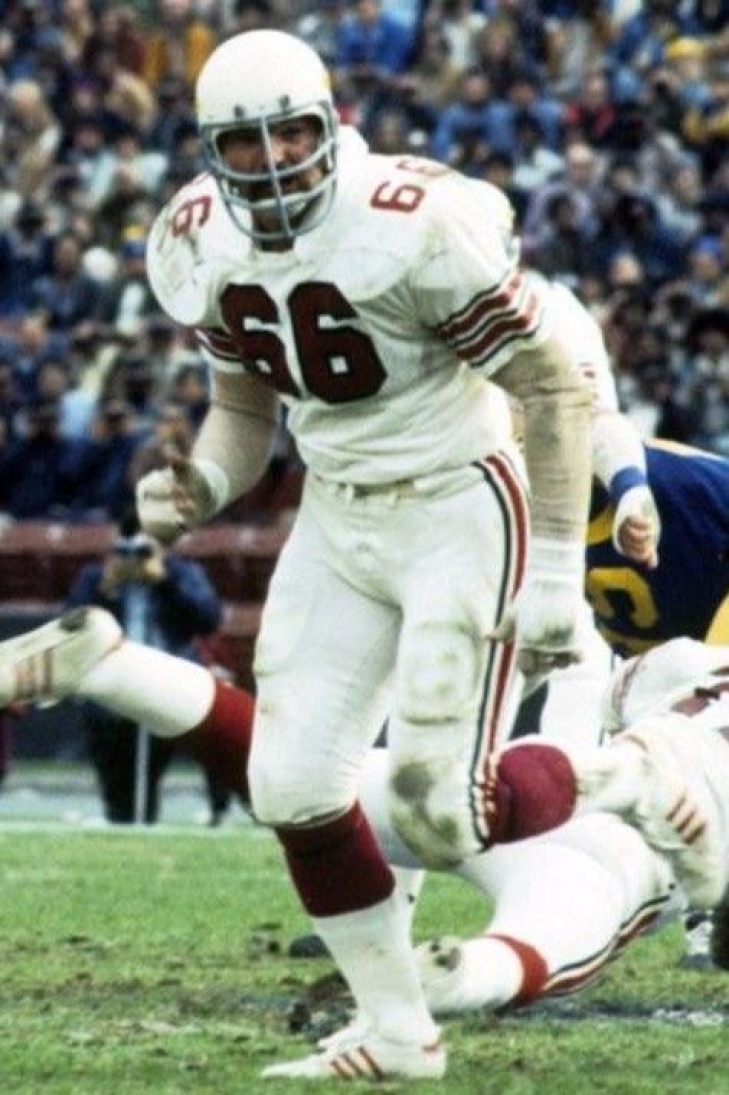
Selected in the fifth round of the 1972 NFL Draft out of Wyoming, Conrad Dobler entered the league as a defensive lineman before transitioning to right guard. Lined up alongside future Hall of Fame tackle Dan Dierdorf, Dobler weaponized mind games, brutal hand placement, and pure physical punishment to become the undisputed psychological villain of 1970s professional football.
Standing 6 feet 3 inches tall and weighing 255 pounds, Dobler approached offensive line play with the aggressive mentality typical of a linebacker. Opponents often accused him of biting, leg-whipping, twisting facemasks, and punching defenders in the pile. His intimidating reputation peaked on the July 25, 1977 cover of Sports Illustrated, which called him "Pro Football's Dirtiest Player.” Despite the controversy, Dobler was also one of the most technically skilled and fierce pass protectors of his time. He was the emotional driving force of the "Air Coryell" line that led St. Louis to consecutive NFC East titles in 1974 and 1975. In 1975, his unit set a then-NFL record by allowing only eight sacks in a 14-game season.
His outstanding performance on the field led to three straight Pro Bowl selections from 1975 to 1977, culminating in Second-Team All-Pro in 1977. Despite some beliefs that his teams faced difficulties, Dobler was a key contributor to the Big Red's impressive 31-11 record during their peak in the mid-70s.
Contract disputes and roster turnover led to a 1978 trade to New Orleans, followed by a final stint in Buffalo, after which he retired following the 1981 season. In six seasons with St. Louis, Dobler appeared in 77 games (73 starts), serving as the unyielding, mean-spirited anchor of the franchise's greatest offensive line.
40. Bill Koman
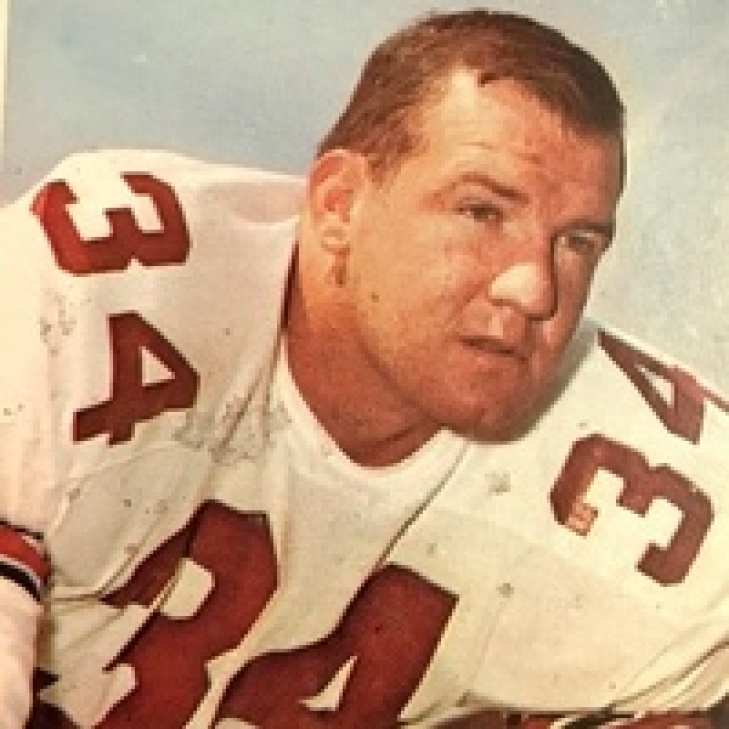
Acquired in a 1959 trade with the Philadelphia Eagles after an earlier stint in Baltimore, Bill Koman entered the Cardinals organization with little fanfare. What the franchise received in return was the physical heartbeat of their defense for nearly a decade. Sliding in at outside linebacker, the University of North Carolina product spent nine seasons with the Big Red (1959–1967), establishing a standard of hitting and durability that set the defensive tone throughout the 1960s.
Koman was an aggressive, downhill defender who relied on raw power, violent shed-and-tackle mechanics, and exceptional durability. Operating through bad knees that required constant wrap and treatment, Koman rarely missed action; he played in 120 consecutive regular-season games for the Cardinals, missing just a single contest over his nine-year tenure with the team.
Following the team’s move from Chicago to St. Louis in 1960, Koman's relentless tackling earned him widespread recognition. He reached his individual peak during the 1962 season, earning his first Pro Bowl invitation after recording 3.5 sacks, two interceptions, and three fumble recoveries.
He repeated that elite standard in 1964, garnering a second Pro Bowl selection as the operational leader of an aggressive front seven. In 1965, he was awarded the Old Pro Award by the St. Louis Quarterback Club, cementing his status as one of the most respected figures in the locker room. Battling through constant knee issues, Koman suited up for 120 consecutive games for the Cardinals, missing only one game across his entire nine-year run with the organization.
Koman retired following the 1967 season. In a Cardinals uniform, he appeared in 121 games, making 121 starts, while accumulating 24.5 unofficial sacks, 6 interceptions, and 16 fumble recoveries.
38. Terry Metcalf
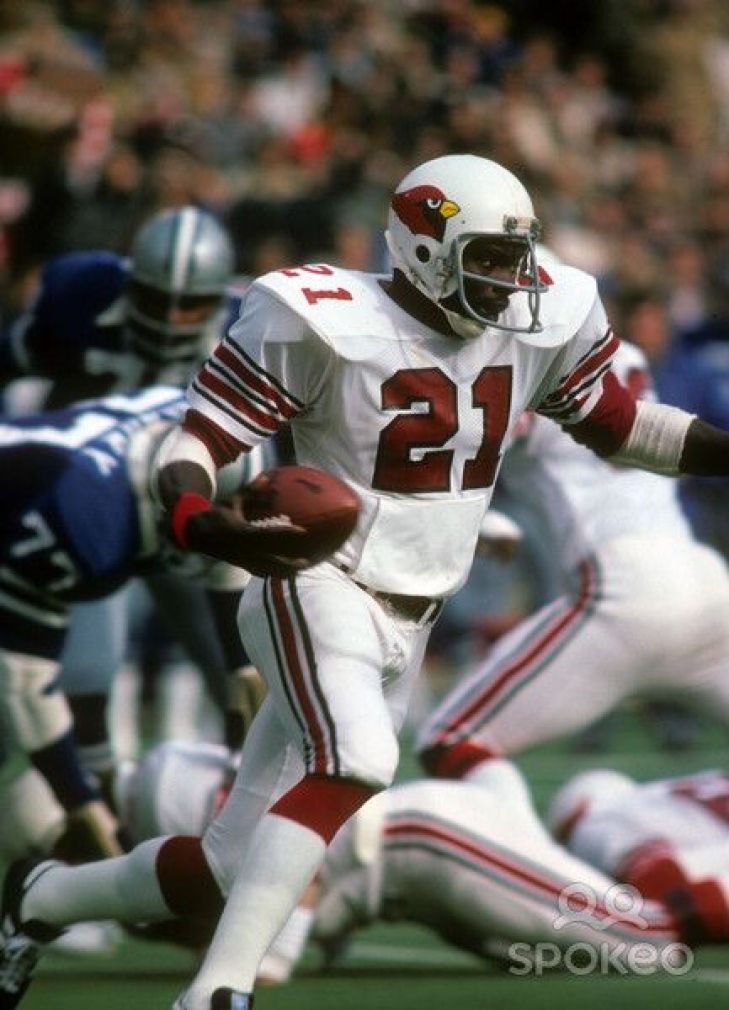
Long Beach State was hardly known as a hotbed for NFL superstars, but when the St. Louis Cardinals selected Terry Metcalf in the third round of the 1973 NFL Draft, they landed one of the most explosive, dynamic playmakers in football history. Nicknamed "The Franchise," Metcalf arrived in St. Louis and immediately revolutionized the all-purpose running back role under head coach Don Coryell.
Metcalf depended on his quick lateral movements, explosive speed, and a distinctive jump-cut running style that made him almost impossible to stop in the open field. He was a versatile threat before the term was even common, lining up in the backfield, playing wide receiver, and always poised to score on kickoff or punt returns.
After making brief appearances as a rookie in 1973, Metcalf dramatically improved in 1974, accumulating over 2,000 all-purpose yards. He averaged an impressive 31.2 yards per kickoff return and 13.1 yards per punt return. His outstanding performance earned him his first Pro Bowl selection and a second-place finish for the NFL Most Valuable Player award.
His 1975 campaign was his masterpiece. Metcalf set an NFL single-season record with 2,462 all-purpose yards over a 14-game season, a remarkable achievement that included 816 rushing yards, 378 receiving yards, 960 kickoff return yards, and 285 punt return yards. He scored 13 total touchdowns, including a pass, a run, a catch, a punt return, and a kickoff return, finishing third in NFL MVP voting and earning his second Pro Bowl selection. His 2,462 all-purpose yards that year remained an NFL record for nearly a decade, highlighting an exceptional workload in rushing, receiving, and returning.
However, Metcalf’s dynamic playing style was marred by a significant weakness: ball security. His tendency to carry the ball loosely in the open field led to a high number of fumbles, with him leading the league twice: 14 fumbles in 1974 and 15 in 1976.
Following his third Pro Bowl selection in 1977, contractual disputes and frustration with the local fanbase led Metcalf to make a shockwave decision: he jumped to the Canadian Football League, signing a lucrative deal with the Toronto Argonauts in 1978. Though his NFL peak was brief, his five years in St. Louis produced 9,048 all-purpose yards and 36 total touchdowns.
37. Tim McDonald
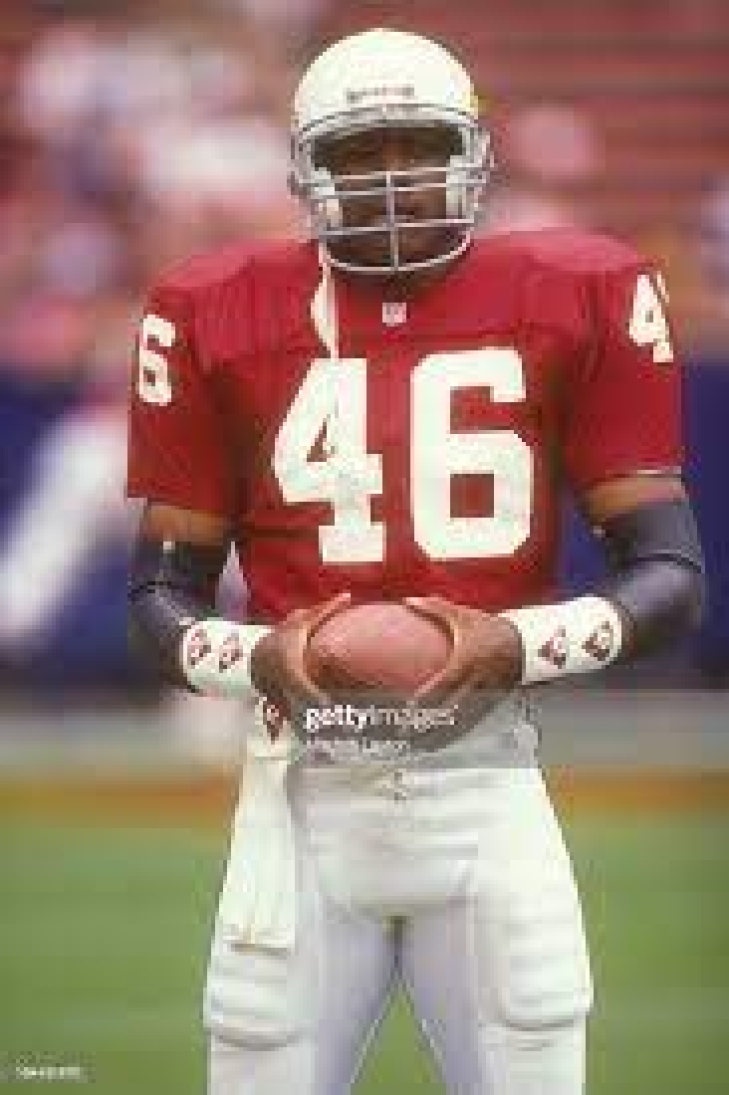
Following in a long line of elite defensive backs out of Southern California, Tim McDonald brought instantly noticeable hitting power and instincts to the professional ranks. Selected in the second round (34th overall) of the 1987 NFL Draft by St. Louis, the physical safety spent his rookie year learning the ropes before taking over the starter's role during the franchise's inaugural 1988 season in Phoenix.
McDonald set an uncompromising physical boundary in the secondary. Functioning virtually as an extra linebacker in run support, he patrolled the box with punishing tackling technique while possessing the range to shadow tight ends and slot receivers downfield. His bone-jarring hits forced opposing wideouts to think twice before crossing the middle.
After stepping into the starting lineup in 1988, McDonald made his mark by leading the NFL with four forced fumbles. His true breakout arrived during the 1989 campaign, when he put together a dominant, career-best statistical season: racking up 155 tackles alongside 7 interceptions (returning one for a touchdown) to capture his first First-Team All-Pro selection and Pro Bowl nod. In 1989, McDonald delivered one of the most complete single-season performances by an NFL safety, combining 155 tackles with 7 interceptions.
As quarterbacks grew increasingly reluctant to test his area of the field, McDonald remained a cornerstone of the secondary, earning consecutive Pro Bowl invitations in 1991 and 1992. Despite playing on roster builds that struggled to contend, his individual play consistently ranked among the gold standards for strong safeties across the league.
In 1993, McDonald joined San Francisco as a prominent free agent, aiming for a championship-level setup. He subsequently won Super Bowl XXIX with the 49ers and earned three additional Pro Bowl selections. Out of his 40 career interceptions, half (20) occurred during his six seasons with the Cardinals. With the squad (1987–1992), McDonald recorded 20 interceptions, 605 tackles, 3 Pro Bowl selections, and 1 First-Team All-Pro honor.
34. Larry Stallings
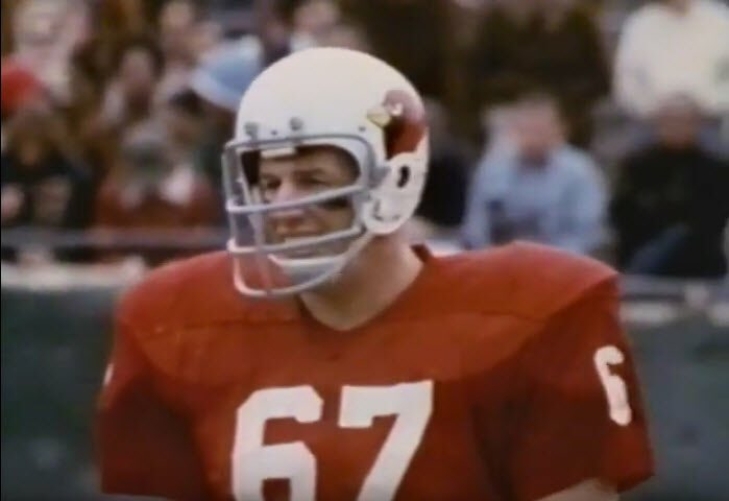
Securing a genuine defensive cornerstone in the 18th round of the NFL Draft is extremely rare, but in 1963, the St. Louis Cardinals achieved this by choosing Georgia Tech’s Larry Stallings as the 241st pick overall. Despite never playing linebacker in college, Stallings was inserted into the starting lineup as a rookie and rapidly adapted, holding the left outside linebacker position for fourteen seasons straight (1963–1976).
Stallings applied a tough, blue-collar mentality to the second level of the Big Red defense. He excelled at setting the edge against the run, strongly resisting being pushed out by pulling guards, and had the agility to drop into boundary coverage. Despite facing early-career knee surgeries in 1964 and 1965, Stallings returned as a full-time starter in 1966 and demonstrated remarkable durability. From 1966 until the end of his career, he played all but two games over an eleven-year period.
His consistent performance earned him early recognition from his teammates, who named him the Cardinals Team MVP after the 1969 season. Stallings hit his career peak in 1970, achieving his best season with 4.0 sacks, two fumble recoveries, an interception, and earning First-Team All-NFC honors from UPI, along with his first Pro Bowl selection. From 1966 to 1976, Stallings was a mainstay at left linebacker, starting 149 of 151 regular-season games.
Stallings served as the defensive team's core through the mid-1970s, offering veteran leadership for the back-to-back NFC East division champions under Don Coryell in 1974 and 1975. When he retired after the 1976 season, he had played all 181 games with the Cardinals, starting 175 of them, and recording 9 interceptions, 13 fumble recoveries, 3 defensive touchdowns, and 27.5 unofficial sacks.
He retired following the 1976 season, finishing with 9 interceptions, 13 fumble recoveries, and 3 defensive touchdowns.
