


Site Admin
13. Paul Derringer
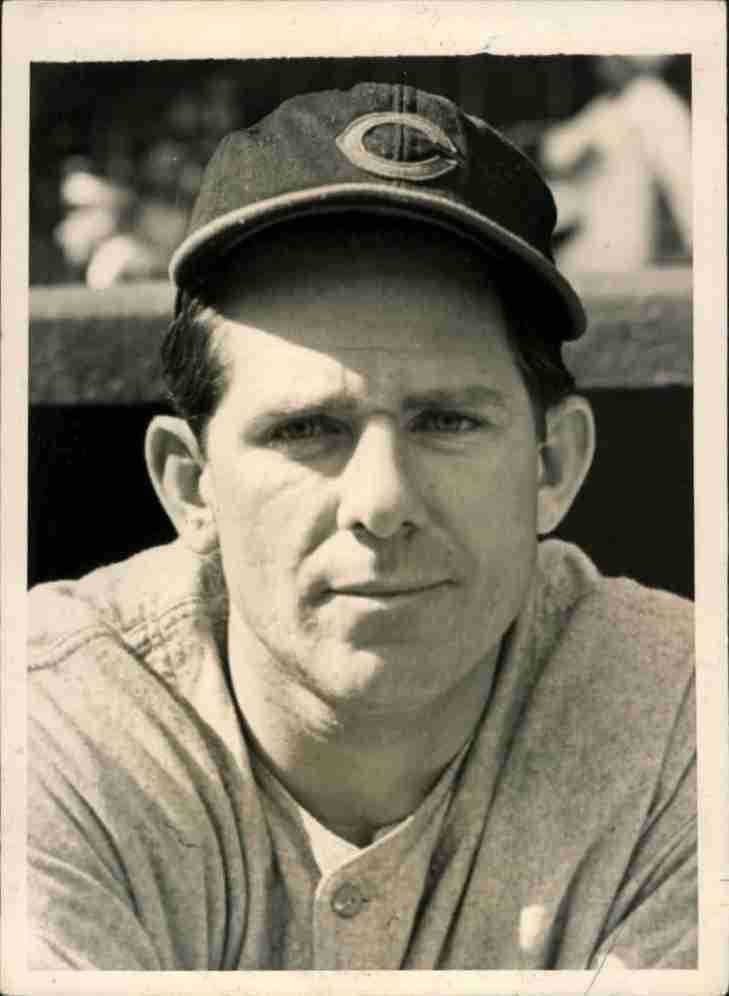
When the Reds acquired Derringer in 1933, they were gambling on a talent that had yet to find its consistency. That gamble paid off as Derringer matured into a surgical force, eventually winning 161 games in a Cincinnati uniform. He became a fixture in the All-Star game, earning six selections, including a run of five straight years, and authored four 20-win campaigns. His signature was a terrifying lack of charity; in an era of high-scoring offenses, Derringer’s refusal to walk batters made him one of the most efficient run-suppressors in the game.
The peak of his dominance was recognized far beyond the pitcher's mound, as he finished in the top five of the MVP voting in both 1939 and 1940. This was a rare feat for a hurler in that era, but it reflected his status as the heartbeat of a winning culture. He wasn't just piling up wins; he was a tactical master who used his control to dictate the pace of play. During his prime years on the staff, he was the guy the Reds called upon to stop a losing streak or secure a vital divisional lead, providing a stabilizing presence that gave the entire roster confidence.
His legacy was truly cemented during the 1940 World Series against the Detroit Tigers. Haunted by previous postseason struggles, Derringer authored a narrative of redemption that remains legendary in Cincinnati lore. He took the ball in both Game 4 and Game 7, delivering masterful performances that steered the franchise to its second World Championship. By winning the deciding game of the Fall Classic, he exorcised his playoff demons and proved that he was a big-game titan capable of carrying a team across the finish line.
The sun eventually set on his time in Cincinnati after the 1942 season, when he moved on to the Chicago Cubs, but he left behind a body of work that few could match. He concluded his journey with the Reds as one of the most reliable and decorated arms in the history of the senior circuit. Whether it was the sheer volume of his wins or the precision of his command, he set a standard for Reds pitching that would last for decades.
In a fitting tribute to his massive impact, the organization named him one of the four inaugural members of the Cincinnati Reds Hall of Fame in 1958.
8. Tony Perez
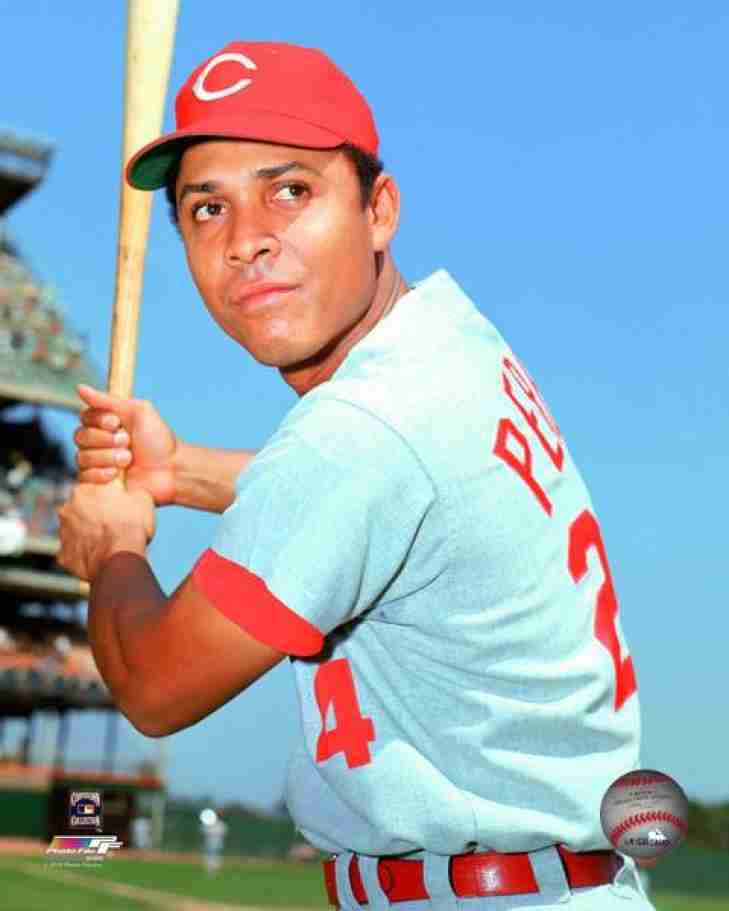
When Tony Pérez arrived in Cincinnati in 1964, he was a young, soft-spoken infielder from Cuba who had to navigate both a new language and a new position. While he broke in as a third baseman, his residency on the South Side of Cincinnati truly took flight when he transitioned to first base, forming a terrifying corner-infield duo with Lee May before eventually becoming the permanent fixture at the bag. He arrived as a promising prospect and quickly matured into a seven-time All-Star, providing the profile of a professional who never let the pressure of the moment alter his approach.
The middle of his journey was defined by a level of dominance in the RBI column that few in the history of the game can match. Throughout the 1970s, Pérez was the premier run-producer for the Big Red Machine, driving in 100 or more runs seven different times and eclipsing the 25-home run mark on six occasions. He was the definitive "Mr. Clutch," a title bestowed upon him by teammates who watched him lead the majors in RBIs over a full decade. His peak arrived in 1970, when he blasted 40 home runs and drove in 129, finishing third in the MVP voting and signaling that the Reds were ready to conquer the National League.
The high-leverage pinnacle of his tenure came during the back-to-back championship seasons of 1975 and 1976. In Game 7 of the 1975 World Series, with the Reds trailing 3-0 and their season on the brink, Pérez launched a two-run moonshot over the Green Monster that swung the momentum and paved the way for the title. He followed that up in 1976 with a walk-off single in Game 2 against the Yankees, proving that while he might not have been the "best" player on a roster of Hall of Famers, he was arguably the most essential when the game was on the line. It was this poise that led manager Sparky Anderson to famously label him the "heart and soul" of the team.
However, the walk toward the exit in 1976 was one of the most painful in franchise history. Traded to Montreal in a move that many fans and teammates never truly forgave, Pérez spent seven seasons "in the wind" with the Expos, Red Sox, and Phillies. But the story had one final, poetic chapter; in 1984, "Doggie" returned to Cincinnati to finish his career where it began. Even as a veteran bench player, he continued to defy time, batting .328 in 1985 and becoming the oldest player at the time to hit a grand slam.
Tony Pérez concluded his career as a first-ballot immortal in the hearts of Reds fans, officially entering Cooperstown in 2000. That same year, the organization retired his number 24, a permanent tribute to the man who provided the "quiet thunder" for the greatest era in Cincinnati sports.
10. Vada Pinson
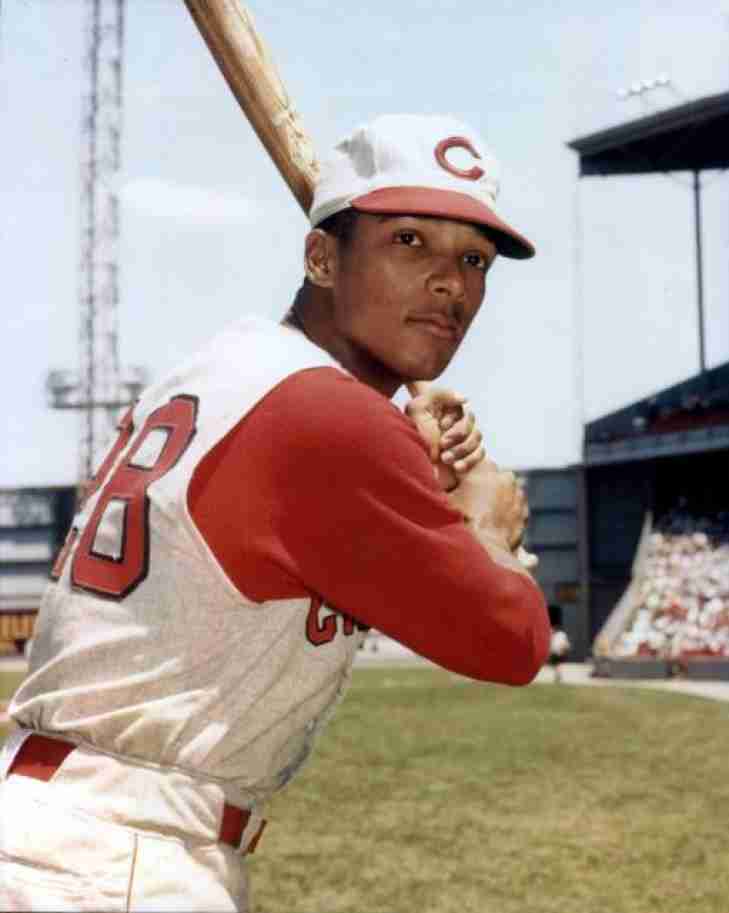
When Vada Pinson arrived in Cincinnati in 1958, he was a 19-year-old phenom who had reportedly considered a career as a trumpet player before his coach convinced him his future was on the grass. Pinson brought an immediate impact to the plate from his very first full season in 1959, leading the National League in runs (131) and doubles (47) while batting .316. He arrived as a kid with immense speed and immediately transformed into a high-volume producer.
The peak of his residency, and the highlight of his career, arrived in 1961, as he helped lead the Reds to their first pennant in over two decades. That season, Pinson led the league with a career-high 208 hits and batted a blistering .343, finishing only behind Roberto Clemente for the batting title. That year, he finished third in the MVP voting and captured his only Gold Glove for his defensive mastery in center. In his first seven seasons, he recorded five years with at least 300 total bases, a feat matched only by legends like Willie Mays and Joe DiMaggio during similar spans.
Pinson was known for his consistency and a quiet, professional demeanor. Pinson was a metronome of production, twice leading the league in hits, doubles, and triples, respectively. He was a perennial 20/20 threat long before it became a standard metric for stardom, rattling off six seasons of at least 20 home runs for the Reds. On May 22, 1968, he collected a double that allowed him to pass Edd Roush for the most hits in franchise history at the time, a record he held until it was eventually surpassed by Pete Rose. He left the organization with 1,881 hits.
Following the 1968 season, Pinson was traded to the St. Louis Cardinals, marking the end of an eleven-year tenure in Cincinnati that saw him earn four All-Star selections. While the call from Cooperstown has remained elusive, the Reds rightfully recognized his impact by inducting him into the team Hall of Fame in 1977.
9. George Foster
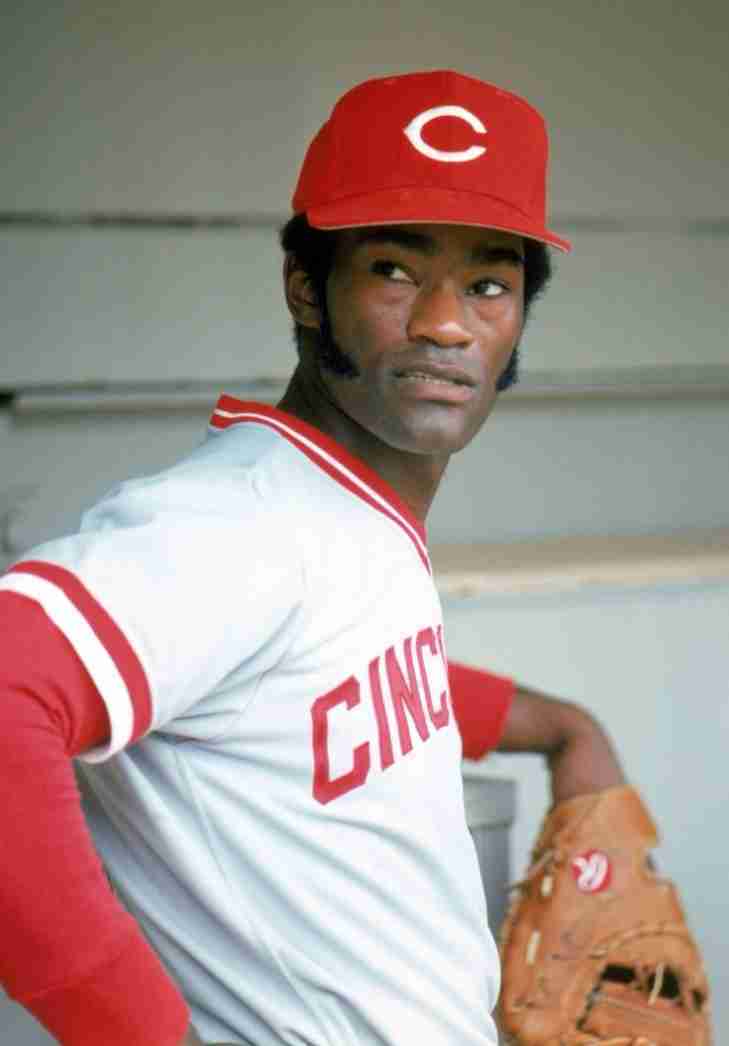
When George Foster arrived in Cincinnati via a trade from San Francisco in 1971, he was a talented outfielder searching for a permanent home on a crowded roster. It took a few seasons of refinement before he truly ignited, but once he locked down the starting job in left field, he became the ultimate deep threat. He joined the organization as a high-potential trade piece and matured into the most dangerous power hitter of the 1970s, with the guise of aquiet giant who let his black bat do all the talking.
His tenure reached a historic crescendo in 1977. In a decade where league leaders often hovered in the 30s, Foster exploded for 52 home runs, becoming the first player to eclipse the 50-mark since Willie Mays over a decade prior. It earned him the National League MVP, as he paired those home runs with 149 RBIs and a .320 batting average. He wasn't just hitting for the highlight reels; he was driving the Reds' offense with relentless efficiency, capturing three consecutive RBI titles from 1976 to 1978.
Foster served as the high-leverage cleanup hitter for the back-to-back championship teams of 1975 and 1976. While Bench, Morgan, and Rose set the table or provided the tactical edges, Foster was the hammer that finished the job. His 1976 campaign was particularly vital, as he drove in 121 runs to help secure the sweep of the Yankees in the World Series. He concluded his time in Cincinnati with a staggering .514 slugging percentage and 244 home runs, a volume of production that made him the most feared out in the National League for half a decade.
Following the 1981 season, Foster was traded to the New York Mets, marking the conclusion of a legendary era in the Queen City. He left the Reds as a beloved icon of the "Big Red Machine.” While the Hall of Fame in Cooperstown has proven elusive, the Reds recognized his impact by inducting him into the team Hall of Fame in 2003, ensuring that the man who brought the "Long Ball" back to the 70s would always have a place in Cincinnati.