

Committee Chairman
90. Dwight Gooden
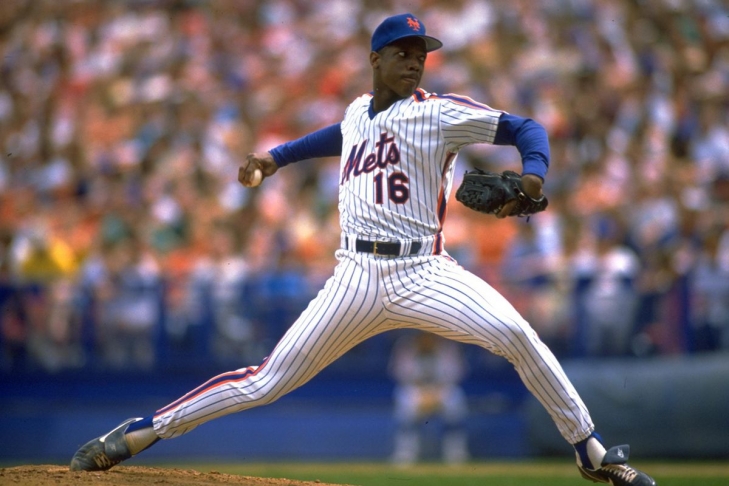
There was a time that Dwight Gooden was the best Pitcher in baseball, but as we know, drug use rendered him a shell of what he was well before his time. One of the incredible things about his career, though, was how long he played and remained a serviceable hurler.
Gooden’s first two seasons in the Majors were about as good as you could hope for. As a teenager, he won the Rookie of the Year award and was the Cy Young runner-up. He would win the latter award as a sophomore when he went 24-4, and led the league in Wins, ERA (1.53), Innings Pitched (276.2), Strikeouts (268), and FIP (2.13), and had a WHIP of 0.965. While this would be his peak (only at 20), he remained an upper-tier pitcher for the rest of the decade.
This was around the time when drugs became a problem for Gooden, but he had three more top-ten finishes in Cy Young voting, and he helped the Mets win the 1986 World Series. Granted, Gooden was abysmal in that Fall Classic, but he was a huge reason they got there. His play suffered in later years, and he was suspended for the entire 1995 season due to cocaine.
Gooden would return and play five more seasons, but not with the Mets. He played for the Yankees, won two World Series Rings, and threw a no-hitter in 1996. That was good, but he was far from the player he used to be. He also had stints with Cleveland, Houston, and Tampa, and after that, a final stint with the Yankees, where he won that third ring.
Had Gooden not gotten so heavily involved with drugs, it is easy to speculate that he would already be in the Hall of Fame. As it stands, we have a very good hurler who, at one time, was the best in the business, but he could be considered a big what-if?
67. Harry Stovey
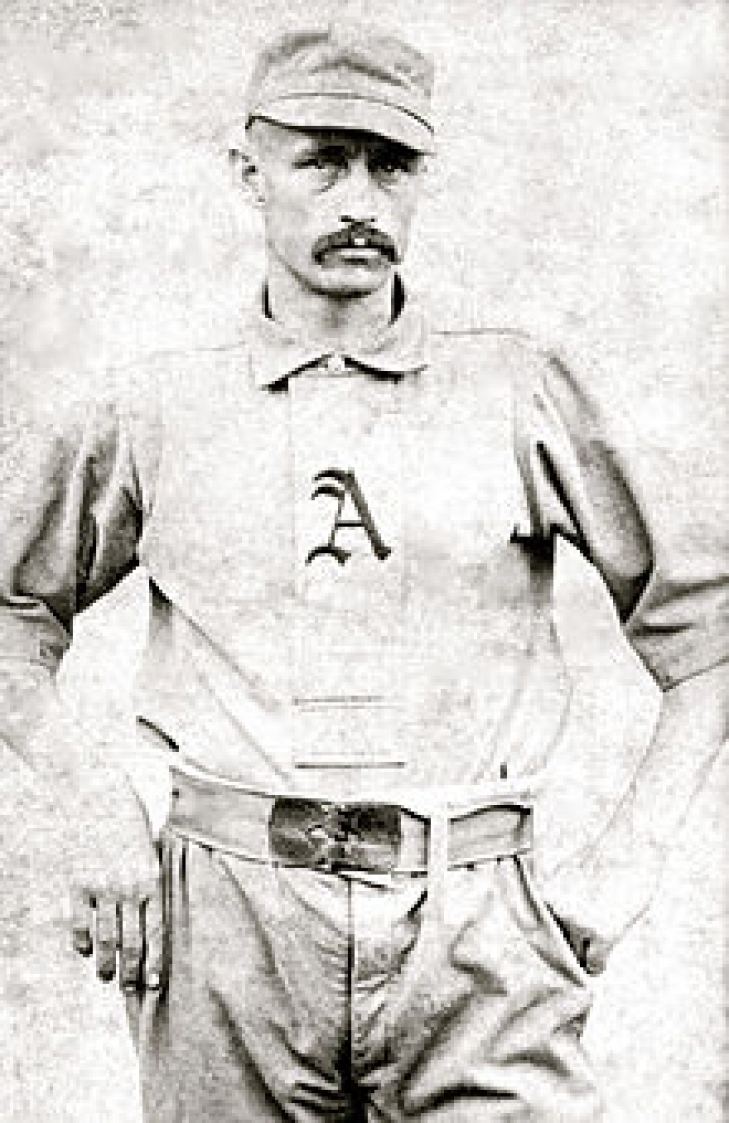
If you look at the career of Harry Stovey, accumulatively, the offensive statistics seem very good, but not Hall of Fame good. 1,775 Hits, 122 Home Runs, and a .288 Batting Average don't stand out, but another look shows that is not the case at all.
Stovey played from 1880 to 1893, an era not known for offensive greatness. Beginning his career with three decent seasons with the Worcester Ruby Legs of the National League, he would join the first incarnation of the Philadelphia Athletics, an inaugural team of the American Association. With Philadelphia, Stovey had four seasons in which he led the AA in Runs Scored, and his lowest total was 110. He won three Home Run Titles, two Triples Titles, and was a base-stealing machine. Four of his seasons saw Stovey bat over .300, and he also won two Slugging Titles.
He would finish his career with stops in Boston during the brief Players’ League and with three more teams in the NL (Boston, Baltimore, and Brooklyn). While hitting 100 Home Runs doesn't seem like much, he was the first to do so as a pro, and that means something.
84. Mickey Lolich
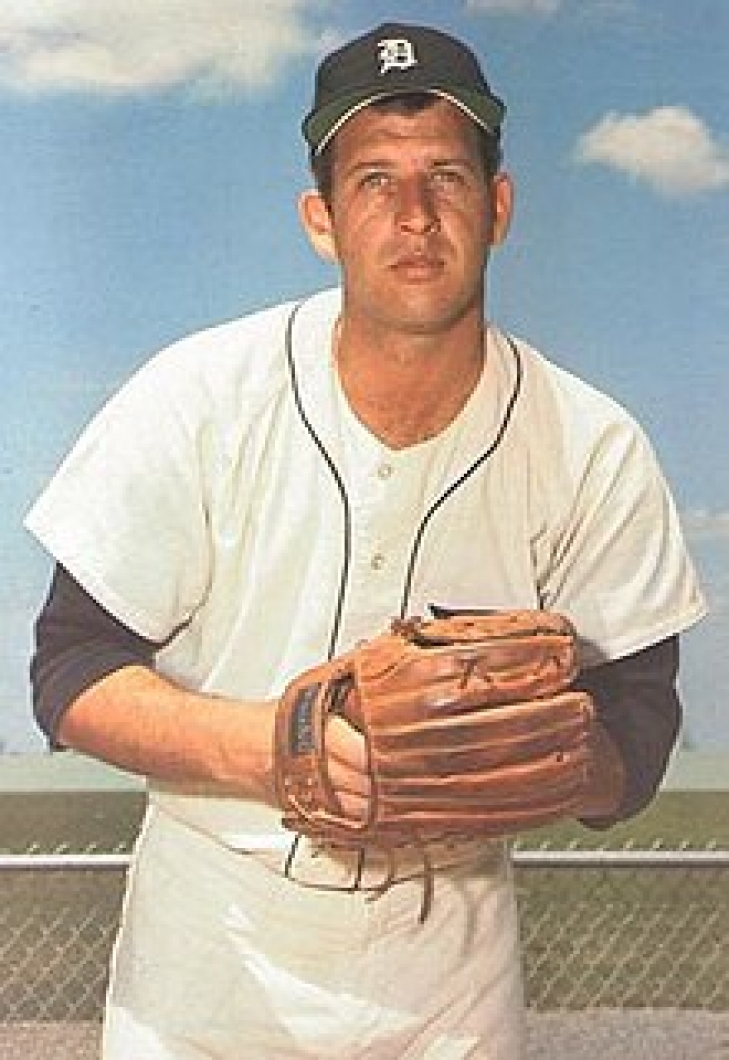
Mickey Lolich spent most of his career with the Detroit Tigers, where he was a proven starter for a dozen seasons in Motown.
From 1964 to 1974, he had at least 14 Wins and 170 Strikeouts each year. After playing in the shadow of Denny McLain in 1968, who had 31 Wins, it was Lolich who was the star of that year’s World Series. The southpaw started three games, going 3-0, completing all games with a 1.67 ERA and 0.963 WHIP over 27 Innings. This performance would be the catalyst for Lolich’s best era as a Pitcher.
Lolich would be named an All-Star in 1969, 1971, and 1972. In his '71 season, he would finish first in the American League in Wins (25), Innings (376), and Strikeouts (308), and was second in Cy Young voting. The year after, he was third in Cy Young voting and helped Detroit make the playoffs, though they lost to Oakland in the ALCS. Notably, he would also throw at least 200 Ks from 1969 to 1974.
Lolich would later be traded to the New York Mets and finished his career with the San Diego Padres, retiring in 1979.
At the time of his retirement, Lolich had the most Strikeouts of any lefthander (2,832), and he left the game with a nice record of 217-191.
85. Babe Adams
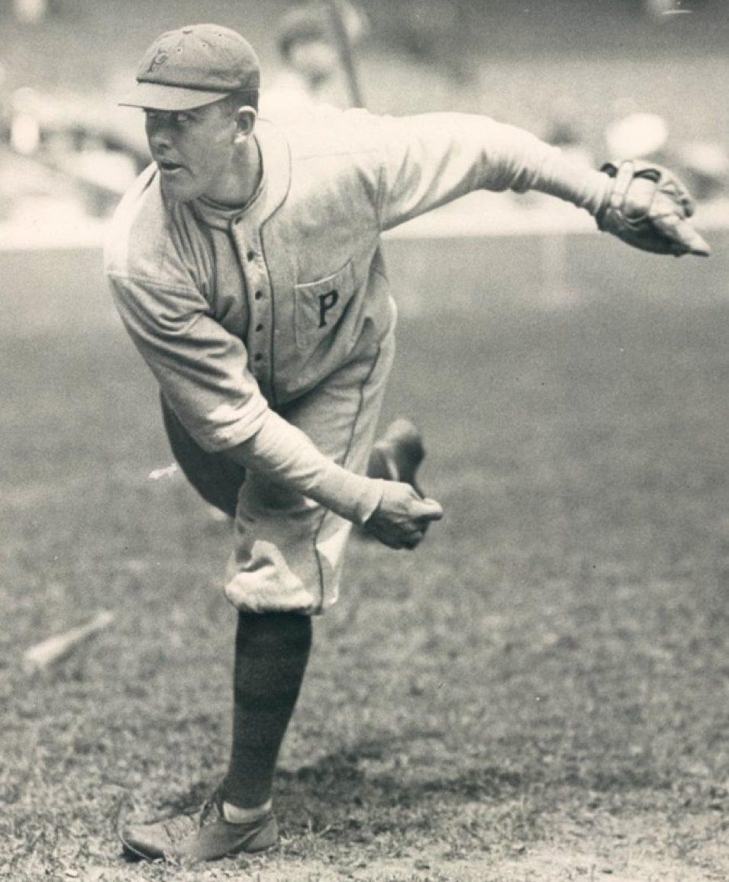
Playing all but one game of his career with the Pittsburgh Pirates, Babe Adams was one of the best control Pitchers of his day.
Adams played in one game for the St. Louis Cardinals in 1906, and his contract was traded to the Pirates shortly after. 1909 was the year he struck, and in that year's World Series, he was their shining star, winning three Games and posting a 1.33 ERA and a 0.889 WHIP.
Over the next few years, Adams was a high-end starter for the Pirates, leading the NL in WHIP in 1911 and 1914 and going 20-for-20 in saves in both 1911 and 1913. Sadly for Adams, shoulder trouble led to a subpar 1916 season, and he spent 1917 in the minors and most of 1918 on the sidelines. It looked like it was over for Adams, but he got healthy, and had there been a Comeback Player of the Year Award, he likely would have won it (although the players coming back from World War I might have had something to say about that).
From 1919 to 1921, he led the National League in WHIP, and from '19 to '22, he was the first-place finisher in BB/9 and SO/BB. Adams would also lead the NL in FIP four times in his career.
His play fell off by 1924, but he was in his 40s by this time. Adams did play in the 1925 World Series, and although he did not play much, he was a member of that championship team, making him the only player who was on both Pittsburgh's 1909 and 1925 World Series Titles. His last season was 1926, and he retired with a record of 194-139 and a WHIP of 1.090.