


Committee Chairman
36. Bob Boone
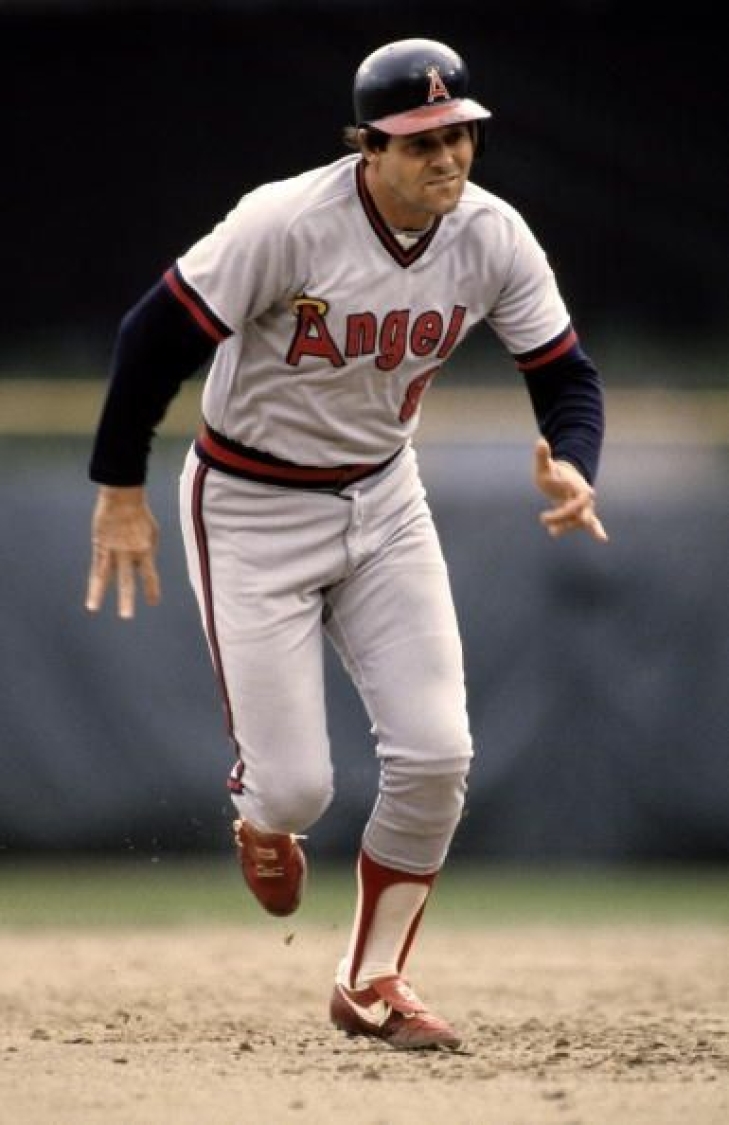
Bob Boone is far greater known for his time in Philadelphia, where he helped them win the 1980 World Series, though don't sleep on what he did with the Angels.
Boone was with California for seven seasons and only had 742 Hits with an OPS of .620. That is poor offense, but the Angels did not acquire him for his bat. At present, Boone’s Angels Defensive bWAR of 14.7 is the highest in franchise history and is higher than what he did in Philadelphia. An All-Star in 1983, Boone led all American League Catchers in Total Zone Runs five times, Putouts five times, and Caught Stealing Percentage twice. He never finished less than fifth in Caught Stealing Percentage with California, and he added four Gold Gloves in his trophy case.
Playing with the Angels until he was 40, he left for Kansas City as a Free Agent, playing two more years before retiring.
38. Albie Pearson
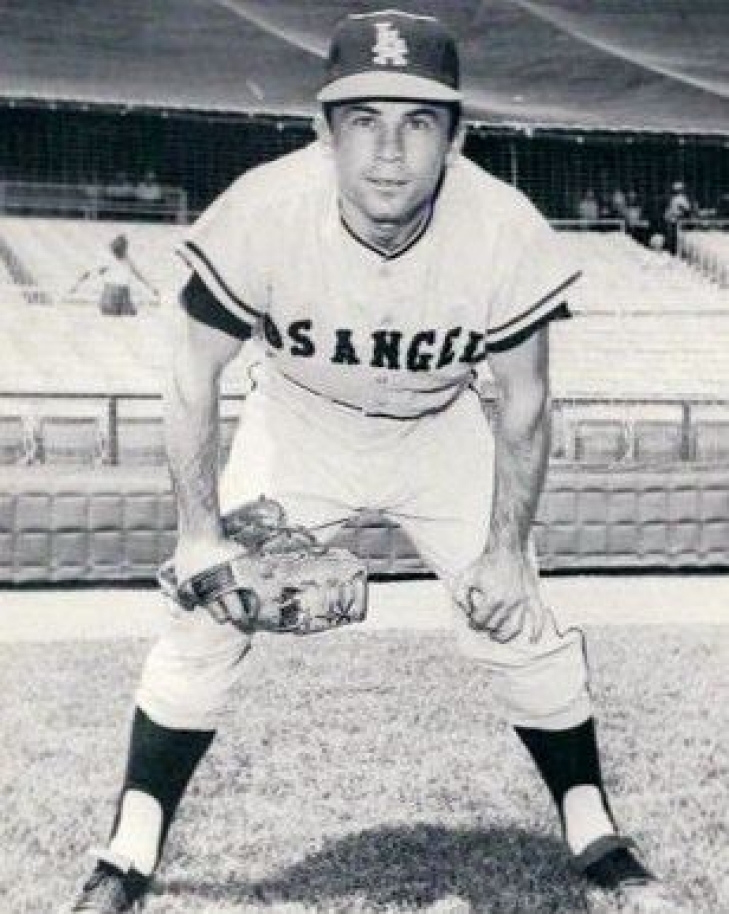
Albie Pearson was the American League Rookie of the Year in 1958 with Washington, but his arrival to the Angels in 1961 as part of the Expansion Draft was not met with a lot of fanfare as his two previous years with the Senators and Orioles were not great. With Los Angeles, he was able to recapture some of that rookie magic, albeit for a brief time.
Standing at only 5' 5" and the shortest man in baseball at the time, Pearson was a Major League starter again, and the Outfielder batted .288 with a .420 OBP in his 1961 comeback season. He followed that with a league-leading 115 Runs Scored in 1962 and was an All-Star in 1963, posting career-highs in Hits (176) and Batting Average (.304). After an injury-plagued year in 1964, Pearson declined and was released in 1966.
With the Angels, Pearson had 618 Hits with a Batting Average of .275.
31. Adam Kennedy
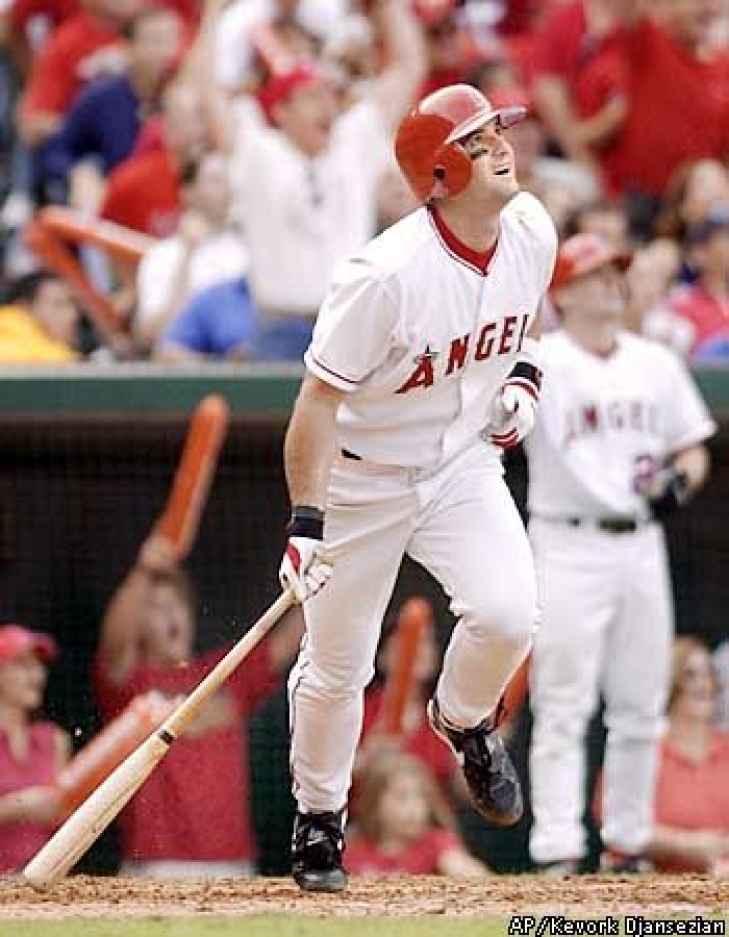
After 33 Games with St. Louis, Adam Kennedy was traded to the Anaheim Angels, sending Jim Edmonds the opposite direction. Kennedy would become the Angels' starting Second Baseman the year after (2000) and would be so until 2006.
Kennedy was not a great hitter but was excellent with the glove. From 2001 to 2005, he had at least 1.0 in Defensive bWAR, peaking with 2.0 in 2005. With the bat, he did enough, batting at least .266 each year as an Angel and batted .312 in their 2002 World Series Championship year. He was especially good in the ALCS, blasting three Home Runs with a 1.357 OPS.
Kennedy left the Angels to return to St. Louis in 2006 as a Free Agent, and with Anaheim/Los Angeles with 935 Hits, 123 Stolen Bases, and a .280 Batting Average.
4. Shohei Ohtani

Shohei Ohtani arrived in Anaheim not merely as a player, but as a myth in the making. He was a once-in-a-century anomaly, a two-way titan who promised to bridge the gap between the modern era and the sepia-toned legends of the Deadball age. For six seasons, he turned every afternoon into a laboratory for the impossible, redefining the limits of human athletic achievement. He pitched with the fire of a desert sun and hit with the force of a tectonic shift, a phenomenon whose individual light was often the only thing keeping the franchise from total darkness.
Ohtani’s ascent began with a 2018 debut that felt like a fever dream. He reached an immediate, high-frequency impact, launching 22 home runs while maintaining a 3.31 ERA over ten starts, a duality that secured him Rookie of the Year honors. However, the physical toll of his ambition led to a sudden plateau; surgery silenced his arm in 2019, and the 2020 campaign saw his production dip into a worrying valley during the shortened season. Yet, he possessed a focused intensity that suggested he was merely recalibrating, a belief vindicated in 2021 when he authored a season that hadn't been witnessed since the days of Babe Ruth.
The core of his tenure was defined by three years of unrivaled, dual-threat dominance. In 2021, Ohtani reached a career summit, blasting 46 home runs and stealing 26 bases while simultaneously striking out 156 batters. He was the unanimous MVP, a statistical outlier who proved he could lead a rotation and a lineup at the same time. He followed this in 2022 by nearly capturing the Cy Young, finishing fourth in the voting with 219 strikeouts while still smacking 34 home runs. He showed the organization that he was a force without peer, a model of efficiency who was effectively two Hall of Fame players occupying a single jersey.
Despite this individual brilliance, the Angels’ front office oversaw a period of tragic stagnation, effectively wasting the prime of a player who was doing everything humanly possible to carry the club. Everything culminated in 2023, a year where Ohtani reached a new peak of offensive destruction, leading the league in home runs (44) and slugging (.654) while winning his second unanimous MVP. As the team imploded around him, the organization made desperate, short-term trades in a fruitless attempt to manufacture a playoff run and entice him to stay. The reality of the situation reached a cold final chapter following the season; Ohtani chose to remain in Los Angeles, but he traded the red of Anaheim for the blue of the Dodgers.
He left the Angels with 171 home runs, 608 strikeouts, and two MVP trophies, a legacy of unmatched individual glory set against a backdrop of organizational failure.