

Site Admin
42. Sherry Magee

Luckily for Sherry Magee, there was no YouTube in 1911; otherwise, all that would ever be replayed of him was the time he decked an umpire with one punch after a called third strike. Of course, he played in the 1900s and 1910s, so there isn’t any footage of him on YouTube at all.
Magee should not be remembered for that moment; his intensity led to moments like that. Magee was a rare star of the deadball era and, for ten years, made multiple appearances at the top of every offensive category imaginable. Magee was also stellar in the outfield and hunted down fly balls the same way we hunted pitches with his bat. Magee’s intensity was matched by his unwavering principles. At the age of 34 (and still more than capable of playing in the Majors), Sherry Magee would finish out his playing career in the Minors to avoid playing for owners he despised. His legacy and wallet would have been enriched playing in the bigs, but his principles would not allow it.
Magee might have had more impressive career numbers had he stayed in the Majors, but he had great numbers for the number of seasons he played. He may have let his temper get the best of him often, but he always wanted to win. Most great athletes do.
Should Sherry Magee be in the Hall of Fame?
40. Allie Reynolds
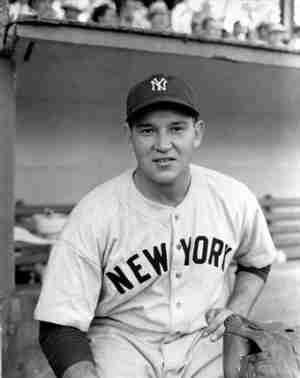
The man called “Superchief” was one of the great right-handed pitchers of the New York Yankees. Allie Reynolds was the first man to toss two no-hitters in a season in the American League, though that was just a small sample of what he accomplished.
The Yankees were a loaded team, and Allie Reynolds was a huge part of that. During the Superchief’s tenure, the Bronx Bombers captured six World Series. His post-season record was 7-2, and he was starting as well as relieving, as shown by his four saves. This was the same type of way he was used in the regular season, as Allie often came out of the pen as well as started. Basically, the flamethrower did whatever was called upon to get the win for his team.
Because of this, Allie Reynolds cannot be judged solely on wins and losses. He was not always placed in positions where he could win games, and he would have easily had more victories if he had been used primarily as a starter. Regardless, baseball knew what they had as he was a perennial All-Star regardless of how he was used.
Should Allie Reynolds be in the Hall of Fame?
26. Dale Murphy
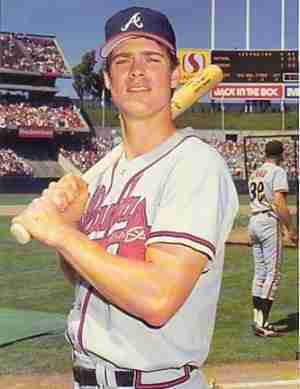
Right now, it is hard to imagine a time when the Atlanta Braves were not relevant in the world of Professional Baseball, but in the 1980’s, frankly, Ted Turner’s team wasn’t a spectacular one. The exception to that rule was Dale Murphy, who in his prime drew comparisons to legends such as Mays and DiMaggio. No, really, he did.
For a five-year stretch, Dale Murphy was among the most feared hitters in the league. He hit for power, had a decent average, and was excellent in the clutch. In addition, Murphy knew how to handle himself in the field, as shown by his five Gold Gloves. He played every day and was a huge favorite among the Braves faithful. He was the only Brave at the time who could get National attention, and he did so quickly with his loud bat and quiet demeanor.
Unfortunately for Dale Murphy, his offensive numbers seriously took a tumble by the age of 32, and he posted substandard numbers thereafter. Of course, all great players suffer a decline, but because it happened to him earlier than it does to others, he did not reach the milestones that stat lovers will point out. Subsequently, he struck out a lot in his career, even during his MVP years. Had his career tailed off at the age of 34, and he put up a career that added two or three hundred more hits, his stock would greatly improve, and his contributions on a bad Braves team might be celebrated more outside of Georgia than they have.
Should Dale Murphy be in the Hall of Fame?
52. Albert Belle
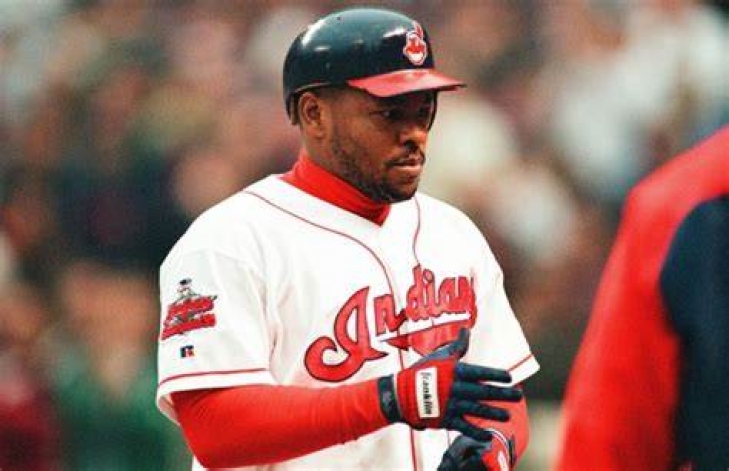
If you look at the Wikipedia article on Albert Belle you will find that the section on his controversies is longer than his accomplishments. He fought with sportswriters, with fans, with other players, and his temper was legendary. So was his prowess with a bat.
Albert Belle may have been the most feared slugger of the 1990s. He was the first 50/50 man (doubles and home runs) in baseball. He pounded out extra base hits by the truckload and was able to generate a decent Batting Average. He was a constant Triple Crown threat as he was to win the MVP Award. In fact, Belle was jobbed out of the 1995 MVP to Mo Vaughn, likely due to the baseball media's hatred of him.
Albert Belle retired at the age of 34 due to a degenerative hip condition, though he quit his baseball career before his numbers declined to an unproductive level. The writers’ bad will towards Belle meant they would have had to amass numbers they could not ignore. As he did not hit them, they dropped him off the ballot after two years. If the writers only looked at what he did on the field instead of off of it (as they should), it is hard for them to justify why his vote tally was so low.