

Site Admin
61. Carl Mays
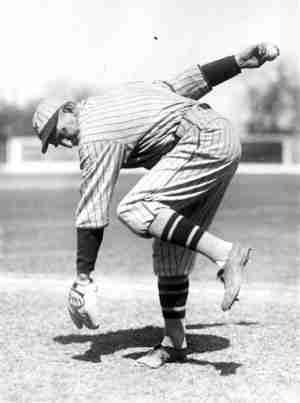
It is often the case for various Halls of Fame to discriminate based on the likeability of the candidate. Carl Mays was not necessarily the most liked player in his day, and his brushes with controversy probably pushed Mays on the opposite side of the bubble.
Sadly, Carl Mays is not best remembered for his four World Series rings or his 208 career wins. He is best known for a beanball he pitched that killed the Cleveland Indians’ Ray Chapman. Mays was also not the most liked player and was a spitball pitcher (legal at the time) which has not necessarily shone him in the brightest of lights. He was a very adept submarine style pitcher and though he won his share of games he could never shake the cloud of Ray Chapman.
Mays may eventually be considered, as the sting of his accident may have washed away. What doesn’t is that he was a purveyor of the spitball, and that in itself could be enough to keep him out.
Should Carl Mays be in the Hall of Fame?
47. Billy Pierce
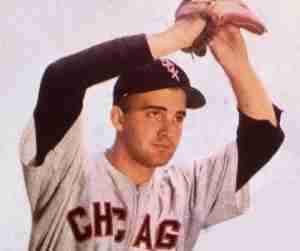
Regardless of the era, it is an impressive feat to be a key member of Chicago's rotation for a decade. The Chicago White Sox may not have won a World Series in the ’50s, but they were a good team, and much of their success was due to the pitching of Billy Pierce.
Through the decade of the ’50s, few were more dependable on the mound than Billy Pierce. The southpaw won 154 games that decade and was constantly pitted against aces of other staffs. Pierce was occasionally the victim of poor run support from his own team, but was still very much a winner. He had a wide assortment of pitches and an excellent fastball that shockingly came from his thin frame.
As a great pitcher for Chicago, he was part of a very good team that won the pennant only once. Pierce himself was also very good, but he played at the same time with other good pitchers, and the Sporting News Awards was all he was able to win. Pierce has been largely forgotten, even in Chicago. He deserves a lot better than that.
Should Billy Pierce be in the Hall of Fame?
50. Reggie Smith
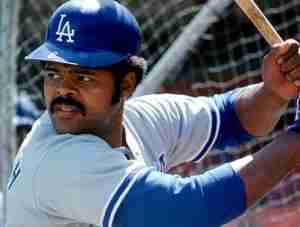
In the late 70’s, Hall of Fame pitcher Don Sutton famously noted that Steve Garvey was not the best player on the Dodgers; it was Reggie Smith. Garvey may have been the most popular, but Sutton was not alone in his assessment of Reggie Smith.
In his prime, Reggie Smith was a legitimate five-tool player. He had decent power, decent speed, and was a smart player who always knew how to get on base. In retrospect, it is hard to find a real criticism of his game, as he was above average in every aspect of his baseball acumen. In fact, should we ever look to do the most underrated players in baseball history, Reggie Smith might very well make the top (or at least top ten) of our list.
Reggie Smith failed to gain the attention of fans and writers alike, as good as he was at different baseball skills, he was not the best at any of them. He could hit homers, but many hit more. He could steal, but many swiped more. He could field, but many were better. Reggie did everything so well, but without one “great” on the baseball report card, he failed to achieve the fame he should have despite playing for high-profile squads.
Should Reggie Smith be in the Hall of Fame?
34. Graig Nettles
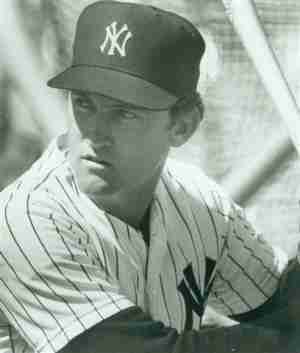
Many baseball players are known for their clutch performances at the plate. Graig Nettles certainly had many clutch hits in his long career, but he may have been known for having more clutch performances with his glove.
Many players start off fast and tail off, but Graig Nettles really hit his stride eight years into his pro career. He was a power-hitting third baseman and was a big part of the Yankees' three consecutive American League Pennants in the ’70s. As his bat came alive, more people paid attention to his aggressive fielding and noticed his wide range at the hot corner. Although he did it well in the 1978 World Series, his defensive expertise was never better, and he robbed Reggie Smith of extra-base hits twice in Game 3.
Despite his ability to hit the long ball, Graig Nettles had a fairly low Batting Average and only hit higher than .270 once. He did walk a lot, though, and for a power hitter, did not strike out that much. Still, justifying Nettles for the Hall with a .248 career Batting Average does prove difficult, and without an MVP season proves harder. Of course, how many teams in the ’70s wanted Nettles as their third baseman? Likely, the answer is almost all of them.
Should Graig Nettles be in the Hall of Fame?