


Darryl Tahirali
Say Hey Has Gone Away. What Is There to Say?
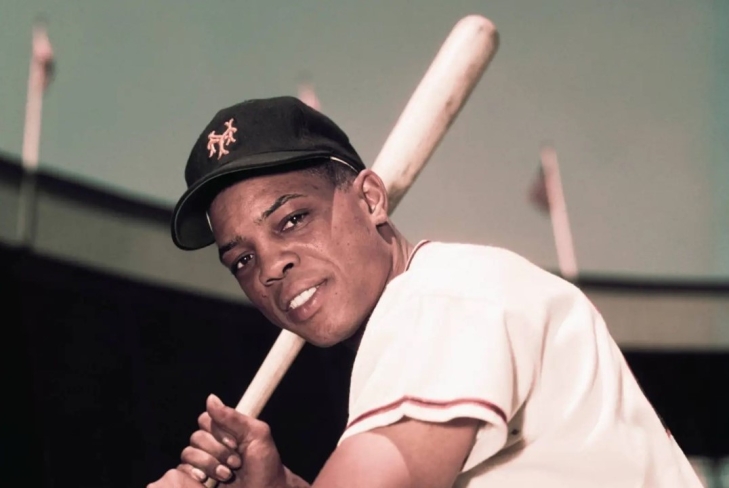
Willie Mays is my all-time favorite baseball player. He has been ever since I was a boy. Why I came to that conclusion at that young age, I don't know. I never even got to see the Say Hey Kid play in person. It was just a childhood intuition that can be rationalized only as an adult, the attempt to understand what instinct already knew to be true. And while I have long since shunned the idea of "hero worship" and "role models," if I ever embraced those ideas in the first place, as far as I was concerned, Willie Mays has always resided on another, higher plane of existence.
Six weeks after he turned 93, Willie Howard Mays died of heart failure in Palo Alto, California, on June 18. Now the Say Hey Kid does reside on another, higher plane of existence, whatever that may be, whether actual or imaginary, whether, to abuse the hoary cliché, it be "heaven's all-star squad" with all the baseball gods who ascended to the Great Diamond in the Sky before him.
Indeed, I won't reiterate the usual narratives and statistics that form the standard approach for obituaries. Mays's story has been told countless times, and it will continue to be told long after contemporary coverage begins to fade because his story is a part of history just as baseball is a part of history, and it isn't just American history as baseball has long been a prime American cultural export.
Robbie Robertson's Last Waltz
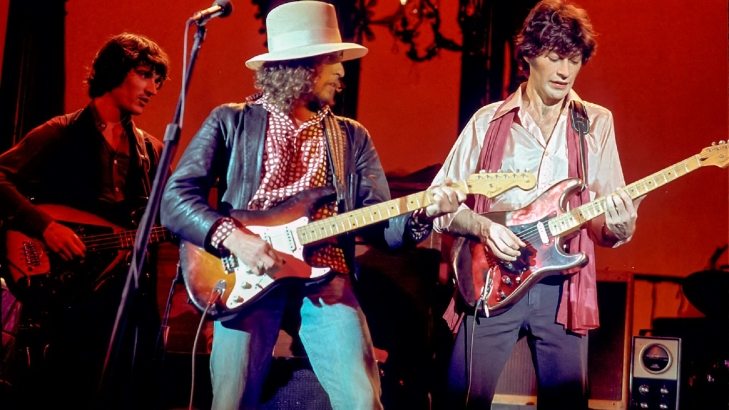
Quite honestly, I can't you tell how many times I've seen The Last Waltz, but I do know that the next time I do, it will be with sadness knowing that Robbie Robertson, alive forever in that landmark rock and roll concert movie, died on August 9 at the age of 80 after his battle with prostate cancer.
Given that The Last Waltz had been directed by Martin Scorsese and had featured a galaxy of classic-rock stars from Bob Dylan, Joni Mitchell, and Van Morrison to Eric Clapton, Muddy Waters, and Neil Young, it is somehow fitting that even casual rock fans—certainly those born after the movie's release date of 1978—who might have vaguely heard of the Band, whose farewell concert is the very purpose of the movie, might still ask, "Robbie who?"
Remembering Gordon Lightfoot
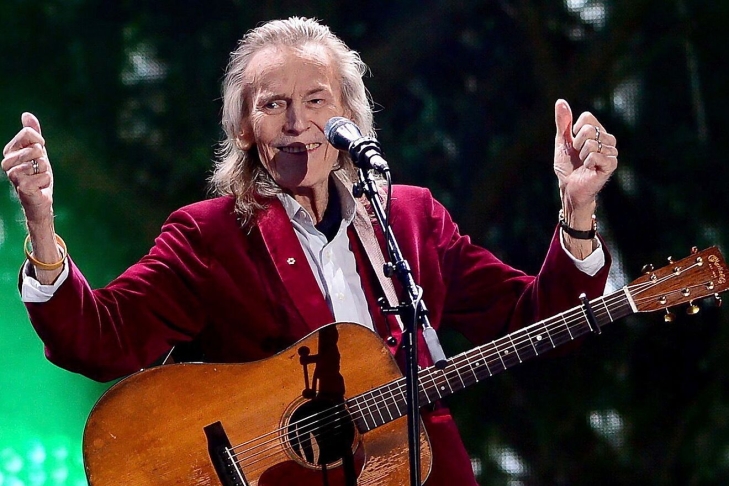
The church bell will ring one last time for Gordon Lightfoot, "the Canadian musical institution," as critic Bart Testa once termed him. That reference is of course to the last verse of the singer-guitarist-songwriter's signature song "The Wreck of the Edmund Fitzgerald," in which "in a musty old hall in Detroit" "the church bell chimed 'til it rang twenty-nine times for each man on the Edmund Fitzgerald," an ore carrier that sank in Lake Superior during a heavy storm in November 1975.
That bell chimes now for Gordon, who died of natural causes at age 84 in Toronto, Ontario, on May 1. Lightfoot had to cancel a tour just three weeks prior to his death, citing health issues as the reason. A bell tolling for him is sadly fitting, for it was Lightfoot's song, a Number Two US hit in 1976, that demonstrated evocatively how folk music, which might have seemed quaint and out-of-date amidst the mid-Seventies disco, glam-rock, and arena-rock, with hints of burgeoning punk-rock beginning to scratch and claw forth, still had the essence to capture the moment.
What's Still Wrong with the Rock and Roll Hall of Fame?
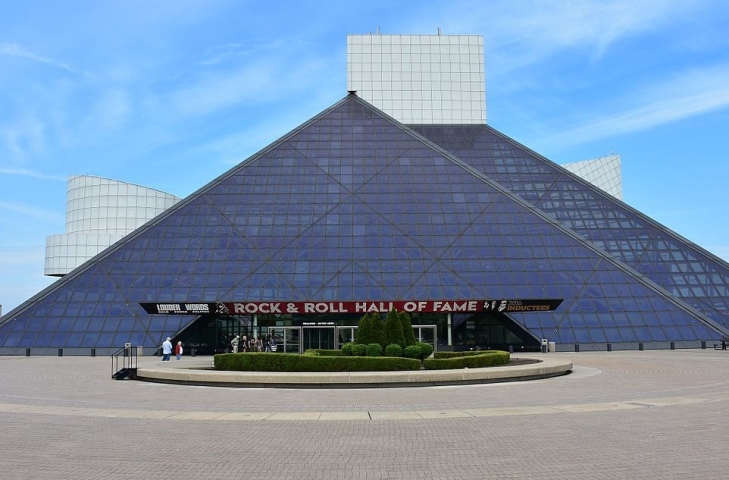
Is the Rock and Roll Hall of Fame still relevant? Was the Rock and Roll Hall of Fame ever relevant? Does anyone still care about the Rock Hall except as a punching bag because his or her favorite artist has yet to be inducted? And just what kind of honorific is it to be labeled as a "Hall of Fame artist," anyway? Does it make their music more legitimate? Less legitimate?
Make no mistake: The notion of memorializing the music of the "Rock and Roll Era," popular music dating primarily from the mid-1950s and made almost exclusively in Western, English-speaking countries, is a worthwhile and even noble one. There is no disputing the enormous impact popular music has made in the last several decades, not just on popular culture but on the society that bred it, and establishing an institution, the Rock and Roll Hall of Fame (located in Cleveland, Ohio), to showcase its legacy would seem both logical and inevitable.
