


Site Admin
7. Keenan McCardell
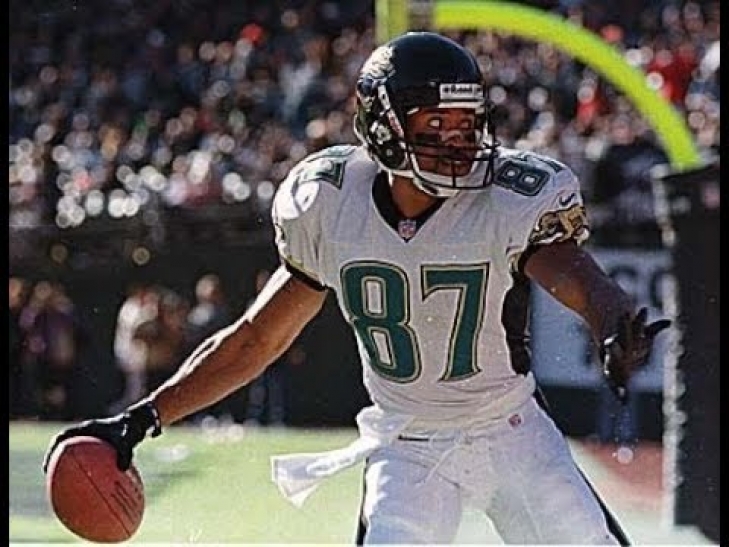
After grinding through four development seasons in Cleveland under Bill Belichick—culminating in a 56-catch campaign in 1995—Keenan McCardell hit free agency in 1996 and found his ideal football home. Landing in Northeast Florida on a three-year deal, he instantly became the missing piece for Tom Coughlin’s high-octane offense, transforming the young Jaguars into an immediate contender.
Operating as the tactical, possession-oriented counterpart to Jimmy Smith’s explosive deep game, McCardell brought elite route discipline and fearless toughness over the middle. He excelled at converting third downs, using crisp footwork and strong hands to haul in throws in heavy traffic. Opposite "Silk Lightning" Smith, McCardell earned the nickname "Velvet Thunder" for his ability to slice through secondary schemes and punishment-heavy coverage areas without flinching.
McCardell made an immediate impact during his inaugural 1996 season in Jacksonville, catching 85 passes for 1,129 yards to earn his first career Pro Bowl selection and propel the franchise to the AFC Championship Game. He proved remarkably consistent over the next five years, topping the 1,100-yard mark three more times (1997, 2000, 2001) and ranking among the top ten in league receiving yards during each of those stellar campaigns.
His reliability under pressure provided Mark Brunell with a trusted safety valve on every drive, ensuring Jacksonville boasted the most feared wideout tandem of the late 1990s. Though salary cap constraints forced the Jaguars to release McCardell after the 2001 season, he went on to win Super Bowl XXXVII with Tampa Bay—catching two touchdowns in the big game—and reached another Pro Bowl in San Diego.
With Jacksonville, he compiled 499 receptions, 6,393 receiving yards, and 30 receiving touchdowns.
6. Brad Meester
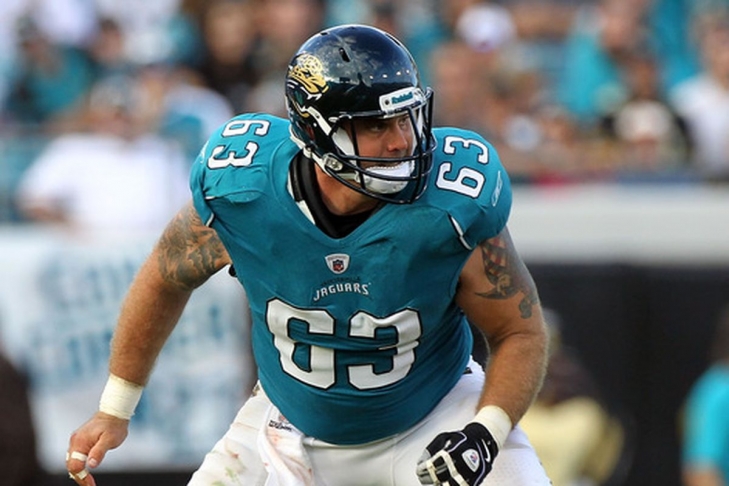
Selected in the second round (60th overall) out of Northern Iowa in 2000, Brad Meester quietly arrived in Jacksonville and went on to set the ultimate gold standard for durability and longevity in franchise history. While small-school offensive linemen often face a steep learning curve in the NFL, Meester stepped straight into the starting lineup as a rookie, immediately anchoring the interior of the line and never looking back.
For his first three seasons in Duval County, Meester served as the team's reliable starting left guard, using exceptional leverage, smart footwork, and a lunch-pail work ethic to pave lanes for Fred Taylor. In 2003, the coaching staff moved him to center—a transition that unlocked his true calling. Operating as the offensive line's cerebral anchor, Meester took over pre-snap line calls and blitz identification, providing a steadying presence for four different starting quarterbacks across multiple coaching regimes.
Meester may have been overlooked for national honors like Pro Bowl rosters, but his value to Jacksonville was immeasurable. He was the constant physical link between the Jaguars' early-2000s playoff squads and the Maurice Jones-Drew era, famously blocking for both of the franchise's 1,000-yard rushing icons. His reliability became legendary; across 14 grueling seasons in the trenches, Meester missed only a handful of games, establishing an indestructible iron-man reputation in the Jacksonville locker room.
His storied career reached a fitting, fan-favorite crescendo in his final home game in December 2013 against Tennessee. In a heartwarming tribute to his 14 years of service, the Jaguars called a screen pass specifically for the retiring center, resulting in a memorable 19-yard reception—the only catch of his entire NFL career—to a roaring standing ovation.
He retired shortly after, standing far and away as the franchise’s undisputed all-time leader in games played and games started, leaving a legacy of quiet, unyielding excellence. He started all of his 209 Games, and in 2021, he was inducted into the Pride of the Jaguars.
5. Maurice Jones-Drew
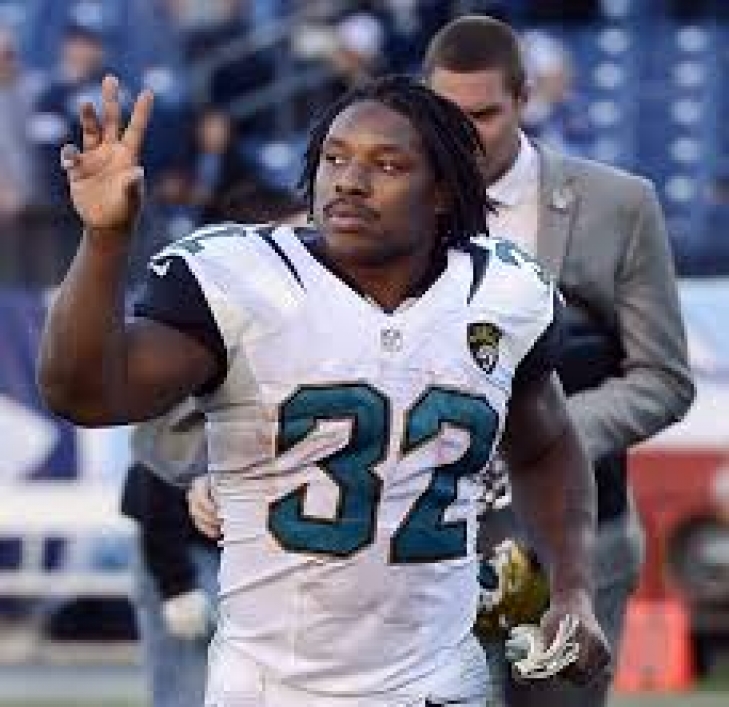
Drafted in the second round (60th overall) out of UCLA in 2006, Maurice Jones-Drew walked into Jacksonville measuring just 5-foot-7, but he instantly packed 210 pounds of pure dynamite. What NFL scouts foolishly miscalculated as a size handicap turned out to be his ultimate weapon; "MJD" hid behind giant offensive linemen before exploding into secondary lanes with low center-of-gravity power, deceptive speed, and leg drive that turned arm tackles into highlight-reel collisions.
During his first three seasons, Jones-Drew served as the lethal lightning to Fred Taylor's thunder in one of the league's most feared backfield tandems. Though sharing carries kept him just under the 1,000-yard mark annually, his nose for the goal line was unmatched. He racked up an astonishing 34 rushing touchdowns over that opening three-year span, cementing his status as a premier red-zone finisher while contributing heavily as a pass-catcher and kickoff returner.
When Taylor left in 2009, Jones-Drew took on the lead role, beginning an impressive three-year streak as a Pro Bowler. Between 2009 and 2011, he consistently gained at least 1,300 rushing yards each season, effectively carrying Jacksonville's offense during its rebuilding phase. His standout season was in 2011, when he challenged stacked defensive fronts to lead the NFL with 1,606 rushing yards, scoring eight touchdowns. This performance earned him his first First-Team All-Pro nod and the franchise's second rushing title.
Following two more seasons in Duval County plagued by a foot injury, Jones-Drew joined Oakland in 2014 before signing a ceremonial contract to retire as a Jaguar. He departed as the franchise's undisputed touchdown king, leaving behind a legacy as one of the most explosive and fan-favorite playmakers to ever wear Teal and Black.
He compiled 8,071 rushing yards, 335 receptions for 2,873 receiving yards, and 81 total touchdowns (68 rushing, 11 receiving, 2 kickoff return) for the Jaguars, departing with the franchise record for career rushing touchdowns. He was inducted as a member of the Pride of the Jaguars in 2024.
4. Mark Brunell
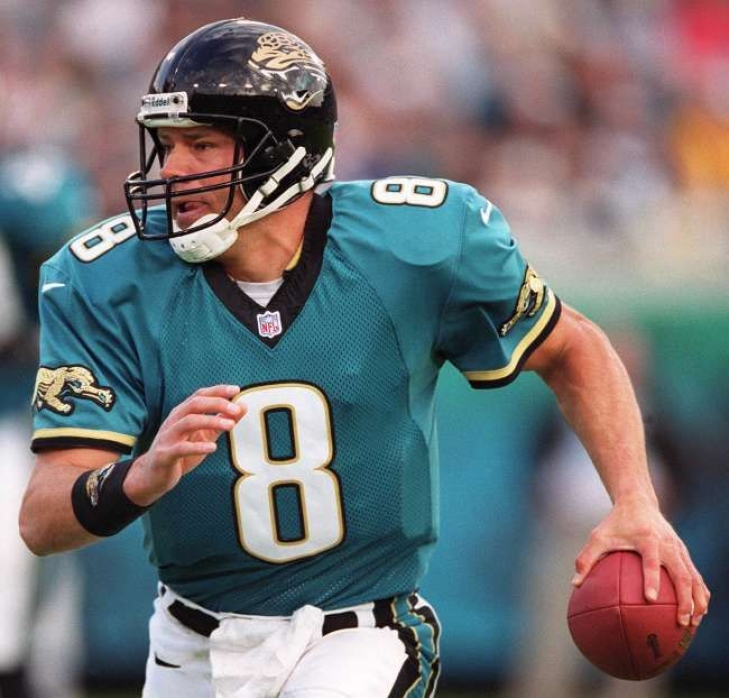
Stuck on the bench in Green Bay behind ironman Brett Favre, Mark Brunell faced an impossible bottleneck for playing time. That changed in April 1995 when the expansion Jacksonville Jaguars shipped third- and fifth-round picks to the Packers, instantly handing the young left-hander the keys to a brand-new franchise. Brunell seized the opportunity, becoming the charismatic, dual-threat leader who put Jacksonville on the NFL map.
Armed with a strong, accurate left arm and deceptive scramble ability, Brunell brought playmaking flair to Tom Coughlin’s offense. He possessed an uncanny ability to evade oncoming pass rushers, extend broken plays, and throw with pinpoint precision on the move. His dual-threat versatility opened up massive passing lanes for Jimmy Smith and Keenan McCardell, transforming a fledgling expansion outfit into a feared, high-scoring AFC contender in record time.
After taking over the starting role midway through Jacksonville's inaugural 1995 season, Brunell put together a historic 1996 campaign. He led the entire NFL with 4,367 passing yards, threw 19 touchdowns, and added 396 rushing yards to earn his first Pro Bowl selection. In just the franchise's second year of existence, Brunell orchestrated a stunning playoff upset over John Elway's Denver Broncos, driving the Jaguars all the way to the AFC Championship Game.
Brunell continued his steady leadership through the turn of the century, earning two additional Pro Bowl nods (1997, 1999) and guiding Jacksonville back to the AFC title game during a franchise-best 14–2 run in 1999. Across his nine years in Teal and Black, he logged four 3,000-yard passing seasons and served as the steady operational hand during the greatest era in franchise history before being traded to Washington in early 2004.
He compiled 25,698 passing yards, 144 passing touchdowns, 86 interceptions, and 2,219 rushing yards with 14 rushing touchdowns for the Jaguars. Brunell was inducted into the Pride of the Jaguars in 2013.
