


Site Admin
12. DeMarcus Ware
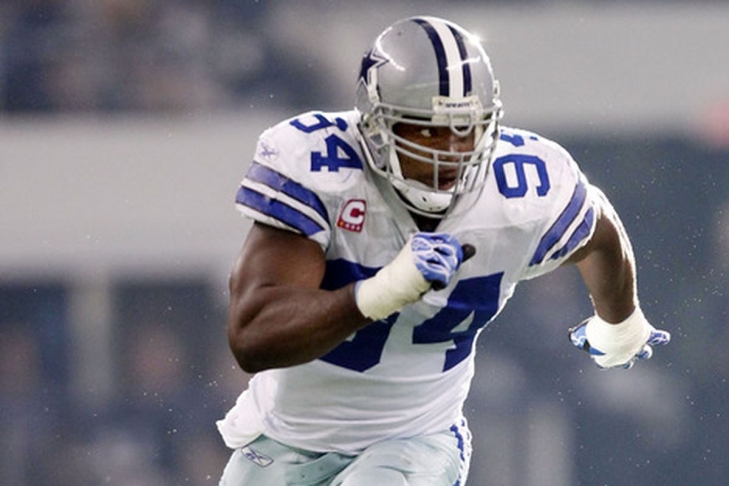
Plucked from tiny Troy University with the 11th overall pick in 2005, the explosive edge rusher made a seamless transition to outside linebacker in Bill Parcells' 3-4 defense. DeMarcus Ware immediately proved that his elite traits translated to the pro level, posting an eight-sack rookie year that set the stage for one of the most dominant pass-rushing runs in modern NFL history.
His major breakthrough came in his second season in 2006, when he recorded 11.5 sacks and three forced fumbles. This performance began an impressive run of seven straight Pro Bowl selections from 2006 to 2012, a period during which Ware dominated opposing tackles with a lethal mix of quick dip-and-bend speed and leverage-driven strength.
During this incredible run of elite play, Ware earned First-Team All-Pro honors four times (2007, 2008, 2009, and 2011) and claimed two NFL sack titles. His finest individual campaign came in 2008, when he recorded a monster 20.0-sack effort, forced six fumbles, and led the league with 27 tackles for loss. He paced the NFL in sacks again in 2010 with 15.5 takedowns, ultimately topping the league in tackles for loss three times (2008, 2010, and 2011) as the undeniable centerpiece of the Dallas defense.
Beyond those sack titles, Ware nearly achieved a third in 2011 with 19.5 sacks, marking his second season with at least 19 takedowns—an accomplishment achieved by only a few pass rushers in league history. He earned a spot on the NFL 2000s All-Decade Team and received two Butkus Awards as the top linebacker of the pro game, regularly disrupting opposing strategies with consistent double-digit sacks and 32 forced fumbles in Dallas.
Cap's injuries forced his release after an injury-hampered 2013 season, prompting Ware to join the Denver Broncos. He earned two more Pro Bowl nods in Colorado and served as a crucial veteran leader alongside Von Miller, capping his playing career with a Super Bowl 50 victory before retiring with 138.5 total career sacks.
In his nine seasons in Dallas (2005–2013), Ware played in 141 games, compiling 117.0 sacks and 32 forced fumbles, and left as the organization's all-time leader in quarterback takedowns. The Cowboys inducted him into the Ring of Honor in 2023, complementing his official entry into the Pro Football Hall of Fame.
11. Jason Witten
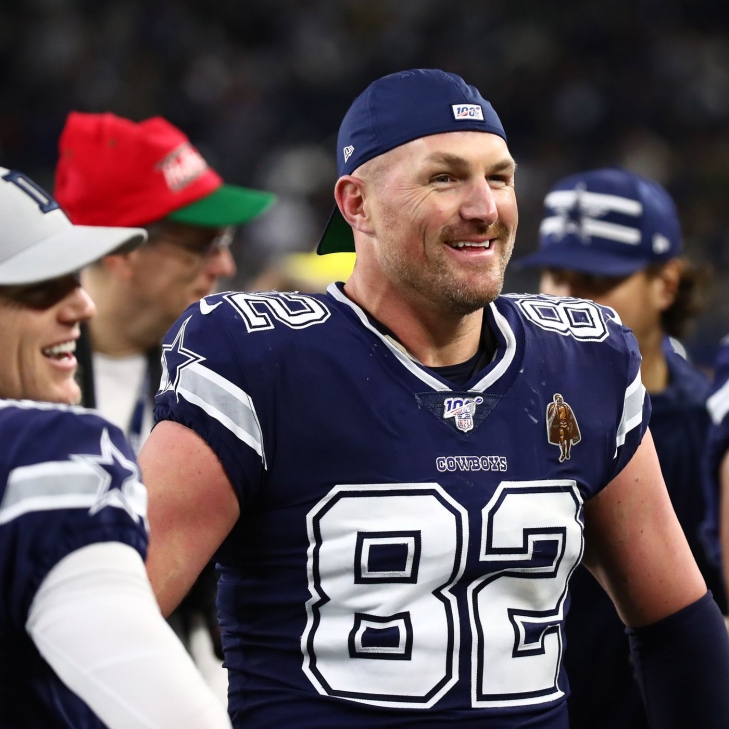
Drafted out of Tennessee in the third round of the 2003 NFL Draft, the 20-year-old tight end quickly made a strong start with Dallas, beginning to reshape the position for a new generation. After a promising rookie season that earned him All-Rookie honors, Jason Witten truly shined in his second year, catching 87 passes for 980 yards and six touchdowns in 2004. That remarkable season earned him his first Pro Bowl and cemented his role as a reliable, high-volume target for the Cowboys' passing game.
That early breakout sparked an impressive ten-year period of consistent aerial output and physical superiority. From 2004 to 2014, Witten was selected for the Pro Bowl ten times within 11 seasons, missing only in 2011. He often took advantage of single coverage in the middle of the field, surpassing 1,000 receiving yards four times (2007, 2008, 2010, and 2012)—a remarkable feat for an inline tight end.
His standout individual campaigns occurred in 2007 and 2010, both earning him First-Team All-Pro honors. In 2007, Witten achieved career highs with 96 receptions for 1,145 yards, acting as Tony Romo's primary target and helping Dallas win the NFC East title. He was equally impressive in 2012, setting a then-NFL single-season record for tight ends with 110 receptions for 1,039 yards, earning Second-Team All-Pro recognition that year, complementing his 2008 honor.
Witten's consistent performance was rooted in his legendary toughness and classic tight end skills. He took great pride in his run-blocking at the point of attack, making him an every-down player who was rarely taken off the field. His reputation as an iron man was cemented in a 2007 game against Philadelphia, when he took a hard hit, lost his helmet, yet still ran another 30 yards to help set up a touchdown. Over 16 seasons with Dallas, Witten missed only one game, playing through injuries like fractured jaws, sprained ankles, and a lacerated spleen, never missing a snap.
After taking a break after the 2017 season to work in broadcasting, Witten unretired and returned to Dallas in 2019, where he caught 63 passes and scored four touchdowns. He ended his playing career with a brief season with Las Vegas in 2020, then officially retired as a Cowboy in 2021 by signing a one-day contract.
Across 16 seasons in Dallas (2003–2017, 2019), Witten appeared in a franchise-record 255 games, retiring as the organization's undisputed all-time leader in receptions (1,215) and receiving yards (12,977) while adding 60 touchdown catches. He is likely to be enshrined in both the Cowboys Ring of Honor and the Pro Football Hall of Fame.
8. Larry Allen
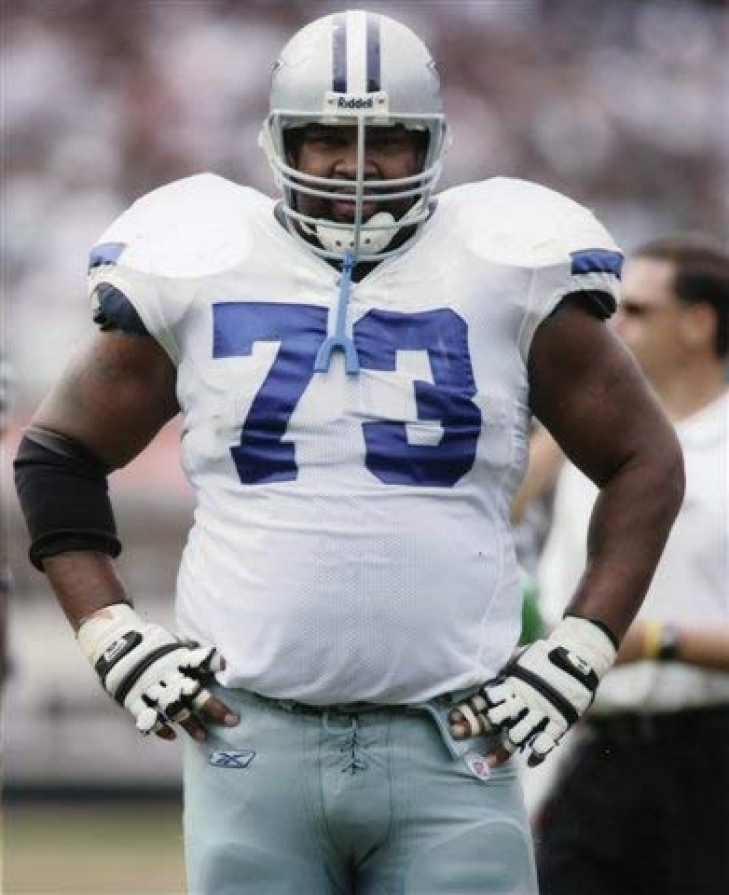
The selection of Larry Allen in the second round of the 1994 NFL Draft out of Division II Sonoma State proved to be one of the greatest drafting triumphs in franchise history. The hulking lineman made immediate history as the first player ever drafted from his school, bringing a terrifying blend of raw bench-press power and freakish open-field athleticism to a Dallas front line already considered standard-setting across the league.
His versatility paid immediate dividends for the defending champions. Pressed into service at right tackle as a rookie after starter Erik Williams was injured, Allen earned All-Rookie team honors for dominant edge blocking. The following season, he moved inside to right guard, anchoring the interior pocket and opening vast lanes for Emmitt Smith as Dallas marched to victory in Super Bowl XXX. That position change launched a three-year streak of Pro Bowl selections from 1995 to 1997, along with consecutive First-Team All-Pro nods in 1996 and 1997.
In 1998, Allen was moved to left tackle by the coaching staff, where he continued to excel, earning another Pro Bowl and First-Team All-Pro honors. In 1999, he transitioned to left guard—his permanent position—and kept dominating opposing defensive lines. Known for his legendary strength, including a bench press of 700 pounds, Allen's real prowess was his mobility. Opponents feared his pull into the flat on sweep plays, where he often took out secondary defenders in space. His switch to left guard resulted in three more straight First-Team All-Pro selections, completing a streak of six consecutive All-Pro honors across three different positions.
After earning ten total Pro Bowl selections during his 12 seasons in Dallas (1994–2005), Allen spent his final two NFL campaigns with the San Francisco 49ers, adding an eleventh Pro Bowl nod to his mantle in 2006 before calling it a career.
With Dallas, Allen started 170 of his 176 games and was also chosen for the 1990s, 2000s, and 100th Anniversary Teams. The Cowboys inducted Allen into the Ring of Honor in 2011, paving the way for his official enshrinement into the Pro Football Hall of Fame in 2013.
9. Michael Irvin
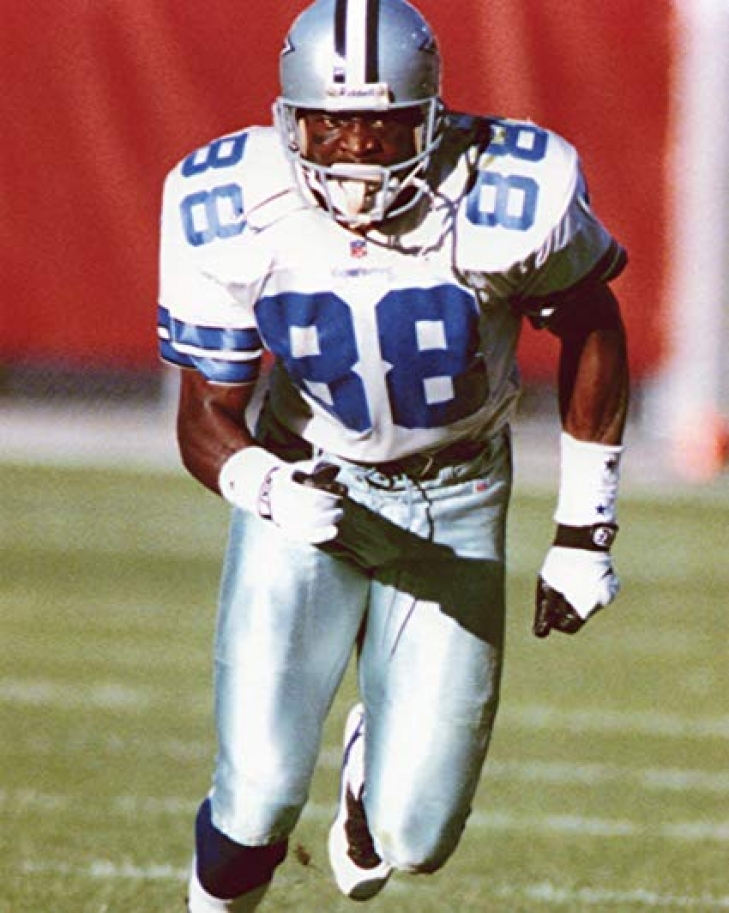
Arriving in Dallas as the 11th overall pick in 1988, the former Miami Hurricane brought an uncompromising swagger and physical dominance to a franchise on the brink of transformation. Long before Troy Aikman and Emmitt Smith joined the fold, Michael Irvin set the culture, using his frame, ferocious competitive edge, and elite hand-fighting at the line of scrimmage to establish himself as the team’s emotional engine.
"The Playmaker" exploded onto the national stage in 1991, putting together a breakout campaign that signaled the dawn of a new dynasty. Irvin led the NFL with 1,523 receiving yards on 93 catches, averaging an extraordinary 16.4 yards per reception and earning First-Team All-Pro honors. That dominant year launched a historic five-year run of Pro Bowl selections from 1991 through 1995. During this peak stretch, Irvin was utterly unshakable, clearing 1,200 receiving yards in each of those five seasons—highlighted by a monster 1995 campaign in which he set career highs with 111 receptions, 1,603 receiving yards, and 10 touchdowns.
Beyond his eye-popping individual numbers, Irvin possessed a rare ability to dictate the physical tempo of an entire game from the receiver position. He turned the slant route into an unstoppable art form, routinely taking violent hits across the middle of the field, only to pop back up and flex in the face of opposing secondaries. His relentless work ethic in practice became legendary throughout the organization, pushing Aikman and the rest of the roster to match his standard of perfection every day.
When the postseason was at its most intense, Irvin boosted his performance to legendary levels. He was a crucial high-pressure weapon during the Cowboys' journey to three Super Bowl victories (XXVII, XXVIII, and XXX), often beating single coverage on important third downs. In 16 playoff games, Irvin recorded 87 receptions for 1,315 yards and eight touchdowns, notably scoring two vital touchdowns in Super Bowl XXVII that significantly widened the game's margin against Buffalo. He also achieved two more 1,000-yard seasons in 1997 and 1998, showing his continued effectiveness as a prolific outside receiver.
A sudden spinal cord injury sustained on the Philadelphia turf early in the 1999 season brought his playing career to a premature end at age 33. Over 12 seasons in Dallas (1988–1999), Irvin played 159 games, with 750 receptions, 11,904 yards, and 65 touchdowns. He was enshrined in the Cowboys Ring of Honor in 2005 and the Pro Football Hall of Fame in 2007.
