


Site Admin
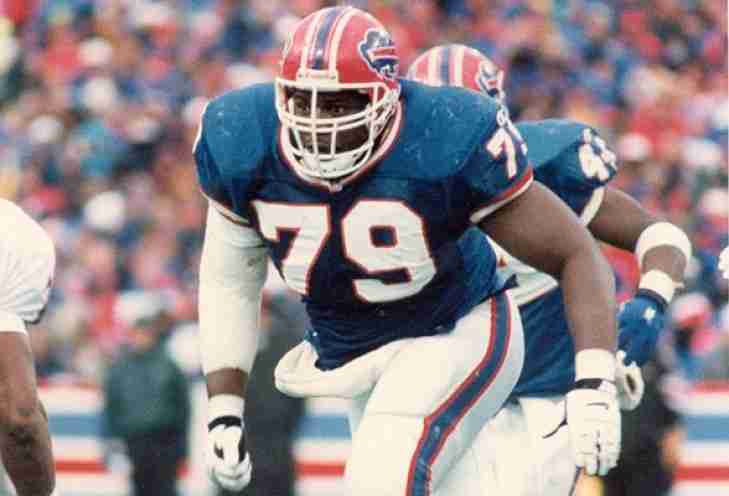
10. Ruben Brown
8. Billy Shaw
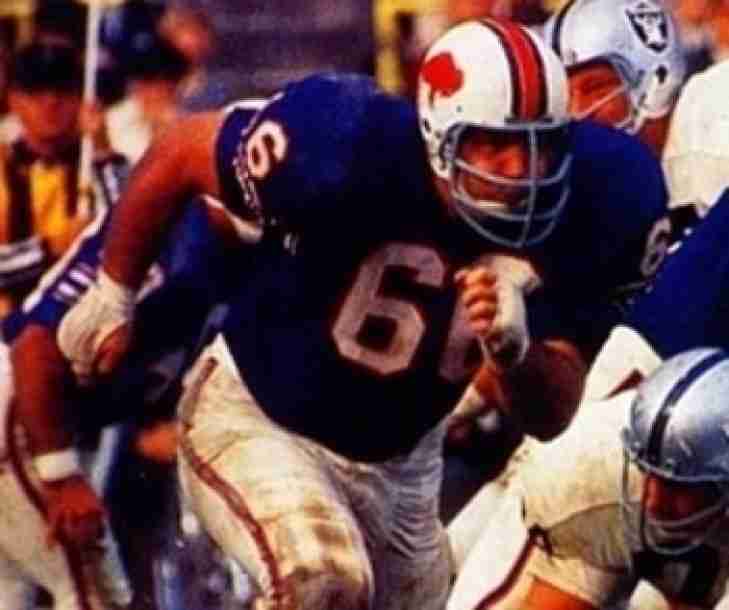
Billy Shaw, drafted in the second round of the 1961 AFL Draft out of Georgia Tech, faced a crucial decision. Picked at the same time by the Dallas Cowboys in the 14th round of the NFL Draft, Shaw chose Western New York because the Bills saw him as a mobile left guard, while Dallas considered him a linebacker. This decision changed the franchise’s course, as Shaw became a key figure in Buffalo's offensive line during its most successful pre-merger period.
In the 1960s, Shaw transformed interior line play with his exceptional speed and agility for an offensive lineman. Instead of just staying stationary as a pass protector, he was a versatile pulling guard, adept at leading sweep plays into open space. Shaw's quickness allowed him to get ahead of runners like Cookie Gilchrist and Wray Carlton, where he delivered powerful blocks against linebackers and defensive backs on the outside. At the same time, he had enough lower-body strength to handle larger interior tackles.
Shaw joined the starting lineup right away as a rookie in 1961, maintaining an elite level of consistency throughout his nine-year career. In 1962, he received his first AFL All-Star nod, beginning an impressive streak of eight consecutive All-Star selections from 1962 to 1969.
Between 1962 and 1966, Shaw received five consecutive First-Team All-AFL honors, anchoring Buffalo's championship offenses. His powerful blocking propelled the Bills to consecutive AFL Championships in 1964 and 1965, notably in 1964 when Buffalo defeated the San Diego Chargers 20-0 with a dominant ground game.
Shaw continued to be a top interior lineman until the end of the decade, earning Second-Team All-AFL honors in 1968 and 1969. He retired after the 1969 season, just before the AFL-NFL merger in 1970. During his nine seasons in Buffalo, he started 116 of his 119 career games and never played for another professional team.
His dominant decade secured his place on the AFL All-Time Team and the NFL 1960s All-Decade Team. The Buffalo Bills honored Shaw by adding him to their Wall of Fame in 1988. In 1999, he made football history by becoming the only player inducted into the Pro Football Hall of Fame who spent his entire professional career exclusively in the American Football League.
9. Joe DeLamielleure
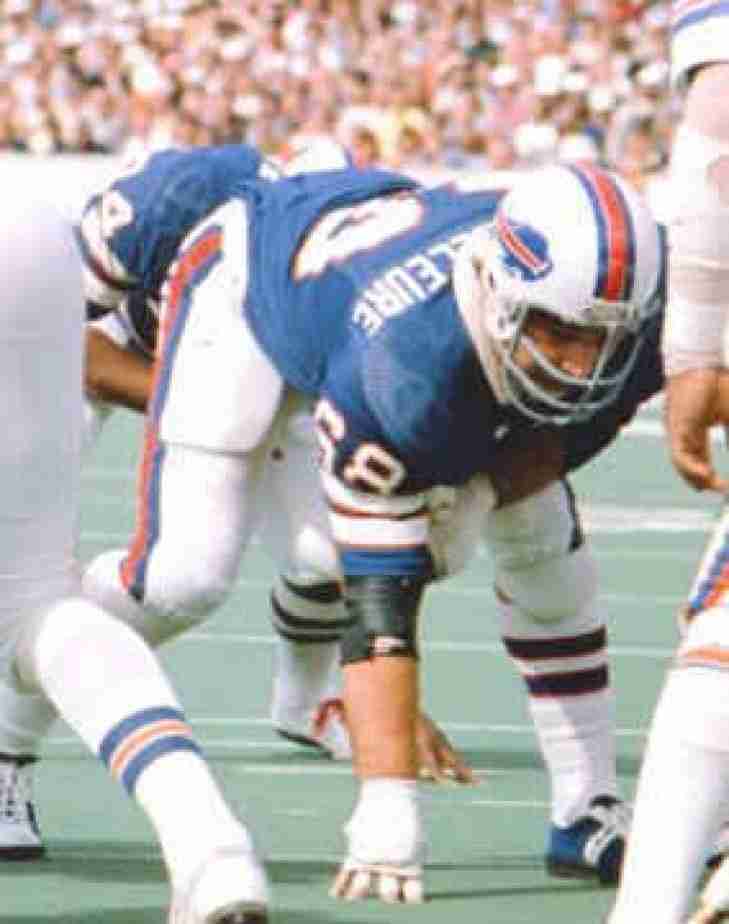
Selected 26th overall in the first round of the 1973 NFL Draft from Michigan State, Joe DeLamielleure arrived in Buffalo under immediate pressure to enhance the franchise's offensive line. Paired with tackle Donnie Green and guard Reggie McKenzie, "Joe D" became the central force of the renowned "Electric Company"—the offensive line celebrated for "turning the Juice loose" and propelling O.J. Simpson into the annals of history.
DeLamielleure, a 1970s guard, revolutionized guard play with quick footwork and superior balance. He was effective as a pulling guard, aggressively engaging linebackers on sweep plays. What distinguished him was his leverage and upper-body strength, allowing him to hold off top defensive tackles at the line of scrimmage. Notably, he frequently faced off against the legendary "Mean" Joe Greene of the Pittsburgh Steelers in intense trenches battles.
DeLamielleure received All-Rookie honors in 1973, starting immediately and playing a key role as Simpson became the NFL's first player to surpass 2,000 rushing yards (2,003 yards in 14 games).
His prime individual performance occurred in the mid-1970s. DeLamielleure received his first Pro Bowl nod in 1975, followed by three straight First-Team All-Pro selections in 1975, 1976, and 1977. His pulling blocks were key to Buffalo's 1975 offense, which at the time set an NFL record with 2,975 rushing yards in a single season. During his initial tenure with Buffalo (1973–1979), he appeared in five consecutive Pro Bowls and played in every game.
DeLamielleure was traded to the Cleveland Browns in 1980, where he played five seasons, earning another Pro Bowl in 1980 and supporting Brian Sipe's MVP season. He went back to Western New York in 1985 for one last season with the Bills before retiring. Over his 13-year career, he played in 185 straight regular-season games.
He was named to the NFL 1970s All-Decade Team, confirming his status as one of the top guards of his era. The Buffalo Bills honored him by adding him to the Wall of Fame in 1997. Six years afterward, DeLamielleure received football's highest accolade when he was inducted into the Pro Football Hall of Fame in 2003.
11. Fred Smerlas
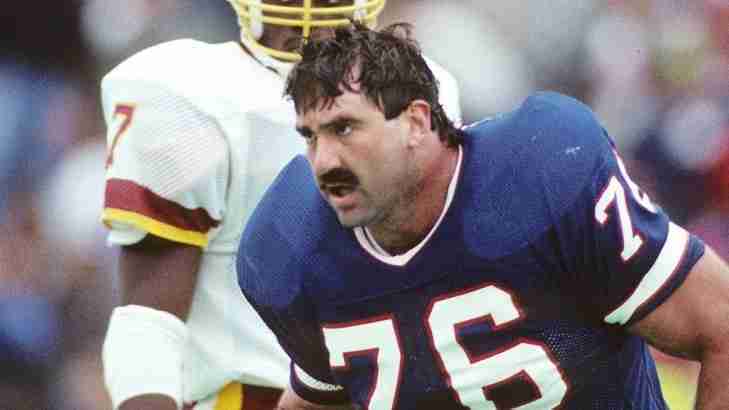
Drafted in the second round (32nd overall) of the 1979 NFL Draft out of Boston College, Fred Smerlas arrived in Western New York as a relentless, physical force. Tipping the scales at 6 feet 3 inches and 275 pounds, he redefined nose tackle play in Chuck Knox’s 3-4 defense, anchoring the center of Buffalo's front line during an era of massive franchise transition.
Smerlas operated with a low center of gravity, aggressive hand techniques, and relentless energy. Positioned centrally, he excelled at breaking double-teams and absorbing hits in the interior, enabling linebackers like Shane Conlan and Darryl Talley to make tackles. Unlike typical nose tackles of his time, Smerlas was noteworthy for his lateral agility—he often shed blocks to disrupt running lanes or collapse the pocket during passing plays.
Smerlas became the starting nose tackle full-time in 1980 during his sophomore year, earning his first Pro Bowl selection as he led a defense that helped Buffalo win its first AFC East title in four years. He reaffirmed his status in 1981 with another Pro Bowl appearance, cementing his reputation as one of the top interior defensive linemen in the league.
His peak performance came in the limited 1982 season. As the key threat on a defense that helped Buffalo stay competitive, Smerlas had a standout run that earned him his only First-Team All-Pro honor and his third straight Pro Bowl selection.
Despite the Bills experiencing several tough losing seasons in the mid-1980s, Smerlas remained a fan favorite and a standout player in Western New York. He earned two more Pro Bowl selections in 1983 and 1988, playing a key role on the defense as young stars like Bruce Smith, Cornelius Bennett, and Jim Kelly helped turn Buffalo into a powerhouse. By the late 1980s, Smerlas's efforts paid off as the team became a consistent contender, winning back-to-back AFC East titles in 1988 and 1989.
After 11 seasons in Buffalo, Smerlas departed after the 1989 campaign as the Bills transitioned to younger defensive linemen. He played one season for San Francisco in 1990 and finished his career with New England in 1991 before retiring.
With the Bills, Smerlas played in 162 regular-season games, accumulating 29 official sacks and recovering 11 fumbles. In recognition of his stellar play and lasting popularity, Smerlas was inducted into the Buffalo Bills Wall of Fame in 2001.
